Stewards of the land

view of sea and mountains at sunset in Plockton

As I grow older, I am convinced more than ever that I am just an interloper on this earth. A transient squatter that one day will evaporate, ashes to ashes, dust to dust. The land, however, will live on.

I am reminded of this every day I watch the wildlife in the woods I live in and the lakes I paddle on. They belong to the blue jays, beavers, porcupines, deer, woodpeckers, dragonflies, butterflies and herons. And yet, humankind aspires to own property and claim it as our own, putting up fences and markers to demarcate what is rightfully ours, and keep people and animals out.

I love my property, but I have always believed it is ours to steward and share, not own. I know there are many of my neighbours who would disagree with me.

Since moving to the country, I’ve seen the widely opposing views on property. Some are generous, allowing people to hike, and even hunt on their land and use private water access points. Others are aggressive in their defence of “their land”, putting up gates and guarding their property with shotguns. You better know who you’re dealing with if you wander down a private laneway or path.

One of my favourite walks in Scotland this summer was on private property in the tiny seaside village of Plockton, just off the Isle of Skye. There is an isthmus that juts out to sea, owned by a local family who has granted permission to anyone to hike the trails around their modest farmhouse. It was one of the most beautiful hikes I’ve ever done, and reminded me of the seascape on Vancouver Island.

In 2003, Scotland adopted the Land Reform Act, commonly known as “right to roam” that gives the people of Scotland the right to access and roam the land and inland waterways, including public lands, farmers’ fields, and other private property. Basic principles include respecting people’s privacy, caring for the environment, leaving no trace, and ensuring no damage is caused to crops or livestock.

England has not been as progressive in adopting this principle and we had some interesting conversations with fellow hikers and locals about the right to roam and our relationship to land and property.

As a society, we have been poor stewards of the land. From polluting our oceans, to mismanagement of our forests and the ever-threatening impacts of climate change, we have failed in our attempts to be good stewards of this planet. One writer described it as “soiling our own nest”, an apt description.

We’ve also incurred irreparable harm to our planet and humankind by trying to define borders and territories. Wars have been fought and millions of lives lost from the desire to conquer land.

In this, as in so many things, we can learn from Indigenous peoples who have a deep connection to nature, viewing themselves as part of an interdependent ecosystem with a deep commitment to care for the land and its creatures for future generations. 

This week’s #HappyAct is to do one small thing to care for the land and creatures in your backyard, all the while accepting it’s not really your backyard in the first place.

Deer in garden

Photos: at top: the view from a trail owned by homeowner’s in Plockton, Scotland, looking out over the sea. Above: deer grazing in my garden.

On the pontoon

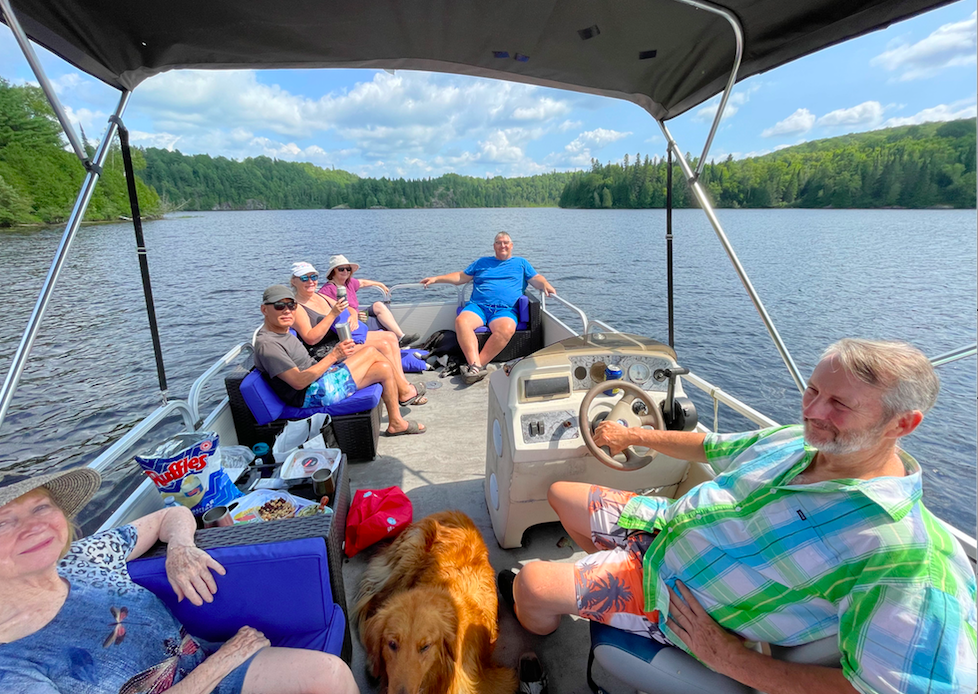
People on a pontoon boat ride

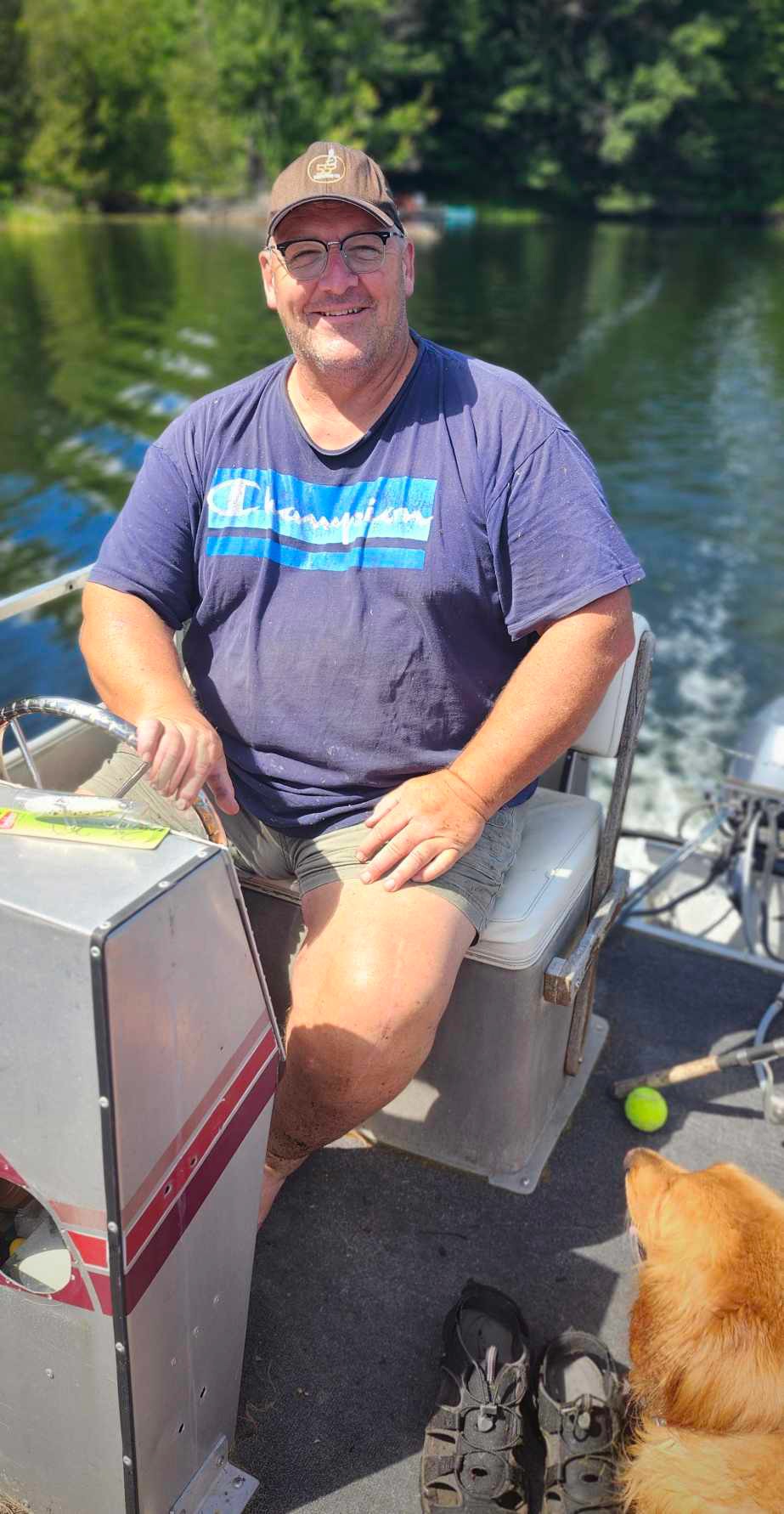
We have a new ride these days, a pontoon boat. Everyone is loving it, from the kids to the dogs, garnering Dave a new nickname, Captain Dave.

Since they were first introduced, pontoon boats have channelled the ultimate party vibe. Step onto the astroturf, get your koozie, let’s go.* You can fish, swim and tube off of them, or just sit back and enjoy the ride.

There is one cottage couple on our lake who take a nightly sunset tour on their pontoon boat, waving regally in the breeze to their neighbours on their docks and decks as they putter along the shoreline.

The pontoon boat is a relatively new invention. It was designed in 1952 by a rural Minnesota farmer named Ambrose Weeres who tied a wooden deck to two aluminum cylinders. He started manufacturing his invention, and the rest, they say is history.

When I was a teenager, I spent many of my summers up at friend’s cottages. Pontoon boats hadn’t made a splash yet on Ontario lakes in those days. It wasn’t until the early 2000s when boat manufacturers starting revving up the horsepower that pontoon boats became all the rage.

All of a sudden, pontoon boats started replacing high-powered speed boats on Ontario’s waterways. Now it seems the only people with speedboats are waterskiiers and fishermen. Today, more than 50,000 new pontoon boats are sold each year in the US.

Pontoon boats are great for many reasons. For people with accessibility issues, they provide a safe, stable means of getting out and enjoying the water. You can have a conversation on a pontoon boat, as opposed to yelling over the motor in a speedboat. They are also highly practical since they can carry large loads of people and items for cottagers needing to barge supplies across the water.

That’s all wonderful, but let’s face it, it’s the vibe of a pontoon boat that is irresistible.

Whether it’s the gentle breeze blowing in your hair, the lure of the perfect cast and catch at dusk, or simply enjoying a laugh and smile with friends and the people you love on the water, a pontoon is the ultimate summer ride.

The best months of summer are upon us. This week’s #HappyAct is to make some waves and catch some rays and party in the open on a pontoon.*

*Lyrics from Little Big Town’s 2012 hit, Pontoon

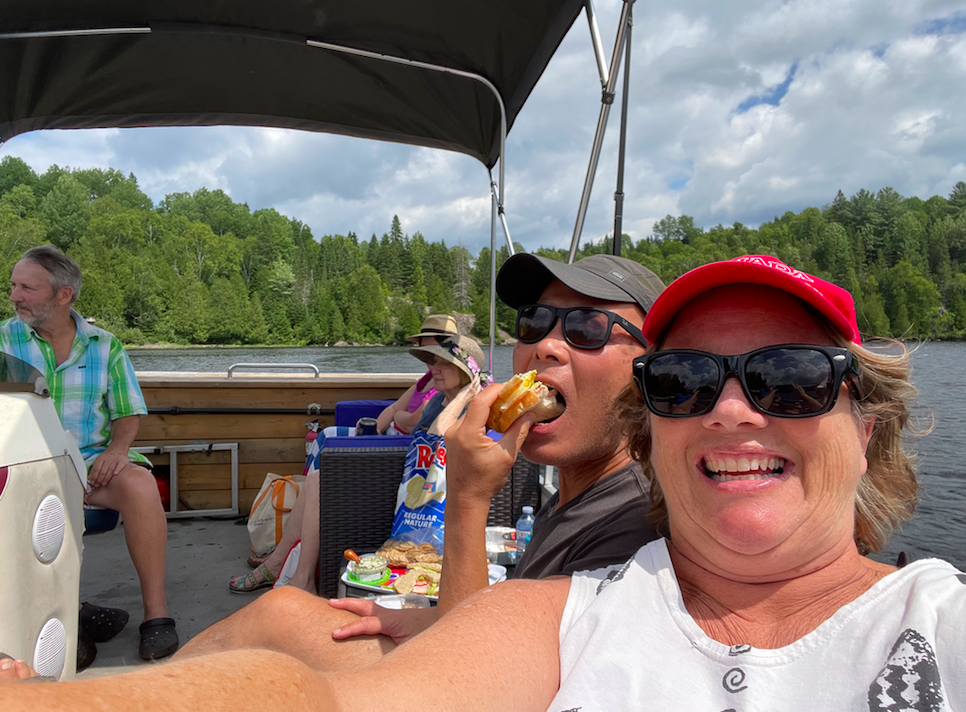
Man and woman eating chips on a pontoon boat

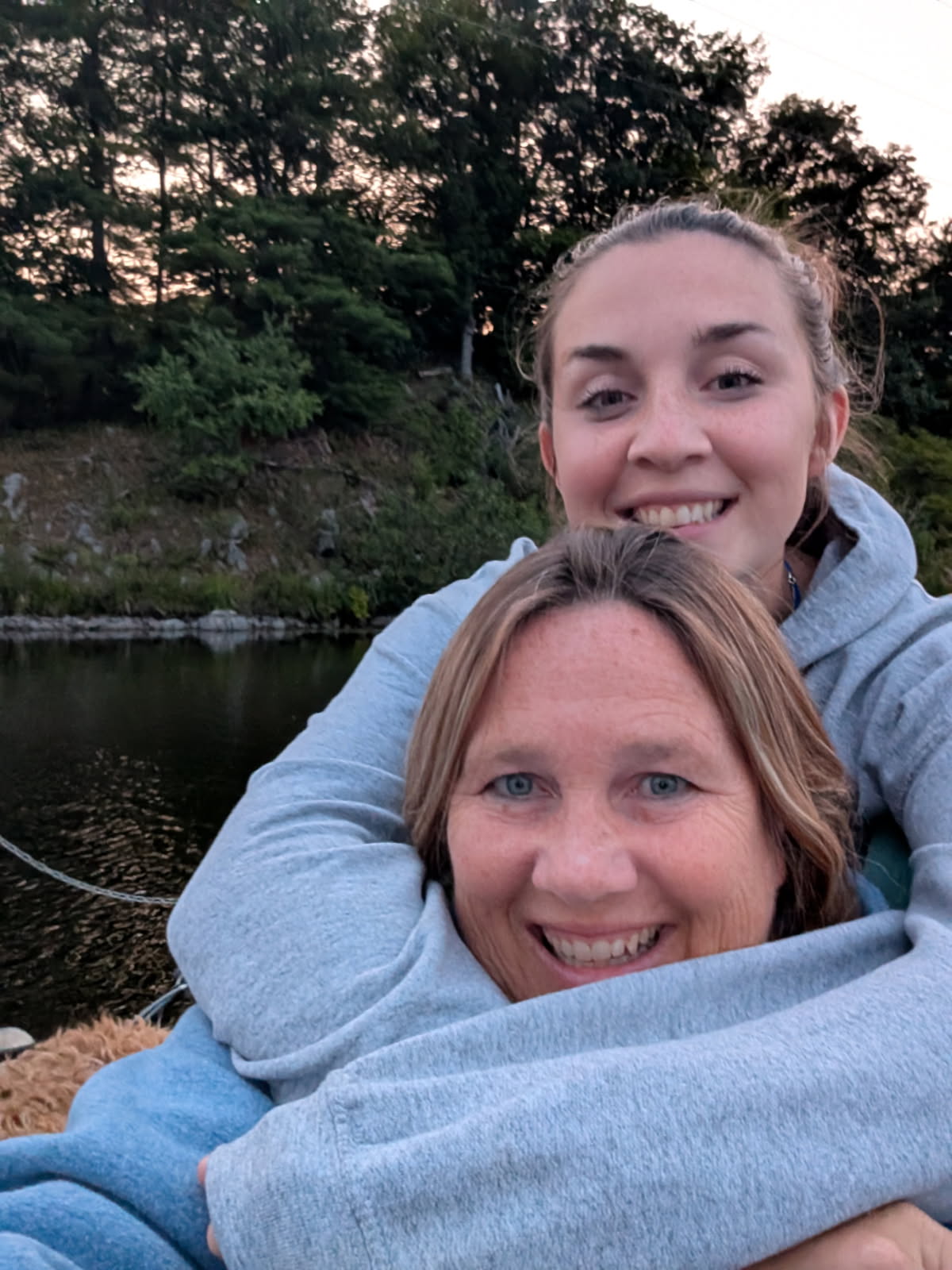
Pictured above: Partying on the pontoon last weekend at our friend Libby and Murray’s cottage; Below: Captain Dave, the girls, and Grace and me on our pontoon.

Man at the helm of a pontoon boat
Two teenagers high fiving on a pontoon boat
Mother and daughter smiling on a pontoon boat