When Dave and I visited Turkey in March, we travelled with a wonderful group of positive people who were up for any adventure. One morning, someone said “Be prepared to be amazed today” and it became a mantra for our trip.
We were amazed almost every day of our Turkey trip, but you don’t need to take a big trip to see amazing things. There are amazing things all around you if you just take the time to look.
Like dragonflies. Did you know a dragonfly’s wings are thinner than a human hair but so strong that researchers have actually studied them to see if they can apply their design to human technological innovations? I love watching them at the lake.
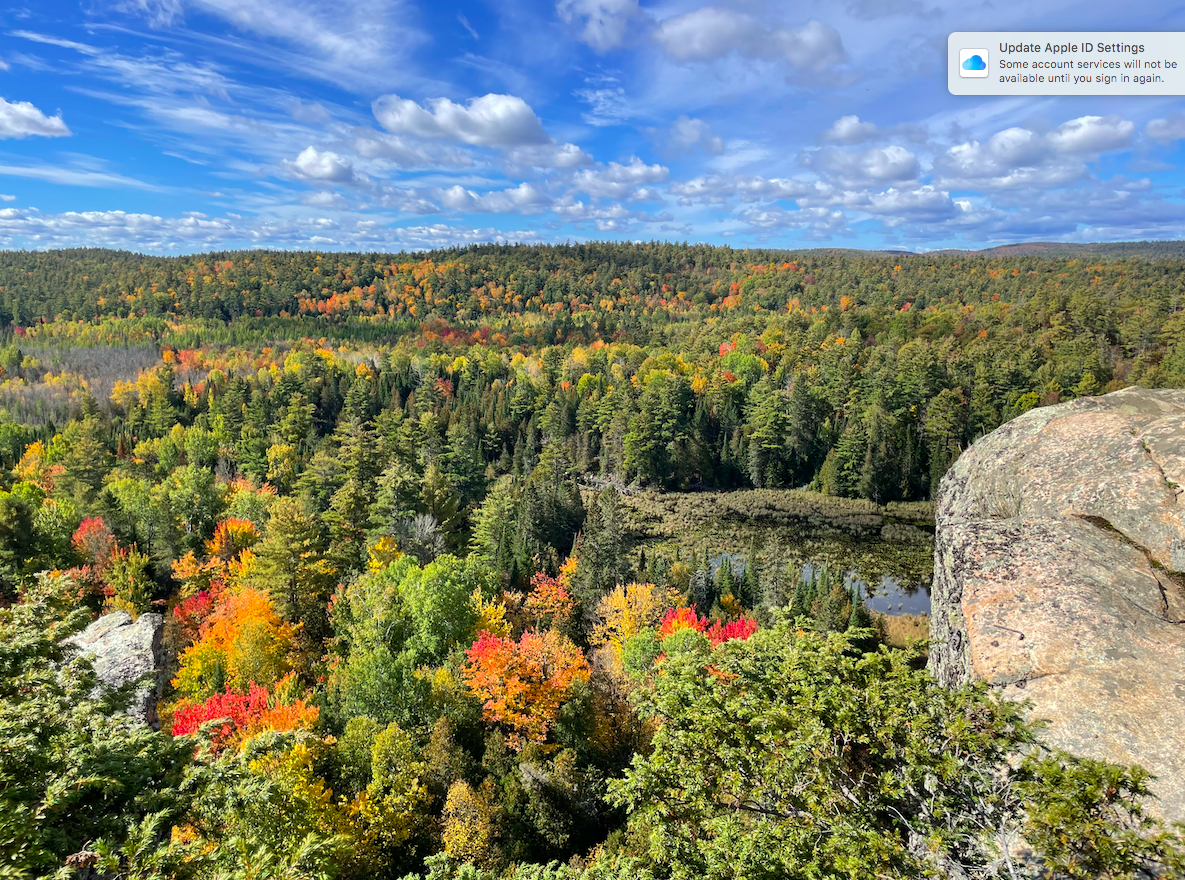
Or how the leaves change colours in the fall at almost the exact same time each year? Dave, my resident tree guy says when the trees turn is based mainly on light and to a lesser degree, cooler temperatures. The colour is determined by the sugar content of the sap. Tree Canada’s website has a very detailed, scientific explanation. I don’t care about the science, but I do watch in wonder each fall as nature puts on the most breathtaking show of colours.
My daughters are a constant amazement to me. This morning, Grace ran in the CIBC Run for the Cure even though she had to work at the park last night and didn’t get home until 2 a.m. (she is a Park Warden) and had a sore knee. Nothing was going to stop her from running to raise awareness and money for breast cancer research.
Of course, amazement can work both ways. I’m amazed the Blue Jays didn’t make it to the playoffs and I’m amazed Leafs’ fans are already bragging that they’re going to take the Cup this year now that they have Gavin McKenna.
This week’s #HappyAct is to wake up every morning this week and say, “I’m going to be prepared to be amazed today”, then look for amazing things around you.
If you’ve ever wondered what it would be like to walk through an enchanted forest at night, the kind you read about in fairy tales, you must visit a lighted forest.
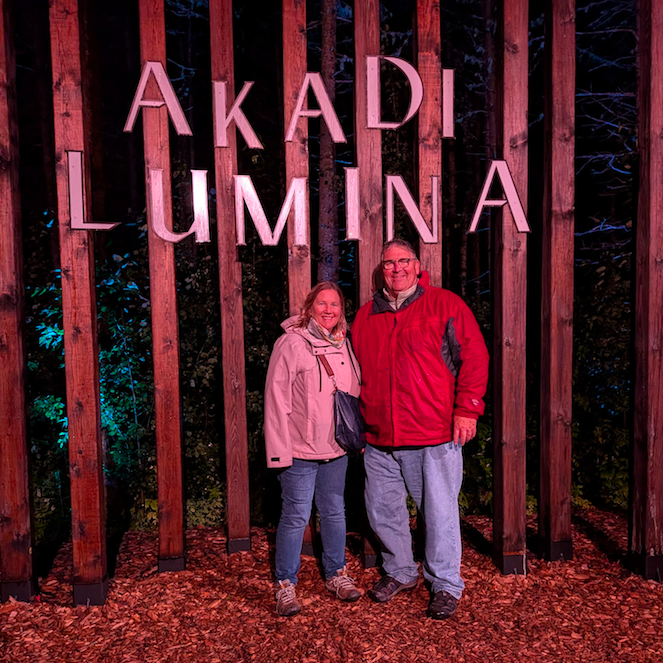
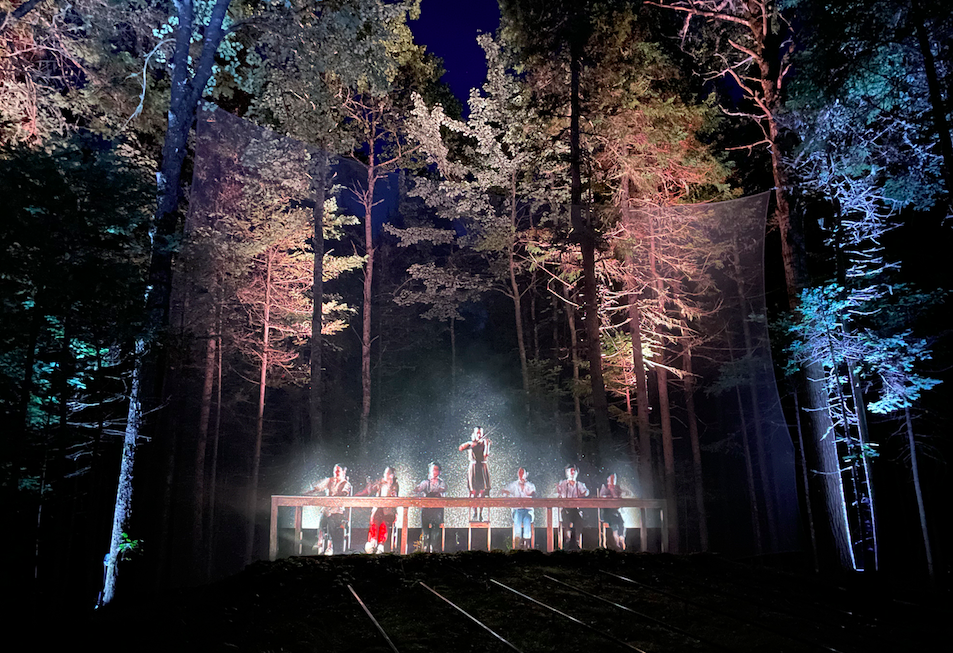
At the end of our trip to Newfoundland, we stayed in the charming village of Bouctouche, New Brunswick so we could attend Akadi Lumina, an intriguing immersive exhibit in the woods featuring lights, visual effects and sound chronicling the story of the deportation of the Acadians and their culture, which is alive and well in this region today.
As we drove down the manicured laneway, five deer, a buck, doe and three fawns grazed in the grass, the last of the sun’s rays glinting off their backs. It was a peaceful, bucolic scene that set the mood for the wondrous experience before us.
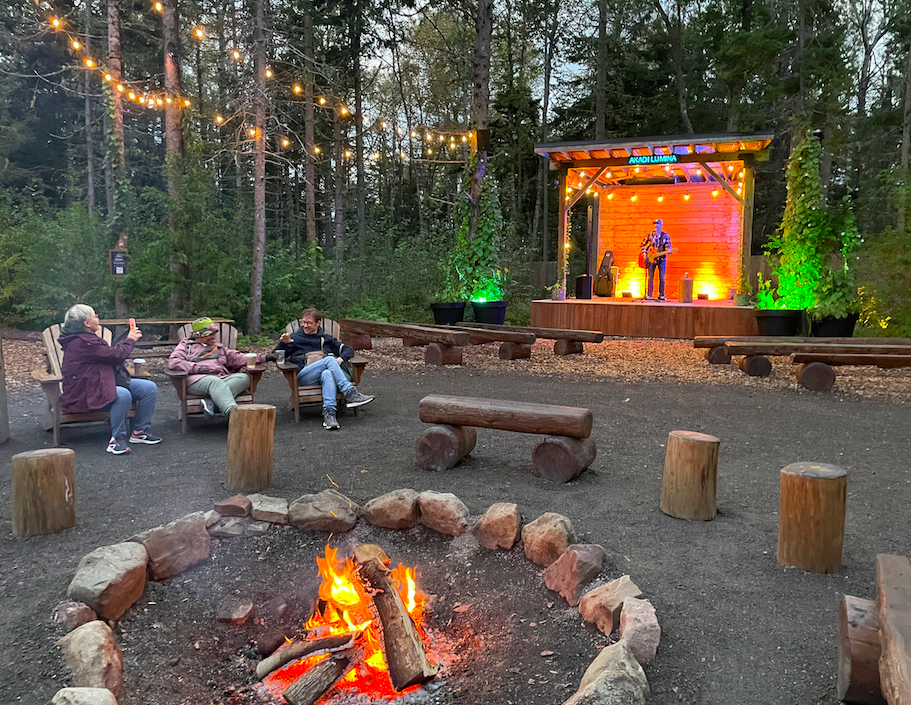
A talented local French Canadian artist was playing the guitar and singing when we arrived. It was a cool evening, so we were grateful to warm our hands around the large bonfire as we waited for our admission time.
At 8:15 pm, we entered the forest. A map that looked like a punched tin lantern showed us the various features we would experience along the 1.5 kms of walking trails. We began by writing our names on a wall, indicating our lineage, an Acadian tradition.
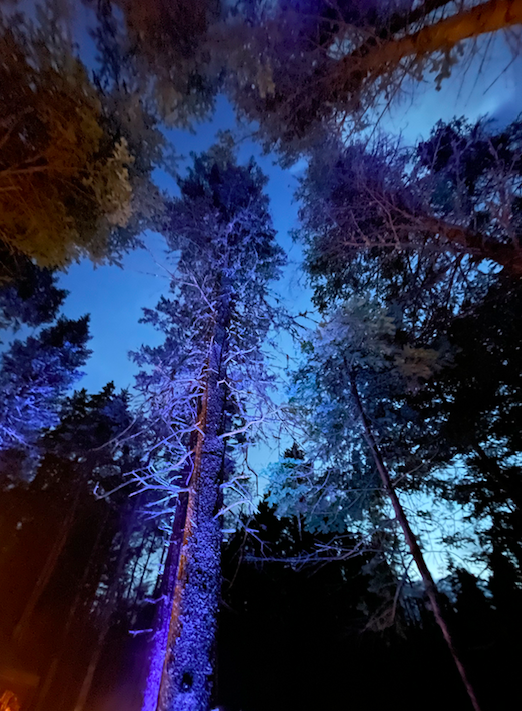
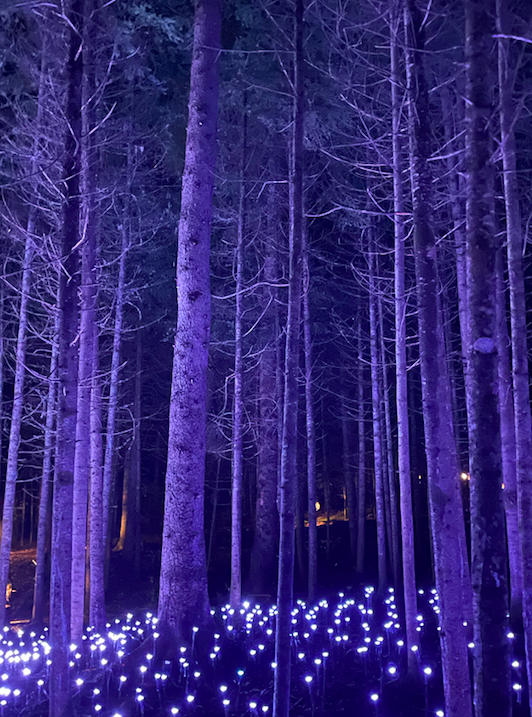
We wandered in awe along the windy paths lined with grapevine lanterns, marvelling at the lights and sounds and the magic of the forest lit up at night. Looking above me, the trees looked like a towering blue canopy. The trees came to life, looming above us, beckoning us and changing with the light and rain. They were ethereal in their splendour.
Each installation was more beautiful than the next. In one spot, the lights and sounds mimicked a thunderstorm, representing the power of the elements that the Acadians had to face in their early days as settlers. In another location, blue floodlights projected onto a rock and a small stream symbolizing the ocean, at times calm, at times rolling and turbulent. I was mesmerized.
In a natural amphitheatre set amongst the trees, they used 3D hologram-like projection technology to show what Acadian life was like through the ages. Further down the pathway, we walked into a grove of trees with tiny white lights sprinkled along the forest floor. Floodlights lit up the trees in blue, purple, white and green taking you on a mystical journey. It was breathtaking.
The trees themselves and the different features of the forest became a centrepiece of each story. A light shining on the ridged bark of a majestic maple tree became a beacon of hope. A gnarled tree branch became a mysterious creature of the night. A hollowed log became a hiding place for persecuted souls.
We wandered across a footbridge, admiring the view of the lights sparkling on the water of the quaint village across the lake, and imagining what village life would have been like hundreds of years ago when the Acadian peoples lived on this land. It was a wonderful way to end our enchanted journey through Akadi Lumina.
This week’s #HappyAct is to visit an enchanted forest. All the enchanted forest walks in Canada I could find are in Eastern Canada:
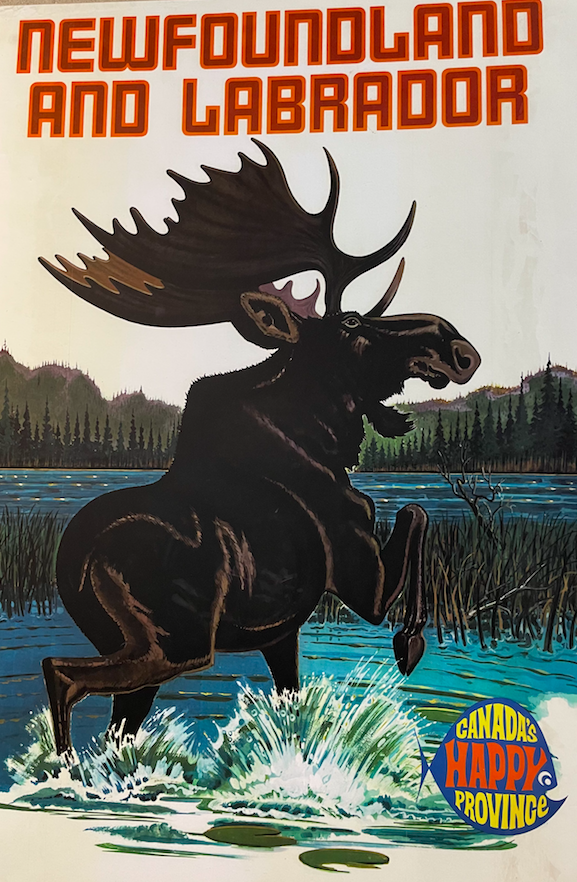
While Newfoundland is known for its rugged coastlines, desolate but breathtaking barrens, and magnificent mountains, anyone “from away” who has visited this beautiful land will tell you it’s the warmth and friendliness of the people who make Newfoundland such a special place. In the 1960’s, the provincial government even adopted the tagline, “the Happy Province” for Newfoundland. Every local had a story. Here are some of my favourite tales from the Rock.
****
“Arya here fordasquid?” We had just walked through the front door of Parkers Blue Water Inn in Triton when a friendly bustling woman with a broom in her hand greeted us in a strange tongue.
“Pardon,” I said, thinking she was speaking a foreign language.
“Are ya here for da squid?” she said, pointing to a plastic bag on the floor.
I still didn’t have a clue what she was saying, but luckily she gleaned we weren’t there for the squid, but to stay for the night. She explained her husband was a squid fisherman and there was a lady coming by that morning to pick up an order of squid. We watched some local fishermen fish for squid in the bay as we ate our supper that night. It’s been one of the best squid fishing years in Newfoundland with the lads sometimes hauling in a catch of $5,000 a day. “Are ya here for da squid” became our mantra for the trip.
***
We had stopped to see the exhibit at the Gander airport, once the largest airport in the world. With the 25th anniversary of 911 coming up, the stories and images of the 38 planes and 7,000 passengers stranded in Gander when the US shut down its airspace was especially poignant.
I heard one Come from Away story a few days later as I was standing in the Brigus tunnel. A gentleman told me he was a Search and Rescue pilot based out of Gander when the 38 planes were rerouted and landed in Gander. He was a critical member of the team during those first few chaotic days when they were trying to get people and dogs and monkeys and cargo off the planes.
He and a buddy had been told to help unload one plane from Antwerp which had a bunch of sealed bags in the hold. They didn’t know what to do with the bags, so they carried them to the back of one of the hangars and stored them behind a stairwell. A few days later, the RCMP, special security and Belgian officials started interviewing airport personnel about where the bags had gone. Nobody seemed to know what had happened to the bags.
They finally asked him, and he said, “Right, sure, I know where they are,” and led them to the staircase. They opened the bags to ensure nothing had gone missing. The one RCMP officer said to him, “Did you know what was in the bags?” When he said no, the officer told him there had been $6 billion in bonds and notes.
He later told me, “I know they were looking for Come from Away stories. I probably should have shared that story.”
***
On a rainy afternoon in St. John’s, we took refuge at the Newfoundland Embassy pub. I sat next to Fred who was elegantly sipping a glass of port while listening to traditional Irish session players. Fred looked like Captain Ahab from Moby Dick. He had a long white beard and twinkly eyes and the gift of the gab and was only missing the yellow sailor’s hat. I commented that his drink choice was very sophisticated and he asked the waitress to get the bottle down from the top shelf, then proceeded to tell me the story of Newman’s Port.
In the 1600 and 1700’s, Portuguese port was one of the favourite spirits of the British artistocracy. Bottles of port were shipped to London each year. In 1679, in what can only be considered a serendipitous act of fate, one of the vessels carrying the precious cargo was targeted by privateers and beset by a fierce storm forcing the ship off course and across the ocean to St. John’s where it became stranded over the harsh winter.
When spring arrived, the ship continued on its voyage to England. When it finally landed, they noticed something extraordinary: the port that had spent the freezing winter in Canada tasted significantly smoother and richer. They didn’t know whether it was the humidity or temperature, but the wine aged in Newfoundland was superior. The company started aging all its port in Newfoundland, and if you find an older bottle today, it will say “Matured in Newfoundland” on it.
The practice stopped in 1997 when the Portuguese government decreed that all port must be bottled in Portugal. Fred entertained me with his stories and one liners, like “There are no volcanoes in the Avalon peninsula. Do ye know why?” I took a sip of beer as I shook my head no. “Because there is no lava there.” (Avalon backwards spells ‘no lava’.)
*****
“Come here, it’s hidden, but it’s very interesting,” said Danny O’Brien at the top of Signal Hill in St. John’s. He wanted me to see the remains of the taproom built on the cliff of the battery to keep the soldiers away from civilians on George Street. At one time, the tap room and later barracks were a bustling concern, but the inhospitable weather on the hill drove the soldiers into town and the taproom was left to ruins.
I learned a lot about Danny in the short conversation we had standing on the hill overlooking the city. He spent the early part of his career working long days in construction, then suddenly found himself with time on his hands when he went to work as a facilities manager at Memorial University. He started running and was planning to run a half-marathon in October from Cape Spear to St. John’s. In his spare time, he picked up and drove hikers on the East Coast Trail to the next leg of the trail.
***
Many of the stories we heard in Newfoundland were captured in song. At the Captain’s Pub in Twillingate, Mike Sixonate regaled us with a story for every song. Mike was also the guy who screeched me in. One of my favourite stories was about him saving up enough to buy a sailboat, then sailing it around the lighthouse to find a safe berth before a big storm.
His famous line was “your first trip to Newfoundland is a bit like a spank on the arse. You’re not sure if you like it, but it starts to grow on ya.” Mike’s coming to Ontario at the end of October to play a series of dates with Arthur O’Brien of The Navigators. You can find the list of his Ontario venues and dates here. Here’s Mike singing The Twillingate Tickle.
***
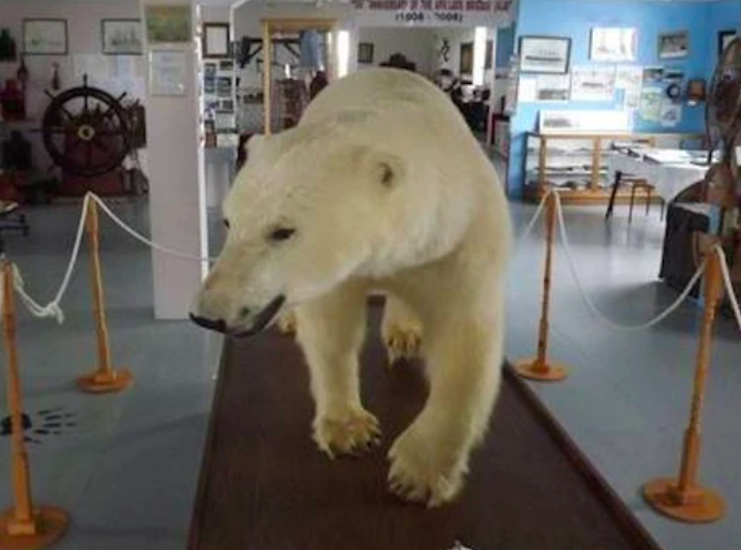
At the Cozy Tea Room in Twillingate, we met Joyce, one of two sisters who ran the shop. Joyce was turning 80 next year and shared the same birthday as me but wasn’t sure how much longer she was going to keep the tea room open. When we expressed our surprise that some of the local restaurants and attractions were already closing down for the season, she said we had to go see the polar bear in the Durrell Museum and told us the story of the bear.
One day back in March 2000, she was having a cup of tea when she looked across the bay and saw a polar bear in her neighbour’s back yard. She called her neighbour on the phone and said, “Edith, you’re not going to believe this, but there’s a polar bear in your backyard!” The bear had made land on an ice flow and was wandering through the village. Due to safety risks, the authorities put the bear down, but the hide was returned to the town for the museum.
***
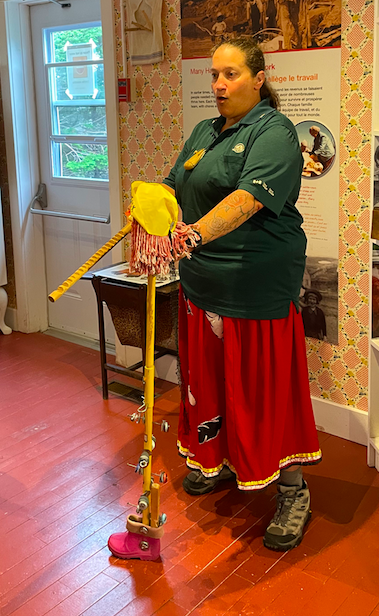
At Gros Morne National Park, we got to know some of the people who work in the park and call it home. On our first night, we attended an Indigenous sharing circle at the Lobster Cove lighthouse and met Marcella, the park’s Indigenous interpreter. Sitting in a circle with people from around the globe, we learned about the Mi’kmaq peoples, their traditions and way of life. Marcella said we could ask her anything, and the session, which was supposed to be an hour, turned into a two and a half-hour intimate experience where we discussed residential schools, Truth and Reconciliation and the connection to the land we all live on.
Gros Morne’s Indigenous interpreter, Marcella, demonstrating the traditional Newfoundland ugly stick
We learned the connection to the park was strong for the people who worked there. Earlier that day, we had chatted with two of the crew members of the boat that took us up the Western Brook Pond fjord. They spent their winters in the park, hunting and snowmobiling and showed us pictures of the park blanketed in snow. Later that evening, we sat around the wood stove at one of the park’s comfort stations with three young guys who were taking their Masters in Physiotherapy at the University of Toronto and Walter, one of the park wardens. What started out as a quick stop to charge our phones quickly turned into an impromptu party, with the guys grabbing their smores and me our bottle of Cabot Maple Cream.
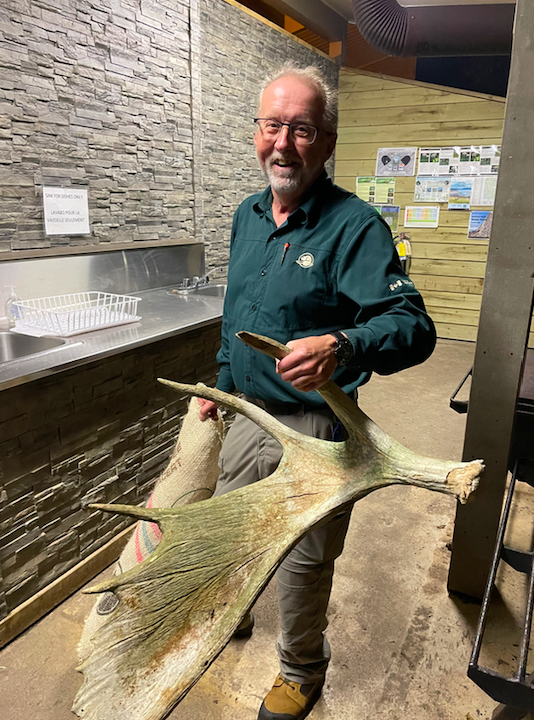
When Walter found out our new friends had forgotten to pack a pot with their gear, he loaned them one of his own he keeps as a stash to help campers in the park. He brought a load of wood and even built a fire for us and told us stories of moose hunting in the park. When hunters shoot a moose there, they have to take it out in chunks on their backs. One time, it took him and his friends eight hours to transport a huge bull they had shot. He had an impressive set of moose antlers he loaded into the truck to show us. What a great guy.
I’m grateful for all the wonderful people we met during our brief time in Newfoundland. Hopefully some day, I’ll be lucky enough to hear more tales from the Rock.
I rescued five garter snakes last week trying to cross the road. It was one of the first warm days, and they must have just come out of hibernation. They were all small and slender and very cute.
On the same walk, I saw a tiny dead turtle overturned with a beautiful orange pattern on his belly. A painted turtle hatchling. He was so little, he didn’t stand a chance against the car who hit him.
Snakes and turtles are on the move. Living on a lake and beside a culvert where turtles nest and hatch, we watch for them carefully and do what we can to keep our turtle population happy.
Last year, one heartbreaking morning, we witnessed the decimation of three large snapping turtles at our culvert. It was so disturbing, the girls were almost in tears.
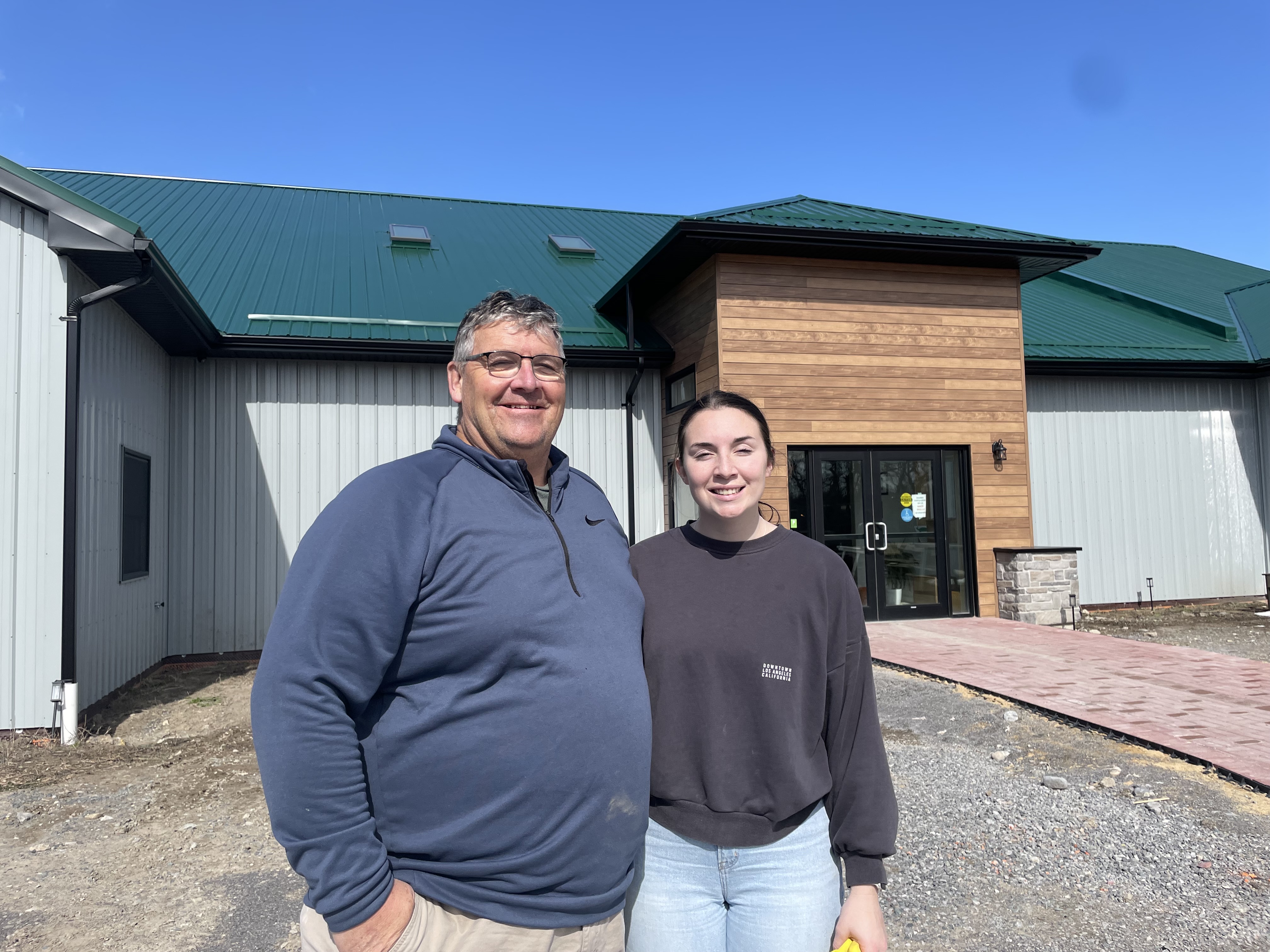
We have an especial fondness for turtles in our house since Grace spent a semester interning at the Ontario Turtle Conservation Centre in Peterborough (follow them on Facebook here). The centre recently completed a new 10,000 foot facility that will be open to the public this summer.
On any given day, the centre can house up to 2,000 turtles, including hundreds of hatchlings orphaned when their parents were killed by cars and dozens of injured turtles being treated in their hospital.
We were fortunate to be given a private tour of the centre last spring by Grace. It’s an amazing facility. In addition to being a full turtle veterinary hospital, it is a conservation and educational facility, educating the public about the importance of turtles in our ecosystem and the risks to the population.
All eight of Ontario’s turtle species are at risk. Less than 1% of turtle hatchlings will survive to adulthood. That means every turtle saved counts.
How you can help keep our turtle population happy
If you see a turtle in the middle of a road at risk of being hit, help it across the road (if it’s a snapper, they have tips for handling snappers on their website—I get Grace to do it!)
Put up signs on your property if you are in an area where turtles hatch and are on the move—you can get them at their online store
Slow down and brake if you see a turtle
What to do if you come across an injured turtle
Call the centre at 705-741-5000, x9. Note the location (road, intersection, closest municipal number) where the turtle was found so it can be released in the same place. Even dead turtles may contain eggs and be valuable.
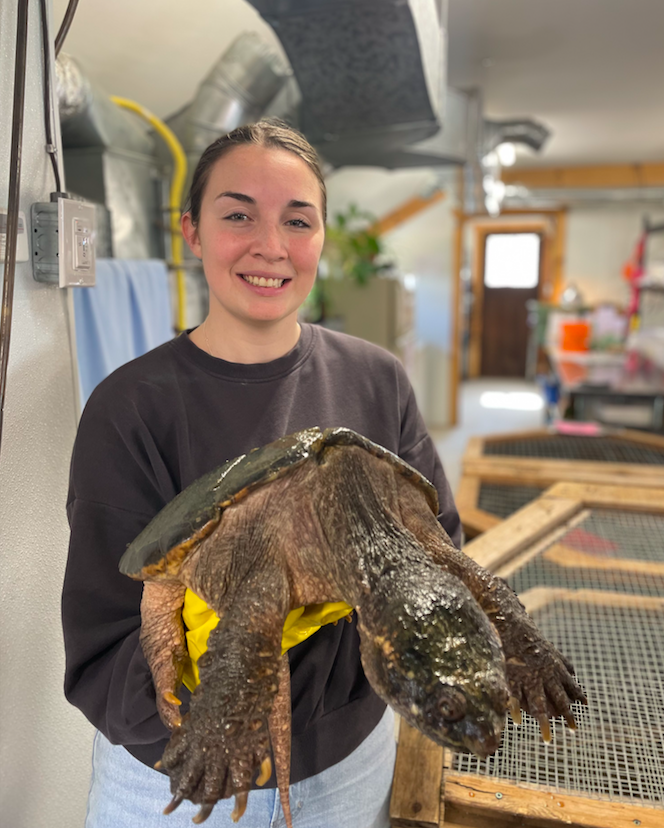
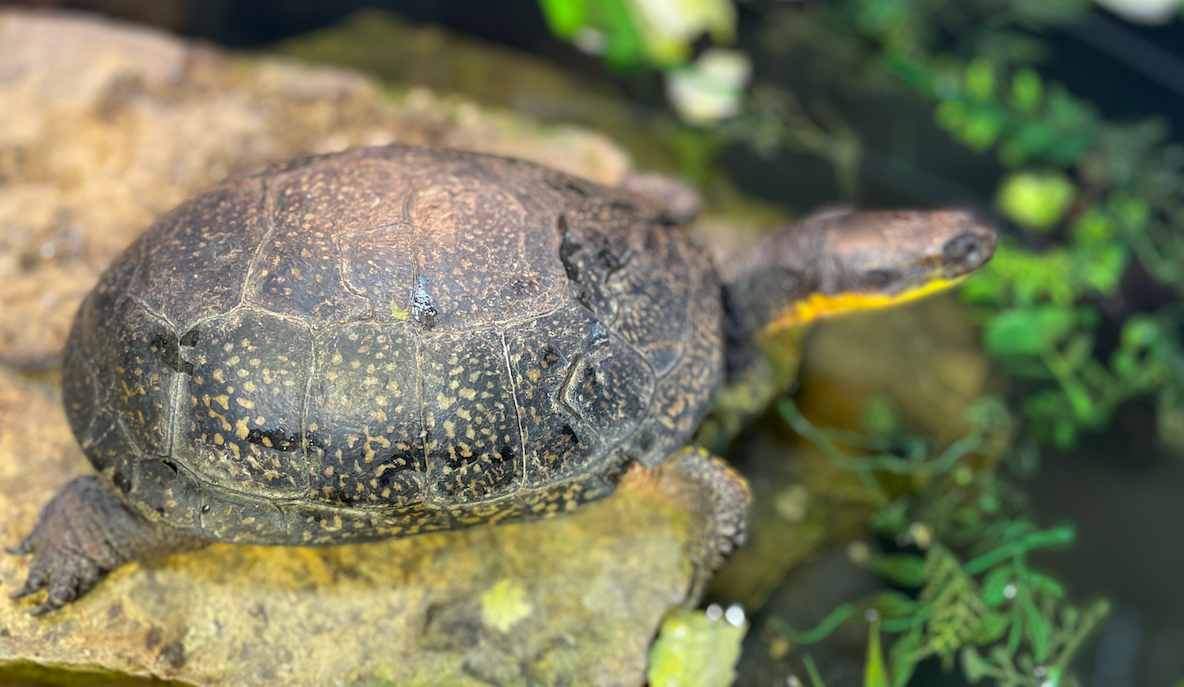
Pictured above: Grace with “Mr D”, one of the permanent educational snapping turtles at the centre (due to his injury, Mr. D can never be released in the wild so he gets to meet school groups and seniors). Below: a blandings turtle, one of the more than 2,000 turtles treated at the Ontario Turtle Conservation Centre in Peterborough. Dave and Grace in front of the Centre’s new state-of-the-art facility.
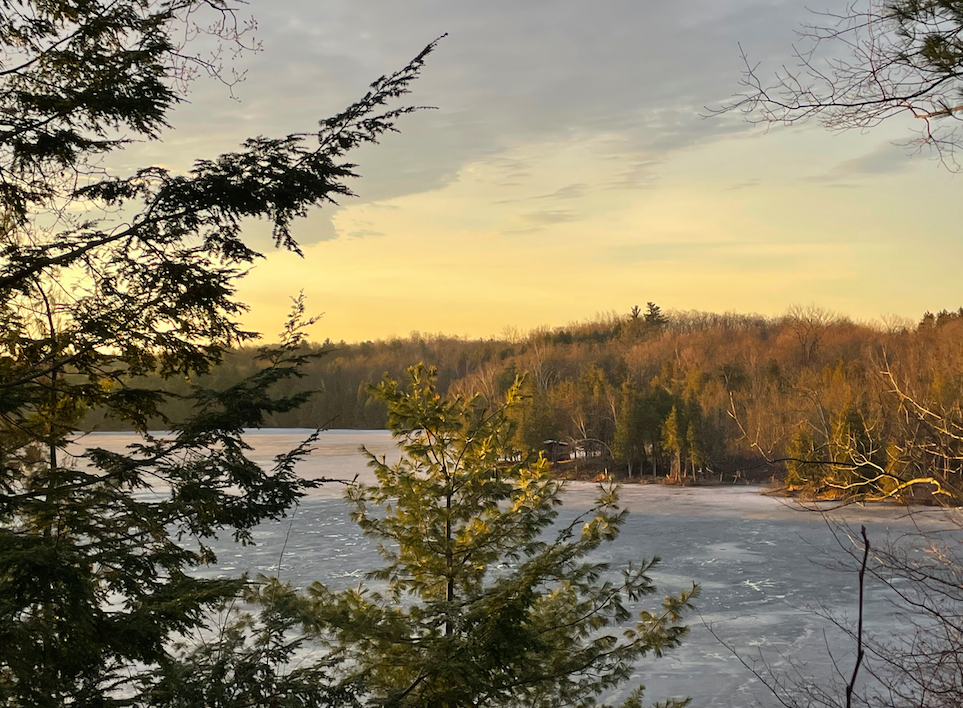
The lake is still frozen, the surface turning darker by the day waiting for the ice to honeycomb and sink. It reminds me of the remarkable images from the Artemis mission to the moon of the craters, swales and pockmarks of its blackened surface.
Last weekend, when it was 20 degrees, I was in my shorts raking the leaves out of the garden beds when I looked down and saw a big dark brown object on the ice.
At first, I thought we had left a pair of pants or jacket on the ice, but then realized it was an otter who had leaped out of one of our ice fishing holes and was feasting on a rather large fish. The otter was huge, the size of a small seal and was gulping the fish down leaving a splatter of blood on the ice. The incongruity of watching an otter eat a fish on the ice while I was raking leaves in my shorts wasn’t lost on me. Spring in Canada.
As I dig in the garden, I see pink and pudgy worms, squirming in the sunshine, waking up from their long winter’s nap. If they could yawn and stretch their grubby bodies like a toddler, they would.
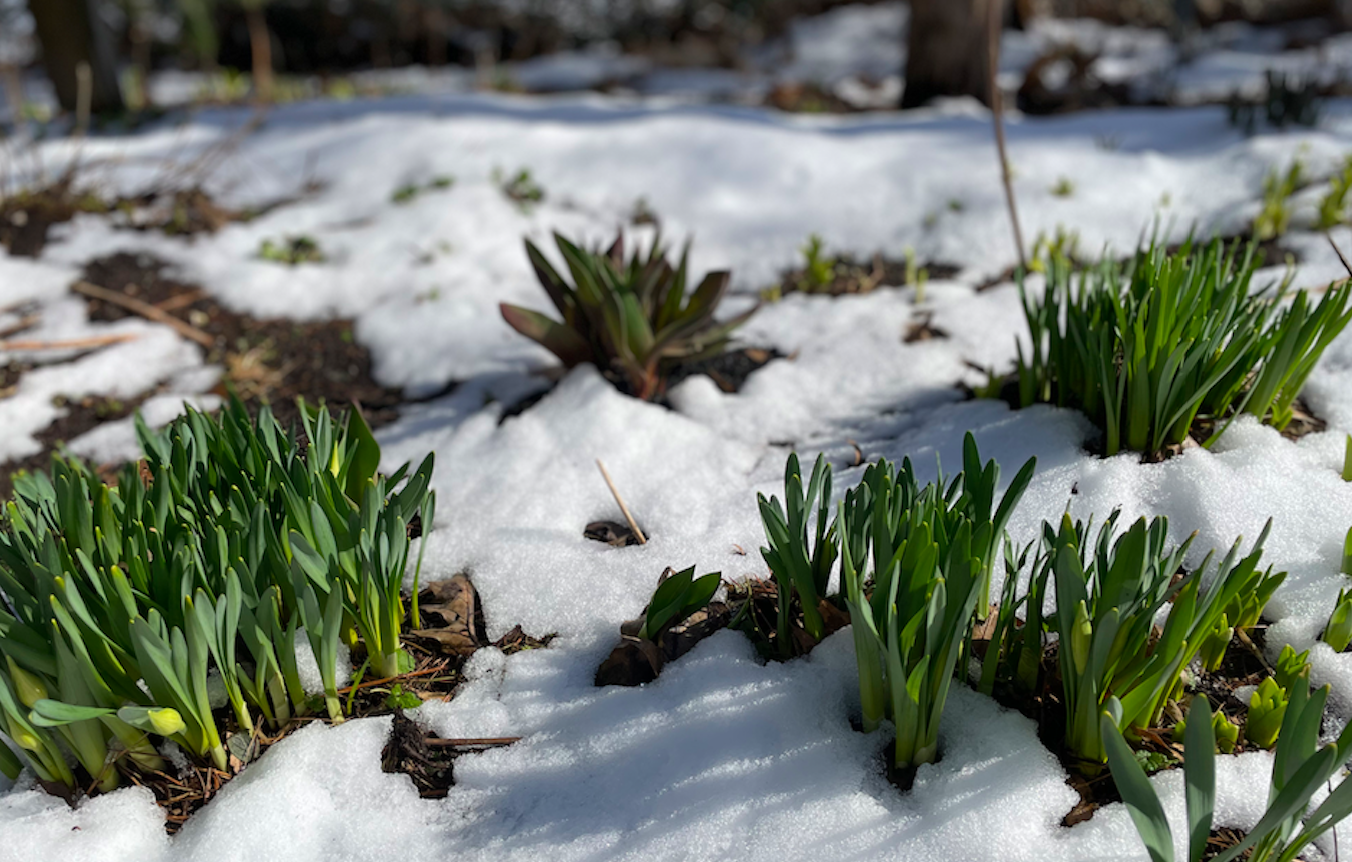
Tiny green shoots sprout up from beneath the pristine snow. Soon, my daffodils and tulips will erupt, flooding the yard with reds and yellows and pinks. The rain rejuvenates the buds and bulbs, washing away the weariness of winter.
We boil down the last of the sap from the six maple trees we tapped. I read somewhere that the sap will stop running when you hear the first spring peepers (frogs). We had pulled the buckets down the day before, and sure enough, on my walk with Bentley, I think I heard my first spring peeper. We’re getting good at this maple syrup thing even if we are amateurs (and even if we still spend $100 on propane to get about the same equivalent in maple syrup).
On Easter Sunday, I visit my friend at their family farm to help them sugar off. As we wait for the rich golden liquid to boil down to that perfect sticky consistency, I mention that we had taken the blade off our ATV. My friend Madeliene, the prophet, says, “Oh, so it’s your fault then?” referring to the endless winter we are having. Two days later, we are blanketed with another dump of snow. Superstition and snow run deep in these parts.
Back at home, I notice a large tree has fallen on the ice. It was an old poplar that had a large dead branch that jutted out over the lake, popular with the wood ducks and eagles when they came to visit. They will need to find a new perch this summer.
I hear and see the flocks of Canada geese flying home and the distinctive honk of the trumpeter swans who never left but are on the move. I finally see our heron—the first harbinger of spring. We hear the first croaky call of the lake’s town crier, the loon, announcing his triumphant return. His vocal chords are weak and out of practice after his long journey home.
Don’t be tricked by the robins and the groundhog. These are the true signs of spring. Or perhaps just spring musings on a rainy day.
The blackened surface of the ice on the lake is like the images of the moon from the recent Artemis mission
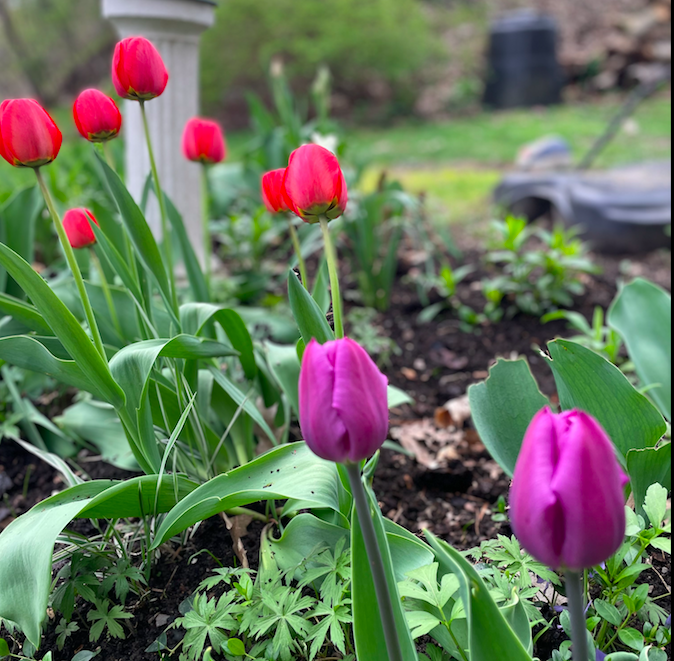
What I hope my garden will look like in a few weeks time
“One day you’re waiting for the sky to fall The next you’re dazzled by the beauty of it all”
I was listening to a cool chill mix on Spotify the other day, and they played Bruce Cockburn’s Lovers in a Dangerous Time. This line seemed to personify how we’re all feeling right now, waiting for the sky to fall like Chicken Little*.
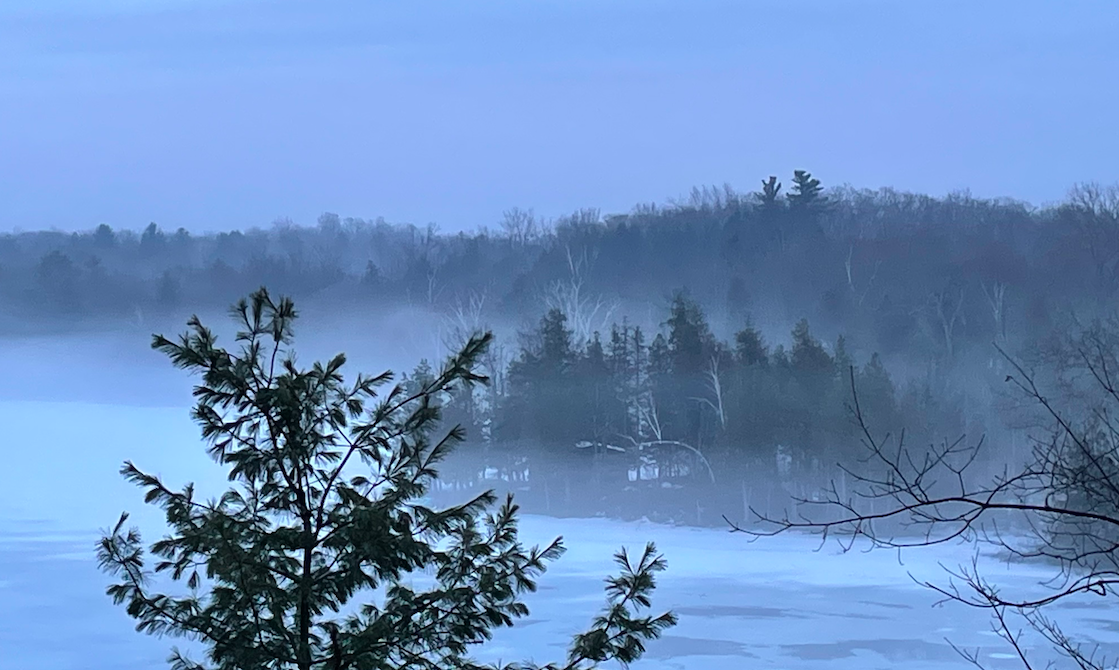
We all have different coping mechanisms. I’m ashamed to admit mine is to retreat into my writing and to my little lake where I can watch the mist rise on the shoreline, listen to the birdsong, and wait for the spring crocuses to appear. Escapism at its finest.
In my heart, I know this is no solution. I wish I was a better person. I wish I was like Carol, the wife of a fellow proctor at Queen’s University who officially retired years ago but keeps working at an outreach program operating out of one of the churches in Kingston, helping people on the street get warm food and shelter. Her response to the unfathomable problem of homelessness and drug use is to volunteer and make a difference.
Or like the millions of Americans in all 50 US states who took to the streets in the No Kings protests yesterday to raise their voices against Trump and his administration’s policies.
That’s not me. I choose to cope by living my small life, making a difference where I can.
Perhaps the ever wise and socially and environmentally conscious Cockburn has provided us with the answer. When the world seems out of control, look for the dazzling beauty in it all.
A magnificent sunrise or sunset. A child’s smile or laughter. The first snow drops or bluebells peeping through the frozen ground. Signs of hope and renewal.
Now it’s your turn to share. What do you do to cope when the world seems to be falling apart and you’re waiting for the sky to fall? Leave a comment below.
*a European folk tale about a chicken who believes the world is ending
I can’t believe I’m here. I can’t believe I’m a thousand feet in the air soaring in the sky in a hot air balloon. It almost wasn’t to be.
When Dave and I decided on Turkey as a destination for a winter getaway, hot air ballooning was one of the premier attractions. The most famous place to hot air balloon in Turkey is Cappadocia over the fairy chimneys and primeval rock formations dating back thousands of years. The internet is teeming with pictures of this magical place where the skies are filled with dozens of colourful balloons in the sky at once.
We arrived in Cappadocia in the middle of a snowstorm. Our balloon ride was cancelled the next morning due to snow and the next day due to fog. We had one chance left to take to the skies the following morning in Pamukkale.
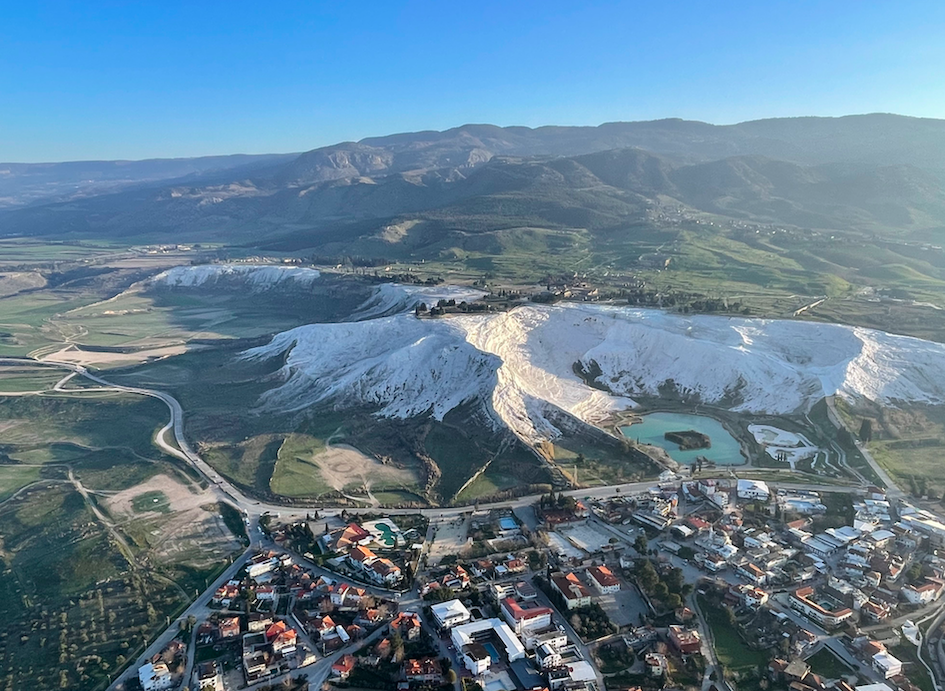
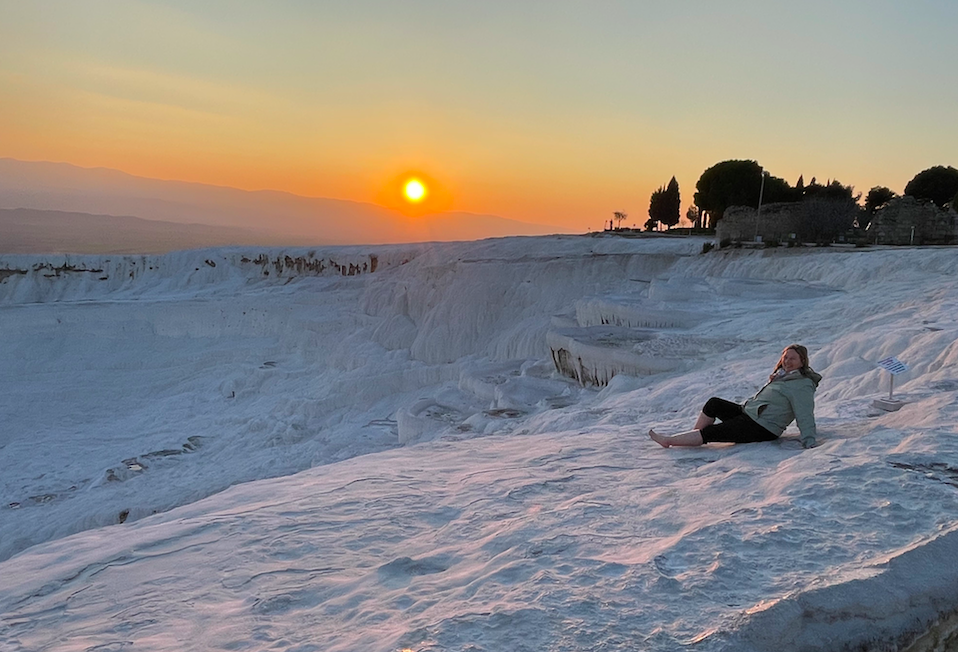
We had toured Pamukkale the day before. It was in fact, my favourite place in Turkey. Pamukkale, which means “cotton castle” in Turkish is a UNESCO World Heritage site famous for its white, thermal pools of calcium deposits the size of Niagara Falls. After soaking in its magical charm at sunset and exploring the ancient ruins of Hieropolis adjacent to it, I was bursting with anticipation to sail above it the next morning in a hot air balloon.
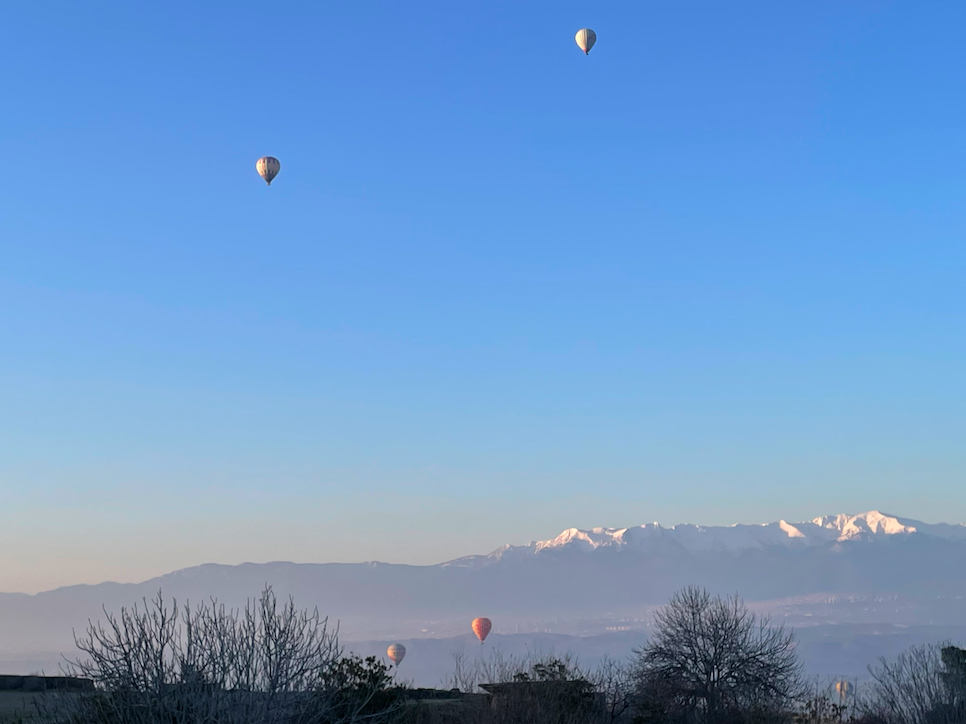
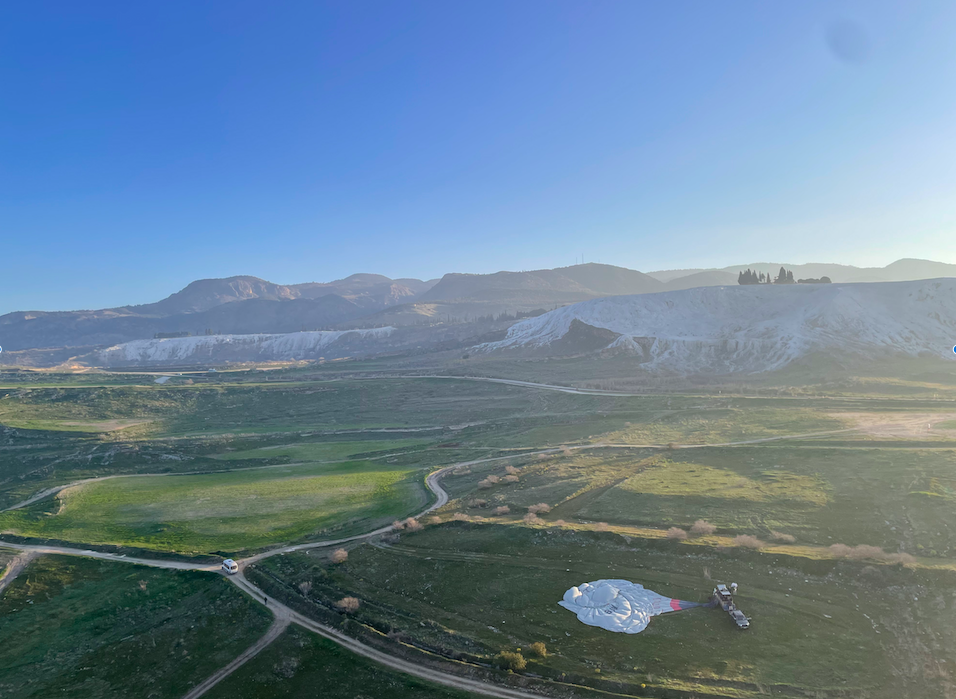
As our transfer took us down through the valley, we could see the first flight of balloons mid-air outside our windows. The sun had just breached the mountains to the east and the air had a soft, hazy glow.
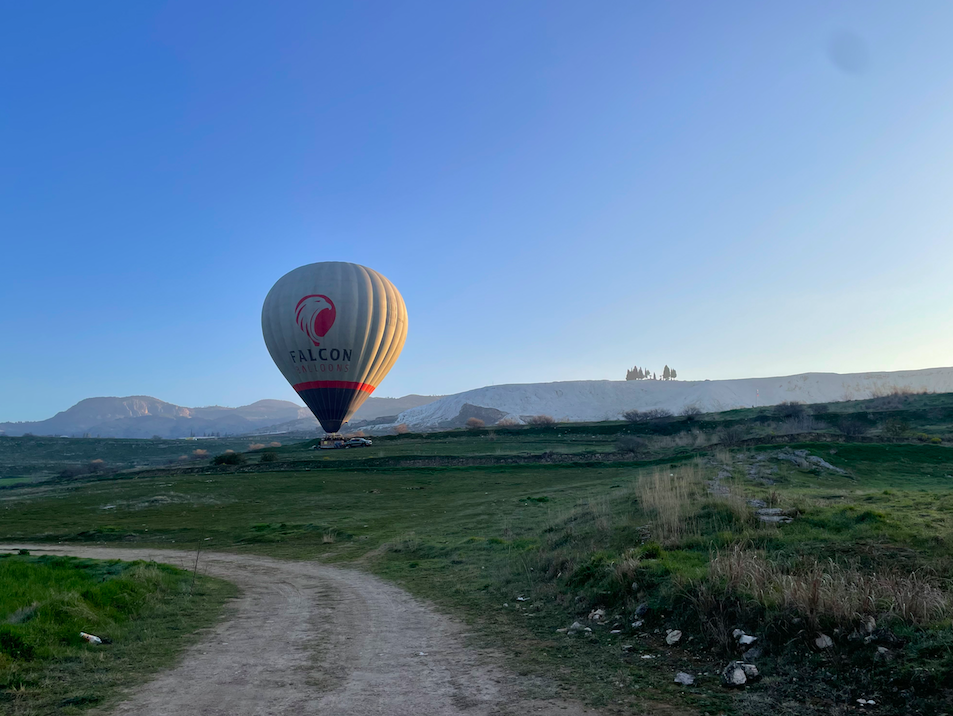
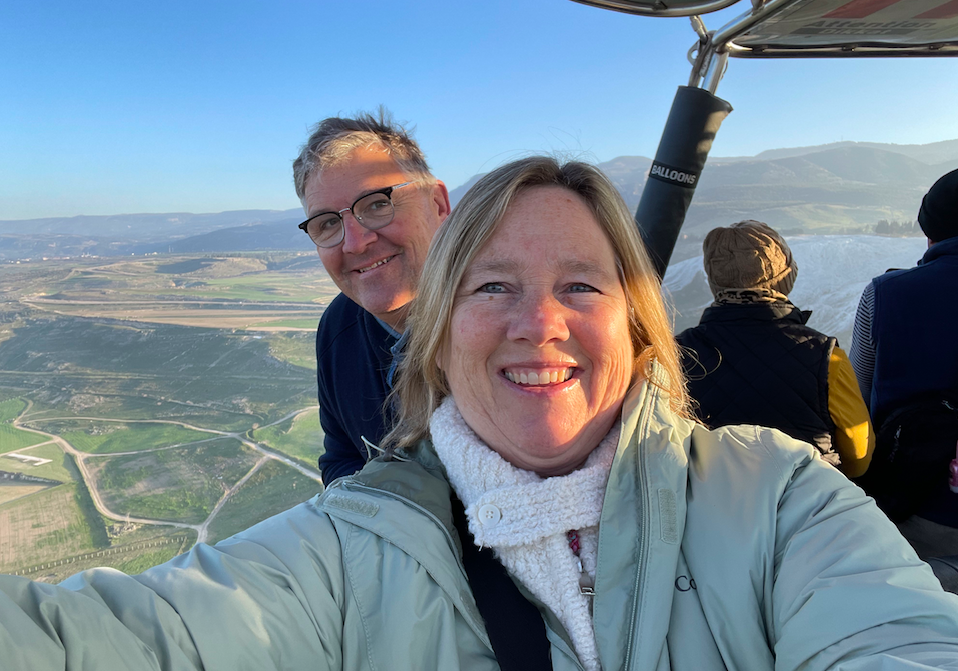
We arrived in a field and watched as the pilot landed the balloon we were about to fly in. They had to balance the weight, so as two people exited the balloon, two of our group entered. It was tricky climbing over the sturdy rattan basket, but the pilot and his crew members were there to help and our group of 12, who had become quite close in our week-long adventures congenially extended helping hands and hauled each other one by one into the basket.
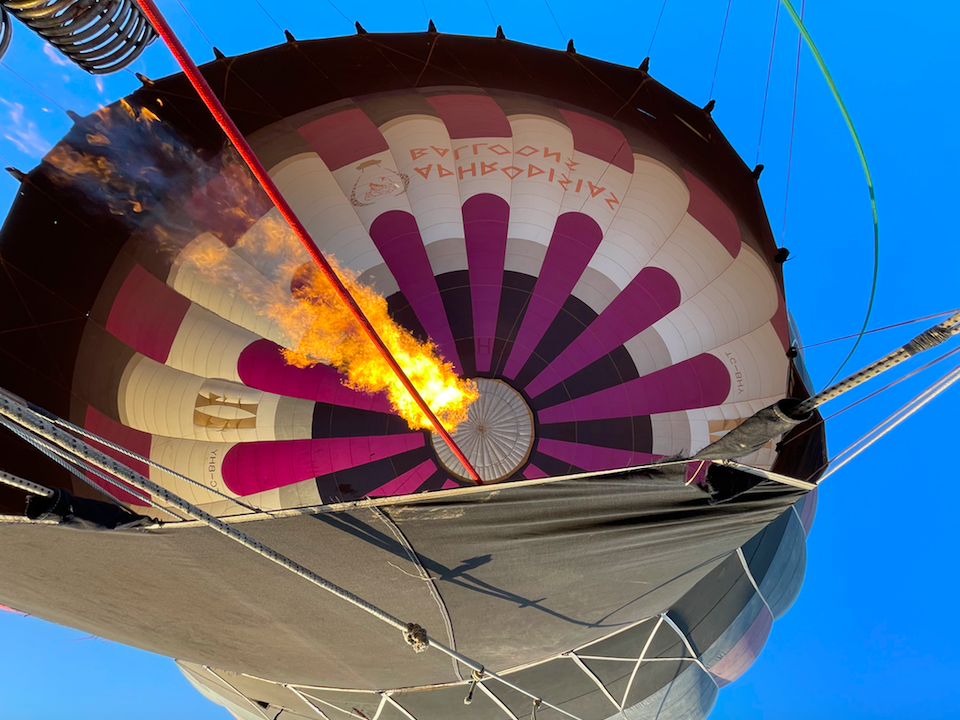
After a quick safety lesson, our pilot fires up the propane tanks. A burst of flames shoots upwards, sending waves of heat into my face as air fills the colourful balloon above us.
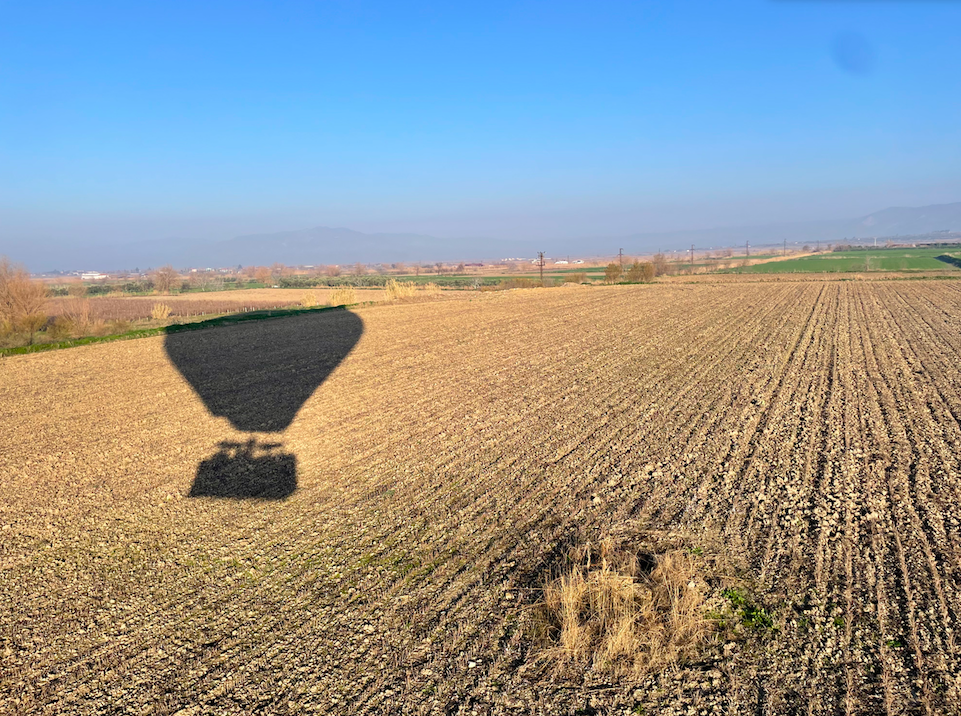
Lift off. The balloon begins to rise majestically, floating ever so gently, gaining altitude as the light from the daybreak casts a soft glow over the hills and valleys.
Our pilot watches the altitude, wind speed and conditions on his control panel. He releases more propane and we rise higher, higher.
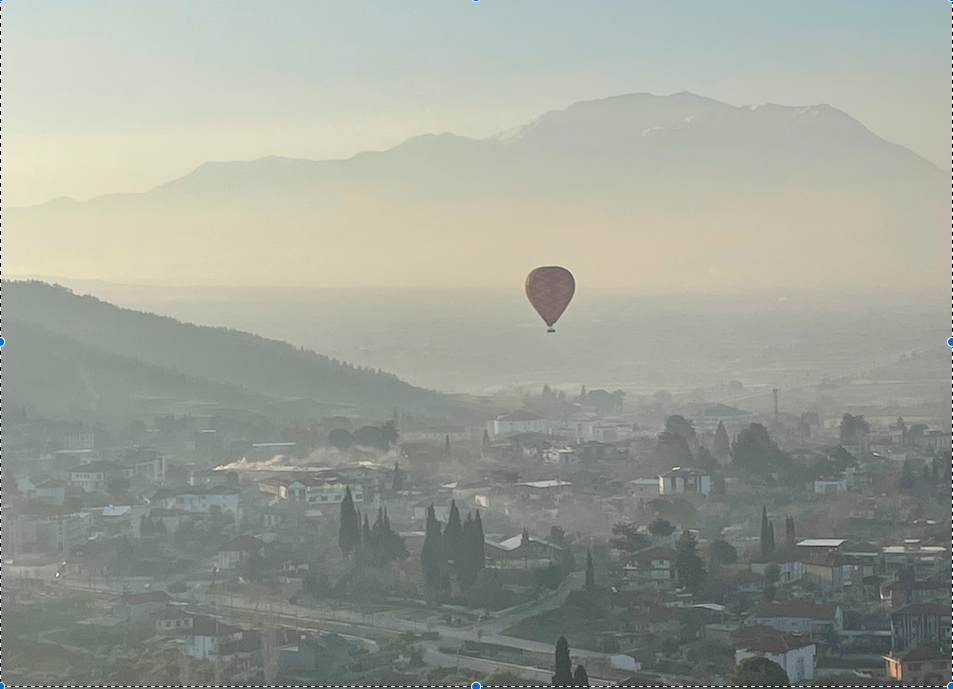
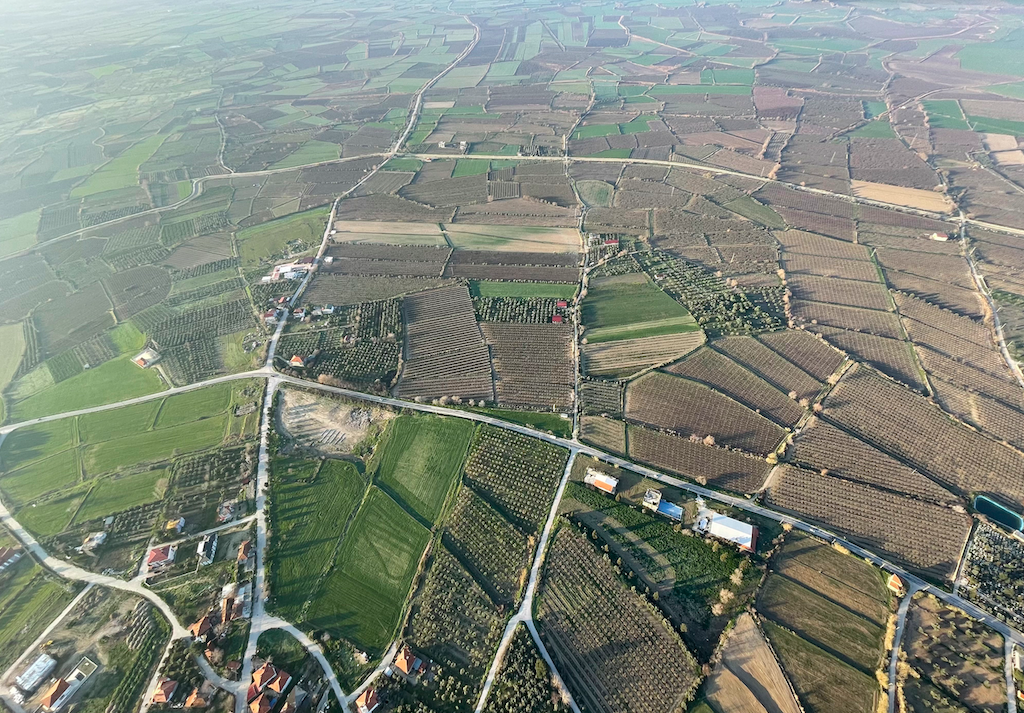
I look down and see a patchwork quilt of vineyards and fields filled with olive trees and grapes and little dots that are houses. There is a large waterpark below us, as we begin to drift towards majestic Pamukkale.
There is a hushed silence, as our group watches in wonder the beauty of the landscape, breathing in the cool air and feeling the warmth of the morning sun on our faces. We are in awe.
A thousand feet. Our pilot keeps turning the balloon from east to west so we can all enjoy the magnificent views of the cotton castle below us and the snow-capped mountains to the west.
We continue suspended in air and in time, floating blissfully, quietly, at peace with the world and immersed in the atmosphere around us.
It is time to land. We had been briefed on how to sit for a crash landing, low in the basket, gripping the handles. As we drift slowly, slowly towards the ground, some of us assume the position. The pilot laughs. He assures us the stance is not necessary, it will be a smooth landing today.
We touch down, barely a bump in a mud-caked farmer’s field. The crew is waiting to greet us with champagne. Another successful flight.
Our hot air balloon ride in Turkey was a magical once-in-a-lifetime adventure. I hope you get to experience something as equally special and meaningful to you some day. See my quick Instagram video here.
The snow keeps falling in an endless sea of white. Tiny feathery flakes fall in slow motion, causing the minutes and hours to tick by slowly. Winter in all its glory grips the landscape in its icy grasp.
There is something rhythmic and pleasing to falling snow. The world is gentle. Silent. Peaceful. The creatures of the forest seek shelter and rest, waiting for the storm to pass so they can emerge from their dens.
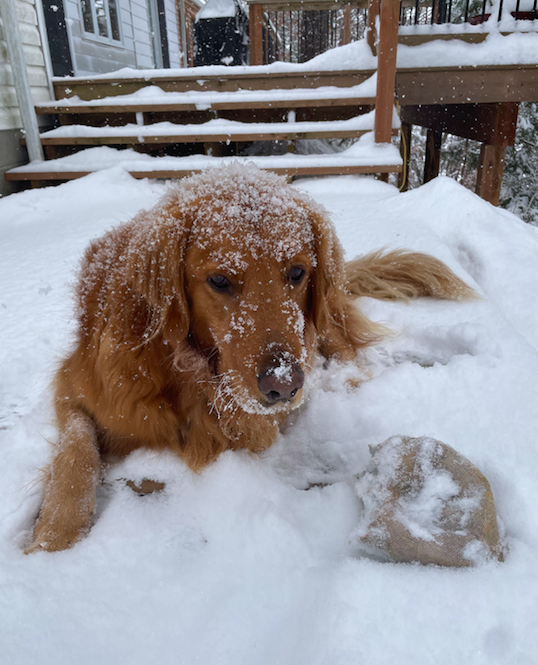
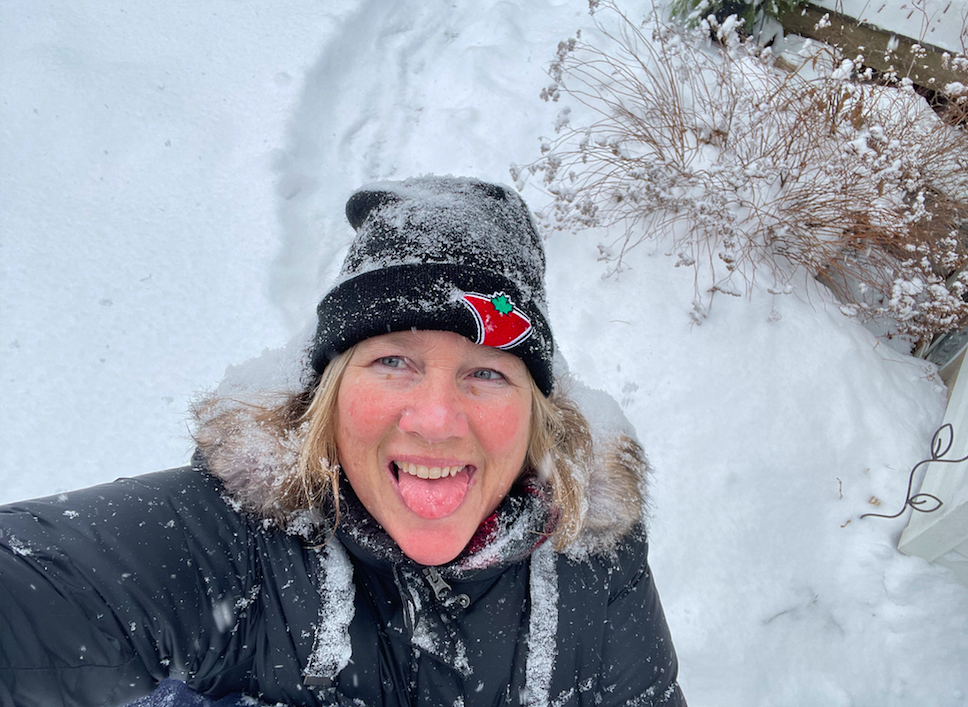
The snowflakes increase in size, the size of peas. I catch them on my tongue. Bentley is covered in white.
I usually love winter, but a few weeks ago, I said to Dave I’m done with winter. It has worn me down.
I become nostalgic, missing the days when a fresh snowfall was an excuse to go out and play with my children and celebrate winter’s bounty: skating on a frozen lake, racing down our driveway on toboggans, and building snowmen in the yard.
I spy an icicle on the side of my barn. My inner child seizes it and takes a hard, crunchy bite. It’s so brittle, it almost chips my weathered, withered teeth. The cold chunk melts in my mouth slowly as I savour the coolness on my throat and mouth. It’s so cold outside, when I take a second bite, the icy chunk sticks to my lips for a nanosecond.
The snow continues to fall and I realize I am fighting a lost cause. Better to embrace it.
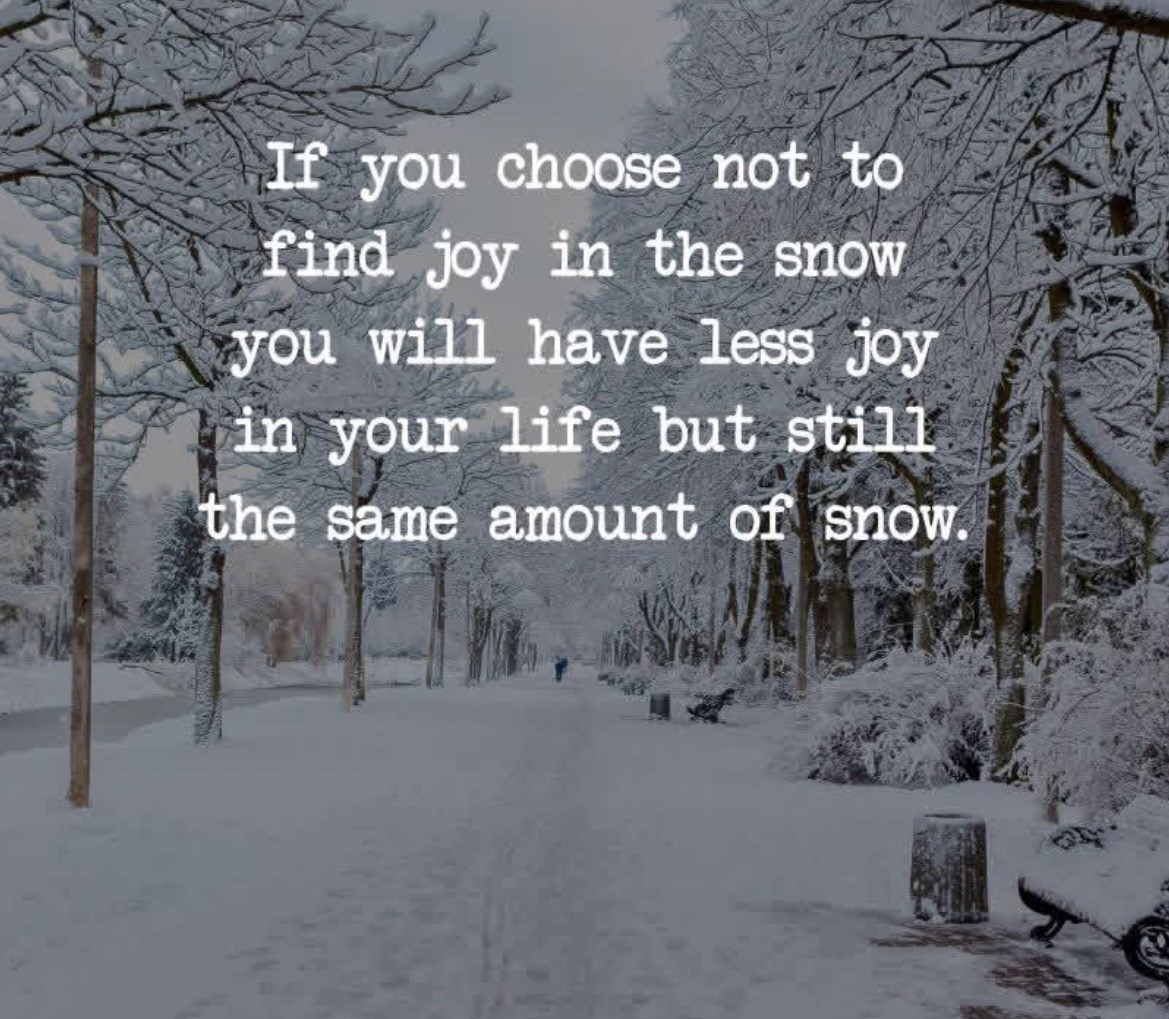
As the saying goes, if you choose not to find joy in the snow, you will have less joy in your life, but still the same amount of snow.
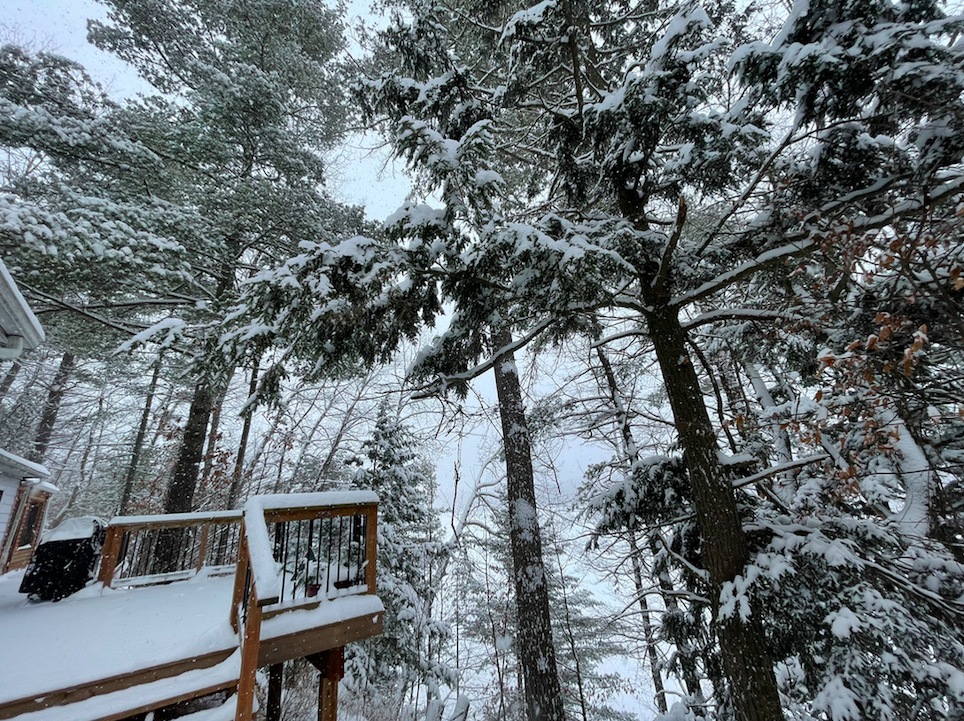
Bentley our weatherforecaster, me catching snowflakes and the view from our back deck. Winter is one of the most peaceful and beautiful times on our lake.
As I grow older, I am convinced more than ever that I am just an interloper on this earth. A transient squatter that one day will evaporate, ashes to ashes, dust to dust. The land, however, will live on.
I am reminded of this every day I watch the wildlife in the woods I live in and the lakes I paddle on. They belong to the blue jays, beavers, porcupines, deer, woodpeckers, dragonflies, butterflies and herons. And yet, humankind aspires to own property and claim it as our own, putting up fences and markers to demarcate what is rightfully ours, and keep people and animals out.
I love my property, but I have always believed it is ours to steward and share, not own. I know there are many of my neighbours who would disagree with me.
Since moving to the country, I’ve seen the widely opposing views on property. Some are generous, allowing people to hike, and even hunt on their land and use private water access points. Others are aggressive in their defence of “their land”, putting up gates and guarding their property with shotguns. You better know who you’re dealing with if you wander down a private laneway or path.
One of my favourite walks in Scotland this summer was on private property in the tiny seaside village of Plockton, just off the Isle of Skye. There is an isthmus that juts out to sea, owned by a local family who has granted permission to anyone to hike the trails around their modest farmhouse. It was one of the most beautiful hikes I’ve ever done, and reminded me of the seascape on Vancouver Island.
In 2003, Scotland adopted the Land Reform Act, commonly known as “right to roam” that gives the people of Scotland the right to access and roam the land and inland waterways, including public lands, farmers’ fields, and other private property. Basic principles include respecting people’s privacy, caring for the environment, leaving no trace, and ensuring no damage is caused to crops or livestock.
England has not been as progressive in adopting this principle and we had some interesting conversations with fellow hikers and locals about the right to roam and our relationship to land and property.
As a society, we have been poor stewards of the land. From polluting our oceans, to mismanagement of our forests and the ever-threatening impacts of climate change, we have failed in our attempts to be good stewards of this planet. One writer described it as “soiling our own nest”, an apt description.
We’ve also incurred irreparable harm to our planet and humankind by trying to define borders and territories. Wars have been fought and millions of lives lost from the desire to conquer land.
In this, as in so many things, we can learn from Indigenous peoples who have a deep connection to nature, viewing themselves as part of an interdependent ecosystem with a deep commitment to care for the land and its creatures for future generations.
This week’s #HappyAct is to do one small thing to care for the land and creatures in your backyard, all the while accepting it’s not really your backyard in the first place.
Photos: at top: the view from a trail owned by homeowner’s in Plockton, Scotland, looking out over the sea. Above: deer grazing in my garden.
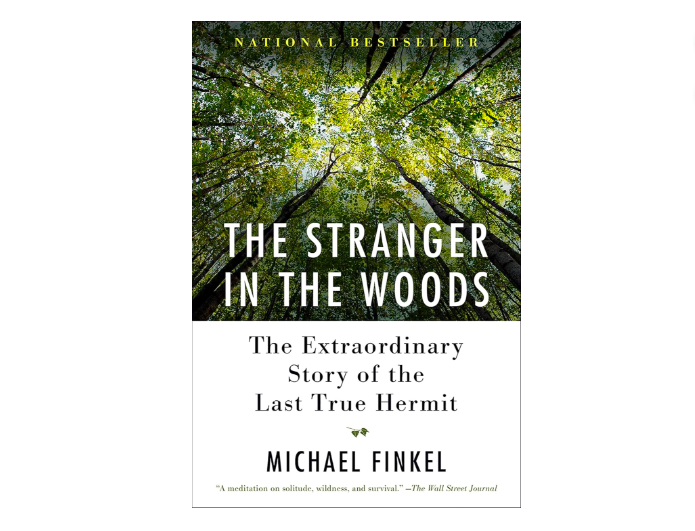
It’s the story of Christopher Knight, an average guy who at the age of 26, decided to live in the Maine woods on his own and didn’t talk or interact with another human being for the next 27 years.
He didn’t create art, he never kept a journal, he didn’t even talk to himself. He just spent his days in his clearing (the guy didn’t even have a cabin) surviving and existing.
Knight was never lonely during his time in the woods. He would sometimes read or listen to the radio, but spent the majority of his free time sitting in a lawn chair “in quiet contemplation” thinking about wherever his mind went. He claimed he was never bored and didn’t understand the concept of boredom. Boredom only applied to people “who felt they had to be doing something all the time.”
In considering Knight’s motives, Finkel explores various ancient beliefs and customs centred around living a life of solitude.
The first great literary work about solitude was written by a hermit protestor Lao-tzu in the sixth century. In Tao Te Ching, Lao-tzu wrote 81 verses about the pleasure of forsaking society and living in harmony with the seasons. Lao-tzu believed that only through retreat rather than pursuit, through inaction, rather than action, that we acquire wisdom and peace.
Finkel quotes the eighteenth-century philosopher Jean-Jacques Rousseau. “I have become solitary because to me the most desolate solitude seems preferable to the society of wicked men which is nourished only in betrayals and hatred.”
Carl Jung said that only an introvert could see the “unfathomable stupidity of man.” Sartre wrote “Hell is other people.”
Herman Melville who wrote Moby Dick withdrew from public life for 30 years. He wrote, “All profound things are preceded and attended by Silence.”
The greatest philosopher of all time, Dave says, “I prefer to spend my time with dogs than people.”
Knight related to the Greek philosophy of stoicism that held self-control and harmonious existence with nature constituted a virtuous life and you must endure hardship without complaint.
He also felt a kinship with Socrates who said, “Beware the barrenness of a busy life. You become free not when you fulfill your desires, but by eliminating desire. Those with less become content; those with more become confused.”
So what learnings can we take away from these philosophies and Knight’s experience? I’m not suggesting we turn our back on society, but perhaps we can experience a greater peace, stillness and happiness by seeking moments of solitude.
I asked at the start how many days can you go without speaking to another soul? I’ve learned for me the answer is three days. I can spend three days quietly at home, at peace in nature and be happy. After three days, I seek human interaction and connection and will reach out to friends or plan some social activity.
I have blogged before about the epidemic of loneliness. It’s important to delineate between being alone and being lonely.
Solitude when chosen, can be bliss, but when it is forced upon mankind, it can be torturous and is still to this day one of the great punishments inflicted on people.
Finkel makes this point in the book, quoting US Senator John McCain who spent more than five years as a prisoner of war in Vietnam, two of them alone. McCain described his experience as “awful. It crushes your spirit. The onset of despair is immediate.”
Solitude must be a choice.
It seems only fitting to bestow the final words to Knight: “If you like solitude, you are never alone. What I miss most in the woods is somewhere in between quiet and solitude. What I miss most is stillness.”
“Solitude bestows an increase in something valuable…Solitude increased my perception. But here’s the tricky thing: when I applied my increased perception to myself, I lost my identity. There was no audience, no one to perform for. There was no need to define myself. I became irrelevant.”
His isolation felt like a communion. “My desires dropped away. I didn’t long for anything. I didn’t even have a name. To put it romantically, I was completely free.”
This week’s #HappyAct is to experience solitude. Be happy and be free.
Leave a comment: how many minutes, hours or days could you go without talking to someone?