Find your anchors in life

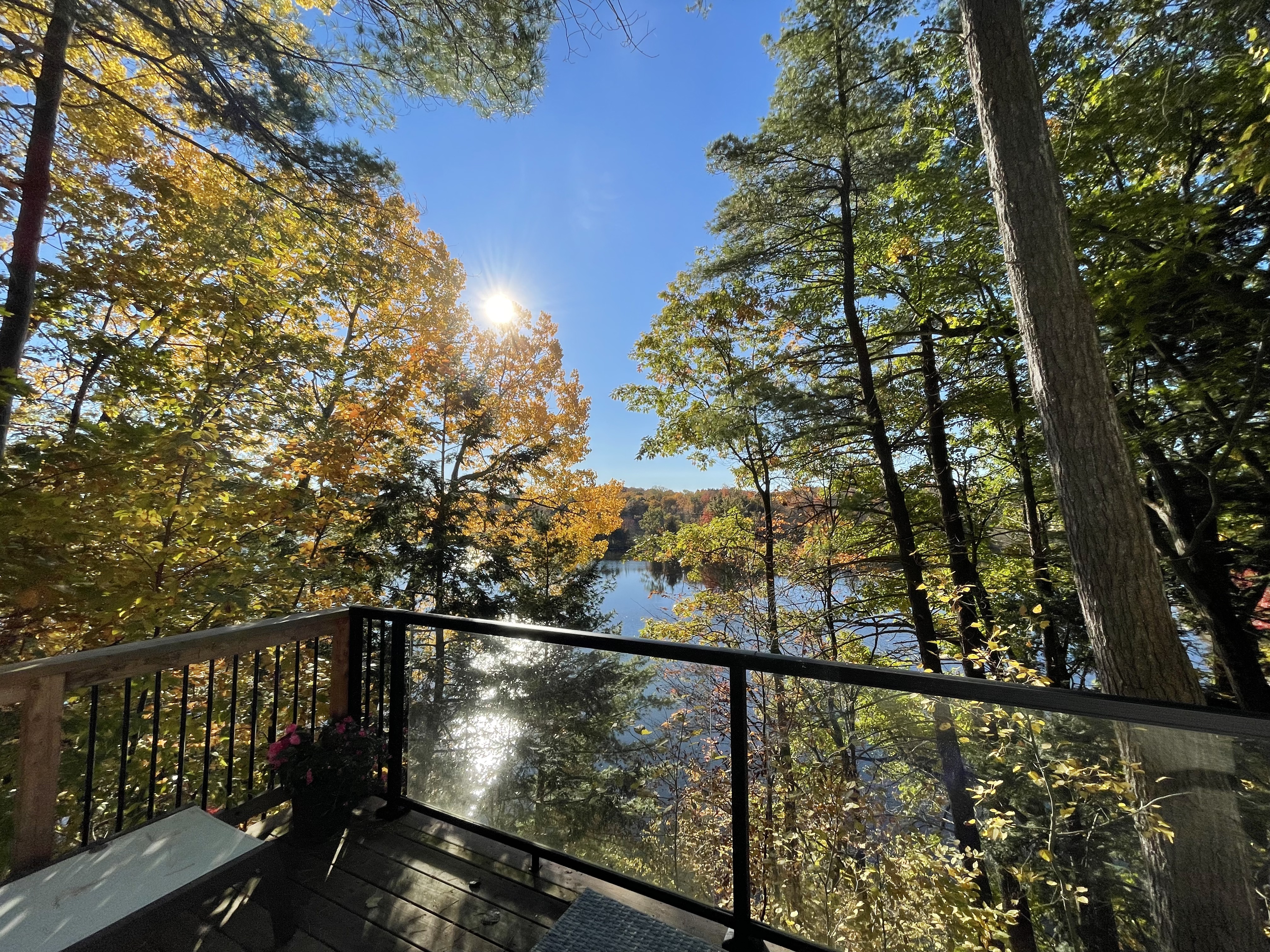
Sun shimmering on a lake as seen from a deck

As I’ve grown older, I’ve come to recognize the importance of anchors in life.
An anchor can be a person, a place, a thing, or something you love to do that lifts you up and feeds your soul. It is anything that grounds you or provides comfort or solace during times of trouble.

For a child, an anchor might be a teddy bear or favourite toy. For a widower, it may be a cherished photo of their spouse sitting on their nightstand.

My anchors are living and being in nature, swimming, music, writing, and Dave.

You really know when something is an anchor in your life when it isn’t there. This past week, Dave had his second knee replaced. Thankfully, the surgery went well and he’s now home resting nicely, but he was in far more pain the day of the operation compared to his first knee replacement and they kept him in the hospital overnight.

I returned home to an empty house that night feeling a bit lost and adrift. Dave has always been a big anchor in my life, and I found myself wandering around the house, restless and anxious. I was never so happy to find him doing much better the next day and ready to come home.

Living and spending time in nature is another key anchor for me. In the summer, I know I need to spend at least an hour or two at the lake every day. If I don’t, I get surly. The trees, the sun glimmering on the water, and spending time outdoors are an essential part of my happiness.

Swimming is an extension of this. I remember a particular Saturday two years ago when Dave’s sister was dying of cancer. Dave and I were helping my brother-inlaw at the house and taking turns driving him to the hospital to see MaryAnne. I spent the morning at the hospital, then we drove back to the house, where I did some chores and took their black flat-coated retriever for a walk. We were waiting for one of their kids who had travelled a long distance to arrive before going back to the hospital, and I slipped away for an hour to go for a long swim at Westport Beach. It was what I needed to face the rest of the day which turned out to be the day MaryAnne died.

Over the years, writing has become an anchor for me. I’ve enjoyed sharing my thoughts on happiness on this blog, and now in retirement, I’m excited to tackle many new writing projects.

This week’s #HappyAct is to reflect on and be grateful for the anchors in your life. What are yours? Leave a comment.

Pretend you didn’t hear anything

Garter snake in a kayak

The other day, I went for a late afternoon kayak. It was one of those glorious September days when the sun feels warm on your skin, the air is still and there is just a hint of colour in the leaves.

I watched the baby loons (our loons had two babies this year) being fed fish by their mother and mewing for more and the seagulls floating in the breeze, and kept paddling through the two channels into the back lake.

As I was sitting basking in the afternoon sun, I started to hear a rustling sound come from behind me. I’ve heard this sound before when a snake stowed away in my kayak.

I decided to adopt the strategy of pretending I didn’t hear anything even though I was pretty sure at this point it wasn’t a solo kayak trip.

The strategy was working just fine until my snake friend decided to make an appearance and slither past me under my life jacket towards the front of the boat.

I like snakes and I’ve been around them enough to know that they won’t hurt you if you just leave them alone. This guy was a harmless garter snake, but he clearly was a little put out that he was trapped in a moving hollow tube with no means of escape.

I didn’t see him for a few minutes, so went back to pretending he wasn’t there, until he started gliding towards me head first with his little red tongue wagging at me. His green and black silk body brushed the side of my leg and just as I started to stiffen, wondering what he was going to do next, something spooked him and he ducked under my life jacket again.

I paddled faster.

The next time he came out he slithered even farther up my leg, right to the top of my thighs, until he was almost resting on my lap, his beady little eyes looking up at me as if to say “You better get me out of this boat or else”. This was a little too close for comfort for my liking, and as I was planning my next move, he slid over my leg towards the back of the kayak.

I didn’t see him again for the rest of the trip.

Sometimes the best strategy is to just pretend you didn’t hear anything.

And if that fails and reality slithers up your leg, stay calm, breathe deeply, and paddle like hell.

Snake slithering out of a kayak

My snake friend finally escapes to land, and below, happy in his regular home amongst the weeds, looking for frogs.

Snake in weeds beside a lake

Of caves and caverns

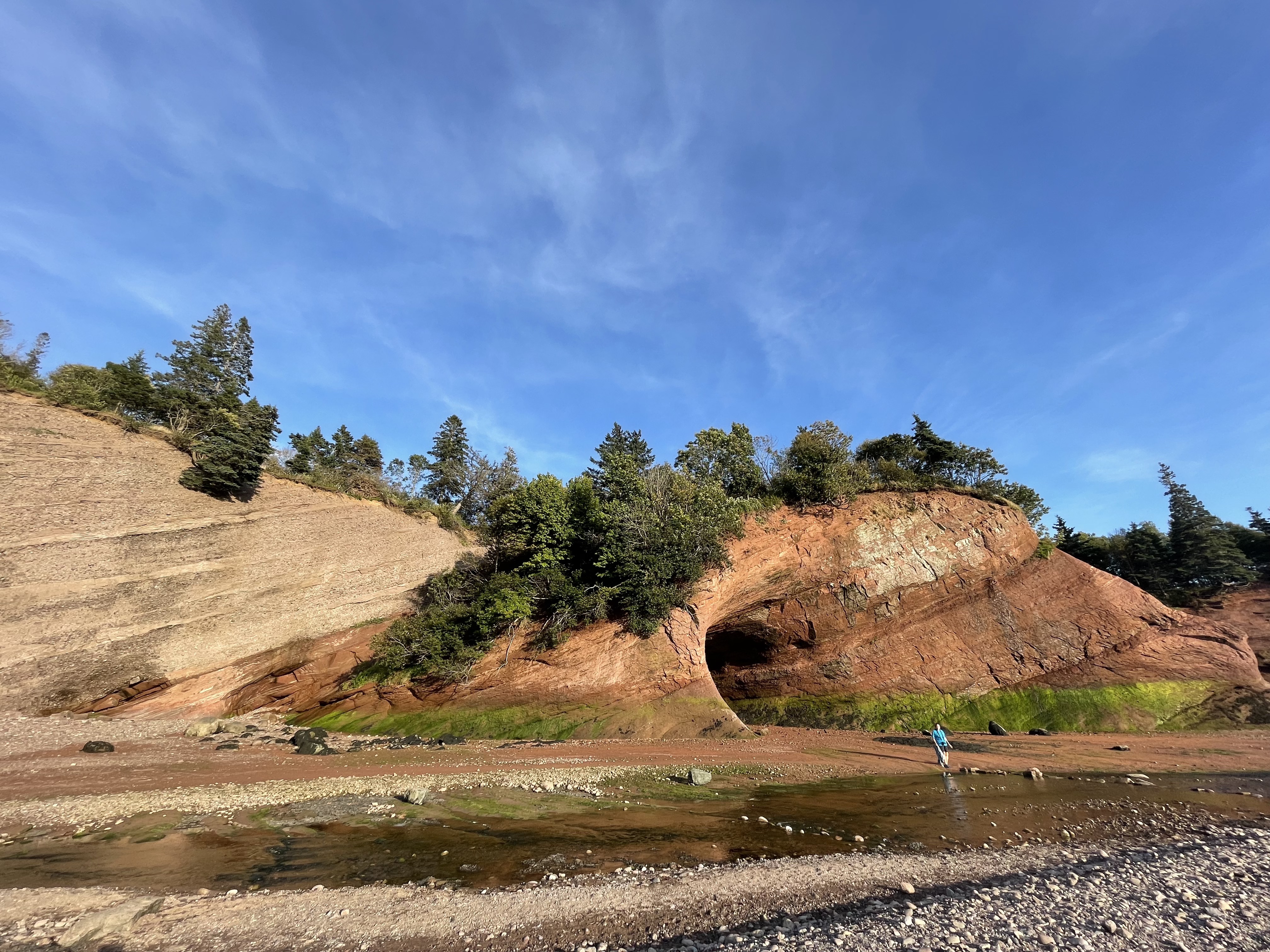
Sea caves in St. Martin's New Brunswick

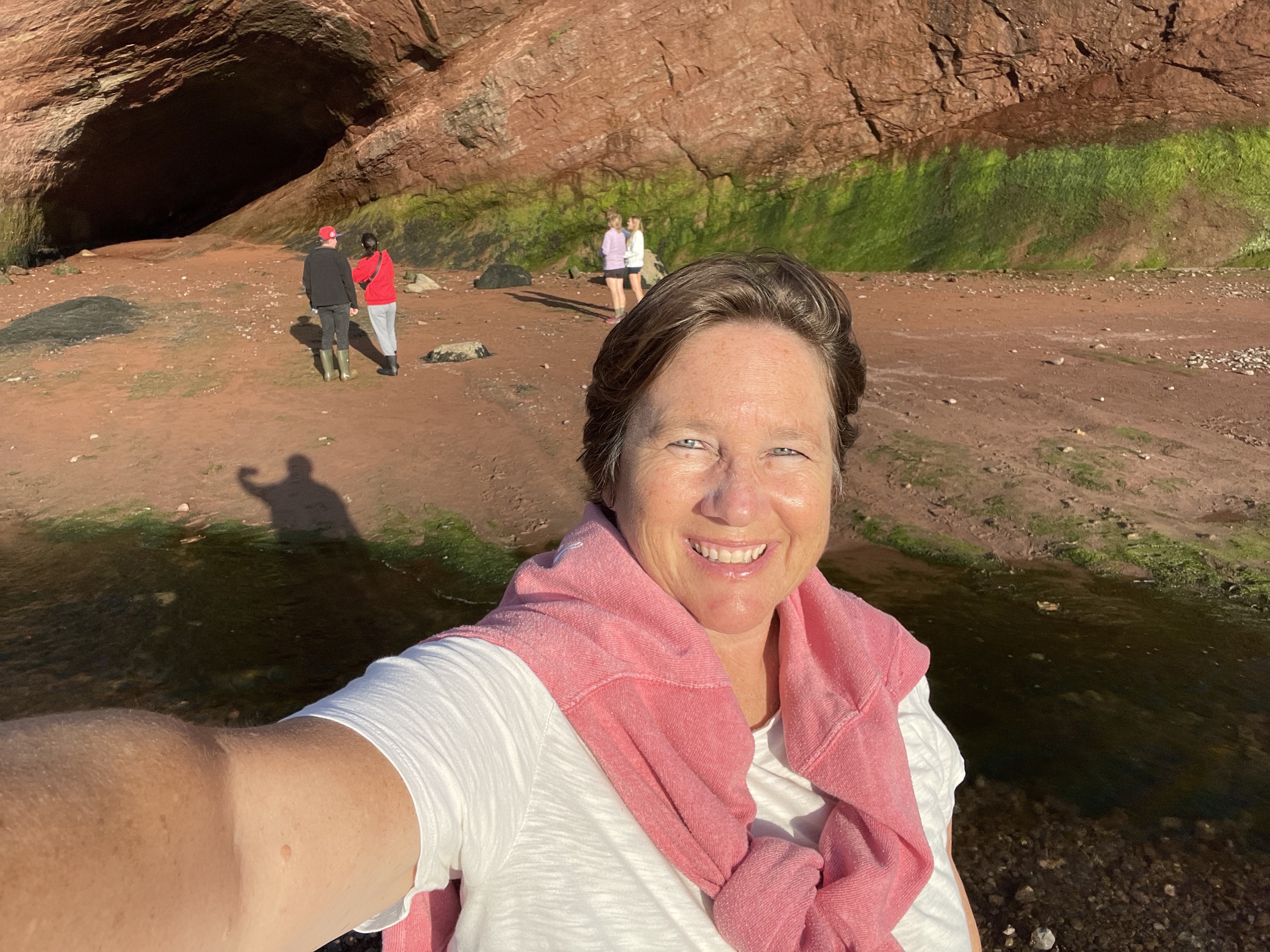
On our travels through New Brunswick at the end of August, we stumbled across some sea caves in the small oceanside town of St. Martin’s.

We explored them at dusk at low tide, when you could walk on the ocean floor. The light was perfect, and we marvelled at these strange and mystical caves carved into the striking Fundy-red coastline with bright green lines marking where land meets the sea and topped with rugged trees reaching out towards the ocean.

Humans have been fascinated by caves since the beginning of time. For some cultures, caves are where deities or mythical creatures were believed to inhabit. In other cultures, caves are often depicted as entrances to other realms and represent both the depths of the unconscious mind and the mysteries of the unknown.

I’ve always been fascinated by caves. One of the most beautiful caves we visited was Luray Caverns in Virginia, an astonishing underground world. As you descend into the caverns, you enter cathedral-sized rooms with ceilings ten stories high, filled with towering natural stone statues and strange and beautiful geological formations like stalacites and stalagmites*.

Everything is different underground. The light reflects and dances against the patterns in the rock. The air is filled with moisture, and the smell of sulphur and musty dew assail your nasal passages. Sounds resonate and echo eerily as you get lost in the mystical properties of the magical underground world being discovered.

You don’t have to venture as far as Virginia or New Brunswick to explore caves and caverns. Here are two great options in eastern Ontario—both are still open until Thanksgiving weekend:

  • Bonnechere Caves in Eganville, Ontario: Dave and I toured these caves several years ago carved into the Bonnechere River. Today, you must take a guided tour, but they are well worth it with waterfalls and a cool bat cave (with literally, hundreds of bats—optional for the faint of heart!)
  • Tyendinaga Cavens and Caves: These caves are located outside of Belleville and are the largest caves in Ontario. You must take a guided tour to learn about how the caves were formed 450 million years old. One of the most unique features is an underground wishing well.

This week’s #HappyAct is to explore a cave or cavern. Happy spelunking!

*Stalacites grow down from the ceiling of a cave; stalagmites grow from the ground up

Author in front of sea caves
Sea cave
Luray Caverns, Virginia

Some more pictures of the sea caves in St. Martin’s and above, stalacites in Luray Caverns in Virginia

Dock decisions

Woman standing on dock beside a lake

Read or snooze

Beer or cooler

One sip. Two sips

Backstroke. Sidestroke

Swim or snorkel

Canoe or kayak

Throw the ball or let the stupid dog nudge it in the water for the hundredth time

If only every decision in life was a dock decision.

My dog Bentley with his football on our dock

For the love of tourist traps

Maid of the mist at Niagara Falls

When I travel, I’m always of two minds. A part of me wants to wander off the beaten path, far flung from the sites and attractions where hordes of tourists flock and diminish the experience.

The other part of me thinks there is a reason why a place is a mecca for tourists and I desperately want to see it.

I’ve learned to blend these two desires on my trips, visiting the “must see” attractions in the guide books and making sure I spend a bit of time exploring backroads.

A couple of weeks ago, my girlfriends and I spent a weekend in Niagara-on-the-Lake and Niagara Falls. On the Saturday, we stopped at Pillitteri Estates Winery for lunch, strolled along the main streets and parks of Niagara-on-the-Lake, saw My Fair Lady at the Shaw Festival and stayed at a lovely bed and breakfast, The Bushey House.

We were debating what to do on the Sunday and I said I’d be up for doing the “Behind the Falls Experience” at Niagara Falls, which I’d never done before.

After a quick stop for a chocolate factory tour at the Chocolate Factory Experience (highly recommended by the way, make sure you pick up their addictive Red Chocolate Cherry Bites), we arrived in Niagara Falls.

It was crawling with tourists. At first we thought it was just the regular throngs that descend on the falls on a Sunday afternoon in June, but we realized after seeing clusters of cyclists that it was the Scotiabank Ride to Conquer Cancer, so it was busier than usual.

We paid our $36 for parking (OMG) and walked across the bridge to the Behind the Falls Experience. While it was cool to get so up close to the falls, I’m not sure I’d include it on the must-see attractions in Niagara Falls.

The “behind the falls” experience consisted of looking at a small opening from a tunnel and a wall of water pouring over it. The observation deck was the real draw, where you could hear the roar of the falls and experience the spray and mist wash over you.

When we emerged from the tunnels, we spent the rest of the afternoon walking along the promenade.

Even though there were thousands of tourists, Niagara Falls never fails to disappoint. There is a reason why some people call it the “eighth wonder of the world”.

The skies that day were an ominous dark steel grey, in stark contrast to the blue swirling waters and white foam of the falls and river. I stood mesmerized, snapping photo after photo, admiring their majestic beauty and watching the cormorants and gulls bouncing and diving in the whirlpools as the tour boats steamed towards the wall of water.

It was worth braving the crowds for.

This week’s #HappyAct is to visit a well-known tourist attraction. You won’t be disappointed.

People on the observation deck at Behind the Falls experience in Niagara Falls
Niagara Falls
Niagara Falls
Daisies along Niagara River

Beautiful daisies grace the gorge

I loved how the mist melded with the sky in this photo

Me and my girlfriends behind the falls

Gardening on a shoestring

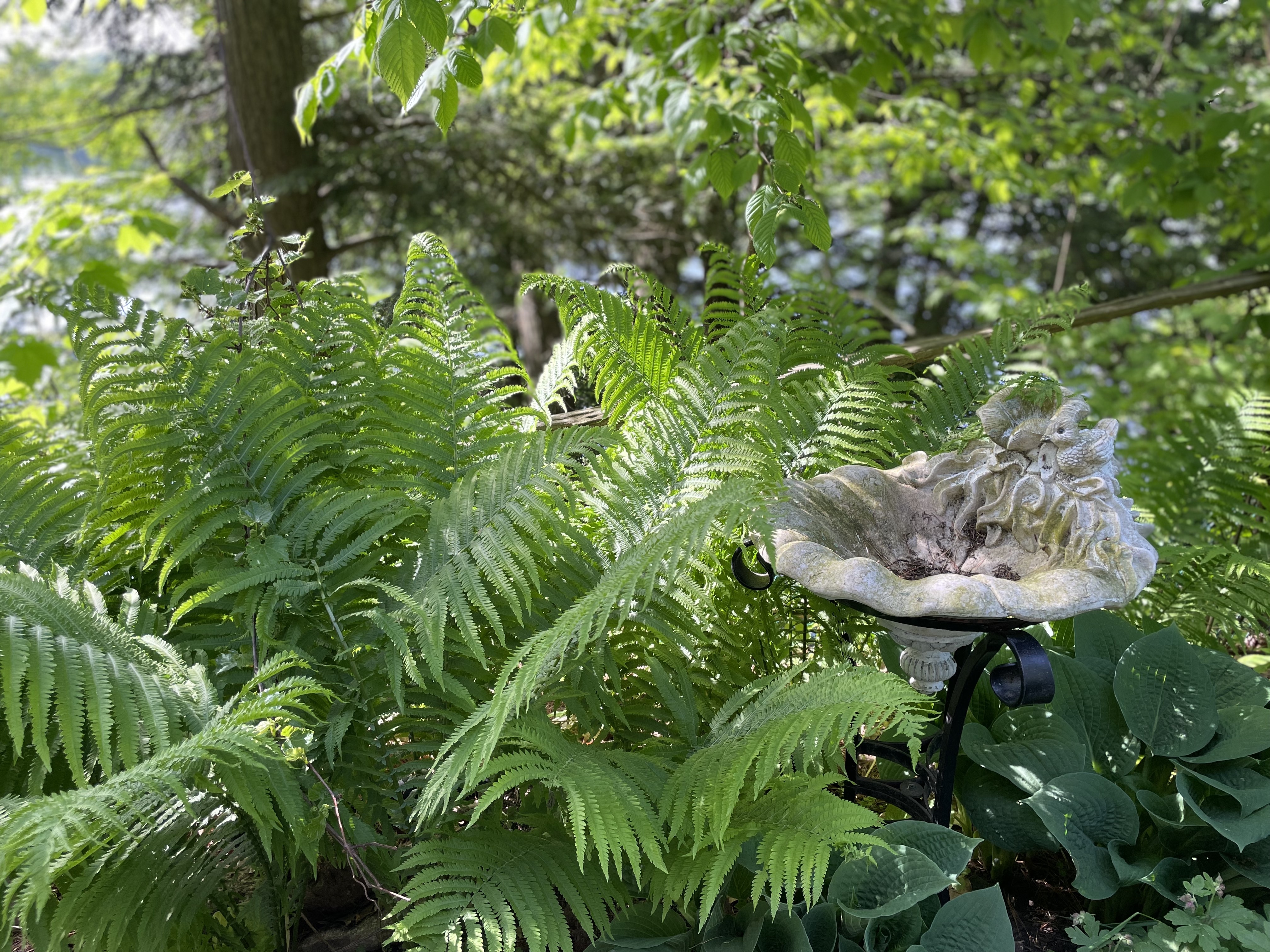
Ferns beside a bird bath

Gardening season is in full bloom, the time of year when seasoned gardeners and weekend warriors spend hours turning over soil, adding manure and mulch to patches of brown dirt, and combing local garden centres to find delicate flowers to create the perfect garden oasis.

Last week, we popped over to a friend’s house because they wanted some advice on how to spruce up the gardens at the front of the house to maximize their curb appeal before they put up their house for sale this summer. They didn’t want to spend a lot of money, which made me start thinking creatively about how you can create a beautiful, welcoming space without draining your pocketbook. Here are some tips for gardening on a shoestring.

  • Divide and conquer: if you have perennials, see what plants can be divided. Hostas, lilies, irises all thrive when split. If you don’t have perennials, see if any friends will give you some.
  • Go wild: look for ferns and wild phlox on the side of roadways or laneways. Just make sure you are not digging up plants on private property without permission (and watch for poison ivy!)
  • Use nature’s bounty: Go beachcombing and find a unique piece of driftwood to add interest to your garden.
  • Make it artful: Look for unique or interesting pieces that could be used for planters or to add a whimsical element to your garden, like old boots, bicycles, watering cans, etc.
  • Sow some seed: Scatter a pack of zinnia or wildflower seeds, an inexpensive way to create colour in a larger space.
  • Buy local—many fundraising groups hold plant sales this time of year to raise money—not only will you save money, you’ll be helping a good cause.
  • Come from good stock: If you are buying annuals from a gardening centre, make sure they are good stock and see if they can be split. The begonias I bought at my local gardening centre had two large blooms in a single pot, so I was able to split them, doubling my money.

I was always find this particular time of year a little sparse in my garden, after the spring bulbs have died off and before the roses, peonies, and irises bloom, but here are some pics from my garden this morning. Happy gardening!

watering can

Above: the ferns around this old birdbath we inherited were all dug up by the side of the road. In this photo, an old watering can adds colour to the pot by my front porch.

begonias lobelia and impatiens in a pot

The begonias I got from Sheila’s Greenhouses in Moscow were so big with two distinct plants in each pot, I was able to split them for my pots on the back deck.

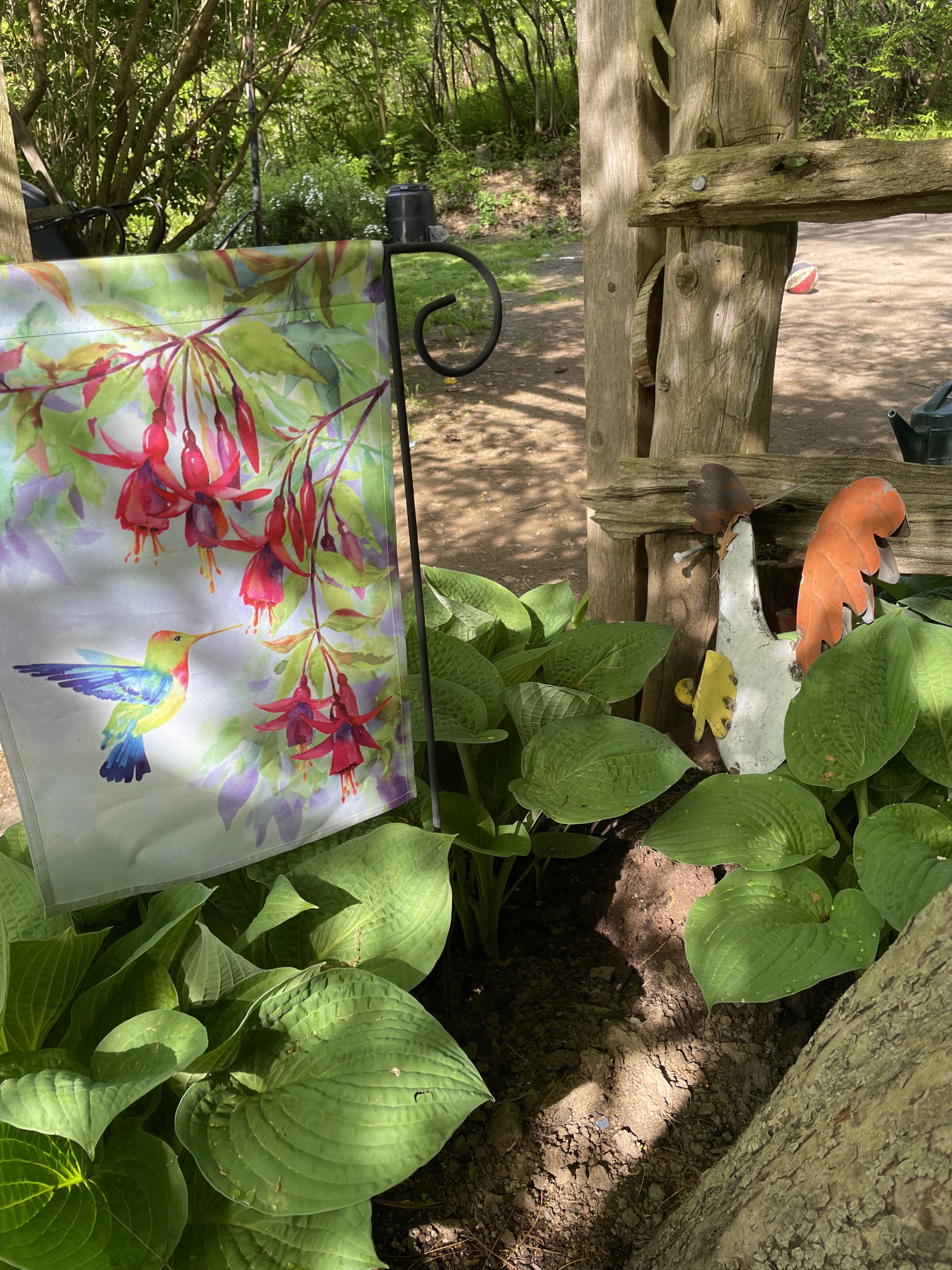
garden flag and chicken sculpture

Dave and the girls tease me all the time about my garden tchotchke. This hummingbird flag greets visitors and the chicken we bought at a cool art studio in Brewerton, New York years ago.

Ferns, hostas and geraniums

More ferns from the roadsides, hostas which we’ve split over the years and perennial geraniums in bloom. I can’t even remember where we got the white cross statue.

The soft shades of spring–a photo essay

new leafy growth on a birch tree stump

They say Ireland has 40 shades of green, but in spring, South Frontenac has 50 shades of green.

Even though spring isn’t my favourite season, I love the softness of this time of year. Tiny wispy yellow-green buds burst forth from the end of tree branches, delicate feathery ferns claw through the dull brown undergrowth, lush dark green grasses appear in clumps in the fields and meadows, and the forest canopy is a kaleidoscope of different shades of green.

When we drive down to the Carolinas each year in late March or April, one of the things I love most is watching the trees change as we go from our cold, grey bleak Canadian landscape to spring within a day’s drive. It’s as if the changing of the seasons is on steroids or fast forward.

In southern Pennsylvania, we get a peek at the first signs of spring, then if we’re lucky, in Maryland, we are treated to the sight of apple blossoms in full bloom with a hint of leaves emerging from their bursting branches. By the time we get to Virginia, we roll the windows down and let the warmth of the sun wash over us as we travel past trees in full foliage.

Here are some pictures I took on my property of the fifty shades of green. The lilacs in our area are just starting to bloom–a perfect day trip.  Happy spring!

treeline beside a field
tulip with green tips and leaves
Lily of the Valley
white birch bark against green grass
white and yellow flowers in the undergrowth
feathery ferns in the undergrowth
crab apple tree leaves and blooms
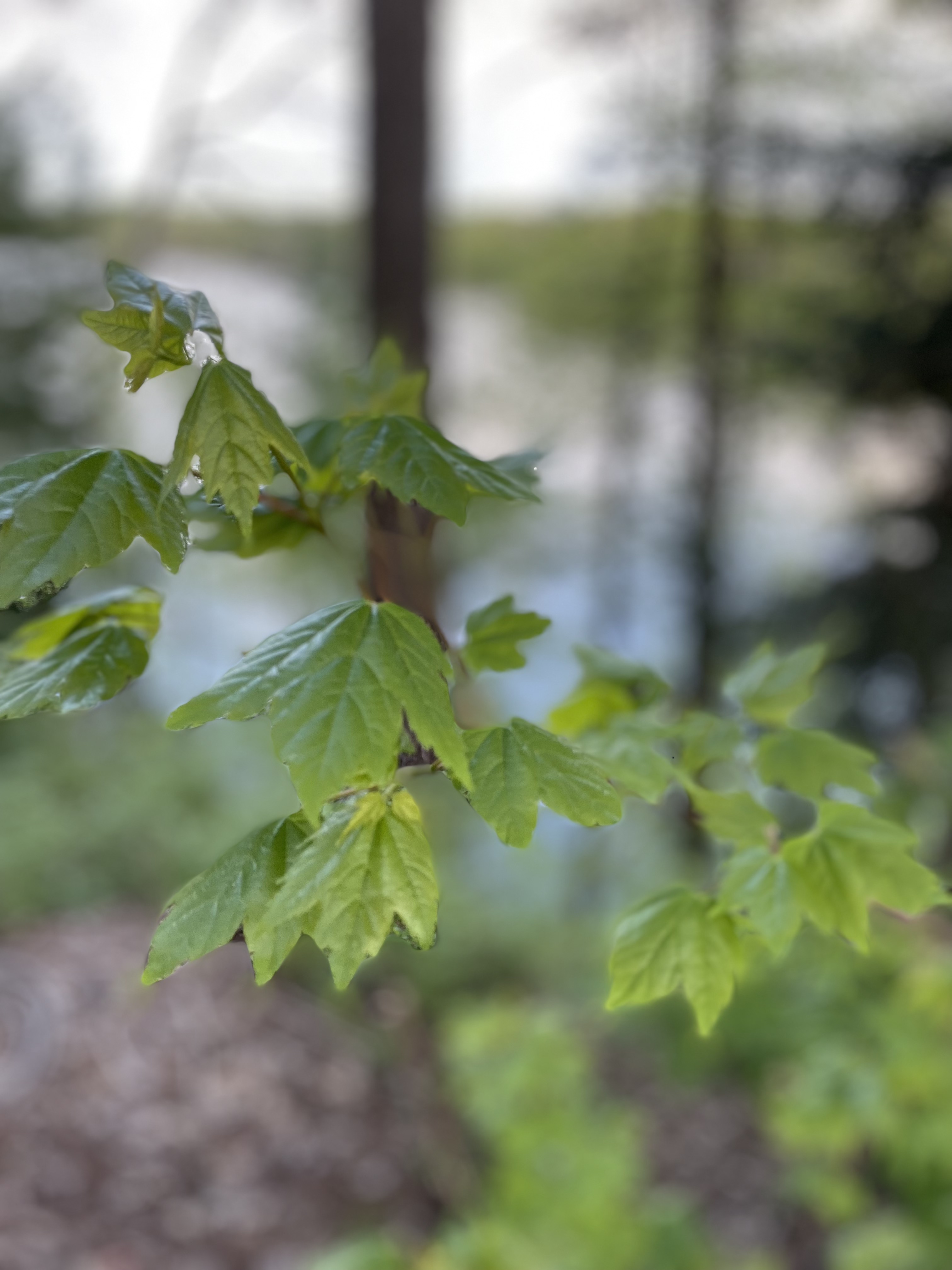
maple leaves on a tree overlooking a lake
apple blossoms in full bloom

This last photo was taken at a rest stop in Maryland on our last trip to South Carolina. The apple blossoms were in full bloom.

The Lost Sun: The solar eclipse on a backcountry spring canoe trip to Frontenac Park

I’m always shocked by how many people in the Kingston region have never been to Frontenac Provincial Park.

Located less than an hour north of Kingston, Frontenac is classified as a semi-wilderness park with more than 160 kms of trails and several canoe routes through the stunning rugged backdrop of the Frontenac Arch Biosphere.

Popular youtube vlogger Canoe the North recently chose Frontenac Provincial Park to explore for his first backcountry canoe trip of the season and to film the April 8th solar eclipse.

The first twenty minutes captures the essence of Frontenac Park: its breathtaking scenery even in early spring with amazing drone footage (one of my favourite shots is the stars twinkling in the night sky), the wildlife, stillness and calm of this special place. The last 10 minutes includes stunning footage of the total solar eclipse.

If it was cloudy in your area and you missed the eclipse, or you just want to see why I love this region so much, you have to watch this video. Enjoy!

Preparing for the apoco-eclipse

total eclipse graphic

Get ready, the apoco-eclipse is coming Monday, April 8. Here in southeastern Ontario, we are in the

….PAAAATH…..OOOFFF…..TOTALITY (said with a low booming echoing voice for maximum effect.)

For a whopping three minutes, the moon will pass in front of the sun and the earth will be in total darkness during the middle of the day, from 3:22 to 3:25 pm to be exact in South Frontenac.

From all the warnings and hype about massive traffic snarls and millions of visitors expected in the region, you’d think the world is coming to an end. My retinas are already burning from reading all the warnings about not looking at the sun directly and how to view the eclipse safely.

Granted this is a once-in-a-lifetime event. The last total eclipse in North America was in 2017 over the northwest US, but back then the eclipse’s path just 71 miles wide, compared to 122 miles AND the total time the moon completely covered the sun was just 2 minutes, 40 seconds compared to over 3 or four minutes this time depending on where you live.

I wasn’t sure just how big a deal this was, so I decided to ask an expert, my old high school buddy Brad Gibson, Professor and Director of the E.A. Milne Centre for Astrophysics at the University of Hull in England. Brad does presentations and TedTalks on subjects like will we ever live on Mars, the top 10 coolest things about outer space and are we alone in the universe?

Being the cool astrophysicist dude he is, Brad confirmed that “a total solar eclipse is always a blast”. He said they aren’t all that rare if you look at planet Earth as a whole since once every 18 months there is a total solar eclipse somewhere on the planet. In any given city, it’s more rare, like once every 300 years. I asked Brad what he’ll see in the UK and he said they’ll see a partial eclipse with about one-third of the sun blocked.

I also didn’t know that some weird and wonderful things can happen during an eclipse too. Animals can get confused thinking it’s nighttime, radio waves have been known to become scrambled, and seconds before totality, you may see shadow bands, or wavy strips of light and dark dancing on the ground like water at the bottom of a swimming pool. 

During the time of total darkness, you may also see the stars and planets, especially Venus and Mars. Now that’s cool.

Personally, I’m more of a northern lights, super moon, meteor shower kind of gal. The nighttime celestial shows outshine any daytime event, even the apoco-eclipse, throwing it into the shade.

This week’s #HappyAct is to get your ISO-certified eclipse glasses and get ready to enjoy the spectacle on April 8. And for those nighttime celestial lovers out there, they say tonight’s a good night to see the northern lights.

Overcoming the anxiety that comes with age

trees at night time

I’ve been a bit more nervous walking at night lately. It’s the strangest feeling and new to me since I’ve always been very comfortable walking at night.

I’m not sure why. Maybe it’s because the coyotes have been very active, with their eerie howls cutting through the stillness of winter nights from across the lake.

For whatever reason, for the first few minutes walking, I’ve felt anxious so I’ve started taking my phone with me. At least this way if I slip and fall and break my other ankle, or the coyotes attack me, they’ll be able to call Dave and let him know where to find my carcass.

As we age, it is only natural to become more tentative and anxious. A few years ago, I had lunch with an elderly friend, and they confessed that for the first time in their life, they were stricken with anxiety. They had confided to their minister, and found talking about it helped, but it was uncharted territory for them and you could tell it had thrown them for a loop.

I’ve never been a worrier—I’ve always considered it a blessing that if Dave was late when the weather was bad or my kids were out god knows where, I never worried about them. But as I age, anxiety is slowly creeping into my psyche bit by bit. I find I need to make a conscious effort to fight through it using deep breathing techniques, telling myself not to worry, and redirecting my thoughts. 

Back to my nightly walks…on the nights when I do feel a bit anxious, I power walk through it. With each step, the tiny morsels of fear in my brain recede, and I embrace and revel in the beauty of the night, the magnificent stars in the sky, and the black silhouettes of the pine trees illuminated by the soft glow of the moon.

I stop and listen for sounds of the woods. There is stillness all around me. I hear an owl swooping up into the trees. His mate hoots in the distance. I am calm and the feeling of anxiety has passed.

Now if the coyotes would just stop howling…