Secrets to happiness from around the globe

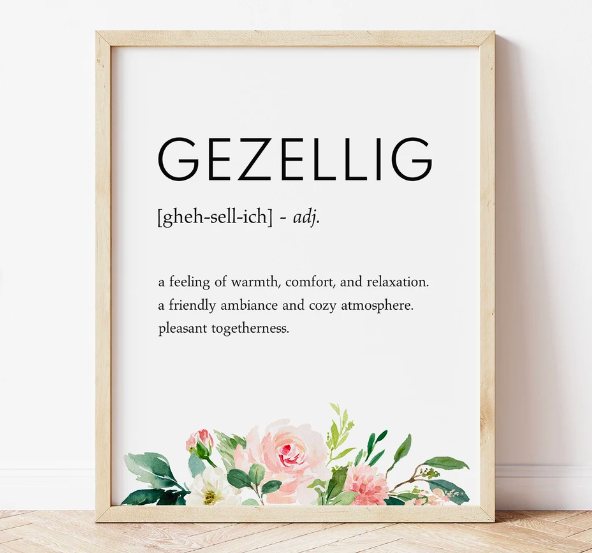
Sign with definition of Gezellig

Every country has its own unique belief system and language to describe happiness. Let’s take a quick trip around the world to see how other cultures seek and find happiness:

Joyous Icelanders embrace theta reddast, the belief that everything will work out in the end.

Italians believe dolce far niente, the sweetness of doing nothing.

In France, people exude joie de vivre, the joy of living.

Chinese xing fu is the art of finding your purpose.

The Dutch celebrate Gezellig, time spent with loved ones in a convivial and cozy atmosphere.

Germans believe in ruhe, finding peace and quiet.

And then there are the Scandinavians–the Danes known for hygge, the art of creating comfort and coziness and the Finns who value sisu, having the psychological strength to overcome extraordinary challenges.

Some countries have embedded happiness into their political and economic systems. Bhutan measures Gross National Happiness instead of GDP based on four pillars: ecological sustainability, preservation and promotion of a free and resilient culture, good governance and equality before the law, and sustainable and equitable socio-economic development.

I think North Americans could learn much about happiness from these other cultures. The ones that resonated most with me were the sweetness of doing nothing, finding peace and quiet, and believing everything will work out in the end. Which ones resonated most with you?

If you’d like to learn more about happiness around the globe, read The Atlas of Happiness: The Global Secrets of How to be Happy by Helen Russell. The common denominator in all these cultures? The power of positivity goes a long way. Have a happy week.

Measuring our Gross National Happiness

Bhutanese childrenWhat if, instead of measuring our Gross National Product, we measured our Gross National Happiness?

It’s not as crazy a concept as you think. In fact, there is one country that has made their Gross National Happiness a priority. Bhutan has been measuring its Gross National Happiness since 1972. The GNH is based on the philosophy that if the government cannot create happiness for its people, then there is no purpose for government to exist.

The GNH of Bhutan is based on four pillars: good governance, sustainable socio-economic development, cultural preservation, and environmental conservation and nine domains to ensure the happiness of its citizens: psychological wellbeing, health, education, time use, cultural diversity and resilience, good governance, community vitality, ecological diversity and resilience, and living standards.

A person is considered happy if they have sufficiency in six of the nine domains.

Here are a few interesting facts from the Bhutan GNH:

  • The happiest people by occupation in Bhutan include civil servants and monks.
  • Interestingly, the unemployed are happier than corporate employees, housewives, farmers or the national work force.
  • Unmarried people and young people are among the happiest.
  • Men tend to be happier than women

The 2015 GNH survey showed an increase from the 2015 in their overall GNH from 0.743 to 0.756 with 43.4 of the Bhutanese people being deeply or extensively happy, and 91.2% showing sufficiency in at least half of the domains.

I’m not sure I’m willing to leave my corporate job to become a monk, but there are many things we can learn from Bhutan’s GNH.

First, we need to put a priority on the happiness of people. As a nation, we need to measure how well we are doing at creating the right conditions for our citizens to be happy. And finally, North Americans need to relinquish our obsession with work and material things and go back to the basics. Things like spiritual wellbeing, being physically active and healthy, and developing strong communities.

Tomorrow, March 20th is the International Day of Happiness. This week’s #HappyAct is to measure your own GNH. Of the nine domains Bhutan measures, how do you score? Leave a comment.