A couple of years ago, I wrote a blog post called The key to job satisfaction in a post-pandemic world. My theory was it wouldn’t be hybrid work, a pay cheque, benefits or perks that would make people satisfied at work, it would be the work itself.
I now believe I had it half right. The other half of the equation is autonomy.
Autonomy at work can mean many things. It can mean the ability to direct your own work, manage your own schedule, and decide when and where you work.
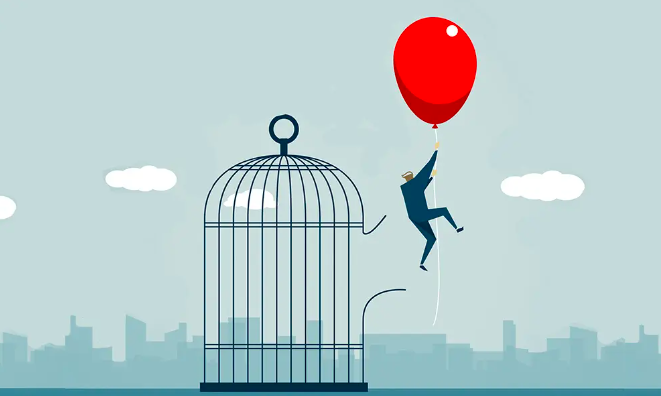
Workers today are demanding more autonomy over their work. And if a company isn’t willing to meet them halfway, they’re leaving in droves.
It’s no surprise many companies return to work programs and mandates have been utter failures. In “Forget Flexibility, Your Employees Want Autonomy”, a Harvard Business Review study found that 59% of workers said they would not work for a company that required them to come into a physical office five days per week. The study researchers concluded, “Mandates feel like a violation of autonomy, which is one of the most important intrinsic drivers of threat and reward in the brain.”
Sadly, some companies have resorted to monitoring employees in an attempt to maintain control in remote working environments. But another study has shown that this can backfire, because employees resent the lack of trust and autonomy.
The article cited another Harvard Business Review study that found employees who otherwise would have been model employees were more likely to engage in various “rule-breaking behaviours” when monitored.
The message to employers is clear. Workers today want a say in the work we do and how we work in a work environment that values autonomy and trust over surveillance.
Beware the company that ignores the will of the masses.
You can’t read a business article these days without some reference to The Big Quit or The Great Resignation. According to a report by Morneau Shepell, one of the country’s biggest HR consulting firms, 25% of Canadians are considering leaving their jobs. Companies are scrambling to try to figure out how to hold on to their top performers and lure the brightest minds to their organization. We’ve entered a new war for talent.
Flexible and hybrid work and employee wellbeing seem to be the two top themes, with competitive compensation and benefits programs now being table stakes.
I believe while providing flexible work and focusing on employee wellbeing will be important, they will not be enough to create true job satisfaction in a post-pandemic world.
There’s an obvious answer to this pressing problem that everyone seems to be missing: the key to job satisfaction in a post-pandemic world will be in the work itself.
Let me explain.
The Friday before my birthday, I started working on a project around 3:30 in the afternoon. Fridays tend to be quieter days for me at work: there are less meetings and interruptions. It was a project where I needed concentrated time to think and focus. I worked away at it, and when I looked up at the time, it was after 5 p.m. So much for knocking off a few minutes early on my birthday weekend. But for the first time in a long time, I felt good about work. I was able to think creatively, immerse myself in a problem and logged off feeling an immense spurt of satisfaction.
I had achieved what the work experts call “flow”. Flow is a state of focused attention so intense it doesn’t allow you to have cognitive bandwidth to do or think of anything else. It is an intersection of optimal being and optimal doing and when we achieve it, it creates inner harmony and happiness since we feel engaged, productive and in control.
Flow is like REM sleep, but for work. To be healthy and productive, our body needs to experience deep REM sleep every night. If you don’t, you feel tired, irritable, and you can’t concentrate or focus.
For many knowledge workers, work has become a constant barrage of emails, zoom calls and interruptions which is affecting our wellbeing and happiness at work. We are not achieving REM at work.
In this article in positivepsychology.com, researcher Mihály Csíkszentmihályi summarized it this way:“The happiest people spend much time in a state of flow – the state in which people are so involved in an activity that nothing else seems to matter; the experience itself is so enjoyable that people will do it even at great cost, for the sheer sake of doing it.”
One of the biggest benefits of flow is that it amplifies performance. Author Malcolm Gladwell claimed in his book Outliers that a person needs to do something for 10,000 hours to master a skill. In a 2014 study called the Flow Genome Project, author Steven Kotler estimated this time can be cut in half by achieving flow.
The interesting thing about flow is knowledge workers to some degree have control over flow. We can intentionally structure our workday to build in concentrated 60-90 minute sessions of work, we can turn off notifications, establish no meeting windows, and purposefully not check email. But I firmly believe companies need to wake up and create a more conducive environment to create flow in work and greater job satisfaction for their employees.
Some companies are already doing this. In my blog post The Future of Work, I talked about a Fortune 500 software company in India which tested a simple policy: no interruptions Tuesday, Thursday and Friday before noon. The company experienced a 65 percent increase in productivity but also reported employees experienced an increase in work satisfaction. They discovered the most important factor in daily joy and motivation was a sense of progress.
Hiring more employees, and cultivating a culture that encourages time spent on creative and strategic thinking and innovation are two more things companies should be doing to help employees do their best work and achieve job satisfaction.
This week’s #HappyAct is to achieve flow in your work this week. Leave a comment. How did it make you feel and did it increase your job satisfaction?


 Happy Act