Stewards of the land

view of sea and mountains at sunset in Plockton

As I grow older, I am convinced more than ever that I am just an interloper on this earth. A transient squatter that one day will evaporate, ashes to ashes, dust to dust. The land, however, will live on.

I am reminded of this every day I watch the wildlife in the woods I live in and the lakes I paddle on. They belong to the blue jays, beavers, porcupines, deer, woodpeckers, dragonflies, butterflies and herons. And yet, humankind aspires to own property and claim it as our own, putting up fences and markers to demarcate what is rightfully ours, and keep people and animals out.

I love my property, but I have always believed it is ours to steward and share, not own. I know there are many of my neighbours who would disagree with me.

Since moving to the country, I’ve seen the widely opposing views on property. Some are generous, allowing people to hike, and even hunt on their land and use private water access points. Others are aggressive in their defence of “their land”, putting up gates and guarding their property with shotguns. You better know who you’re dealing with if you wander down a private laneway or path.

One of my favourite walks in Scotland this summer was on private property in the tiny seaside village of Plockton, just off the Isle of Skye. There is an isthmus that juts out to sea, owned by a local family who has granted permission to anyone to hike the trails around their modest farmhouse. It was one of the most beautiful hikes I’ve ever done, and reminded me of the seascape on Vancouver Island.

In 2003, Scotland adopted the Land Reform Act, commonly known as “right to roam” that gives the people of Scotland the right to access and roam the land and inland waterways, including public lands, farmers’ fields, and other private property. Basic principles include respecting people’s privacy, caring for the environment, leaving no trace, and ensuring no damage is caused to crops or livestock.

England has not been as progressive in adopting this principle and we had some interesting conversations with fellow hikers and locals about the right to roam and our relationship to land and property.

As a society, we have been poor stewards of the land. From polluting our oceans, to mismanagement of our forests and the ever-threatening impacts of climate change, we have failed in our attempts to be good stewards of this planet. One writer described it as “soiling our own nest”, an apt description.

We’ve also incurred irreparable harm to our planet and humankind by trying to define borders and territories. Wars have been fought and millions of lives lost from the desire to conquer land.

In this, as in so many things, we can learn from Indigenous peoples who have a deep connection to nature, viewing themselves as part of an interdependent ecosystem with a deep commitment to care for the land and its creatures for future generations. 

This week’s #HappyAct is to do one small thing to care for the land and creatures in your backyard, all the while accepting it’s not really your backyard in the first place.

Deer in garden

Photos: at top: the view from a trail owned by homeowner’s in Plockton, Scotland, looking out over the sea. Above: deer grazing in my garden.

The lakes of my life

Sydenham Lake at dusk

Are you a mountain, beach or desert person?

My brother is a desert person. There’s something about the light and landscapes of places like New Mexico, Utah and Nevada that speaks to him. Since I live on a lake, and am a water baby, it will come as no surprise to you that I’m a beach person.

And while Canada is blessed to boast three coastlines, all with stunning scenery, I have long since realized that I will always need to be or live on interior lakes where I can swim.

Here are ten interior lakes in Canada that hold a special place in my heart:

  • Big Hawk Lake: I’ve been visiting this beautiful lake north of Minden, Ontario since I was a teenager. The lake is on a popular canoe route and is dotted with pretty islands and bays and has several interesting features including rapids, a historic log chute, a rockface known as the three chiefs, rocks for cliff jumping and even a totem pole.
  • Lake Moraine: There is a reason why this picturesque lake in Banff National Park in Alberta was featured on our $20 bill. When you round the corner from the short hiking trail, your breath is literally taken away by its stunning turquoise blue colour and mountainous backdrop. (The colour is unique to glacial lakes and is caused by rock flour that is produced as glaciers grind against bedrock and is carried by glacial meltwater into the lake). Substitute any mountain lake in the Rockies or BC.
  • Red Lake: Anyone who has spent time in northern Ontario will understand why Dave’s father calls this region God’s country. Located where the road ends off the TransCanada highway near the Manitoba border, Red Lake is a fisherman’s dream, spanning 165 kms of islands, bays teeming with walleye, northern pike and muskie. The constant drone of float planes taking off from Howie Bay serenade you while on the water, but can make swimming in Red Lake hazardous!
  • Mazinaw Lake: Bon Echo Provincial Park houses this second deepest lake in Ontario, famous for its impressive 100 metre high Mazinaw Rock. While the rockface itself is magnificent, it’s the ancient pictographs painted centuries ago by the Algonquin and Anishinaabe peoples that are said to have spiritual meanings and qualities that attract people to the cliffs.
  • Georgian Bay: With more than 30,000 islands and grey granite sculpted shorelines, Georgian Bay is a boaters dream. Every time I’ve spent time in this beautiful region of Ontario, I fall in love all over again with its greenish blue waters, unique shorelines and undulating waves that stretch for miles and miles.
  • Lake Superior: The granddaddy of the Great Lakes, Lake Gitche Gumee is massive, majestic, and magical. It can be peaceful, calm, and breathtaking on a nice day, and dark, menacing and deadly on a stormy day. Take the Lake Superior Circle Tour, a 2,000 km route and enjoy the magnificent views and natural wonders. Be sure to take a slight detour to Mackinac Island just south of Sault Ste Marie.  
  • Lake Memphramagog: This stunning lake in the Eastern Townships straddles the Quebec/Vermont border and offers picturesque mountain views. Legend has it that a sea monster inhabits the lake! Spend an afternoon strolling along the boardwalk in Magog or in the pretty town of Newport, Vermont which Dave and I explored last fall on our way back from the Maritimes.
  • Opeongo Lake or any lake in Algonquin Park: There’s something about Algonquin Park that is special. When people think of a wild space, they think of Algonquin. Picture early morning mist gently rising off the water, revealing stately pines lining the shoreline and pure silence. It’s pure heaven.
  • Mackenzie Lake: Located near Lake St. Peter Provincial Park in Ontario, this lake and region is a snowmobiler’s dream in the winter with trails galore. Surrounded by cliffs, there is one concave rockface on the southern end of the lake that becomes almost mystical towards the end of the day when the light hits it. Patterns of light dance across the rockface and the water. Alone in a canoe or kayak, it’s one of the most spiritual places I’ve ever been. 
  • Lake of the Woods OR Lake Muskoka/Lake Joseph: Okay, since this is supposed to be a top ten list, I’m cheating and combining the lakes that make up the “Muskoka of the South” and the “Muskoka of the North”, even though they are 1,600 kms apart. Beautiful, stunning and expansive, these lakes have become prime real estate. Take a boat cruise and spend time gawking at the million dollar cottages. Hey, you can always dream!
  • Bonus pic: Desert Lake or any lake in South Frontenac. Dave and I moved to this area thirty years ago because of all the beautiful shield lakes and its proximity to Kingston. When you’re paddling on the north end of Desert Lake on a bright sunny day, watching eagles perching on the tips of pine trees swaying in the breeze and loons feeding their babies beside your canoe, you feel like you’re in paradise.

Of course, every lake is special. I’m reminded of this every time I’m out exploring our pretty little lake in my kayak. This week’s #HappyAct is to spend some time on the water.

Related reading: The trees of my life

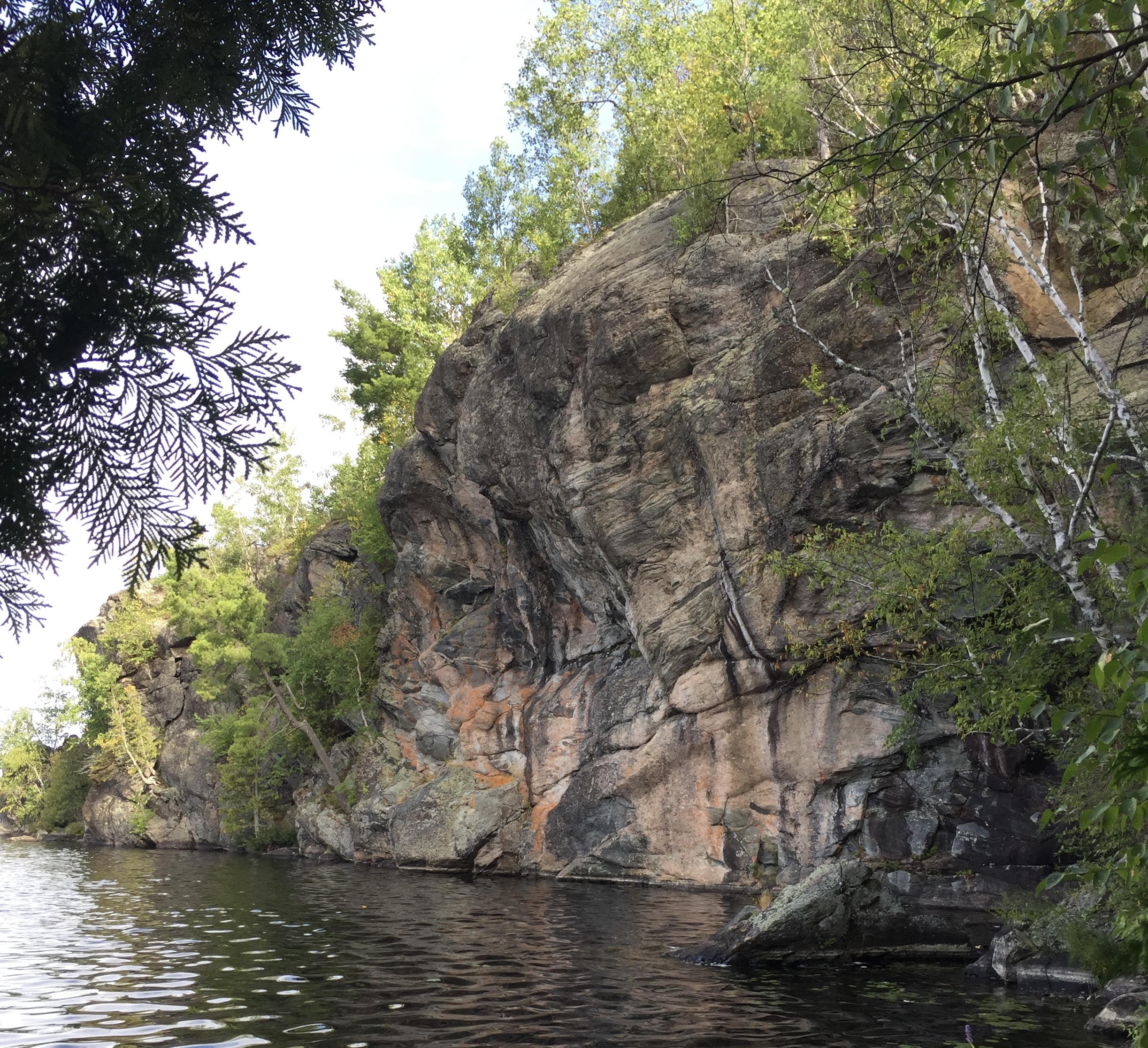
Rockface at Mackenzie Lake

The sunlight reflecting off this conclave rock face on Mackenzie Lake at the end of the day is very spiritual. I’ve yet to photograph it in the perfect light.

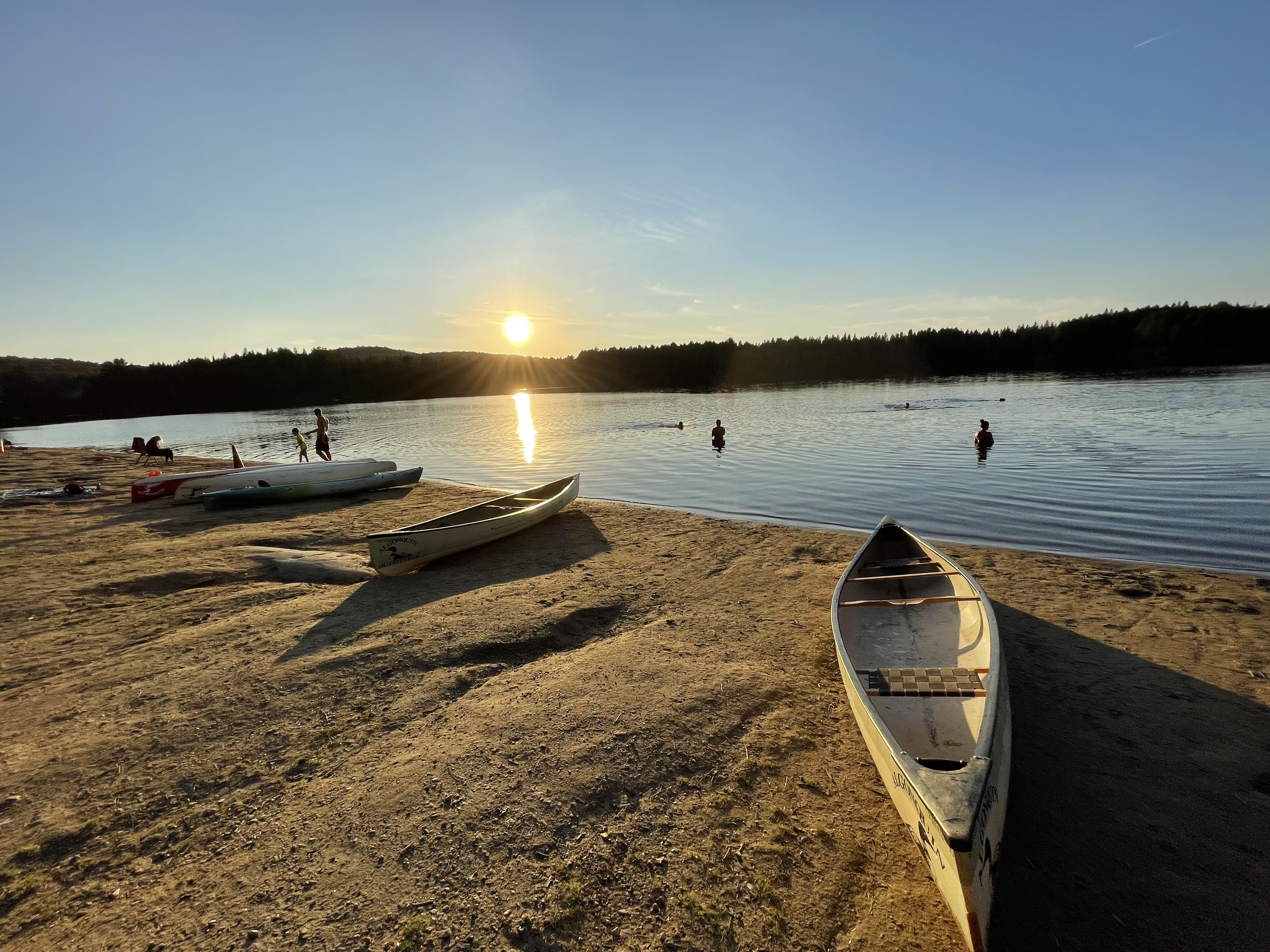
Beach with canoes

Pog light campground in Algonquin Park

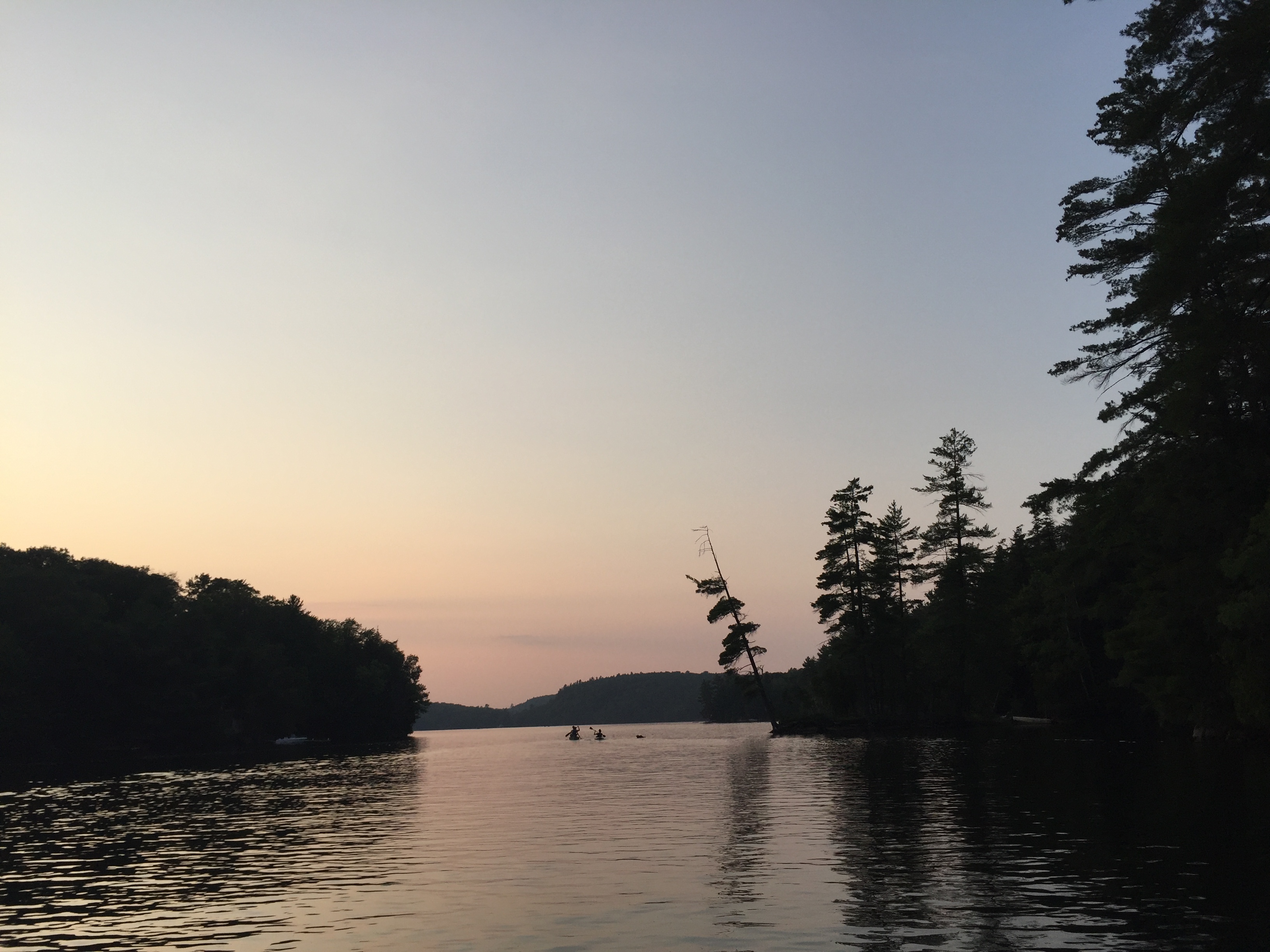
Girls paddling kayaks at dusk

My girls paddling at dusk on Big Hawk Lake.

Featured photo above: Sydenham Lake at dusk in South Frontenac.

Walking in a winter wonderland

Pine trees in snow

I’m dreaming of a white Christmas
Just like the ones I used to know
Where treetops glisten
And children listen
To hear sleigh bells in the snow

Outside snowflakes are falling
Our sleds and skis in tow
A sense of joy fills the air
We haven’t a care
Playing in a wonderland of snow

The lake is frozen over
The world is frosty and grand
Birds share their singsong
As we sing along
In a wintery fairy land

Love and happiness surround us
As we stroll hand in hand
It’s a beautiful sight
All is merry and bright
Walking in a winter wonderland

The world is peaceful and quiet
A bed of fresh fallen snow
The sky sparkles with light
Before the still, silent night
With lights all warm and aglow

So throw your arms up to the sky
In the snow on Christmas day
May it be merry and bright
Every Christmas be white
And all your troubles be far away

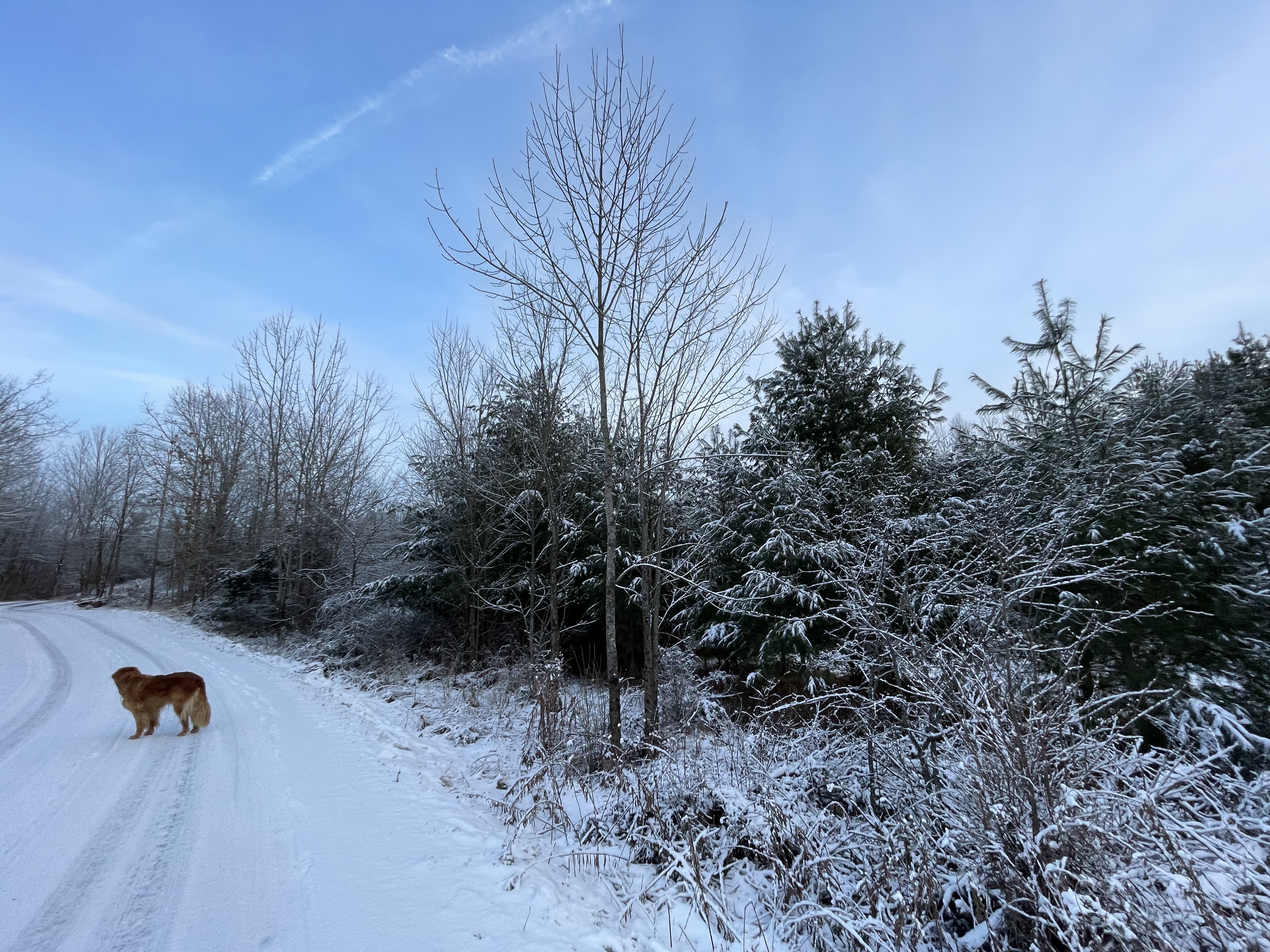
Ed note: Living in Eastern Ontario, it’s not Christmas without snow. It will be a white Christmas this year and that makes me happy. I took these photos on one of my walks this week after a fresh snowfall and wrote this mash-up of several favourite Christmas songs that includes lyrics from Irving Berlin’s White Christmas, Sarah McLachlan’s Wintersong, It’s Beginning to Look a Lot Like Christmas by Meredith Willson and Sleigh Ride by Leroy Anderson, plus a few verses of my own. If you’re a musician, feel free to put them to music!

I hope everyone has a very peaceful and joyous Christmas. Be sure to check back for next week’s #HappyAct, my annual round-up of top happy acts of 2024.

tree with snow and blue sky
snow covered trees
Swamp covered in snow
Dog on a snowy lane

Listen to the birds

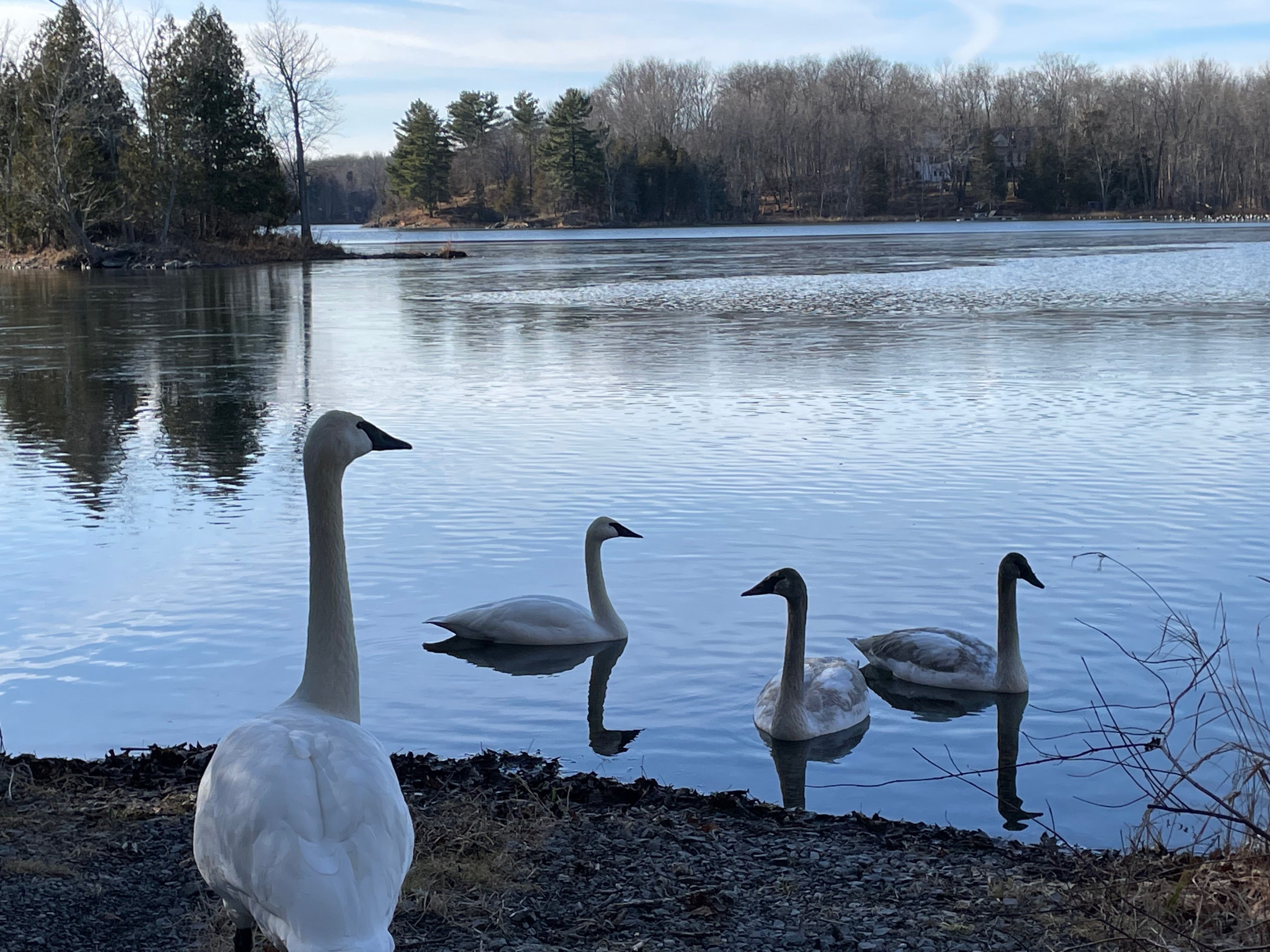
Trumpeter swans in water

Each year, between December 14 and January 5, people from across North America participate in one of the largest citizen science projects in the world, the Christmas Bird Count.

Survey teams and individuals count birds in the field or at feeders on their property and record the birds they see. The data is submitted to the National Audubon Society and analyzed by Birds Canada to provide insight on the number, movements, and distribution of winter bird populations.

Studies show that seeing or hearing birds can have a positive impact on your mental wellbeing and happiness. One King’s College London study provided 1,200 people from around the world with an app. They were asked at random intervals to record how they were feeling such as happy or stressed and what they heard or saw, like trees and birds.

The study concluded everyday encounters with birds can be linked to “time-lasting improvements in mental wellbeing” and “these improvements were evident not only in healthy people but also in those with a diagnosis of depression”.

This year, the Frontenac Christmas Bird is on Saturday, December 14 and is celebrating its tenth anniversary. There are lots of special events planned, including a Winter Birds 101 crash course from 9-9:30 am, a Kids Bird Count from 1-3 pm with bird specimens, interactive activities, and a short walk to count birds, and a special dinner starting at 4 pm, all happening at the Sydenham Legion Hall. Wintergreen Studios is also hosting a winter bird workshop and guided count from 10 am to 3 pm on their property (register on their website here).

If you live north of Kingston and are looking for a fun day out in nature to lift your spirits, sign up to participate by emailing bonta.johnson@sympatico.ca or on Wintergreen’s website for their event. You can register or find out when the Christmas Bird Count is happening in your region on the Birds Canada website.

Need a smile? Watch one of these Best of the Nest Videos from All About Birds.

Ed. note: I took the above photo of trumpeter swans on a lake near my house during the 2023 Christmas Bird Count.

Learn to accept when nature takes its course

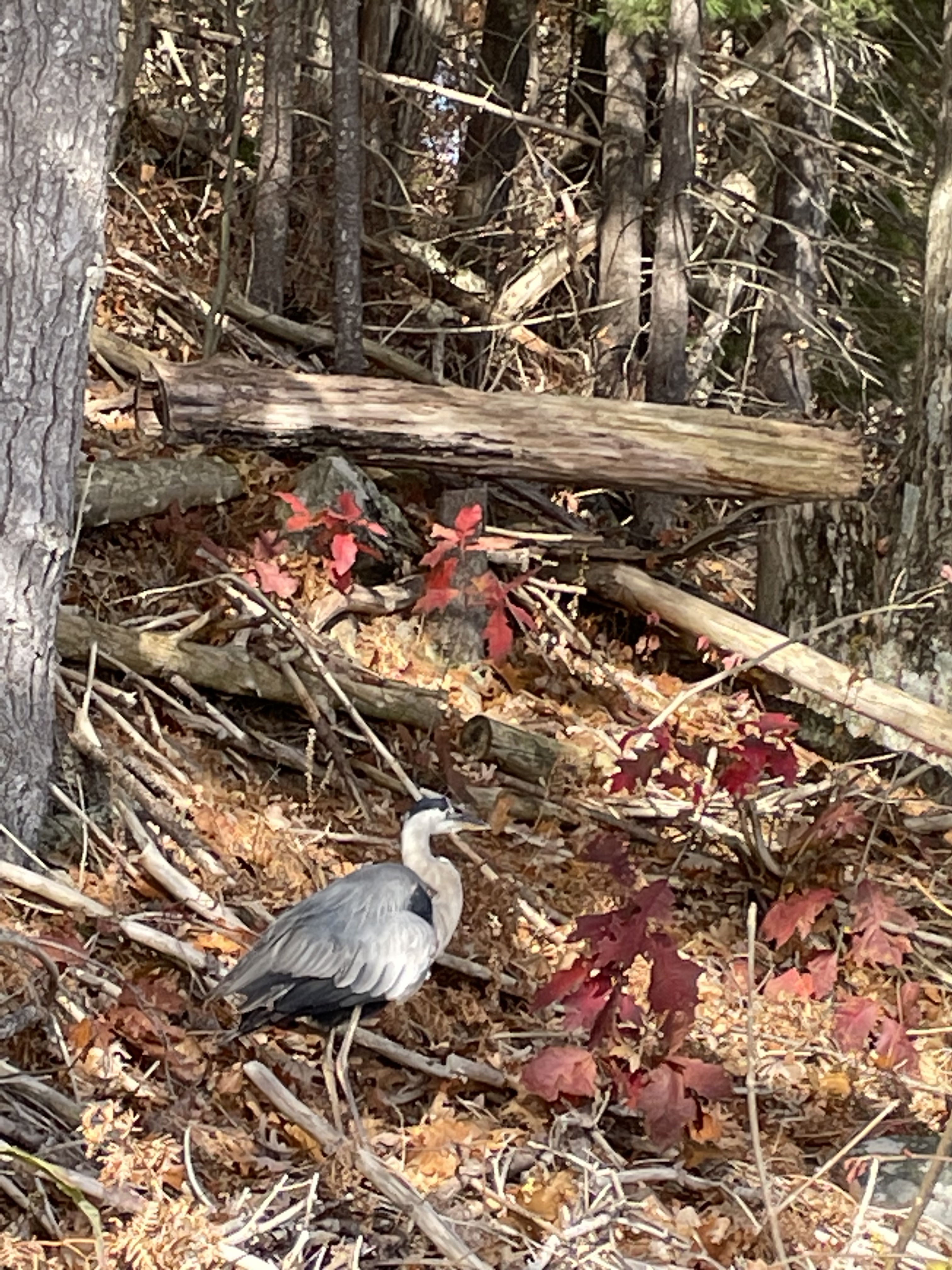
Great blue heron on a shoreline

Last Sunday, I walked down to the lake to throw some sticks for Bentley so he could have a late fall swim.

As we approached the dock, we startled a large great blue heron who had been standing on the shoreline close to the dock. Bentley started chasing the heron, and instead of flying away, which would have been the bird’s normal behaviour, the heron flapped its wings into the water a few feet, flailed around for a bit, then limped back to shore.

By this time, I realized something was wrong with my friend Harry. I hastily called Bentley off and sat down on the dock to observe him.

I couldn’t see any visible sign he was injured. I thought one of his legs might have been hurt, but herons have those weird stilt-like legs that bend almost backwards when they walk so it was hard to tell. Also, if his leg was hurt, he probably could still fly away. There was also no marked injury on his wings.

I called Sandy Pines Wildlife Centre for some advice. They suggested trying to capture the heron with a sheet or blanket and place it in a dog crate and bring it in. I still wasn’t convinced Harry was hurt, so I decided to leave it for a day and if Harry was still in the same spot 24 hours later, I’d reassess. I watched him catch and eat a frog, so I knew he was at least eating.

I was busy in town the next morning, but went down to the lake after lunch, and sure enough, Harry was still there.

He was standing on a steep section of the shoreline, and I had no idea how I could catch him safely. I also wanted a second opinion since I wasn’t convinced he was injured. I also knew that any capture attempt would be extremely stressful on the bird.

Dave thought he just might be old and ready to fly away to the big heron rookery in the sky. Herons live typically 15-20 years and are very territorial, so if this was my friend Harry who I shared our lake with for the past 20 years, it was possible he was weak and old and nearing the end of his life.

I called my neighbour Bruno who came over on his pontoon boat. Using the trolling motor, we came within five feet of Harry. He didn’t fly away but kept hopping along the shore away from us. Bruno agreed something was wrong with him (he would have flown away), but we came to the conclusion there was no way we could catch him and he was just old.

As we were about to give up the mission, Harry mustered up his last ounce of energy and lifted his majestic wings for a final low flight across the lake, almost as if to say, “thanks for the concern guys, but I’d prefer to be alone.”

I snuck in two paddles during those final warm days of October. I found Harry standing camouflaged in the marsh in the exact same spot he had flown to both days across the lake. I said my goodbyes and accepted it was time for nature to take its course.

Heron on the shore
Great blue heron

Pretend you didn’t hear anything

Garter snake in a kayak

The other day, I went for a late afternoon kayak. It was one of those glorious September days when the sun feels warm on your skin, the air is still and there is just a hint of colour in the leaves.

I watched the baby loons (our loons had two babies this year) being fed fish by their mother and mewing for more and the seagulls floating in the breeze, and kept paddling through the two channels into the back lake.

As I was sitting basking in the afternoon sun, I started to hear a rustling sound come from behind me. I’ve heard this sound before when a snake stowed away in my kayak.

I decided to adopt the strategy of pretending I didn’t hear anything even though I was pretty sure at this point it wasn’t a solo kayak trip.

The strategy was working just fine until my snake friend decided to make an appearance and slither past me under my life jacket towards the front of the boat.

I like snakes and I’ve been around them enough to know that they won’t hurt you if you just leave them alone. This guy was a harmless garter snake, but he clearly was a little put out that he was trapped in a moving hollow tube with no means of escape.

I didn’t see him for a few minutes, so went back to pretending he wasn’t there, until he started gliding towards me head first with his little red tongue wagging at me. His green and black silk body brushed the side of my leg and just as I started to stiffen, wondering what he was going to do next, something spooked him and he ducked under my life jacket again.

I paddled faster.

The next time he came out he slithered even farther up my leg, right to the top of my thighs, until he was almost resting on my lap, his beady little eyes looking up at me as if to say “You better get me out of this boat or else”. This was a little too close for comfort for my liking, and as I was planning my next move, he slid over my leg towards the back of the kayak.

I didn’t see him again for the rest of the trip.

Sometimes the best strategy is to just pretend you didn’t hear anything.

And if that fails and reality slithers up your leg, stay calm, breathe deeply, and paddle like hell.

Snake slithering out of a kayak

My snake friend finally escapes to land, and below, happy in his regular home amongst the weeds, looking for frogs.

Snake in weeds beside a lake

Of caves and caverns

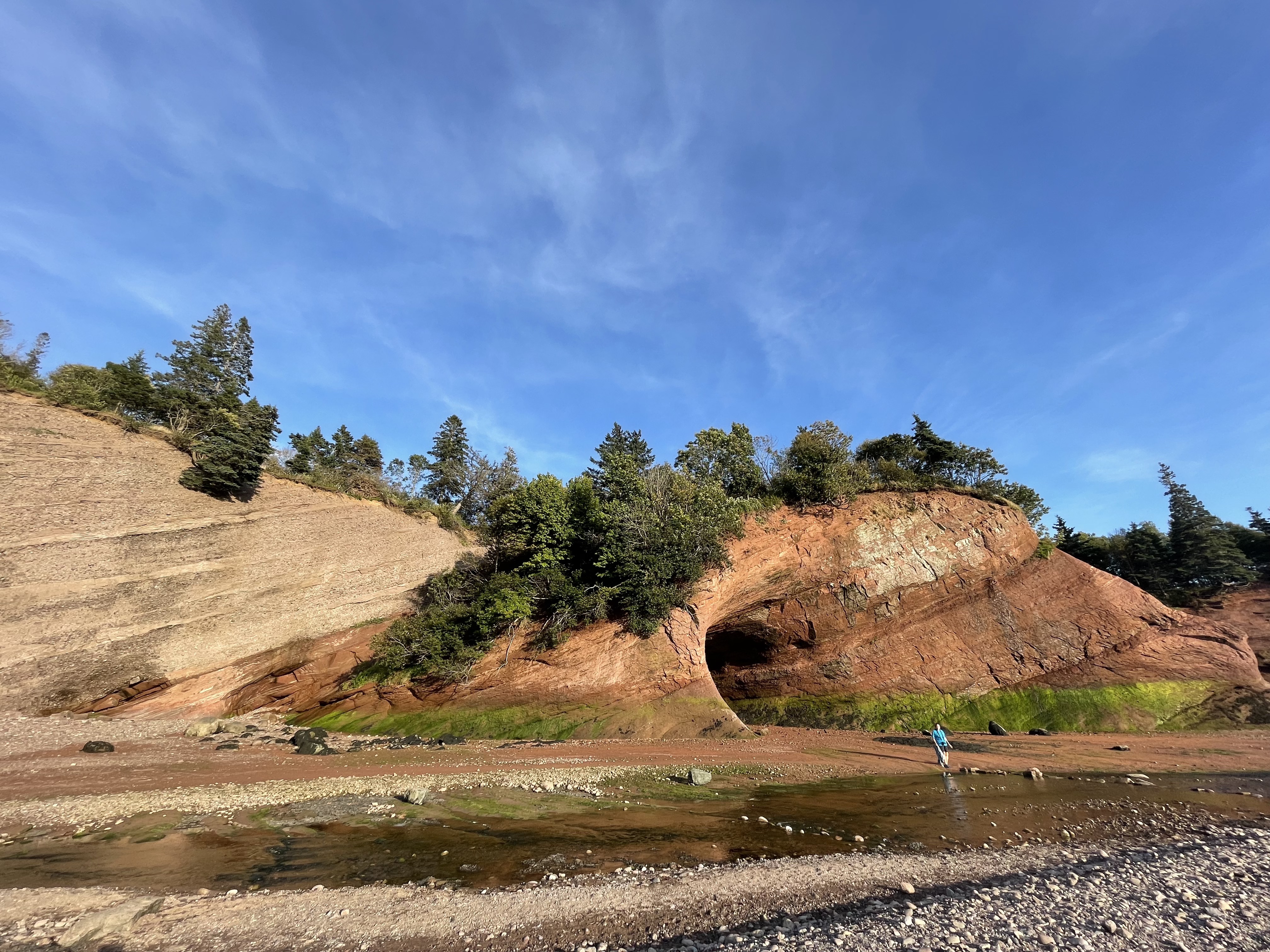
Sea caves in St. Martin's New Brunswick

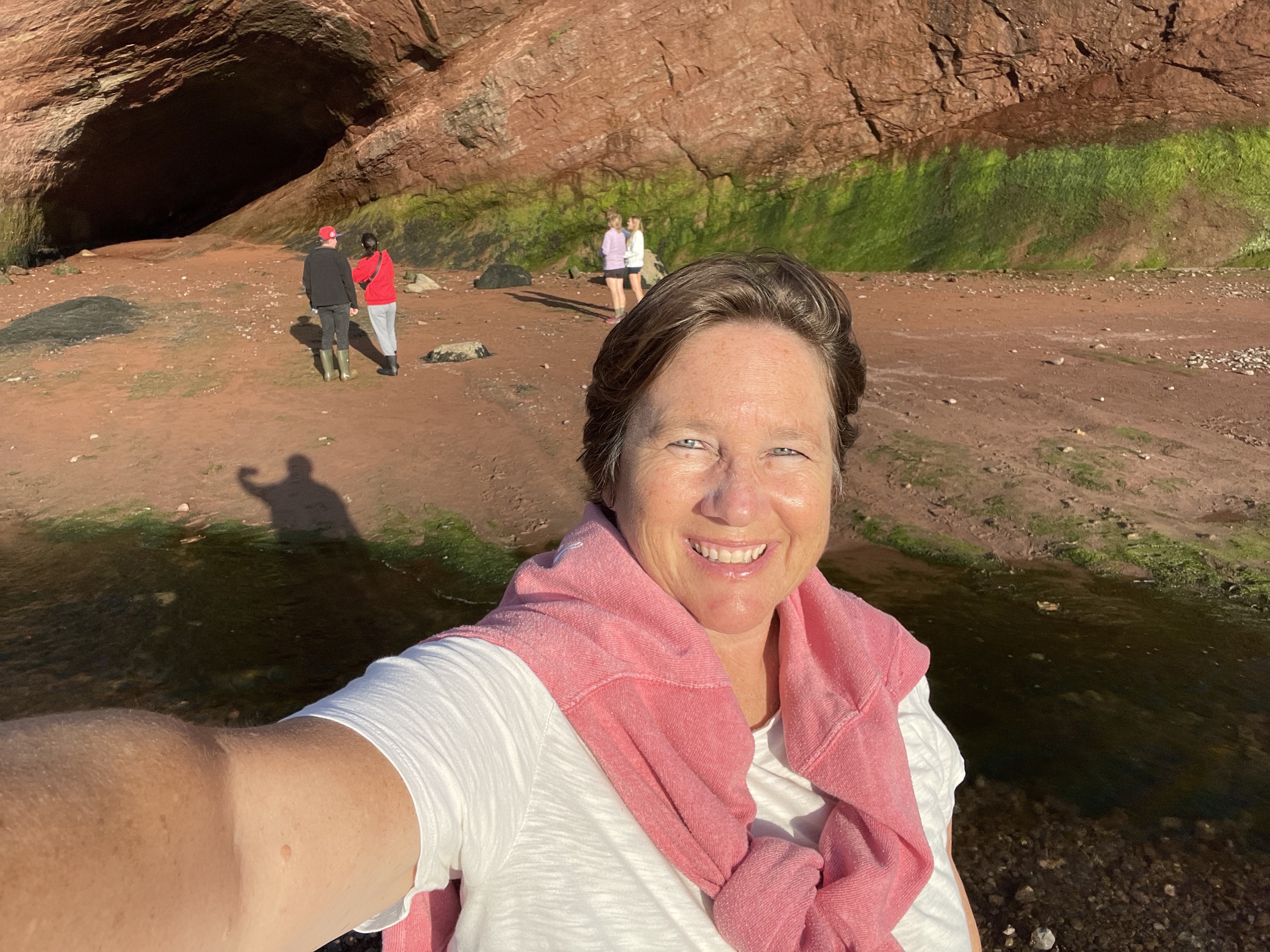
On our travels through New Brunswick at the end of August, we stumbled across some sea caves in the small oceanside town of St. Martin’s.

We explored them at dusk at low tide, when you could walk on the ocean floor. The light was perfect, and we marvelled at these strange and mystical caves carved into the striking Fundy-red coastline with bright green lines marking where land meets the sea and topped with rugged trees reaching out towards the ocean.

Humans have been fascinated by caves since the beginning of time. For some cultures, caves are where deities or mythical creatures were believed to inhabit. In other cultures, caves are often depicted as entrances to other realms and represent both the depths of the unconscious mind and the mysteries of the unknown.

I’ve always been fascinated by caves. One of the most beautiful caves we visited was Luray Caverns in Virginia, an astonishing underground world. As you descend into the caverns, you enter cathedral-sized rooms with ceilings ten stories high, filled with towering natural stone statues and strange and beautiful geological formations like stalacites and stalagmites*.

Everything is different underground. The light reflects and dances against the patterns in the rock. The air is filled with moisture, and the smell of sulphur and musty dew assail your nasal passages. Sounds resonate and echo eerily as you get lost in the mystical properties of the magical underground world being discovered.

You don’t have to venture as far as Virginia or New Brunswick to explore caves and caverns. Here are two great options in eastern Ontario—both are still open until Thanksgiving weekend:

  • Bonnechere Caves in Eganville, Ontario: Dave and I toured these caves several years ago carved into the Bonnechere River. Today, you must take a guided tour, but they are well worth it with waterfalls and a cool bat cave (with literally, hundreds of bats—optional for the faint of heart!)
  • Tyendinaga Cavens and Caves: These caves are located outside of Belleville and are the largest caves in Ontario. You must take a guided tour to learn about how the caves were formed 450 million years old. One of the most unique features is an underground wishing well.

This week’s #HappyAct is to explore a cave or cavern. Happy spelunking!

*Stalacites grow down from the ceiling of a cave; stalagmites grow from the ground up

Author in front of sea caves
Sea cave
Luray Caverns, Virginia

Some more pictures of the sea caves in St. Martin’s and above, stalacites in Luray Caverns in Virginia

Gardening on a shoestring

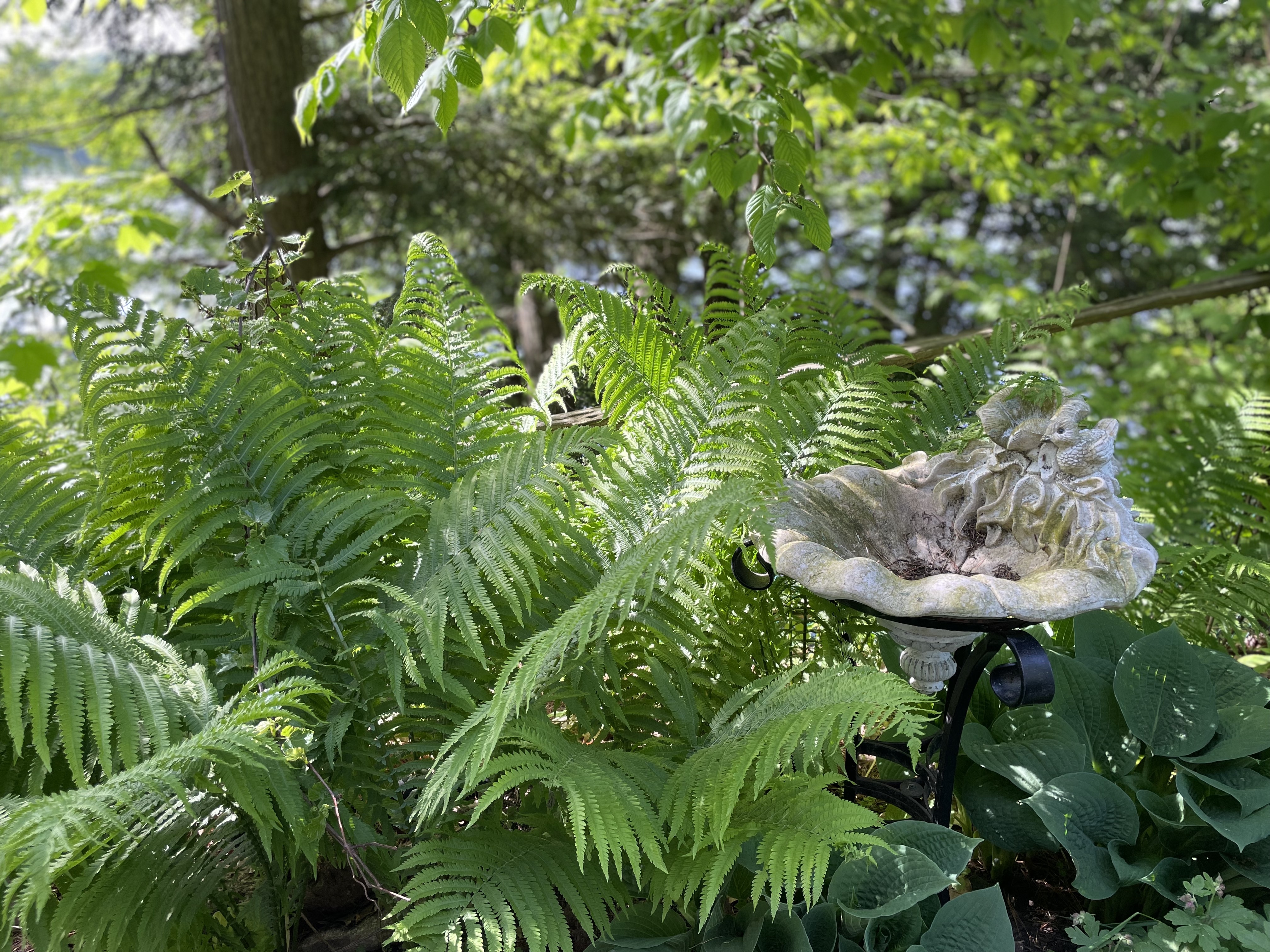
Ferns beside a bird bath

Gardening season is in full bloom, the time of year when seasoned gardeners and weekend warriors spend hours turning over soil, adding manure and mulch to patches of brown dirt, and combing local garden centres to find delicate flowers to create the perfect garden oasis.

Last week, we popped over to a friend’s house because they wanted some advice on how to spruce up the gardens at the front of the house to maximize their curb appeal before they put up their house for sale this summer. They didn’t want to spend a lot of money, which made me start thinking creatively about how you can create a beautiful, welcoming space without draining your pocketbook. Here are some tips for gardening on a shoestring.

  • Divide and conquer: if you have perennials, see what plants can be divided. Hostas, lilies, irises all thrive when split. If you don’t have perennials, see if any friends will give you some.
  • Go wild: look for ferns and wild phlox on the side of roadways or laneways. Just make sure you are not digging up plants on private property without permission (and watch for poison ivy!)
  • Use nature’s bounty: Go beachcombing and find a unique piece of driftwood to add interest to your garden.
  • Make it artful: Look for unique or interesting pieces that could be used for planters or to add a whimsical element to your garden, like old boots, bicycles, watering cans, etc.
  • Sow some seed: Scatter a pack of zinnia or wildflower seeds, an inexpensive way to create colour in a larger space.
  • Buy local—many fundraising groups hold plant sales this time of year to raise money—not only will you save money, you’ll be helping a good cause.
  • Come from good stock: If you are buying annuals from a gardening centre, make sure they are good stock and see if they can be split. The begonias I bought at my local gardening centre had two large blooms in a single pot, so I was able to split them, doubling my money.

I was always find this particular time of year a little sparse in my garden, after the spring bulbs have died off and before the roses, peonies, and irises bloom, but here are some pics from my garden this morning. Happy gardening!

watering can

Above: the ferns around this old birdbath we inherited were all dug up by the side of the road. In this photo, an old watering can adds colour to the pot by my front porch.

begonias lobelia and impatiens in a pot

The begonias I got from Sheila’s Greenhouses in Moscow were so big with two distinct plants in each pot, I was able to split them for my pots on the back deck.

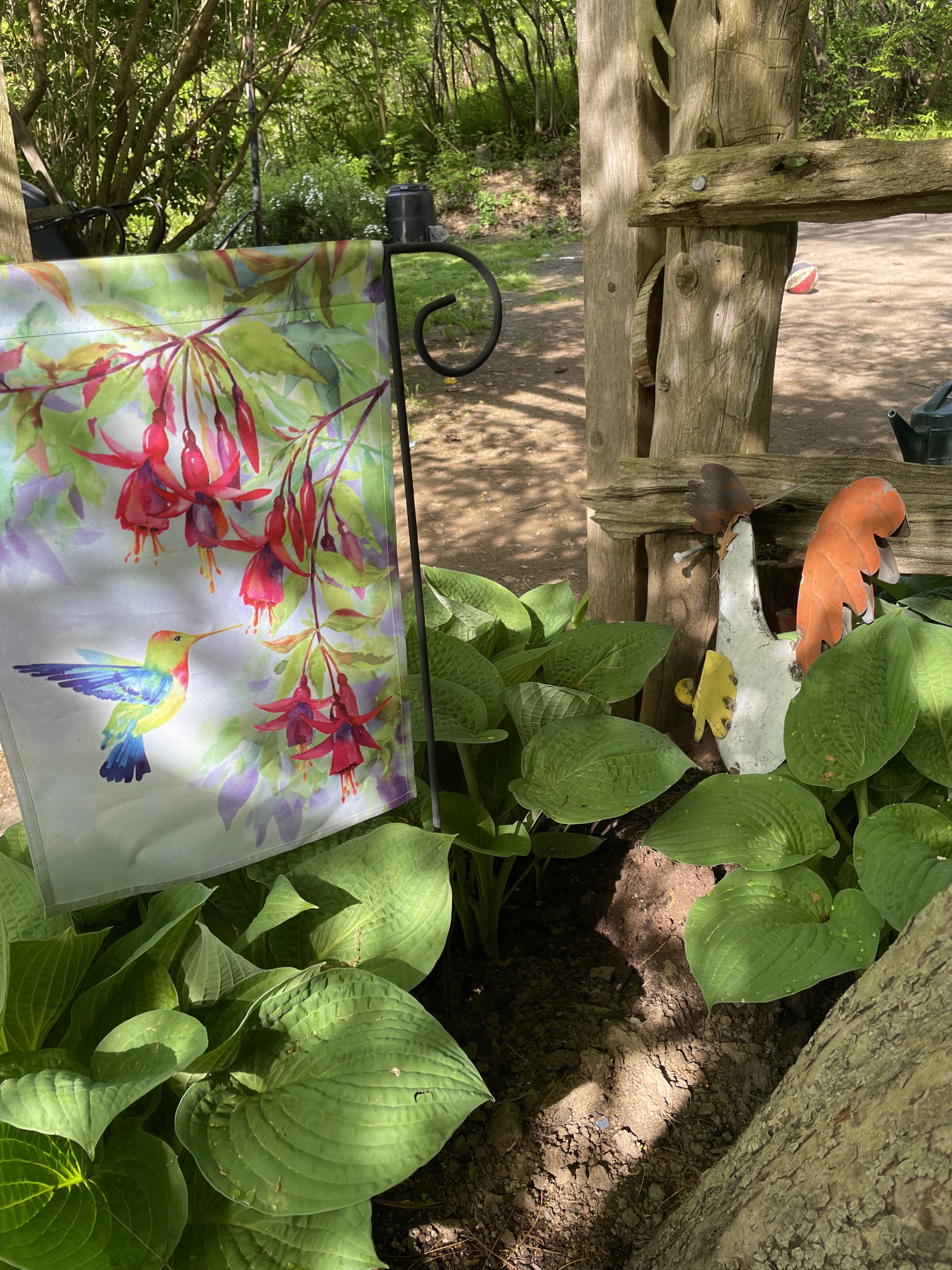
garden flag and chicken sculpture

Dave and the girls tease me all the time about my garden tchotchke. This hummingbird flag greets visitors and the chicken we bought at a cool art studio in Brewerton, New York years ago.

Ferns, hostas and geraniums

More ferns from the roadsides, hostas which we’ve split over the years and perennial geraniums in bloom. I can’t even remember where we got the white cross statue.

The soft shades of spring–a photo essay

new leafy growth on a birch tree stump

They say Ireland has 40 shades of green, but in spring, South Frontenac has 50 shades of green.

Even though spring isn’t my favourite season, I love the softness of this time of year. Tiny wispy yellow-green buds burst forth from the end of tree branches, delicate feathery ferns claw through the dull brown undergrowth, lush dark green grasses appear in clumps in the fields and meadows, and the forest canopy is a kaleidoscope of different shades of green.

When we drive down to the Carolinas each year in late March or April, one of the things I love most is watching the trees change as we go from our cold, grey bleak Canadian landscape to spring within a day’s drive. It’s as if the changing of the seasons is on steroids or fast forward.

In southern Pennsylvania, we get a peek at the first signs of spring, then if we’re lucky, in Maryland, we are treated to the sight of apple blossoms in full bloom with a hint of leaves emerging from their bursting branches. By the time we get to Virginia, we roll the windows down and let the warmth of the sun wash over us as we travel past trees in full foliage.

Here are some pictures I took on my property of the fifty shades of green. The lilacs in our area are just starting to bloom–a perfect day trip.  Happy spring!

treeline beside a field
tulip with green tips and leaves
Lily of the Valley
white birch bark against green grass
white and yellow flowers in the undergrowth
feathery ferns in the undergrowth
crab apple tree leaves and blooms
maple leaves on a tree overlooking a lake
apple blossoms in full bloom

This last photo was taken at a rest stop in Maryland on our last trip to South Carolina. The apple blossoms were in full bloom.

The Lost Sun: The solar eclipse on a backcountry spring canoe trip to Frontenac Park

I’m always shocked by how many people in the Kingston region have never been to Frontenac Provincial Park.

Located less than an hour north of Kingston, Frontenac is classified as a semi-wilderness park with more than 160 kms of trails and several canoe routes through the stunning rugged backdrop of the Frontenac Arch Biosphere.

Popular youtube vlogger Canoe the North recently chose Frontenac Provincial Park to explore for his first backcountry canoe trip of the season and to film the April 8th solar eclipse.

The first twenty minutes captures the essence of Frontenac Park: its breathtaking scenery even in early spring with amazing drone footage (one of my favourite shots is the stars twinkling in the night sky), the wildlife, stillness and calm of this special place. The last 10 minutes includes stunning footage of the total solar eclipse.

If it was cloudy in your area and you missed the eclipse, or you just want to see why I love this region so much, you have to watch this video. Enjoy!