Wisdom and teachings from the two Janes this Earth Day

CNN photo of Jane Fonda getting arrested

Last week, I participated in a climate change focus group at work. It was an insightful discussion into our fears and hopes about the state of the climate, and actions we could take in our little corner of the world to address climate change.

As the climate change window narrows (some experts say we need to reach the stated global targets within the next six years), the natural response and mentality may be to give up hope. But we can’t.

We need to look to lifelong activists like Jane Fonda and Jane Goodall for guidance, inspiration and hope.

Fonda, who has been known for her activism since her early days as a successful actress in Hollywood said five or six years ago she was feeling very despondent about climate change and it was hard to get out of bed she was so depressed.

She started Fire Drill Fridays, a pledge to use her platform and celebrity status to get arrested every Friday at a climate change protest and even moved to Washington at the age of 81 to achieve her goal. Soon celebrities like Sally Field, Robert Kennedy Jr. and Ted Danson joined her. Fonda said an unexpected benefit of her activisim was her depression lifted, and was replaced by hope.

With half the world going to the polls in 2024 she is urging young people to “please vote and vote with climate in your heart”. 

English anthropologist Jane Goodall who spent years in the jungle studying gorillas has also shifted her focus at the age of 90 to activism, founding Roots and Shoots, a movement urging young people to create change in their communities and based on the philosophy that every individual has a role to play.

Roots and Shoots is now active in 70 countries with hundreds of thousands of young people spearheading climate-related projects to create a better world.

Jacques Cousteau once said, “We only protect what we love.” This Earth Day, commit to taking one or two actions, no matter how small to address climate change and love our earth. Happy Earth Day!

Preparing for the apoco-eclipse

total eclipse graphic

Get ready, the apoco-eclipse is coming Monday, April 8. Here in southeastern Ontario, we are in the

….PAAAATH…..OOOFFF…..TOTALITY (said with a low booming echoing voice for maximum effect.)

For a whopping three minutes, the moon will pass in front of the sun and the earth will be in total darkness during the middle of the day, from 3:22 to 3:25 pm to be exact in South Frontenac.

From all the warnings and hype about massive traffic snarls and millions of visitors expected in the region, you’d think the world is coming to an end. My retinas are already burning from reading all the warnings about not looking at the sun directly and how to view the eclipse safely.

Granted this is a once-in-a-lifetime event. The last total eclipse in North America was in 2017 over the northwest US, but back then the eclipse’s path just 71 miles wide, compared to 122 miles AND the total time the moon completely covered the sun was just 2 minutes, 40 seconds compared to over 3 or four minutes this time depending on where you live.

I wasn’t sure just how big a deal this was, so I decided to ask an expert, my old high school buddy Brad Gibson, Professor and Director of the E.A. Milne Centre for Astrophysics at the University of Hull in England. Brad does presentations and TedTalks on subjects like will we ever live on Mars, the top 10 coolest things about outer space and are we alone in the universe?

Being the cool astrophysicist dude he is, Brad confirmed that “a total solar eclipse is always a blast”. He said they aren’t all that rare if you look at planet Earth as a whole since once every 18 months there is a total solar eclipse somewhere on the planet. In any given city, it’s more rare, like once every 300 years. I asked Brad what he’ll see in the UK and he said they’ll see a partial eclipse with about one-third of the sun blocked.

I also didn’t know that some weird and wonderful things can happen during an eclipse too. Animals can get confused thinking it’s nighttime, radio waves have been known to become scrambled, and seconds before totality, you may see shadow bands, or wavy strips of light and dark dancing on the ground like water at the bottom of a swimming pool. 

During the time of total darkness, you may also see the stars and planets, especially Venus and Mars. Now that’s cool.

Personally, I’m more of a northern lights, super moon, meteor shower kind of gal. The nighttime celestial shows outshine any daytime event, even the apoco-eclipse, throwing it into the shade.

This week’s #HappyAct is to get your ISO-certified eclipse glasses and get ready to enjoy the spectacle on April 8. And for those nighttime celestial lovers out there, they say tonight’s a good night to see the northern lights.

Hopeful for the future: flattening the curve of climate change

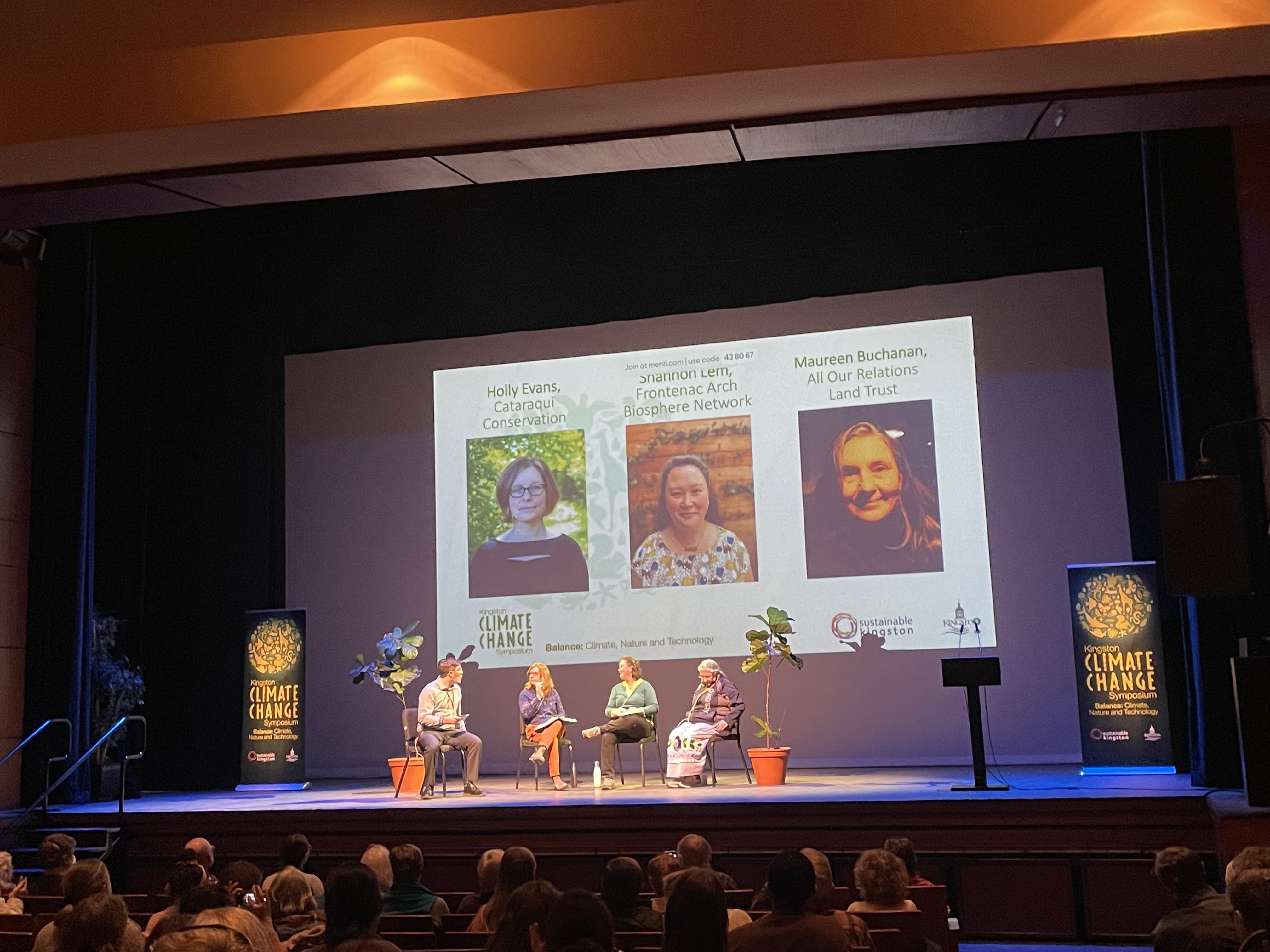
panel on biodiversity at the Kingston Climate Change Symposium

I didn’t expect to walk away from a climate change symposium feeling hopeful.

Hope is a good word. It inspires action.

The seventh annual Kingston Climate Change Symposium was held in person for the first time since Covid at the Grand Theatre at the end of January. More than 400 people from all different walks of life attended. That in itself gave me hope.

The key note speaker was Bob Macdonald from CBC’s Quirks and Quarks and author of one of the latest books on climate change, The Future is Now.

His message was optimistic–we now have the technology and the know-how to solve the climate problem. From micro-nuclear technology, to solar, wind and electricity, we’ve come leaps and bounds in our ability to develop alternative clean energies and make existing energy sources like oil and gas cleaner.
I came away hopeful that we are listening and learning from Indigenous cultures and peoples about how we are all connected to each other and to Mother Earth, and how we need to deprogram ourselves and our colonial attitude to the land and treat it and its creatures with respect and we must approach this work with open minds and open hearts.

I also came away feeling positive about my personal actions in thinking globally and acting locally, from the geothermal heating/cooling system we installed in our house, to buying my first hybrid vehicle, to all the trees I’ve sold and planted in my lifetime, to participating in one of the world’s largest citizen scientist projects, the Christmas bird count every year. One individual’s actions can make a difference.

Macdonald finished his talk drawing a parallel between the world’s response to COVID-19 to our response to climate change. In both cases, the global community had to come together to flatten a curve–in the case of the pandemic, of transmission of the disease and hospitalizations, and in the case of climate change, rising temperatures and greenhouse gas emissions.

During COVID, scientists developed vaccines in record time, governments acted swiftly, businesses pivoted and the populace took action to protect the spread.

The science of climate change and the technology to address it has advanced. We now simply need the collective will of governments, business and people to take action.

I’m hopeful we will flatten the curve once again.

Be on the lookout for fall colours

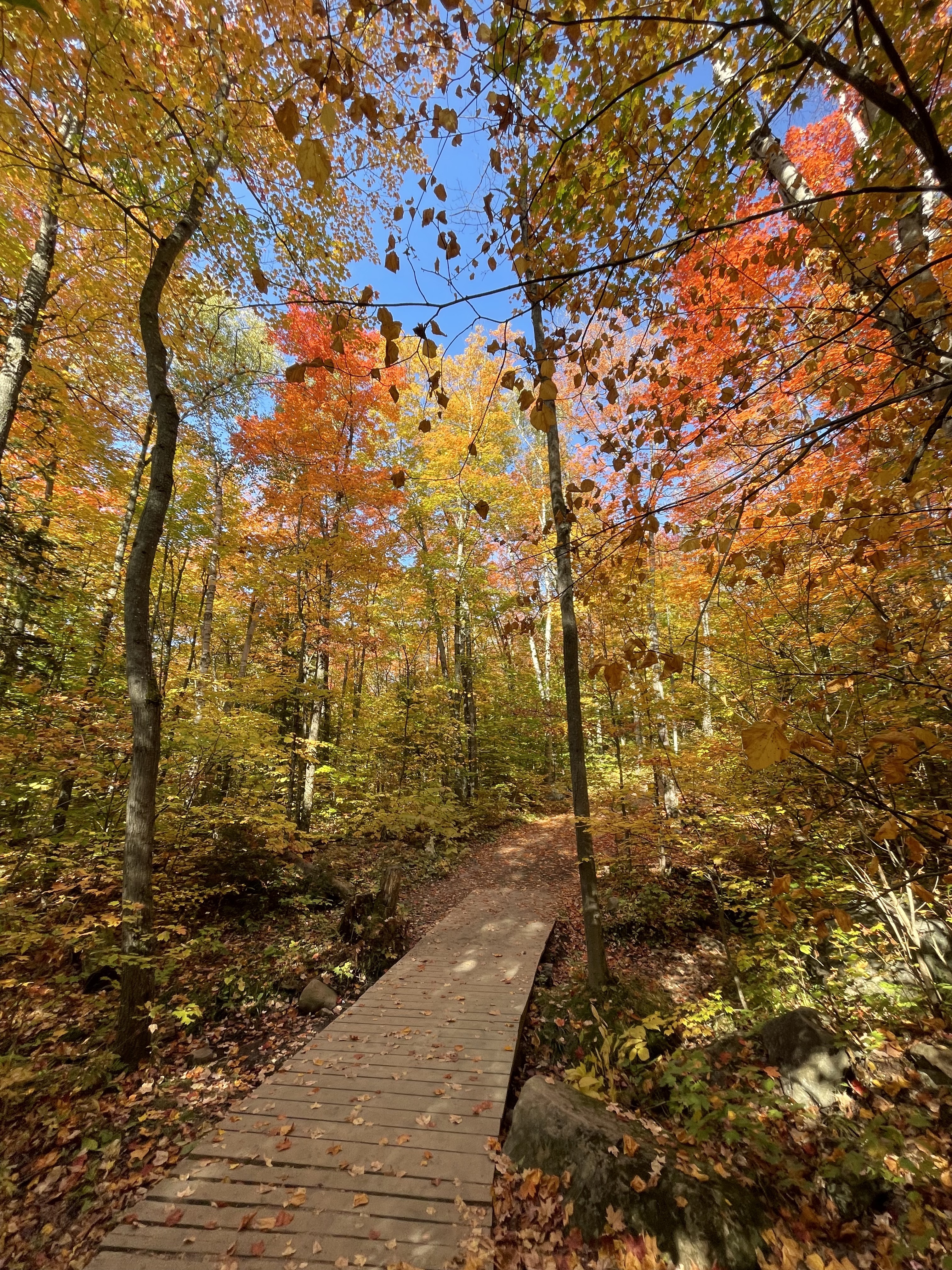
Red maple leaf and fall colours

I went to bed the other night dreaming of red and orange mosaics. It was as if the brilliant fall colours we’d seen on the weekend had been imprinted on my mind, like a patchwork quilt, lulling me to sleep.

I can’t remember a year where the colours have been so brilliant or the weather so spectacular, but this is the first year we also ventured further afar, seeking scenic lookouts.

Our first scenic lookout was the Eagle’s Nest in Bancroft, Ontario. Located on Highway 62 on the north end of town, this popular vantage point is known for its spectacular views of the Madawaska Highlands and for spotting eagles. In the winter, you can sometimes see adventure seekers ice climbing the rock face. Grace, Dave and I walked the easy trail to the lookout. The sun wasn’t out yet, but the view was still incredible—dappled greens, yellows and entire swaths of red and orange.

Scenic view of fall colours

Views from the Eagle’s Nest in Bancroft

Our next lookout was Skyline Park in Haliburton. By the time we arrived, the sun had broken through the clouds, illuminating the reddish and orange hues surrounding beautiful Head Lake.

View from Skyline Park
colourful trees beside a lake
scenic view from lookout

Views from Skyline Park in Haliburton

On Sunday, we hiked the Lookout Trail in Algonquin Park, just off the Highway 60 corridor. This 2 km loop meanders through old hardwood forest until it reaches the summit, with drop-dead gorgeous views west over the park. It was a perfect morning and we sat watching the colours unfurl with each ray of sunshine.

Three spectacular lookouts with three spectacular views. I think the mosaics will be forever emblazoned in my mind.

This week’s #HappyAct is to find a lookout in your region and enjoy a bird’s eye view of the magnificent fall we’re having. Here are some more great lookouts in eastern Ontario:

algonquin park in fall
scenic lookout and fall colours in Algonquin Park
colourful trees on a trail
Author and her husband at the summit

Watch the world go by

boy on beach

My mother-in-law once said the biggest change she had seen in her lifetime was no one just sits anymore.

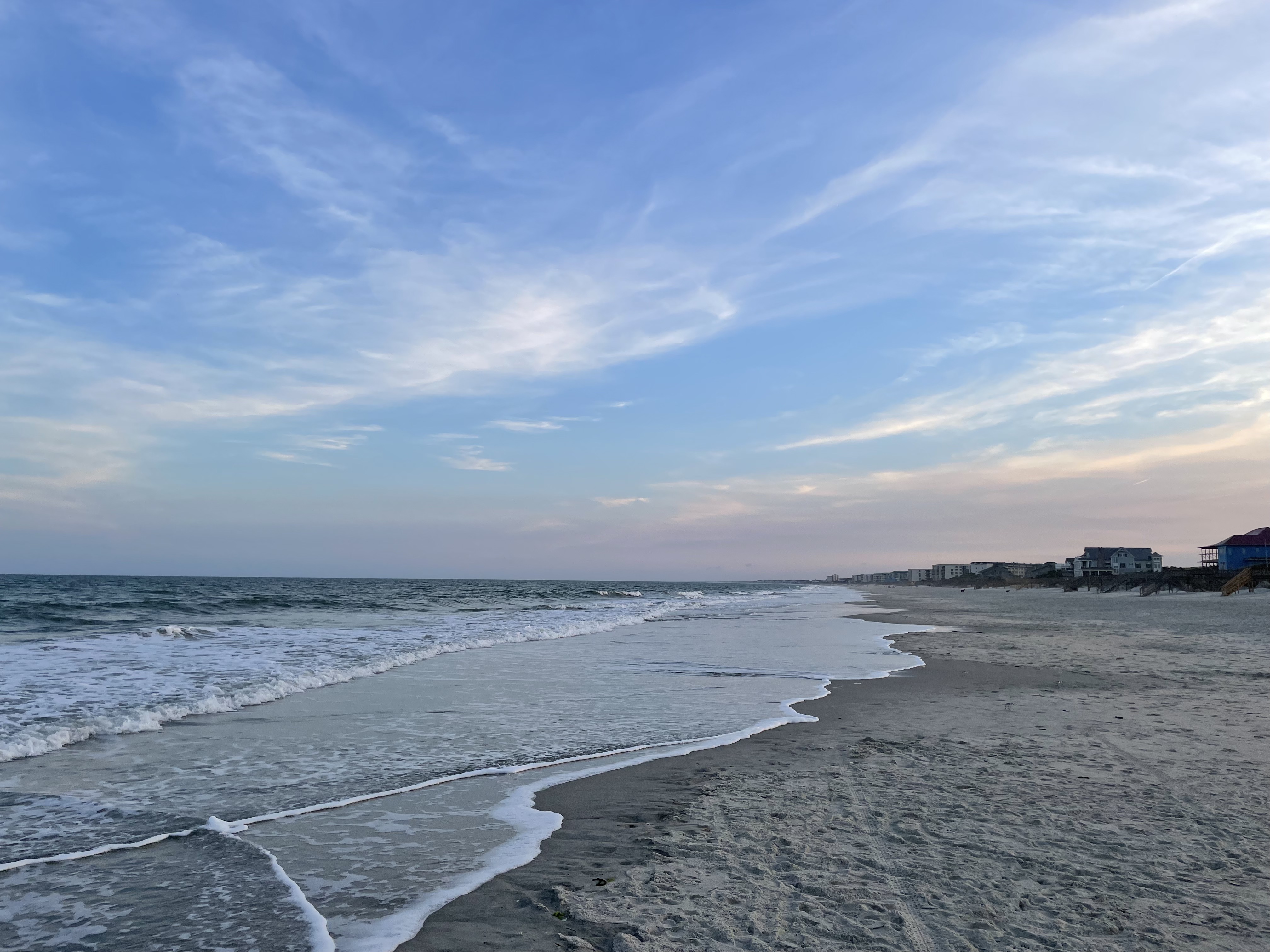
On my last sunny beach day in South Carolina a few weeks ago, I just sat on the beach and watched the world go by.

There were families who lugged their beach carts to the same spot they had the day before, filled to the brim with plastic sand shovels, coolers, colourful beach chairs and umbrellas. Before the adults could set up even one chair, the kids would grab the beach toys and run with glee towards the water and furiously start digging in the sand.

There were surf fisherman who sat close to shore, the water lapping up on their toes as their lines bounced in the white-flecked waves.

There were lots and lots of dogs, since it was a pet friendly beach. German shepherds, labs, a grizzled old golden retriever that lay beside its owners in a small patch of shade beside their chair, and breeds I never even knew existed like the German Elo (who was named Murphy, by the way, just like our old dog Murph).

There were osprey soaring in the brilliant blue skies, splashing into the surf to catch their lunch, then lifting slowly and wobbily, a fresh catch in their talons. There were pelican armies flying in formation patrolling the picturesque shoreline, and gulls, terns and sandpipers tiptoeing in the grainy sands.

And best of all there were dolphins. Spied first far, far out in the ocean. Their fins cresting out of the water in graceful intervals. Then closer to shore, coming near my two teenagers splashing in the waves. I try to yell at them to look, but they just wave back, oblivious of the magnificent creatures sharing the ocean’s expanse.

I couldn’t believe how many dolphins I spied that day. There were multiple pods, some playing in the waves, leaping in the white crests of the surf and blowing and chuffing as they came up for air. They must have known the weather was about to change and decided to enjoy their final day on the beach frolicking in the waves.

Yes, spending a day watching the world go by is a bit of a luxury in today’s world, but I highly recommend it…especially at the beach.

Ed. note: The photos below were all taken in the evening since I didn’t bring my phone to the beach during the day so they don’t capture the images I’ve described above, but I hope you enjoy them anyway.

terns and pipers on beach
deserted beach
Grace and Clare swimming in the ocean at sunset
Woman and her daughter on the beach

The trees of my life

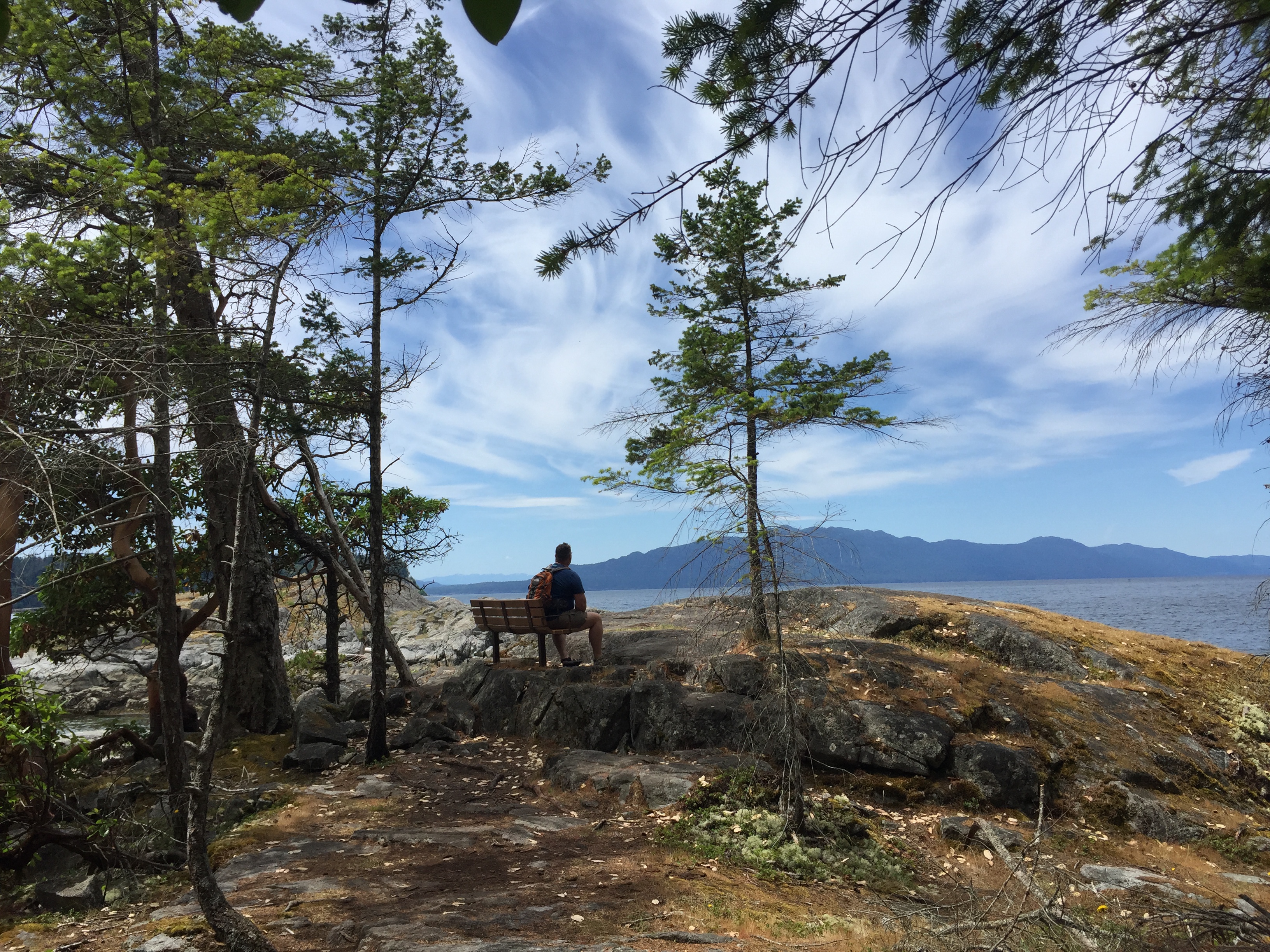
Man sitting on bench on BC coast

The Toronto Star used to run a column on a neighbourhood tree. I’ve always loved trees, maybe that’s why I married a lumberjack.

By my count, I’ve either directly or indirectly had a hand or shovel in planting tens of thousands of trees in my lifetime.

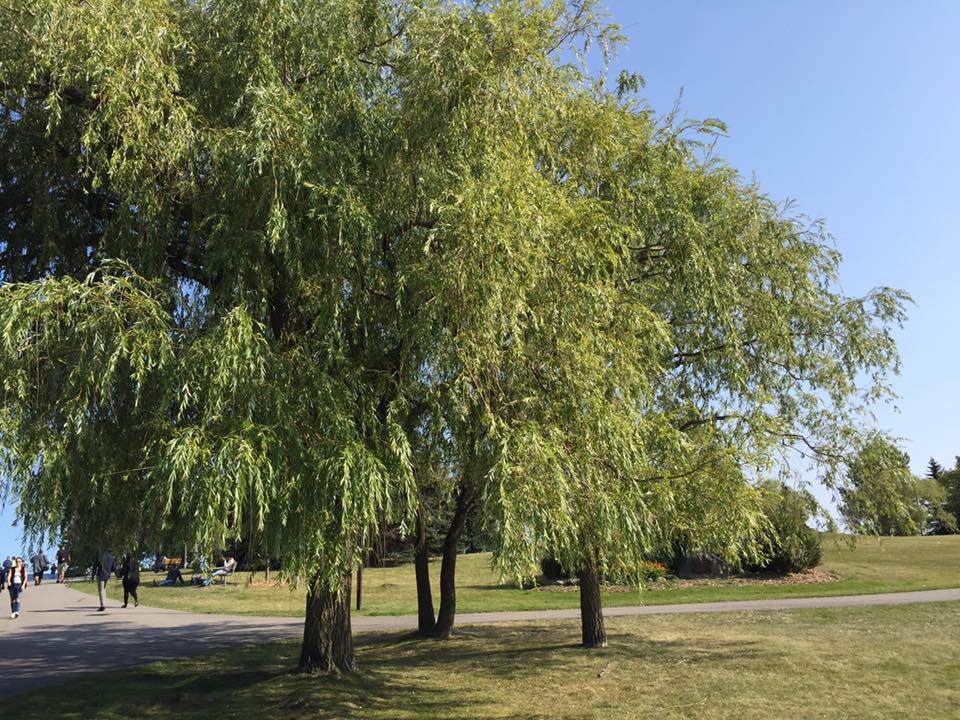
As a summer student in the Forestry department at the City of Mississauga, we reforested city parks, my favourite being Saddington Park, a former landfill and now one of the prettiest parks in Mississauga with beautiful willows we planted swaying in the lake breezes.

My family has planted trees every spring and fall at Lemoine’s Point Conservation area as part of their annual tree planting program.

And for the past seven years or so, I’ve sold seedlings as a fundraiser for local non-profit organizations like the Sydenham Lake Canoe Club. I’m looking forward to seeing my regular clients again this spring and hearing where they planted their trees from last year, how big they’ve grown, and what their plans are for this year’s seedlings.

Some days when I’m feeling down about the effects of climate change and our inertia as a global community to address it, I think about the trees I’ve helped to plant and it makes me feel better.

So this week’s #HappyAct is a photo essay, a tribute if you will, to the trees of my life.

Above: Dave beside arbutus trees on the Sunshine Coast in British Columbia

trees overlooking a lake

The beautiful pine trees off my back deck

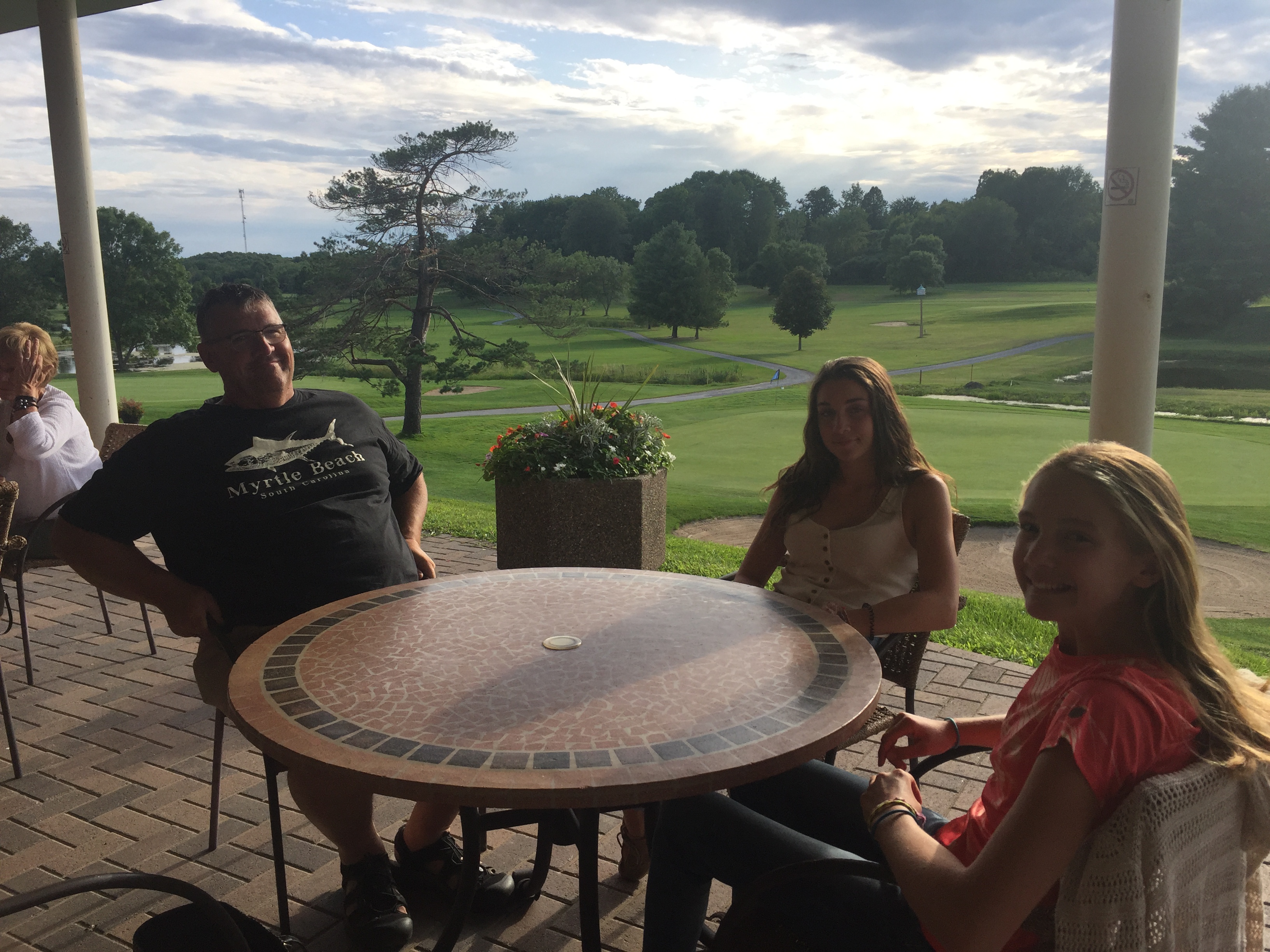
Family sitting on a patio at a golf course

I always loved this pine tree at the 18th green at our local golf course in Verona. It came down in a storm a few years ago.

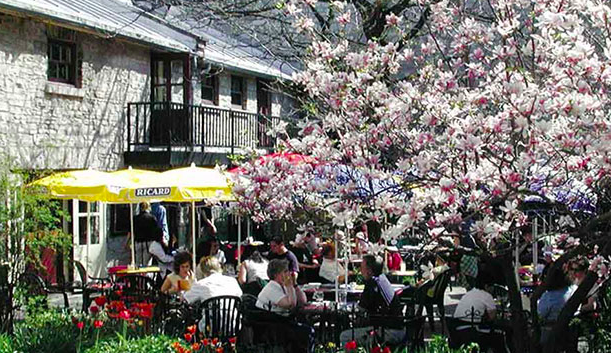
Magnolia tree in a restaurant courtyard

Magnolia trees in Chez Piggy courtyard, one of my favourite patios in Kingston

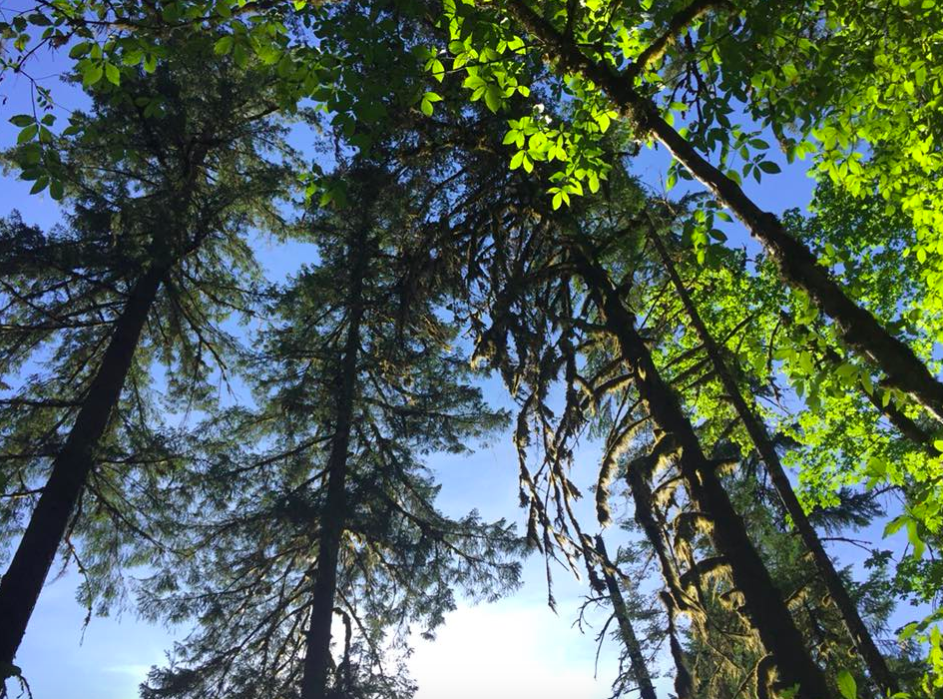
trees in Stamp River Provincial Park

Tree canopy in Stamp River Provincial Park in Alberni, BC

trees in the fall

Trees near the magic waterfall in the woods where I walk

Girl holding seedlings

Clare helping me sell trees as a fundraiser

Palm trees at dusk

Palm trees from the Carolinas, where we vacation every year

willow trees
Trees I planted 30 years ago in Saddington Park, Mississauga
Arbutus tree

Arbutus tree in British Columbia

Trees in the mist

More from my back deck, definitely my happy place

Walk on the ocean floor

Girls at Hopewell Rocks, New Brunswick
Me, Danette and Leslie at Hopewell Rocks, New Brunswick

Have you ever wondered what it’s like to walk on the ocean floor?

Last week at this time, I was walking on the ocean floor at Hopewell Rocks Provincial Park in New Brunswick on the way home from an epic two-week vacation to Cape Breton with my girlfriends Leslie and Danette.

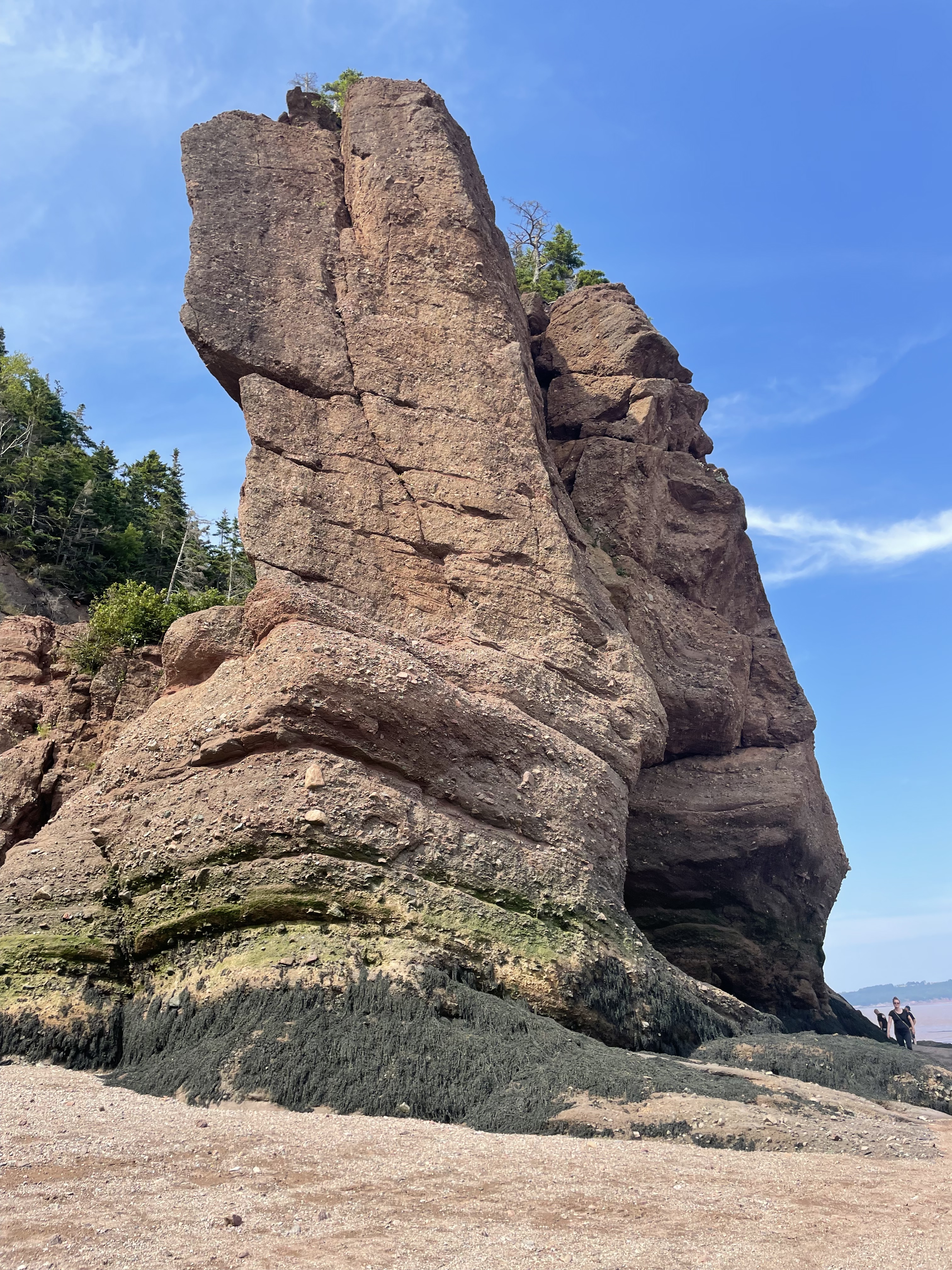
Hopewell Rocks is one of the most recognizable landmarks in Canada. It is known for its iconic flowerpot rocks and for being located on the Bay of Fundy which has some of the highest tides in the world. Twice a day, the bay fills and empties of a billion tonnes of water during each tide cycle—more than the flow of all the world’s freshwater rivers combined.

Flowerpot rocks at Hopewell Rocks

The tides rise and fall between 40-50 feet at Hopewell Rocks. The entrance fee to the park is actually good for two days, since many people like to come back to see both low and high tides, or kayak between the rocks during high tide.

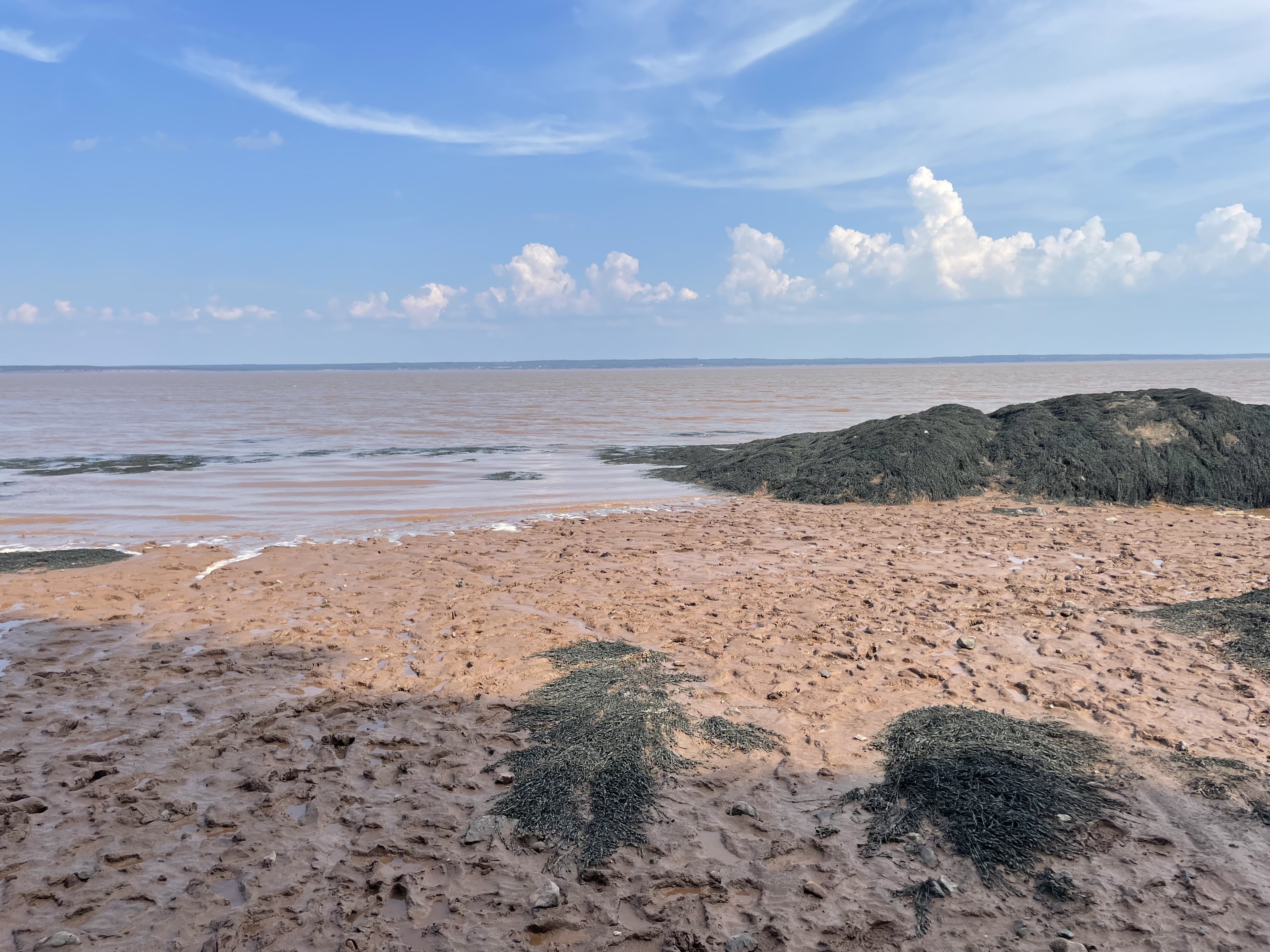
We arrived mid-afternoon and descended the massive staircase to the ocean floor. It’s a bit of a strange feeling to know that the rocks and beach you’re strolling on will be completely underwater in a matter of minutes. The tides rise so fast there, they now have park staff monitoring different sections of the beach to make sure stragglers make it back to the stairs to return to the surface in time.

We arrived as the tide was coming in. I stood and watched two exposed rocks to see how long it would take for the water to engulf them. I probably only watched for about five minutes for the rocks to fully disappear—that was how fast the water rose.

I was fascinated by the shape of the rocks, their unique patterns and colouring and the barnacles that covered the rocks like blankets. They were rubbery and uniform and dry to the touch. Some say the flowerpot rocks will eventually crumble, but they’ve lasted for thousands of years so my guess is you still have plenty of time to see them if you plan to visit.

Girl in front of rocks
Barnacles on rock

Many visitors don’t take the time to explore the many viewing platforms from up above, but I highly recommend it. When we first arrived, we watched a young deer trying to manoeuvre its way through the vast dark brown sand to the more lush green vegetation on the banks. It struggled to move through the quicksand and seemed disoriented in the loamy soil left from the receding waters. It was still trying to escape to safety when we moved to the next viewing platform.

There we saw a mother peregrine falcon perched on a tree limb stretching out over the Bay’s waters. This was the first time I’ve ever seen a peregrine falcon in the wild. We were very close, so we got a great view of her.

View of sandy soil and a deer
It’s nearly impossible to see, but the tiny dot in the estuary of water between all the brown loamy ocean soil was a deer trying to find its way to safety
Mother and baby peregrine falcon

As we were admiring her stately helmet and stature, one of her babies came flying in beside her. They screeched an exchange for a few minutes, then both settled on the limb. One of the park staff later told me there were four babies. Babies often stay in the same area as their family after leaving the nest, flying with them while hunting. The staff member showed me a bunch of photos he had of the falcons on his phone—he said this is one of the first years they’ve had peregrine falcons at the park and the park staff were clearly very proud of their newest residents.

This week’s #HappyAct is to plan a trip to walk on the ocean floor, or visit an iconic park landmark in your area. Happy travels!

Rock at Hopewell Rocks
Muddy ocean floor

Advice from a sunflower

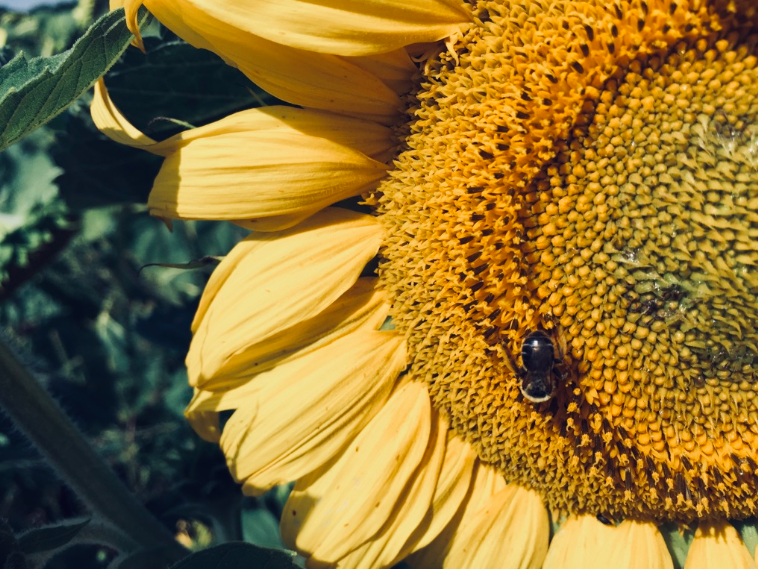
sunflower

For some reason, this spoke to me this week.

Be bright

Be kind

Be sunny and positive

Spread seeds of happiness

Rise, shine and hold your head high

Have a happy week and smile if you see a sunflower.

Explore a deserted beach

Driftwood on beach

At the end of April, we travelled to St. Simon’s Island, Georgia for our annual family vacation. We’ve become enamoured with the barrier islands in the Low Country and this beautiful island south of Savannah didn’t disappoint.

One of my favourite days was exploring Driftwood Beach on nearby Jekyll Island. Located on the northern end of the island, it’s unlike any other beach you’ve been to. It’s quite isolated and stretches for miles and is strewn with pieces of driftwood, each one unique, interesting and amazing.  

As I walked down the beach, I felt like Robinson Crusoe or a castaway member from Gilligan’s Island. There wasn’t a soul around, and it was very dystopian. I wandered through nature’s art gallery examining the different pieces of driftwood.

There were ancient trolls guarding the beach, dolphins leaping amongst the waves, sea turtles nesting on the beach, wolves howling into the wind and warriors lifting their swords high into the sky.

While my little lake at home is nothing like Driftwood Beach, I get a similar feeling of being an explorer when I paddle into our back lakes where there are no houses or cottages, just me and my kayak, the sun on the water and the herons, vultures and beavers keeping me company.

This week’s #HappyAct is to get lost on a deserted island or beach. Happy exploring.

Ancient trolls guarding the beach

Driftwood
Driftwood
Driftwood
Driftwood
Grace on the beach
Driftwood
Driftwood art sculptures
Two wolves howling at the moon and a dolphin jumping in the waves

Adopt Happytalism

International Day of Happiness poster

A decade ago, the United Nations held its first ever conference on happiness and established an International Happiness Day to remind us that being happy is a human right and worth celebrating.

This year the significance of International Happiness Day on March 20 and the belief that happiness is a fundamental human right is playing out on the world stage as we watch millions of Ukranians refugees and citizens who have had their happiness ripped from them overnight with every Russian rocket, bomb and artillery strike.

In 2011, the UN General Assembly adopted a resolution that made it a “fundamental human goal” to give happiness as much priority as economic opportunity. In 2015, the UN launched the 17 Sustainable Development Goals, which seek to end poverty, reduce inequality, and protect our planet. It also recognized the need for a more inclusive, equitable and balanced approach to economic growth that promotes sustainable development, poverty eradication, happiness and the well-being of all peoples.

What’s interesting in all these resolutions is there is no mention of war or conflict and its impact on happiness; the focus is solely on economic factors.

Most likely that’s because in war, there is no happiness.

As we face this global crisis, let’s find positive ways to look after ourselves and each other and adopt Happytalism.

The UN secretariat for the International Day of Happiness is calling on all 7.8 billion people and all 206 nations and territories in our global community to take the “Ten Steps to Global Happiness” challenge and call to action. You can find all ten steps here. I’ve listed my top five, with the last one being my own:

  1. Celebrate the day. Do something special, just don’t let it pass by.
  2. Attend a world happiness event. There are live and virtual events on almost every topic imaginable, from education, health, technology, self and work. See the full list of events here. There’s a small cost to the virtual events, but in many cases, the proceeds go to helping others, like sponsoring a teacher that is helping underserved populations.
  3. Do what makes you happy. Happiness is about practicing self love, mindfulness, acting consciously, and with purpose and intention, positive energy and mindset, and celebrating the things you love that make you happy.
  4. Tell everyone. Spread the word and mission of #InternationalDayOfHappiness. Post something that makes you happy on social media, write a song or letter, make a poster.
  5. Support the people of the Ukraine. Make a donation. This CBC story lists charities you can support.

This week’s #HappyAct is to adopt and spread a more holistic, inclusive, equitable and balanced approach to the world order that promotes sustainable development, eradicates poverty and war, and focuses on the happiness and the well-being of all peoples.

#HappinessForAllForever.