It’s for the birds

Birdhouse and wren
Our little house wren on the post beside her new home

There have been several interesting and unexpected phenomenon that have come out of COVID-19. One is how the animal world has reclaimed territory as humans have retreated. Nowhere more can this be seen than in the abundance of migratory birds in Eastern Ontario this spring.

While I wouldn’t exactly call myself a birder, I have enjoyed watching and identifying all the species that we’ve seen on our property in the past few weeks as the weather has gotten warm.

We’ve had all the usual suspects: blue jays and eastern kingbirds, goldfinches, woodpeckers and robins. The herons, loons, barn swallows, kingfishers and red-winged blackbirds have all returned to the marshes and lakes.

But I can’t recall seeing so many different types of birds like we have this year. We’ve seen flickers, cowbirds, bobolinks, baltimore orioles, rose-breasted and black-headed grosbeaks, yellow-rumped warblers and blackburnian warblers. We’ve even had two wood ducks show up several mornings in the trees watching us eat our breakfast.

And the songs, oh the songs. This morning, as I was planting my annuals and perennials, I was serenaded by a beautiful brown house wren who has taken up residence in one of our birdhouses, while a rose-breasted grosbeak tried to drown her out with his own magnificent melody. If you look up the song of a grosbeak in the bird book, it says, “rising and falling passages, like a Robin who has taken voice lessons.

My friend Karen sent me a picture of two black-necked swans that flew over their boat at their hunting camp near Tamworth. They are considered “exotic” so you would normally never see them in this region.

Yes, it’s been a banner year for the birds. This week’s #HappyAct is to get out and make a new fine feathered friend. Happy birding.

Black-necked swans flying over a lake
Rare sighting of two black-necked swans

An afternoon at the Canadian Canoe Museum

Haida Gwaii canoes

When the weather is blustery outside, a great way to while away the afternoon is indoors at your local museum.

Last week, Dave and I spent two hours wandering around the Canadian Canoe Museum in Peterborough.

The history of the museum is quite interesting and I found as I wandered around its circular exhibits, a strong connection to its history and contents.

The collection of canoes that now call the museum home was started by a guy by the name of Kirk Wipper. He was given a dugout canoe in the 1950s, which inspired his passion for collecting canoes. Kirk was the founder of Camp Kandalore, a well-known summer camp north of Minden. I spent many a summer near Camp Kandalore since my best friends’ cottages were just a few lakes away.

native canoe

The collection became the foundation for the museum’s artefacts, and now the museum has more than 600 canoes.

There’s the iconic red canoe famously painted by Robert Bateman. Bateman by the way had a family cottage very close to Camp Kandalore. It just went up for sale a few years ago.

There’s Gordon Lightfoot’s canary yellow canoe, memorialized in song. The make was Old Town, still one of the best canoes made in Maine, and the same make as our trusty green canoe given to us by friends for a wedding gift.

Canoes given to members of the Royal family

One exhibit showcases the canoes given to members of the Royal family in Britain. Prince Andrew, of course, came to Canada to study at Lakefield cottage just north of Peterborough.

As you wander around the exhibits, you traverse the routes and passages of the early fur traders and voyageurs through Canadian culture and history. You pass Haida Gwaii canoes, masterful in their carvings and paintings, a canoe laden with thousands of pounds of blankets, food, and other goods fur traders would transport to Hudson Bay posts, and beautiful birch bark canoes used by Algonquin and Iroquois first nations peoples in the areas north of the Great Lakes.

Canoe laden with trade goods
Contents of a typical trade canoe

One mural had this message on it. “In the Athapaskan languages, there is not word for wilderness. Wherever the Dene travelled, it was home. The land belonged to the Creator, and in the Dene expression, was only borrowed from their children’s children.”

Yes, on a wintry afternoon, this museum felt like home.

This week’s #HappyAct is to plan a trip to Peterborough and spend time in this unique little museum. The museum is trying to raise $65 million to move to a new location on the water near the Trent Lift Locks in a couple of years. What a wonderful time to visit. I plan to be there on opening day.

Man portaging a canoe

Home sweet home

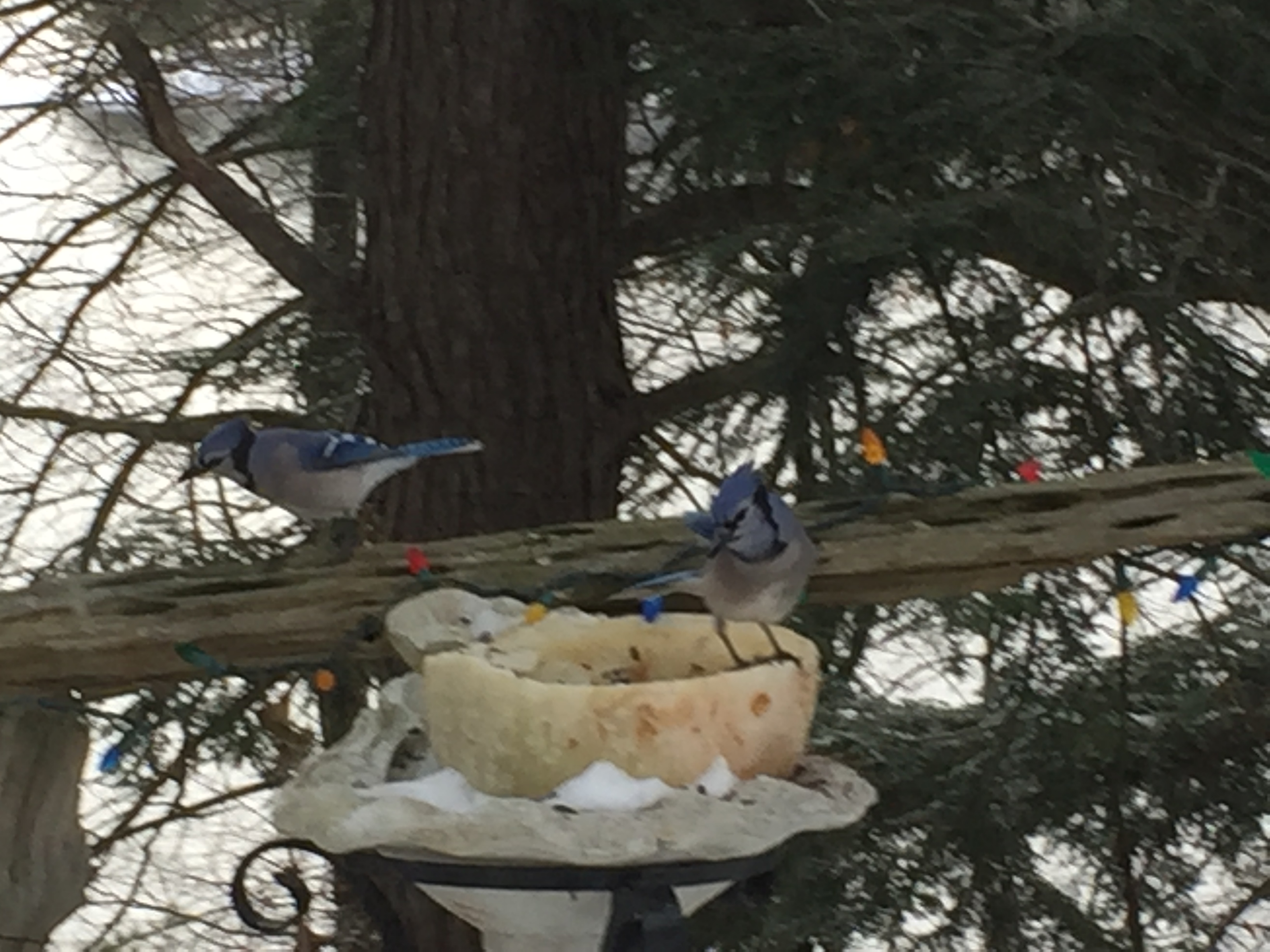
blue jays at bird feeder
We cut our pumpkins in half this year and have used them as makeshift bird feeders. The birds and squirrels love it!

Dorothy said it best, there’s no place like home. For the past two months we’ve been away almost every weekend to Peterborough for hockey. While I love watching Clare play, it means we haven’t been home much.

This weekend is the first weekend I’ve spent the whole weekend at home. I forgot how much I enjoy being at home.

First, there’s the joy of sleeping in. Being able to get up when your body is finished resting, and not having to rocket out of bed, and get the kids on the bus and rush off to work is one of the best parts of any weekend.

I can sit (hallelujah!) and read the papers and enjoy my coffee and look out my sunroom window at the squirrels and blue jays at the feeders.

We go for long walks in the daylight, a real treat at this time of year. Late in the day, as the sun fades, we start a fire, and sit with a glass of wine before making supper. We may even go for a long winter’s nap.

I remember one time when Clare interviewed Dave’s mother for a school project, she asked Donna, “What’s the one biggest change you’ve seen in your lifetime?” Donna responded, “People don’t sit anymore; they are always rushing to do something.”

This week’s #HappyAct is to enjoy time at home. As your body goes into hibernation mode this winter, don’t fight it, embrace it.

Autumn ablaze–a photo essay

creek with fall colours

This year the fall colours have been particularly spectacular. I tried reading up on why, but got lost in words like chlorophyll and carotenoids. I don’t care about the science. I’m just grateful for the beauty of the area we live in.

Here is a photo essay from my Thanksgiving weekend. Enjoy the colours while they last, and Happy Thanksgiving!

yellow and red treesseagulls on a dock in the fall

porch with fall decorations

clouds over water

high cranberry bush

fall trees and sky

deer in woods


Girl walking in fall leaves

sunburst through trees

Watch the world awaken

Darkness out a car window

5 a.m.

Pour the coffee

Pack the car

Hit the road jack


The car headlights cut through the fog

Blurred darkness


6 a.m.

The world begins to lighten

We pass through sleepy towns with quirky names like Tichborne and Wemyss


Signs never seen before

The Battle River Bison Company

10 acre hobby farm for sale

Even the wildlife sleep, save for a lone bat startled by the car headlights


The blanket of mist slowly lifts

Revealing silhouettes of Jack pines

Standing guard, protecting the quiet, still dark lakes


7 a.m.

Movement.

A few drowsy cows graze outside my car window

A light flickers in a farmhouse

Round hay bales sit forlornly in the fields

Saluted by the stands of corn


Daylight.

The fog persists

But another day has dawned


Ed.note: I wrote this poem in my head early Sunday morning driving to Ottawa for Clare’s provincial kayaking championships. I’m not a morning person, so you won’t see many “enjoy an early morning happy acts!”, but there is something special about watching the world awaken. Try it (if only once!) The trip was definitely worth it. Clare got a gold, silver and bronze medal.

Fireflies at night

Firefly

A couple of weeks ago the Ottawa Citizen ran a story, Fireflies are flooding Ottawa with light this summer.

It seems the wet spring has provided lots of food for these fascinating insects, and the woods and riverbanks along the Ottawa River are alight with lightning bugs.

I’ve always found fireflies magical. I remember one time in Vermont when we rented a 100-year old cabin in the woods. It sat on 25 acres, and there was a huge field that sloped down from the large wraparound porch into the woods. The kids were quite little and I  had to get up in the middle of the night with one of them. I looked out the upstairs window, and the entire field was filled with glowing tiny lights sparkling in the night. It was magic.

Fireflies aren’t flies, they’re actually beetles. They go through four stages: egg, larvae, pupae, to beetle. Their glow comes from a chemical reaction that produces light without heat.

One night, Clare and I were walking and we found a whole bunch of tiny bugs which we found out after were firefly larvae (some people call them glowworms). They looked like tiny worms with scales, but you could see they glowed. If you ever see a firefly up close, it’s really cool too. They are bright green—you often can see them on window screens. We’ve even rescued some in the house.

They say the best time to view fireflies are in May and June around dusk, but we still have some on the property, so it’s not too late to get out and watch nature’s light show.

This week’s #HappyAct is to enjoy the fireflies at night. Happy summer!

firefly larvae
Firefly larvae

Happy trails

Girl at trailhead

Eastern Ontario is a hiker’s and biker’s paradise thanks to the miles of abandoned rail beds that have been converted into trails.

A couple of weeks ago, Clare and I hiked a new portion of the trail. We started in Harrowsmith, which is the junction of the K&P Trail and Cataraqui Trail. It was a windy spring day, and the fur of our great Pyrenees Bella shimmered and rippled in the breeze like the rushes in the neighbouring wetlands. It was a great day to get out, enjoy the spring sunshine, clear our heads and get some exercise.

Dog in breeze

The Kingston and Pembroke trail was an old railway that ran from Kingston Renfrew. It was abandoned by Canadian Pacific Railway between 1962 and 1986 before being taken over by the City of Kingston and Township of South Frontenac. Most of the trail is now complete up to Sharbot Lake, except for a small stretch near Tichborne.

The Cataraqui Trail is 104 kms long and was the rail line operated by Canadian National. The 78.2 km section from Smiths Falls to Harrowsmith is part of the Trans Canada Trail. Harrowsmith is an excellent starting point since the two trails connect there with four different routes to hike.

We watched ducks and geese in the marshes, saw baby cows in the farmer’s fields and ate lunch overlooking a beautiful vista.

I’m always surprised how many people in Kingston don’t venture north of the city. This week’s #HappyAct is to get out and discover the beautiful trails north of the city. And best of all, it’s free!

Signpost on the K&P Trail

The signature sound of August

cicada

August. Warm days, bugless nights and gentle breezes create a beautiful languor, as you submit to summer’s halcyon days.

The signature sound of August has to be the cicada. It starts as a slow whir and rises in pitch and intensity to a high-pitched buzz that engulfs the air. To me, it’s the signature sound of summer.

Cicadas are fascinating insects. Cicada comes from a latin word meaning tree cricket. The sound you hear is their mating call. Their shrill call can be as loud as 120 decibels, which one website claims is as loud as a rock concert or chainsaw.

Cicadas will actually gravitate to high pitched sounds, like lawnmowers. Apparently  female cicadas mistake them for singing males, and male cicadas will follow in order to continue wooing the females.

They are also quite beautiful when you look at them closely. Clare found one in the house the other day and we had a good look at him before we released him gently outside.

This week’s #HappyAct is to enjoy the sound of the cicadas and summer’s final days. Here’s a video clip of the cicadas at my lake.

Raising chickens


Chickens in garden

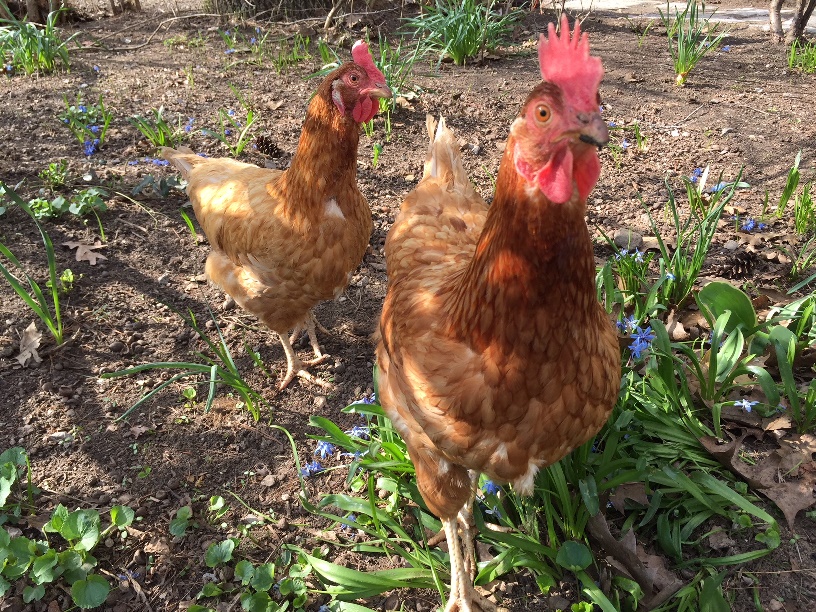
For the past three years, we’ve heard the pitter patter of little feet in our yard—chickens.

Whenever I tell people we raise chickens, it’s usually followed by a barrage of questions about how many eggs we get a day, how much it costs for feed and how to build a sturdy coop.

The answers, in case you’re wondering or thinking about getting chickens, is one egg per chicken per day (it’s actually slightly lower, so in 7 days, you would get about six eggs per chicken), $20 a month on feed for about 6 chickens, and…google it, but I can give you some design tips.

The thing I’ve been surprised about most is how much we enjoy our chickens. While I wouldn’t go so far as calling them pets, we do call them “our girls” and they have become an extension of our family.

I’ve learned the chicken community is a little crazy. I have one friend with a t-shirt that says “Crazy Chicken Lady” that she wears proudly.

I was at a 4H meeting earlier this year where another Mom plunked her chicken purse down on the table.

Harrowsmith magazine recently ran a story about raising chickens. The author said every evening around 5 p.m., she’d have cocktail hour with her chickens and took a picture of her with her glass of wine with a chicken on her lap.

I hope I’m not on the far end of the crazy chicken lady scale, but I do like my girls and we’ve certainly enjoyed additional benefits of raising chickens other than the beautiful fresh eggs every day.

You may have seen on Facebook a story about how raising chickens have given the residents of a senior’s home joy and purpose. There is something about caring for animals that provide sustenance. I also think they have helped cut down on the tick population in our yard.

This week’s #HappyAct is to go back to the farm—buy local farm fresh produce, produce your own, or if you really want to become a crazy chicken lady, look into raising chickens of your own.

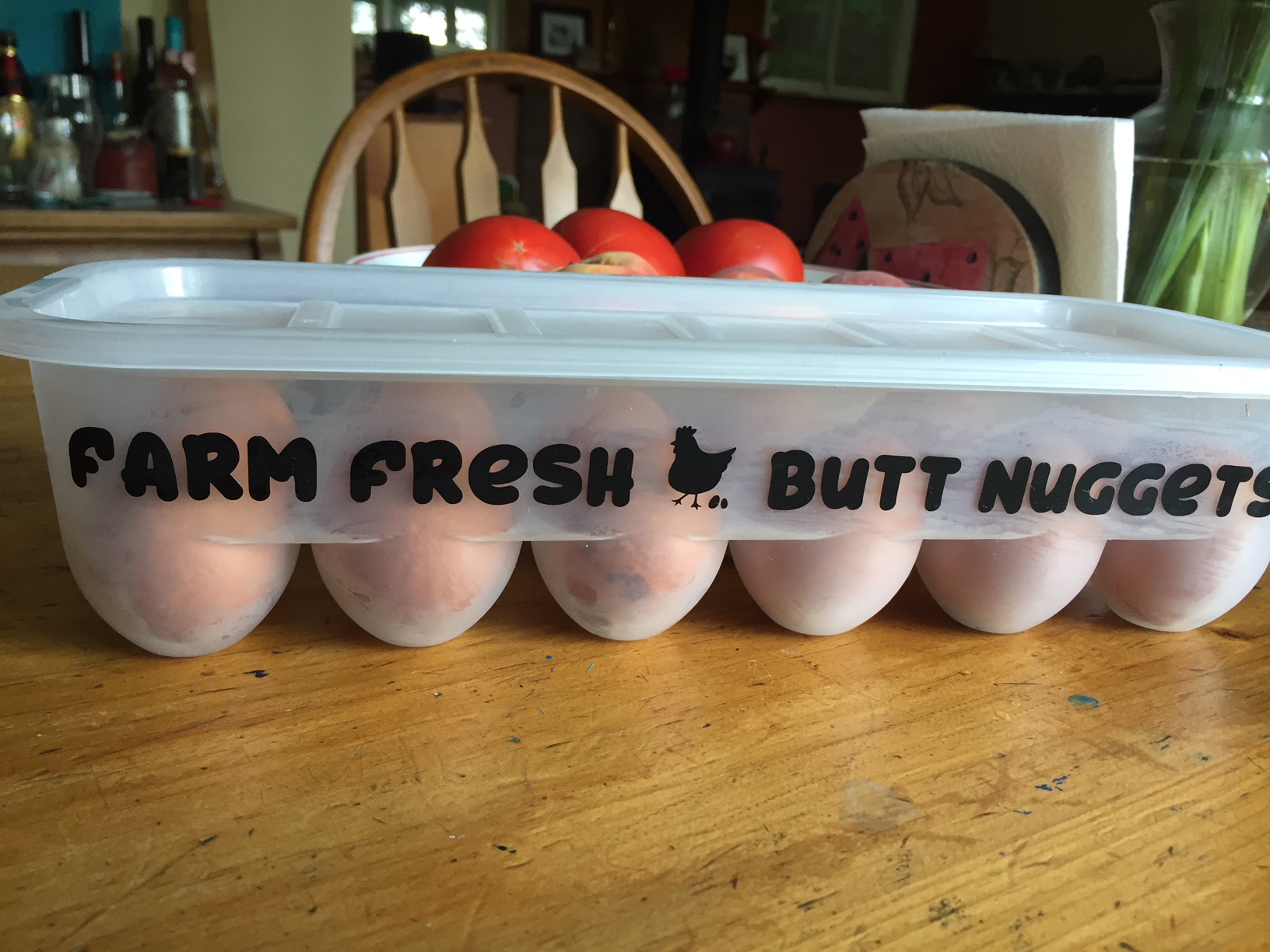
Ed. note: This spring I blogged about the ultimate tacky souvenir. My girlfriend Danette on our recent trip to Vancouver Island, used my money to buy an egg holder for me with “Farm Fresh Butt Nuggets” written on the side. Okay, so maybe I am a crazy chicken lady now.

egg carton that says farm fresh butt nuggets


Chickens in sun on front porch
My girls sunning themselves on the front porch
chicken purse
My friend’s chicken purse

Find your true north

Ottawa River

One of the many things that makes this country great is the natural beauty of our landscapes, rich resources and biodiversity.

This summer, why not explore all Canada has to offer by visiting a Nature Conservancy of Canada property?

The NCC was founded in 1960 by naturalists who decided to take action to protect natural spaces and promote conservation. Today they have thousands of acres of natural properties across Canada and offer volunteer opportunities for Canadians to help in conservation efforts. They recently launched a new website naturedestinations.ca and are inviting Canadians to explore their properties.

There is probably a Nature Conservancy of Canada property near you and you don’t even know it. I just learned about three properties close to me: Whitefish Lake nature reserve, a 120 acre property along the shores of Whitefish Lake here in South Frontenac, Brighton Wetland, one of the last undeveloped shorelines on Presqu’ile Bay, and a property with the longest underwater cave system in Canada under the Ottawa River.

Some other land parcels worth exploring are the Green Mountains Nature reserve in Quebec’s Eastern townships, Cockburn Island in Lake Huron and the Eastern Georgian Bay Coast Natural Area.

Want to learn more about the work of the NCC? On August 23rd the NCC is looking for volunteers to restore habitat in one of their Warkworth properties in the Rice Lake plains.

You can also sign up for their blog.

Today’s #HappyAct in honour of Canada Day is to explore all this great land has to offer this year. Happy Canada Day!

Ed. note: If you are in Eastern Ontario, another great property to check out is the Depot Creek Conservation Area at 6329 First Lake Road. This 71-acre property was purchased from artist Kim Ondaatje who still lives next door in Blue Roof Farm.