It’s okay to be sad

happy and sad face pictures

People don’t talk about being sad anymore. They talk about being unhappy, struggling with their mental health or being depressed, but they don’t talk about being sad.

It’s like the word has been eradicated from our vocabulary.

This is a dangerous and disturbing trend because it presupposes that when we are sad, we have an illness or problem, when sadness is a natural emotion.

The other day I asked a friend how they were doing after spending the first Christmas without their Mom. My friend naturally admitted there were times she was sad, missing her mother very much.

Last week, we dropped Clare off at the airport in Ottawa. We knew it would be the last time we would see her until spring, and I was very sad for a day or two, missing her terribly as we returned to a quiet, empty house.

Author and happiness researcher Helen Russell in “How to Be Sad” says that in order to be happy, you need to allow yourself to be sad sometimes, but most people are terrified of being sad.

Exacerbating the problem is society’s newfound hyper-focus on mental health. We are so focused on mental health that there is a propensity to self-diagnose a deeper issue or problem when we may just be in fact, experiencing temporary, normal sadness.

We are often sad when we experience grief or loss, all inescapable emotions in life. If we are sad, it is because we’ve been blessed to have held something dear and joyous.

For example, as a parent, it is hard to watch your child experience heartbreak, but if they are sad from having their heart broken, it means they have lived and loved, and sadness and heartbreak are all part of the process of loving and finding the right person.

So the next time you find yourself feeling a little down, remember it’s okay to be sad.
Secrets to happiness from around the globe

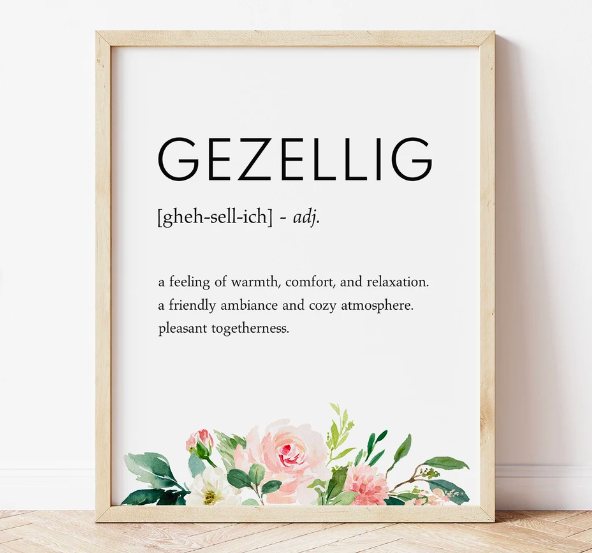
Sign with definition of Gezellig

Every country has its own unique belief system and language to describe happiness. Let’s take a quick trip around the world to see how other cultures seek and find happiness:

Joyous Icelanders embrace theta reddast, the belief that everything will work out in the end.

Italians believe dolce far niente, the sweetness of doing nothing.

In France, people exude joie de vivre, the joy of living.

Chinese xing fu is the art of finding your purpose.

The Dutch celebrate Gezellig, time spent with loved ones in a convivial and cozy atmosphere.

Germans believe in ruhe, finding peace and quiet.

And then there are the Scandinavians–the Danes known for hygge, the art of creating comfort and coziness and the Finns who value sisu, having the psychological strength to overcome extraordinary challenges.

Some countries have embedded happiness into their political and economic systems. Bhutan measures Gross National Happiness instead of GDP based on four pillars: ecological sustainability, preservation and promotion of a free and resilient culture, good governance and equality before the law, and sustainable and equitable socio-economic development.

I think North Americans could learn much about happiness from these other cultures. The ones that resonated most with me were the sweetness of doing nothing, finding peace and quiet, and believing everything will work out in the end. Which ones resonated most with you?

If you’d like to learn more about happiness around the globe, read The Atlas of Happiness: The Global Secrets of How to be Happy by Helen Russell. The common denominator in all these cultures? The power of positivity goes a long way. Have a happy week.