At my last writer’s class, my friend Dallis shared a wonderful story recalling the imaginary worlds she lived in as a child.
She wrote, “With my thoughts and dreams alone, I can obtain anything I want.” The final line in the piece she shared as she looked back on her childhood years was, “My internal flight to freedom continues to enrich my life and within its comforting landscape, the child I was lives on.”
Her piece engendered a very interesting discussion about the imaginary worlds we create and live in as children and adults.
Some of the greatest thinkers, inventors and artists in the history of time lived in imaginary worlds.
Picasso said, “Everything you can imagine is real”. Albert Einstein believed, “Logic will get you from A to Z; imagination will get you everywhere.”
Any fiction writer will tell you their brains spend a good chunk of their waking and yes, sometimes even sleeping existence, living in an imaginary world.
Imagination is an important tool for adults. It can help you come up with creative ideas and solutions to problems, see things in a new perspective, motivate you and it keeps life interesting. It can also build resilience and help you be happy.
And yet, we are taught to suppress our imaginary worlds as we age. As my friend Mo said in the discussion afterwards, living a life in reality is super imposed on us. We all have an inner life and these imaginary worlds enrich our lives.
Someone said they read somewhere that if you imagine yourself lying on a beach, it is just as good as lying on a beach.
I’m not 100% sold on this theory. It’s nice to picture yourself lying on a beach, but it will never replace the feeling of the warm sun on your body, the sound of the crashing waves and the sights of dolphins breaching the water in the distance. Still, it is a welcome escape from reality.
Reality is highly overrated. This week’s #HappyAct is to embrace your inner world and let your imagination roam free.
Here’s a philosophical question for our omniprescient digital world: should you believe what you see online if it makes you happy?
The online world is now a dangerous minefield of falsehoods, fiction and fakes thanks to artificial intelligence, disreputable news sites, content creators and citizen journalism. AI has amplified this trend, creating a wild wild west frontier of fake news. What do you believe any more?
Maybe it’s not as important to know what to believe, as it is to know how the content you consume makes you feel. If it makes you happy, maybe we allow ourselves the grace and the joy to believe in it. If it makes you sad, angry or anxious, don’t believe it and stop reading it.
A simplistic theory fraught with perils, perhaps. But there are precedents. H.G. Wells 1938 radio broadcast of The War of the Worlds, where listeners believed aliens were invading the earth. JibJab videos of your co-workers dressed as elves dancing to Jingle Bells. Cheap Rolex watches and Gucci purses you can buy for $15. A child’s belief in Santa Claus and the Easter Bunny. If it brings you joy, go ahead and believe.
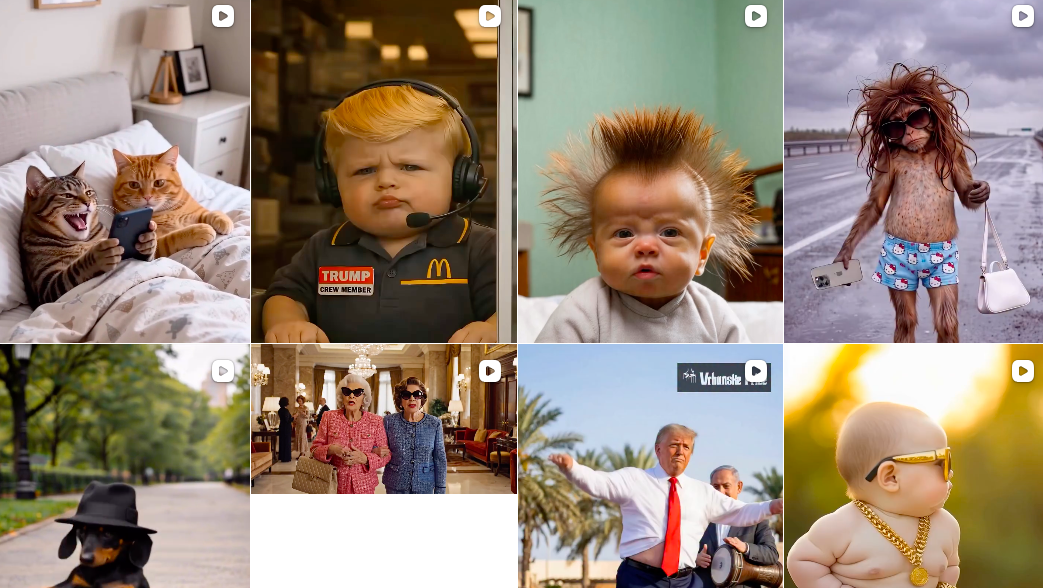
Of course, it’s better if you know what you are watching is fake. One of my favourite fake AI video series on Instagram are the absurd_ai_videos of two toddlers, Kai and Bella who travel the world, rating the places they visit and their experiences out of 10. The videos are obviously fake (it helps when ai is in the handle name) and the posts obviously sponsored by brands, but I don’t care, I believe them. You can even ask the toddlers to craft a custom message for your Aunt Charlotte’s 80th birthday for a price. Witty. Creative. Brilliant marketing. I give them a 10 out of 10.
Who hasn’t seen and loved animali.tr’s hilarious chimpanzee playing the cheese grater and pots and pans in the kitchen? Or cats cooking spaghetti in the kitchen? Guaranteed to make you smile every time. I think the monkey’s real and they trained him to play percussion.
And I’m constantly amazed and amused by the plethora of videos starring the Toddler in Chief. Maybe fiction is more real than fact.
A massive caveat. You must apply the happiness measuring stick with caution. If a beautiful woman by the name of Cameron Diaz connects with you online and agrees to be your girlfriend making you feel happy, but needs money for her grandmother’s surgery, let your common sense override your desire for happiness.
And as long as we live in a world where wars rage, there will always be content we see and consume that is very, very real that makes us angry, sad and anxious. We need to believe it to learn from our mistakes and our past.
This week’s #HappyAct is to apply a healthy dose of skepticism to what you read and see online, and believe it if it makes you happy. Just beware of the dangers.
In North America and Western Europe, young people are much less happy than they were a year ago.
That’s the startling first sentence in this year’s World Happiness Report, issued on March 20, World Happiness Day.
This year’s report sheds a light on the alarming use of social media, especially among young people and its negative impact on happiness.
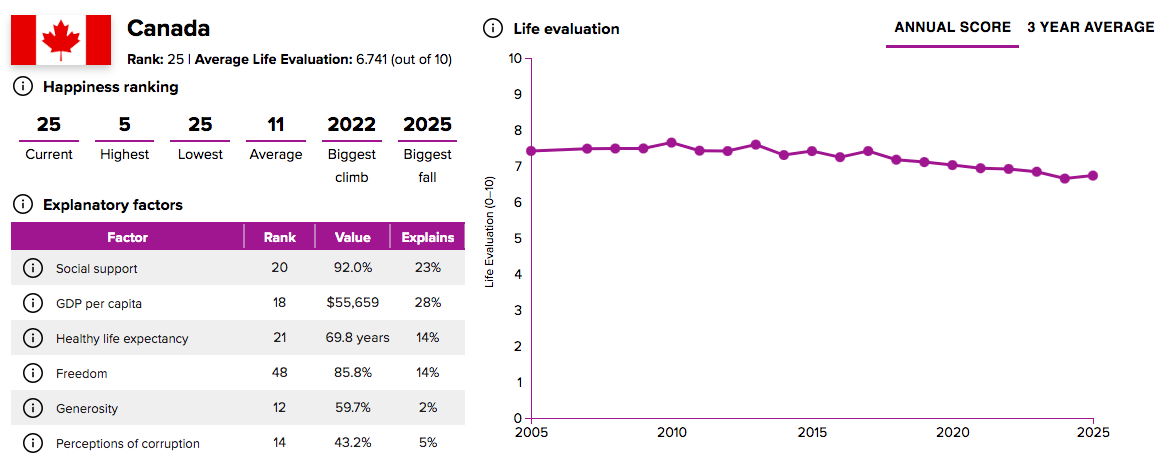
Canada fell to 25th place in in this year’s report, continuing a decade long decline. Finland ranked #1 again for the ninth year in a row. The US ranked 23rd and Britain 29th. For the second year in a row, no English speaking countries appear in the top ten.
Social media use was cited as a troubling factor especially for teenage girls in English speaking countries and teenagers.
Some disturbing findings from this year’s report.
In general, most Western industrial countries are now less happy than they were between 2005 and 2010. Fifteen of them have had significant drops, compared to four with significant increases.
In a ranking of happiness changes for under-25s, the United States, Canada, Australia, and New Zealand (the NANZ region) rank between 122 and 133 in the list of 136 countries.
In a sample of US college students, the majority wish social media platforms didn’t exist. They use them because others are using them, but they would prefer it if no one did.
In regards to social media, “there is now overwhelming evidence of severe and widespread direct harms (such as sextortion and cyberbullying), and compelling evidence of troubling indirect harms (such as depression and anxiety).”
The report found that the nature of internet use and which age group and gender use it has a direct correlation to happiness and wellbeing. It is strongly negative for Gen Z, moderately negative for Millennials, near zero for Gen X, and slightly positive for Baby Boomers.
One of the studies the report cited was of 15-year olds in 45 countries, where they found life satisfaction is highest at low rates of social media use and lower at higher rates of use.
Platforms designed to facilitate social connections show a clear positive association with happiness, whereas those driven by algorithmically curated content tend to demonstrate a negative association at high rates of use.
Communications, news, learning, and content creation are associated with higher life satisfaction. Social media, gaming, and browsing for fun are associated with lower life evaluations.
Last year, Australia banned social media for youth under the age of 16. Other countries say they are considering following their lead.
There was some good news in this year’s report.
Looking at changes in happiness from 2006–2010 compared to 2023–2025, nearly twice as many countries have had significant gains (79) than significant losses (41), the biggest winners being in Central and Eastern Europe and the biggest losers being in or near zones of conflict.
In eight of the ten global regions covering roughly 90% of the world’s population, those in the youngest age group have higher life evaluations now than in 2006–2010, either in absolute terms or relative to those over 25.
Positive emotions continue to be twice as frequent as negative emotions.
Outside the English-speaking world and Western Europe, the links between social media use and wellbeing are more positive, and depend greatly on the platforms used. Data from Latin America for example show that platforms with algorithmic feeds and featuring influencers are more likely to be negatively linked to life satisfaction than platforms that mainly facilitate communication.
Congratulations to Costa Rica, who jumped to fourth place (the report’s editors surmised this could be due to the quality of their social lives). Here is the list of top 10 happiest countries in the world.
Finland
Iceland
Denmark
Costa Rica
Sweden
Norway
Netherlands
Israel
Luxembourg
Switzerland
This week’s #HappyAct is to take a page from this year’s study and spend less time on social media. Delete an app or two. Stay happy.
It’s a New Year and as always, I wish you my loyal readers, much joy, success and most of all happiness in 2026.
One thing I’ve learned after blogging about happiness for more than a decade is we don’t always know what we want or need to do to be happier. We get caught up in the daily hamster wheel of cooking, cleaning, going to work, taking our kids to activities or rushing out to our own commitments leaving us feeling drained, exhausted and defeated. Or worse, we suffer from a general malaise, where it’s hard to see the happy in our lives.
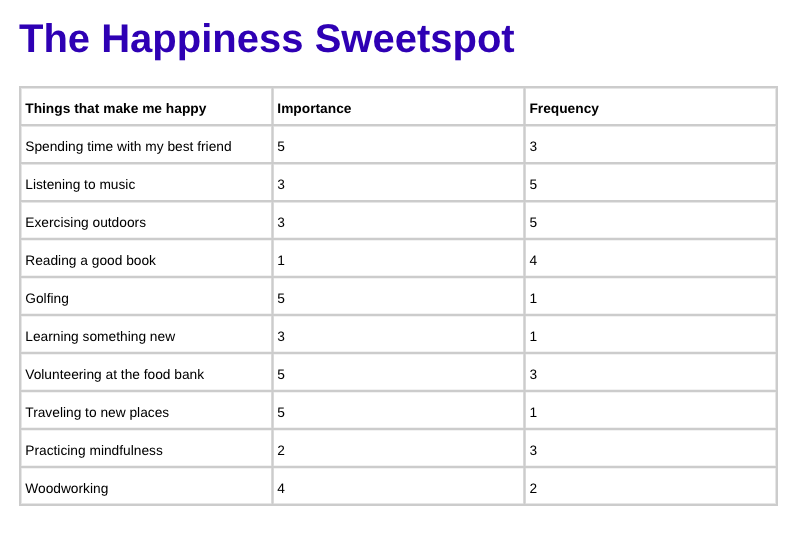
So in the spirit of the eternal optimism a new year brings, here is a simple little exercise to help you discover what actions to take this year to be happier. I call it the Happiness Sweetspot Table.
On a blank sheet of paper or in a spreadsheet, make a table with six columns across the top. In the first three columns, write
Things that make me happy
Importance (on a scale from 1-5, 5 being most important to you)
Frequency (on a scale from 1-5, 5 being you do them frequently and 1 being you do them rarely)
In the next three columns, do the same for Things that make me unhappy
Start filling out the Things that make me happy and Things that make me unhappy columns. Examples could include playing a favourite sport, spending time with friends, spending time in nature, playing guitar, etc. Try to be specific as possible. Examples of things that make you unhappy could include commuting, eating alone, cleaning the house, a volunteer commitment, etc.
Next, rank how important and how frequently you do each activity on a scale from 1-5.
Multiply the importance and frequency columns to get a total score for each activity.
Add one final column at the end called “Things I’ve Always Wanted to Do/Try but never made time for”.
Analyze your list. Your table should look something like this.
Here are some questions to ask yourself:
What items received the highest score on the unhappy list and how can you reduce or eliminate them? For instance, if you hate cleaning the house, can you lighten up on the cleaning or afford a housekeeper once a month?
What items on your happy list did you rank highest for importance but lowest for frequency. How can you make time for these going forward?
What surprised you?
What items did you add to the things you’ve always wanted to do but never made time for? What’s stopping you?
Try to be introspective and as brutally honest with yourself. While we all enjoy watching Netflix, ask yourself does it truly make you happy, or is it just a default for something to do on a cold winter night? If it doesn’t make you happy or unhappy, leave it off the list. The goal is to identify the things in your life that give you the most joy and fulfillment and the things that are acting as a drag on your happiness.
Of course, it isn’t an exact science. If you ranked “playing golf” as a 5 for importance, but 1 for frequency because it’s January, for an overall score of 5, that may not reflect how much golf makes you happy. Feel free to adjust the numbers, but also maybe think outside the box. Play some indoor golf this month, or book a golf trip if you can afford it.
Finally, identify two to three specific actions you can take this year to do more of what makes you happy, and less of what makes you unhappy. For instance, if you discovered that eating alone makes you unhappy and you eat alone seven nights a week, see if any of your friends are interested in starting a rotating potluck supper night one night a week, or suggest meeting a friend in the park for lunch once the weather gets nice.
This week’s #HappyAct is to discover your happiness sweetspots. May 2026 be your happiest year yet.
In compiling this annual list, I noticed a distinct trend this year: macro events influencing my weekly thoughts on happiness. It’s understandable. In a year dominated by Trump, the wars in Gaza and the Ukraine, not to mention all the political shenanigans here in Canada, it was hard to escape the events shaping our times that penetrated our consciousness and impacted our happiness this year.
Here’s the top 10 HappyActs of 2025 (plus a bonus one, because it’s 11, one better):
10: A letter to my American friends: when I wrote this post back on February 16, 2025, it was the early days of Trump. Little did we know just how bad it would get. Still real, still relevant, and my most-read blog post of last year.
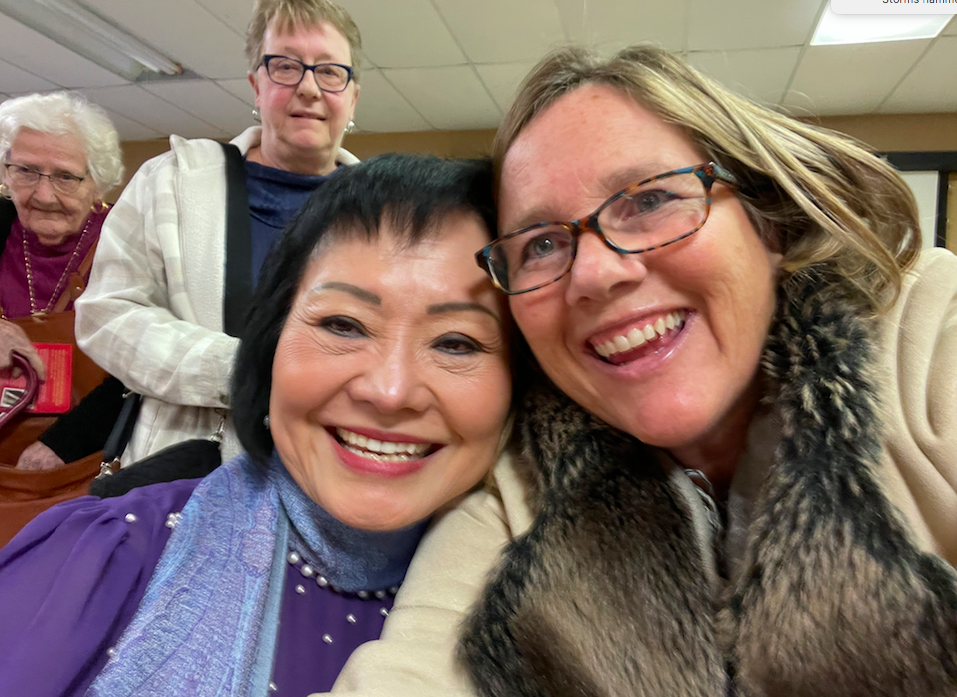
9: Golden happiness: the story of the napalm girl. When I attended a talk by Kim Phuc earlier this fall (pictured above), I expected to hear about the horrors of war and importance of peace. What I didn’t expect was to hear a survivor’s inspirational philosophy on faith, happiness and forgiveness.
7. Humans by nature are social beings, yet moments of solitude can restore the soul. In my blog posts, Battling the epidemic of loneliness and Spend time in solitude, I explore the dichotomy of the human condition: when to be with others, and when to be alone.
6. It’s okay to be sad: a good reminder in a world hyper-focused on mental health
If you’re looking for a New Year’s resolution for 2026
5. Hit delete: in this post I ask people, if you could delete one thing in your life to be happier, what would it be? I had some interesting responses online, including religion (the source of many conflicts), the internet, and WWW!
4. Learn when to say yes and no: one of the greatest skills in life is to learn when to say yes and when to say no.
3. Never lose faith: true on every level, whether it’s the state of the world, having faith in others, your team, or yourself
Retirement has been a difficult transition for me. I’m coming up on two years now and I still haven’t adjusted as well as some people do. I was sitting this afternoon, watching the rain pelt against the window obscuring a grey fall transition to winter, when it hit me.
Nobody needs me anymore.
I was always in middle management in my career. Always giving vague direction and punishing people for not reading my mind as the old Dilbert cartoon used to read. My specialty was putting out fires. People came to me looking for answers and I tried my best to write a plan on a cocktail napkin and hope it worked well enough to fool my superiors.
My days were an endless mix of planning, timesheets, scheduling, maintenance and finding the best ways to get the most out of each and every person who worked for me. I loved being needed at work even if I didn’t always love the work itself. Fast forward two years later and the only decisions I have to make are which trail to walk the dog on and what we are having for supper. Work doesn’t need me anymore.
My kids certainly don’t need me either. Both are out living their lives, one almost finished university (so proud) and looking at where she will end up next, the other knee-deep studying whatever biochemistry is. Except for rare conversations about new musical groups (Red Clay Strays and Tyler Childers) and the odd supper, they are completely and utterly embracing their own lives. No more rides to a remote hockey rink on a snowy winter road, no more conversations asking for advice on relationships. They don’t need me anymore.
Honestly the only person who even tolerates me is my life partner. Truthfully, I think if she had to pick between me and the dog, we all know who would win. Bookending Monday badminton and Tuesday line dancing is Friday writing groups and Saturday stock sport tournaments. She has embraced retirement with gusto and I am glad for this. She doesn’t need me anymore.
All the influencers talking about retirement being the golden age should have their heads examined. For some, retirement is a time to worry, to wander aimlessly trying to find direction and meaning in their lives, all the while wondering if their investments will support them until they leave this earthly abode.
I know that some of you are saying to yourself, what does he have to whine about? Lives on a lake, semi-good looking, gorgeous wife, yada, yada, yada but for some, myself included, the emptiness from not being needed outweighs all aspects in life.
Tread well into retirement my friends, sometimes it’s not all as advertised.
And if you see a white Dodge Cummins diesel with a 30-foot trailer rolling down the 401 at a buck twenty, festooned with Kingston BMW logos on it, know that someone is still depending on me to deliver a car that is worth more than my last annual salary. I guess someone still needs me……….
Dave asked me a funny question the other day. He asked what my followers are called.
Gaga has her little monsters. Taylor Swift has her Swifties.
Now I realize my little blog isn’t exactly on the same scale as these music legends, but it got me to thinking my followers deserve a moniker too, so I’ve decided to call you, my loyal readers, The Happy Actors.
There is something to be said for faking it til you make it, or in this case, pretending to be happy to achieve happiness.
In fact, in response to last week’s blog on what people’s personal mantras were, a friend of mine who was away replied hers was “Fake it til you make it”. She said, “You probably know more than you give yourself credit for. At work, in other situations, smile and give it your best shot and you’ll probably do just fine!”
I believe the same applies to happiness to an extent. If you pretend you’re happy, you are far more likely to achieve happiness.
Here’s my theory. When we pretend we’re happy, our mood is lighter and our brain is tricked into seeing things in a more positive light. We are apt to be open to new things, and take in the beauty and goodness around us. Through this mindset and our actions, we become happier.
American philosopher and psychologist William James first propounded this theory in the late 1800s, believing that our behaviours create our emotions. Known as the theory of pragmatism, it touts that the practical consequences of ideas and actions evolve through our experiences and interactions with the world. Truths are not fixed, and through our actions, we can find meaning and happiness if we choose.
This week’s #HappyAct is to conduct a little experiment: on a day when you might be feeling a bit down, pretend for the whole day you’re happy, then report back on whether you actually felt happier or had a happy day.
A career spanning decades Accumulated stress from years of working Secrets from your past
A relationship that drains you instead of filling your cup Regrets, many or few Self-doubt
Lying awake in bed worrying about your children when they’re out late at night instead of home safe in their beds Missing your children when they’ve left the nest to conquer the world on their own
So many feelings (the hard ones the hardest to let go) Pent-up guilt or resentment Inhibitions holding you back
Caring too much what people think of you Not caring enough to take action when action is warranted. Being envious of riches others have
As a parent, all you really want is for your kids to be happy. Helping my kids find happiness was one of the reasons I started this blog, but I quickly realized I couldn’t help them be happy, they had to chart their own path in finding joy and happiness in their lives.
So my heart soared when we received a phone call from Grace last week. She was in the Starbucks drive-through and saw a police car pull up behind her. She decided to pay it forward and buy the police officers a coffee.
They pulled up beside her and rolled down their windows to thank her, saying it was so nice (and sadly rare) when members of the community expressed their appreciation for what they did. Since Grace is a Park Warden with Ontario Parks and often works with the OPP on incidents, she has immense respect for police officers.
It made my day to hear the happiness in Grace’s voice as she related how good it felt to do this one small act of kindness that made such a big difference in the day of these police officers.
And it made me smile to think, maybe, just maybe, the Nextgen of #HappyActs is alive and well.
Several years ago, I was on a business trip with some colleagues. We’d had a long travel day and after checking in to our hotel around 8 pm, wandered down to the hotel bar for a late dinner. We sat for at least ten minutes without any service, so one of my co-workers got up and approached the waitress. He said she was quite surly when he talked to her, but she eventually came over with some menus.
I’ve always been fascinated by how a person’s actions can affect the actions of others, even more so since starting this blog, so I decided to embark on a little experiment. I wondered if I smiled broadly and was overly nice to our server, asking her questions about her day and thanking her every time she came to the table, whether by the end of our dinner, she would provide better service.
We ordered our drinks, and I kept smiling, laughing and making small talk when she brought us our meals. By the end of the evening, she still seemed stressed and unhappy, but was a bit more friendly and attentive.
There are many takeways from this night. The first is if someone is having a bad day, chances are it has nothing to do with you. Our waitress was probably on her feet for eight hours by the time our group strolled in. No doubt she was exhausted and wanting to go home. Who knows what she was dealing with at work or at home—a sick parent or child, mounting bills, an argument with her husband or friend. Since she never shared anything personal, we’ll never know.
The second is our actions did result in her being a bit nicer and attentive, so there was a positive correlation between our efforts to be nice and her actions.
The third takeaway is our group did get better service so it pays to be kind. As one of my old bosses used to say, “You can catch more flies with honey than vinegar”.
Everyone can have a bad day. It seems to me people have short fuses these days and are starting to lose their capacity to show empathy and understanding. Even if you can’t turn someone’s frown upside down, you can give them grace and compassion.