
How long could you go without talking to another human being and be happy?
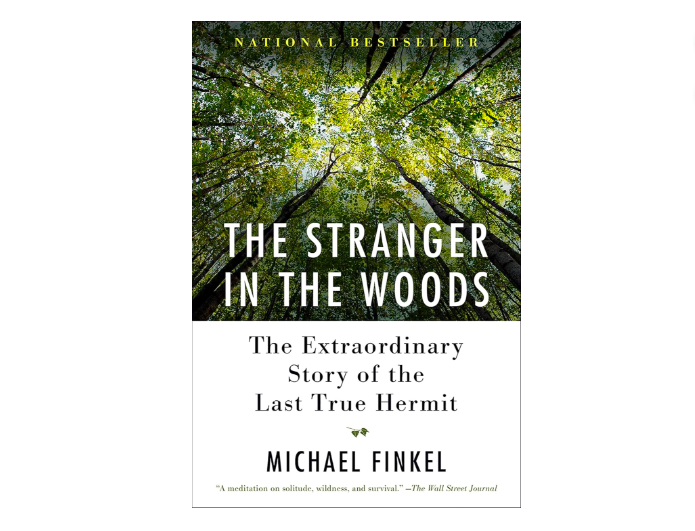
I’ve been thinking about this question after finishing a fascinating read, The Stranger in the Woods, the Extraordinary Story of the Last True Hermit by Michael Finkel.
It’s the story of Christopher Knight, an average guy who at the age of 26, decided to live in the Maine woods on his own and didn’t talk or interact with another human being for the next 27 years.
He didn’t create art, he never kept a journal, he didn’t even talk to himself. He just spent his days in his clearing (the guy didn’t even have a cabin) surviving and existing.
Knight was never lonely during his time in the woods. He would sometimes read or listen to the radio, but spent the majority of his free time sitting in a lawn chair “in quiet contemplation” thinking about wherever his mind went. He claimed he was never bored and didn’t understand the concept of boredom. Boredom only applied to people “who felt they had to be doing something all the time.”
In considering Knight’s motives, Finkel explores various ancient beliefs and customs centred around living a life of solitude.
The first great literary work about solitude was written by a hermit protestor Lao-tzu in the sixth century. In Tao Te Ching, Lao-tzu wrote 81 verses about the pleasure of forsaking society and living in harmony with the seasons. Lao-tzu believed that only through retreat rather than pursuit, through inaction, rather than action, that we acquire wisdom and peace.
Finkel quotes the eighteenth-century philosopher Jean-Jacques Rousseau. “I have become solitary because to me the most desolate solitude seems preferable to the society of wicked men which is nourished only in betrayals and hatred.”
Carl Jung said that only an introvert could see the “unfathomable stupidity of man.” Sartre wrote “Hell is other people.”
Herman Melville who wrote Moby Dick withdrew from public life for 30 years. He wrote, “All profound things are preceded and attended by Silence.”
The greatest philosopher of all time, Dave says, “I prefer to spend my time with dogs than people.”
Knight related to the Greek philosophy of stoicism that held self-control and harmonious existence with nature constituted a virtuous life and you must endure hardship without complaint.
He also felt a kinship with Socrates who said, “Beware the barrenness of a busy life. You become free not when you fulfill your desires, but by eliminating desire. Those with less become content; those with more become confused.”
So what learnings can we take away from these philosophies and Knight’s experience? I’m not suggesting we turn our back on society, but perhaps we can experience a greater peace, stillness and happiness by seeking moments of solitude.
I asked at the start how many days can you go without speaking to another soul? I’ve learned for me the answer is three days. I can spend three days quietly at home, at peace in nature and be happy. After three days, I seek human interaction and connection and will reach out to friends or plan some social activity.
I have blogged before about the epidemic of loneliness. It’s important to delineate between being alone and being lonely.
Solitude when chosen, can be bliss, but when it is forced upon mankind, it can be torturous and is still to this day one of the great punishments inflicted on people.
Finkel makes this point in the book, quoting US Senator John McCain who spent more than five years as a prisoner of war in Vietnam, two of them alone. McCain described his experience as “awful. It crushes your spirit. The onset of despair is immediate.”
Solitude must be a choice.
It seems only fitting to bestow the final words to Knight: “If you like solitude, you are never alone. What I miss most in the woods is somewhere in between quiet and solitude. What I miss most is stillness.”
“Solitude bestows an increase in something valuable…Solitude increased my perception. But here’s the tricky thing: when I applied my increased perception to myself, I lost my identity. There was no audience, no one to perform for. There was no need to define myself. I became irrelevant.”
His isolation felt like a communion. “My desires dropped away. I didn’t long for anything. I didn’t even have a name. To put it romantically, I was completely free.”
This week’s #HappyAct is to experience solitude. Be happy and be free.
Leave a comment: how many minutes, hours or days could you go without talking to someone?

 Happy Act