“One day you’re waiting for the sky to fall The next you’re dazzled by the beauty of it all”
I was listening to a cool chill mix on Spotify the other day, and they played Bruce Cockburn’s Lovers in a Dangerous Time. This line seemed to personify how we’re all feeling right now, waiting for the sky to fall like Chicken Little*.
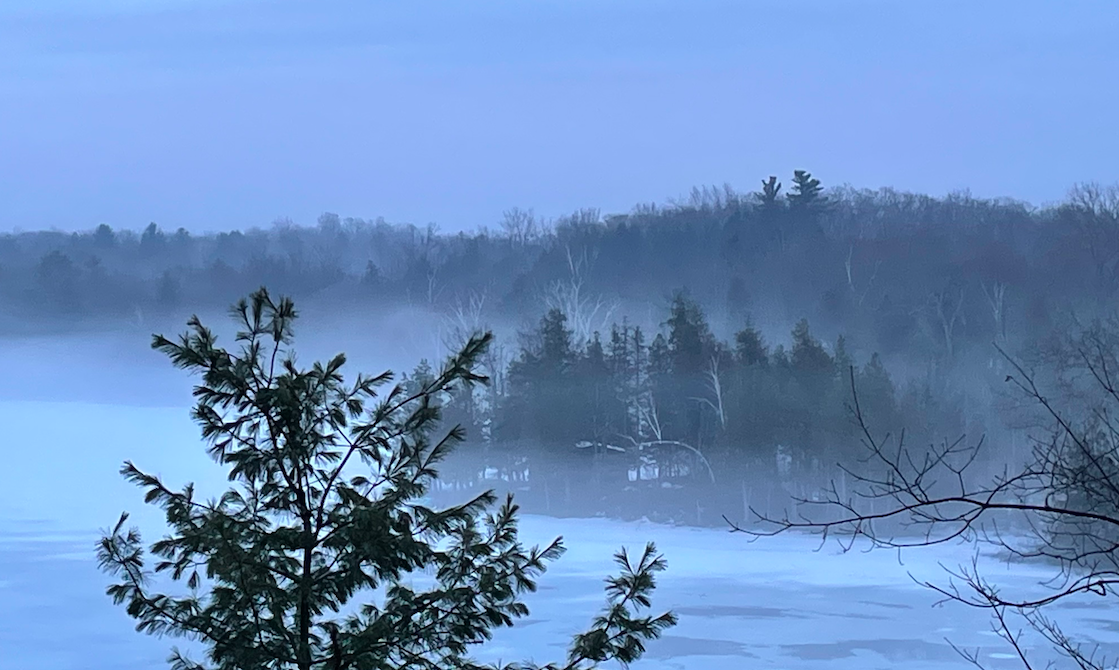
We all have different coping mechanisms. I’m ashamed to admit mine is to retreat into my writing and to my little lake where I can watch the mist rise on the shoreline, listen to the birdsong, and wait for the spring crocuses to appear. Escapism at its finest.
In my heart, I know this is no solution. I wish I was a better person. I wish I was like Carol, the wife of a fellow proctor at Queen’s University who officially retired years ago but keeps working at an outreach program operating out of one of the churches in Kingston, helping people on the street get warm food and shelter. Her response to the unfathomable problem of homelessness and drug use is to volunteer and make a difference.
Or like the millions of Americans in all 50 US states who took to the streets in the No Kings protests yesterday to raise their voices against Trump and his administration’s policies.
That’s not me. I choose to cope by living my small life, making a difference where I can.
Perhaps the ever wise and socially and environmentally conscious Cockburn has provided us with the answer. When the world seems out of control, look for the dazzling beauty in it all.
A magnificent sunrise or sunset. A child’s smile or laughter. The first snow drops or bluebells peeping through the frozen ground. Signs of hope and renewal.
Now it’s your turn to share. What do you do to cope when the world seems to be falling apart and you’re waiting for the sky to fall? Leave a comment below.
*a European folk tale about a chicken who believes the world is ending
Social prescribing is a relatively new philosophy and practice in health care. It involves health practitioners writing prescriptions for their patients to participate in social or physical activities, just like a prescription for traditional medicine.
Instead of asking, “what’s the matter with you?”, health care professionals ask, “what matters to you?” to prescribe activities that help patients build strong community connections improving their overall health.
The United Kingdom has been at the leading edge of social prescribing. In 2023, doctors in the UK wrote more than one million social prescriptions for patients to participate in social, cultural and nature activities. These patients saw their doctors 40% less than the regular population saving the health care system $2,400 per person.
Social prescribing is starting to take off in Canada too. A University of Toronto researcher started the Canadian Institute for Social Prescribing (CISP) in 2022 in response to the after effects of COVID-19. A national organization anchored by the Canadian Red Cross, it connects people and practices, shares knowledge and gathers data to influence policies to strengthen health and community care. There’s even a Social Prescribing Day in Canada (March 19) and week, filled with lectures and events.
I have to confess when I first read about social prescribing, I was a bit put out. Have we really come to a point where we need to rely on health care professionals to tell us to get out of the house and get active or be social? There is enough strain on the health care system already. I’m pretty sure my doctor has better things to do than discuss whether signing up for a watercolours class, drum circle or swimming lessons would improve my mental or physical health.
Some of these programs however can be expensive, even cost prohibitive for individuals. One solution is for insurance companies to offer a certain amount of coverage each year ($200-$400) as part of their benefits program for employees to participate in these types of programs, similar to the amounts allocated for physio, massage and chiropractic services.
Another solution is for employers as part of their health and wellness offerings to subsidize these programs. It’s not as crazy as you think. Good employers now offer a wide array of perks or provide financial support for programs and services that contribute to their employees’ wellbeing, such as gym memberships, fitness equipment, and educational courses.
As someone who writes, I was interested to find out that one of the organizations CISP has partnered with is the Writers Collective of Canada, which runs between 20-30 free workshops a week in major cities across Canada.
I can attest to the great value, friendship and social connection I’ve discovered through the writer’s and badminton groups I belong to through the Kingston Seniors Association.
And it’s not just seniors who can benefit from social prescribing. According to CISP, social prescribing can result in 3,900 fewer cases of adolescent depression and 3,500 years of additional schooling completed by Canadian youth aged 15-17 experiencing signs of depression.
This week’s #HappyAct is to sign up for a new activity and write your own prescription for happiness–give your doctor the day off.
I had some time to reflect over the holidays and decided that in 2026 I would become more involved and aware of the things going on in my community.
Recently retired, I wanted to find more purpose in my days. Don’t get me wrong, living in the country I have plenty of time for long walks, reading and writing, connecting with friends, shovelling snow and embracing wind chills.
However, I wanted more, so I started reviewing local news, and websites and was surprised at how much is going on in my little corner of the woods.
What also surprised me was how much joy it brings to connect with my fellow “Stone Millers” (what I call those of us who live in Stone Mills Township northwest of Kingston)
So far this year, I have attended a weaving demonstration at a local museum, an agricultural land use meeting to understand how land is designated in the province, and will be attending an open house for the proposed southern route for the Alto high-speed train rail proposal in eastern Ontario.
So much going on in my neighbourhood.
The transition from working full-time to retirement can be tricky, but I am finding new ways to discover happiness in my own backyard.
I predict some great local connections in the months to come and look forward to being an active and well-informed “Stone Miller”.
Ed. note:Alto is a crown corporation that was established to plan and deliver the high-speed rail project in the Toronto to Quebec City corridor. The speed of the trains will reach 300 km/hour and the cost of the project is projected to be $80 billion. Alto is evaluating two rail routes between Peterborough and Ottawa, a southern route through more heavily populated but ecologically sensitive South Frontenac, and a northern route near Highway 7. A route along the already established corridor north of Lake Ontario through Kingston is not currently under consideration. If you want to find out more about this project and make your opinions known, Alto is holding a series of Open Houses this month. You can also complete an online form to share your feedback. The times for the Open Houses appear to be the same for all locations.
February 18: South Frontenac (11 am – 3 pm and 5-9 pm at Storrington Lions Club, 2992 Princess Rd., Inverary)
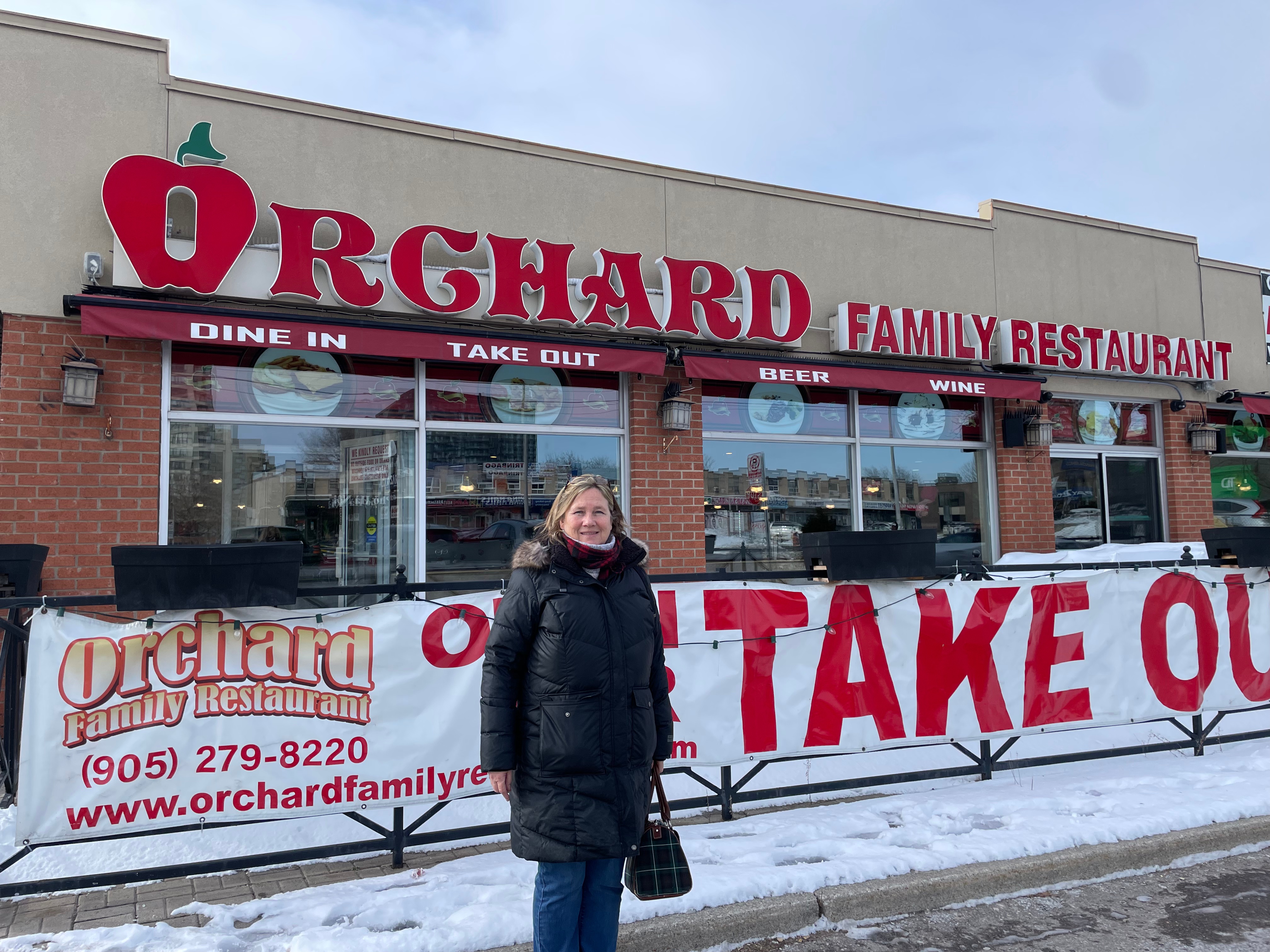
Whenever I go to the Orchard, it’s like a trip down memory lane. You see “The Orchard” was a regular Sunday morning ritual for my family when I was a child, and especially once my mother passed away.
The Orchard is almost as old as I am. It opened in 1966 a block south of Hurontario and Dundas and was owned by two friends, Angelo Mazaris and Louis Velianou from Florina, Greece. Louis’ son Tom runs it today. An interesting fun fact: my Mom was born in a house on Argyle Street, just a few streets from the Orchard where my grandparents owned a greenhouse for years in the 1930’s. The Orchard was literally in my Mom’s backyard. I’m guessing they called it the Orchard because in those days, that entire area of Mississauga was full of apple orchards.
Back in the 80’s, there was always a long line up at the door to be seated. I loved watching my Dad when he walked into The Orchard. It was like an episode of The King of Kensington or Cheers where everybody knew his name. As soon as my Dad or brother Don were seated, one of the waitresses would come up and give them a hug or kiss. The owners Angelo or Louis would wave in greeting from behind the open counter as they were flipping eggs on the grill.
They say our sense of smell triggers the most powerful memories and that was true with The Orchard. The unmistakeable smell of fried bacon, the intoxicating aroma of the best coffee in town, and that greasy smell of oil from French fries or hash browns that always made your stomach grumble.
At the end of breakfast when we offered to pay for the bill, my Dad would always say, “you can leave the tip”. You paid at the counter on the way out and no one used a debit or credit card in those days–it was always cash.
The Orchard was more than just a breakfast place for our family. As we got older and moved out of my Dad’s house, breakfast at The Orchard was often the only meal we ate as a family together each week. The place where we shared what was happening in each other’s lives. The staff there became an extension of our family, familiar faces on a Sunday morning. And when my father passed away, it was the place we went to honour him and to continue the tradition.
Today, there’s an entire slew of chains serving up breakfast, but few offer the same family feel of a restaurant like The Orchard.
This week’s #HappyAct is to find your favourite breakfast spot that makes you feel like family and help yourself to a big greasy breakfast.
I’ve been thinking a lot about narratives and filters lately, both on a global scale but also on a micro level and how people can create their own narrative based on filters that skew how they see things.
I’ve seen this in some of the relationships in my personal life—people seeing things very differently based on their experiences and filters. It’s led to some interesting conversations.
It’s only natural to derive our opinions and views based on the experiences and influences in our life. We all do this. But it seems to me there are more people concocting disturbing and trenchant narratives, often based on misinformation or their warped view of the world and this is causing seismic rifts in our personal lives and in the world.
The scary thing is when people see the world through artificial filters and false narratives, the narrative becomes justification for their actions. They stop caring about what others think, and believe what they want, often despite the facts. The narrative becomes their truth.
So how do we resist creating false narratives in our minds?
Actively seek differing opinions.
Don’t rely on a single news source. I had a conversation with one person recently who gets all their news from The Epoch Times. They took every word as gospel.
Try to see things from other people’s perspectives and filters to build understanding, compassion and forgiveness.
Don’t be afraid to question someone else’s narrative. If something doesn’t add up, do your own research.
At the same time, challenge narratives you’ve created in your own mind. Are you seeing things clearly? What have you fabricated? What filters are you applying?
Know there can be truth on both sides sometimes.
Accept that most things aren’t black and white.
Remember, actions always speak louder than words: Live your life in such a way that if someone was to ever speak badly of you, no one would believe them.
These are interesting times. We are more divided than ever. If we are going to rise above our own human frailty and fragility, we need to seek the true narrative.
Don’t let anyone tell you there’s no such thing as a free lunch.
This past month, I’ve enjoyed four free lunches, making me an official pensioner. I come by it honestly. The Swinton family motto after all is, “You can call me anything you want, just don’t call me late for dinner.”
My first free lunch was the annual Celebration of Friends of Empire Life retirees and 25-year employees. It was a wonderful afternoon of catching up with old friends and colleagues at the Kingston Marriott. Three hours flew by, and I realized I didn’t get a chance to talk to even half the people that were there.
My second free lunch was a thank you from my dear friend Pamela who is turning 92 this month. I drive Pamela to writing class every other Friday and she suggested we have lunch before class at Hattie’s Cove, the Senior’s Centre restaurant. They offer a free lunch to members each month celebrating a birthday.
My last two free lunches were volunteer appreciation luncheons hosted by South Frontenac Township and Southern Frontenac Community Services where Dave and I volunteered this summer in their garden. They were catered by Rampart Kitchens, a wonderful local caterer and we enjoyed eating the delicious Greek-themed meals, chatting with other volunteers in our community and listening to live music at the Grace Centre.
So, the next time someone tells you there’s no such thing as a free lunch, follow the Swinton rule.
The holiday season and New Year always provide ample opportunities to snag free nosh. Shop at stores that offer free hot chocolate and snacks, attend a dinner or craft night at your local church, or watch for invitations to a New Year’s Levee in your community. Many service groups or churches also offer a free Christmas or holiday meal at this time of year. Happy munching!
Note: While this post is meant to be tongue in cheek and a thank you for my free lunches this past month, food insecurity is a growing issue in many communities. Food Banks are in desperate need of donations, so if you are able to give, please give to your local food bank this holiday season. And if you live in South Frontenac, the Verona Lions host a free Christmas dinner every year on December 25 at noon at the Verona Lions Hall. They ask you register on their website so they have an idea of numbers.
As I grow older, I am convinced more than ever that I am just an interloper on this earth. A transient squatter that one day will evaporate, ashes to ashes, dust to dust. The land, however, will live on.
I am reminded of this every day I watch the wildlife in the woods I live in and the lakes I paddle on. They belong to the blue jays, beavers, porcupines, deer, woodpeckers, dragonflies, butterflies and herons. And yet, humankind aspires to own property and claim it as our own, putting up fences and markers to demarcate what is rightfully ours, and keep people and animals out.
I love my property, but I have always believed it is ours to steward and share, not own. I know there are many of my neighbours who would disagree with me.
Since moving to the country, I’ve seen the widely opposing views on property. Some are generous, allowing people to hike, and even hunt on their land and use private water access points. Others are aggressive in their defence of “their land”, putting up gates and guarding their property with shotguns. You better know who you’re dealing with if you wander down a private laneway or path.
One of my favourite walks in Scotland this summer was on private property in the tiny seaside village of Plockton, just off the Isle of Skye. There is an isthmus that juts out to sea, owned by a local family who has granted permission to anyone to hike the trails around their modest farmhouse. It was one of the most beautiful hikes I’ve ever done, and reminded me of the seascape on Vancouver Island.
In 2003, Scotland adopted the Land Reform Act, commonly known as “right to roam” that gives the people of Scotland the right to access and roam the land and inland waterways, including public lands, farmers’ fields, and other private property. Basic principles include respecting people’s privacy, caring for the environment, leaving no trace, and ensuring no damage is caused to crops or livestock.
England has not been as progressive in adopting this principle and we had some interesting conversations with fellow hikers and locals about the right to roam and our relationship to land and property.
As a society, we have been poor stewards of the land. From polluting our oceans, to mismanagement of our forests and the ever-threatening impacts of climate change, we have failed in our attempts to be good stewards of this planet. One writer described it as “soiling our own nest”, an apt description.
We’ve also incurred irreparable harm to our planet and humankind by trying to define borders and territories. Wars have been fought and millions of lives lost from the desire to conquer land.
In this, as in so many things, we can learn from Indigenous peoples who have a deep connection to nature, viewing themselves as part of an interdependent ecosystem with a deep commitment to care for the land and its creatures for future generations.
This week’s #HappyAct is to do one small thing to care for the land and creatures in your backyard, all the while accepting it’s not really your backyard in the first place.
Photos: at top: the view from a trail owned by homeowner’s in Plockton, Scotland, looking out over the sea. Above: deer grazing in my garden.
If you want to get a feel for a place, spend an afternoon in a city park.
A city park is a refuge, a place to exercise, play, eat, rest, and reflect. It’s a place where neighbours, friends, strangers, and lovers meet. It’s a special place that is often the life and heartbeat of the city and the community.
When I travel, one of the first things I like to do is take a stroll in a city park. Whether it’s Regent Park in London, Central Park in New York, or Stanley Park in Vancouver, I love exploring the meandering paths and watching the people and activity going on.
Gage Park in Hamilton has been my strolling ground lately since we are housesitting for Dave’s sister. Here’s what I’ve observed during my morning walks.
Conversations.
An older couple sit on a bench talking to a homeless man. He shares his experience of living in shelters across the country, from Charlottetown to Saint John to Hamilton. He spends part of every day at the Salvation Army. His voice breaks when he tells a story about being chased by street gangs downtown.
Two young mothers pushing strollers walk briskly, sharing confidences. “I’m always thinking, what can I do tomorrow to keep him entertained so I don’t lose my mind. Where’s me? I feel like I’ve lost me becoming a Mom.” The lament of every young mother. I say to them in my head, “Don’t worry, you’ll find yourself again.”
A man wearing a Toronto Blue Jays hat. He doesn’t think their chances are good this year. We chat about the weather and he asks Siri for the forecast, which is very detailed, chance of showers later in the day with a heat wave blazing toward us by the weekend. He used to work on a chicken farm on Starr’s Island in Port Perry and loves dogs. He takes the bus to the park.
Sights, sounds, and smells.
The fragrant scent of lilacs and peonies and roses and the surprising smell of vinegar in the rose garden.
Birdsong. Robins chirping in the trees. A cardinal singing, brightly welcoming the morning.
Black squirrels with brown tails and grey squirrels with black tails chasing each other around the craggy bark of a Kentucky coffee tree.
Bike bells chiming as a man on a bicycle passes a bunch of kids on scooters.
All ages from all walks of life.
A man in an electric wheelchair whirring around the park blasting out Steely Dan on loud speakers; it’s a Long Cool Woman in a Black Dress on his second tour.
City workers hunched low, pruning and weeding in the rose garden, talking about their plans for the weekend.
A young couple lying on a blanket, their heads resting on their elbows, almost touching, deep in conversation.
Toddlers in blue and pink onesies with hats with brims so wide you can’t tell if they stumble because of their pudgy little legs, or because they can’t see two feet in from of them.
A dog walker with six dogs, four types of doodles (always the doodles), a husky and some kind of German shepherd cross. How do the leashes never get tangled?
A parade of mostly mothers and strollers marching through the park and gathering in a circle under a big oak tree for a yoga class.
An older gentleman dressed nattily in a blue checked short-sleeved shirt, grey dress shorts and socks, black running shoes and a bowler hat, jogging slowly through the park. How does he manage to look so dapper jogging?
Teenagers splashing each other with water from the fountain, screaming and swearing, oblivious to the disapproving looks of the older woman sitting nearby.
That irritating older woman, always on her phone, looking down instead of up.*
This week’s #HappyAct is to take a stroll in your city park and discover the heart of your city.
*Ed. note: To truly experience the sights, sounds, and smells of your stroll, it’s recommended to stay off your phone. I did use my phone to take photos and notes since I have a poor memory. And for those of you with a historical interest: Many of Canada’s grandest city parks were built in the golden age of park development from 1874-1914. Mont Royal Park in Montreal was built in 1874, Stanley Park in 1888, Assiniboine Park in Winnipeg in 1909, and Gage Park in 1922. As cities developed, there was a recognition that people needed access to nature for their physical and mental health. The City Beautiful Movement rose which promoted beautiful public spaces, including buildings, streetscapes and parks.
If you’re looking for a fun and interesting way to spend a morning, go to an auction.
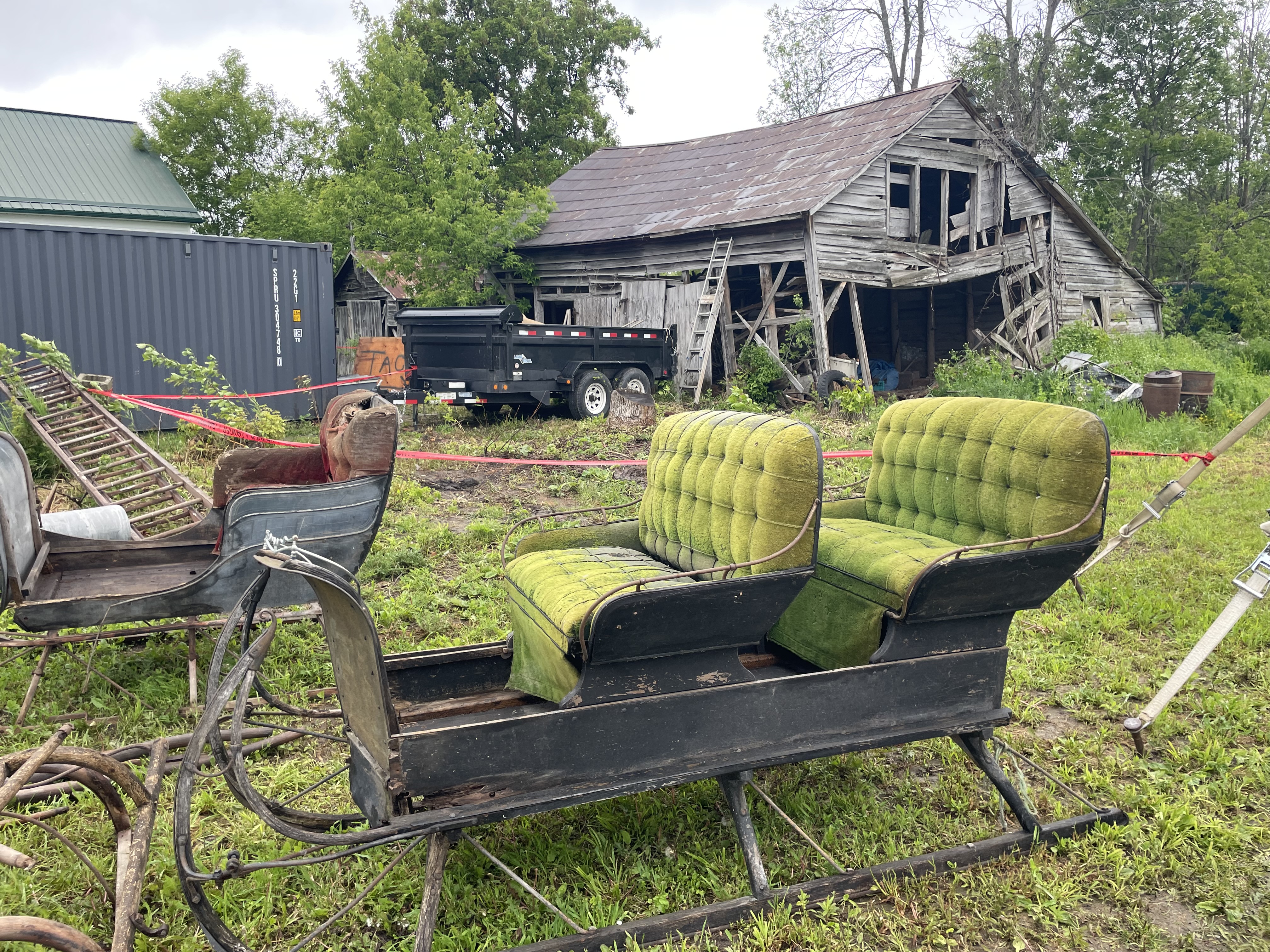
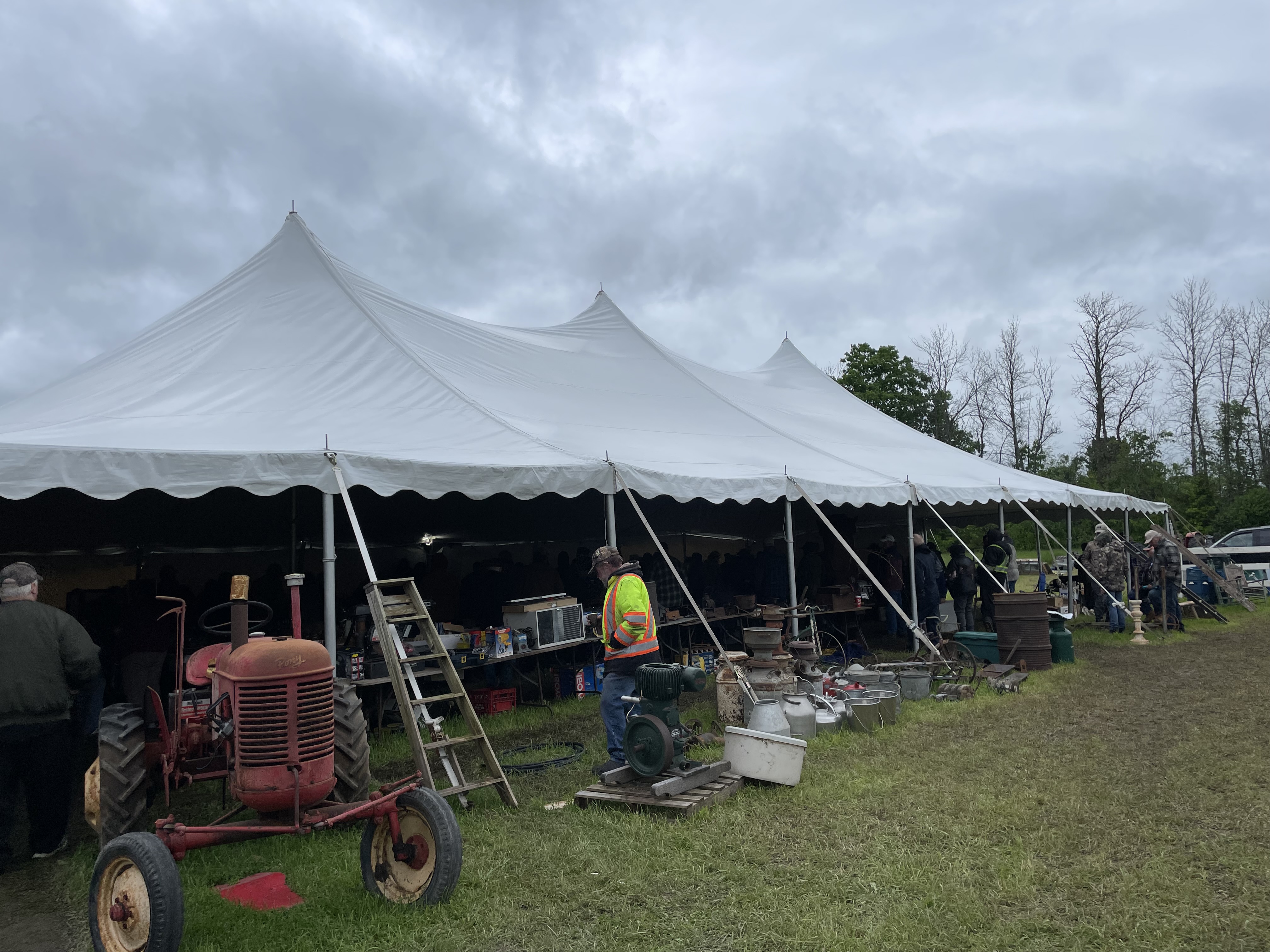
Yesterday, Dave and I headed out under grey cold rainy skies to an estate auction on Maple Road, just north of Odessa. It was an antique and collectibles auction of a local farmer featuring horse gear and memorabilia, but with lots of interesting household antiques, prints, books, and tools.
The auction company was Snider and Sons, and what made this auction particularly interesting is it was their father who had passed away, so the sons who were the auctioneers had first-hand knowledge and commentary on many of the items.
Some people might balk at bidding on the cherished possessions of a family member who has passed, but I’ve always taken the opposite view, taking comfort in knowing these precious antiques and treasures will be loved and become a part of a new family’s home for generations to come.
There’s always so much to see at an auction, starting with the treasures themselves. There were antique baskets, cowboy and bowler hats, snowshoes, rugs, horse bits, drill bits and wrench sets, stamps, and books under the main tent, and more garden and farm tools on three wagons out in the yard.
I had my eye on a cast iron rabbit, a unique wood carving of an Indigenous chief and eagles, some signs, including a No Fishing sign I wanted for the lake where our geothermal coils are in the water, and some antique oil lamps.
I was bidding on this unique wood carving but it ended up going for more than I was willing to pay
Sometimes there are items that nobody knows what they are; sometimes there are items you haven’t seen in years, like the stoneware bed warmers called “pigs” that sold yesterday for $10.
These stoneware pigs were used as bed warmers in olden days
Then there’s the people. You get “all kinds” at an auction, from serious collectors, to local farmers, and casual bidders like me who just love a good auction and turn up for fun. There was one couple who bid only on tire-shaped ashtrays and cigarette lighters (they had a whole box of them by the end of the auction), a younger woman and older fellow who got into a bidding war whenever antique horse bits were on the auction block, and a guy who wouldn’t bid on anything over $10.
The fun thing about an auction, unless you’re an expert or a collector, is you never know what price things will go for. Some box lots can go as low as $1, but then a pair of wrenches (these ones were rare Comet and Oxo wrenches) went for $75. I was surprised when two small sleeves of stamps went for $370.
There is a noticeable excitement in the air when rare or big ticket items come up for bid. At yesterday’s auction, the biggest items were Black Horse Ale collectible statues that went for $1,500 and a custom display of antique horse rosettes or pins that went for $3,100. The crowd applauded after the bidding ended.
If you’re new to the auction game, there are some things you should know. First, not all auctions are alike. The ones we like best are estate auctions, where you can get a glimpse into the person’s life and the contents are from one home (some auction houses will combine lots).
Always get a bidding number even if you’re not sure you want to buy anything. You don’t want to be unprepared if something comes up you want to bid on.
A good auctioneer will signal what an item is worth and what they hope to get in their opening chant. The first amount they say is what it’s worth, the next amount is closer to what they are hoping to get, then they’ll come down to where people want to start bidding. So they may say, “$100, do I hear $100, $50, do I have $50, $25…” and maybe starting as low as $10, but if the auctioneer started at $100 and dropped it to $50, there’s a good chance the item will go for between $50-$100.
In the end, I only walked away with my no fishing sign, $10 well spent for a morning’s worth of entertainment.
This week’s #HappyAct is to go to an auction, but hurry, before it’s going once, going twice, sold!
One of the greatest skills you can learn in life is when to say yes and when to say no.
This applies to parenting, volunteering, work, relationships, and the list goes on.
Some career coaches would advise you to always lean in and say yes when tapped on the shoulder to take on a new role or responsibilities at work. Not at the cost of your happiness.
There were at least three times in my career when I was offered a different role not in my chosen field of communications that would have given me broader management experience where I said no. Would I have advanced further in my career? Probably. But I know for a fact I would have been miserable and to this day I’m grateful I made the right decision for me and for my family to be happy.
I’m now a retiree and one of my retirement pledges was to help my community more. I’m still navigating what this looks like. I’ve started volunteering at the community garden once a week that supplies our local food bank and Meals on Wheels programs, just finished my annual seedling fundraiser for the Sydenham Lake Canoe Club, and worked a shift for the Verona Lions for their annual Victoria Day voluntary road toll. I was very happy to say yes to all of these volunteer jobs.
I also have greater clarity on what I’ll say no to. I refuse to do another garage sale—they are just too much work (ironically, Dave volunteered at one yesterday morning), and true to my retirement pledges, I’ll never sign up for something where I have to be on Zoom or in meetings a lot. Been there, done that.
Some people say yes to everything. They are the heroes and backbones of every workplace and community. I admire these people, but I am not one of them.
Here’s the wonderful thing about saying yes. When you say yes to the things you enjoy, you feel good about your contributions and are far more confident and unapologetic about saying no to the things that won’t bring you joy.
Sometimes it all comes down to timing. There are periods in our lives when you want to do more, but you just can’t. You have enough on your plate. During those times, it’s okay to say no. The day will come when you can say yes again.
This week’s #HappyAct is to learn when to say yes and when to say no. And whatever your answer is, always prioritize your happiness or the happiness of your family in the decision.
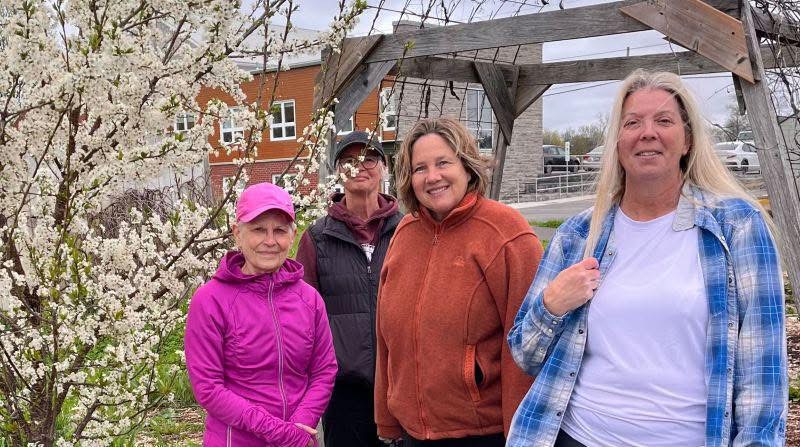
Pictured above: My neighbour Odin and I working the Verona Lions road toll. All the money raised goes back into the community. Learn more about volunteering with the Verona Lions. Below: volunteers at the Grace Centre garden with the garden coordinator Josey Cadieux (Dave was whipper snipping and didn’t want to be in the picture). See this article in the Frontenac News for more on the garden.







 Happy Act