Findings from the 2025 World Happiness Report

man sharing a meal in Africa with others

The 2025 World Happiness Report was released on March 20, the International Day of Happiness. The first World Happiness Report was published in 2012 after Bhutan, a country that measures its success based on the happiness of its people urged the UN and national governments to “give more importance to happiness and well-being in determining how to achieve and measure social and economic development.”

Since then, the report has been measuring which countries in the world have the happiest citizens and exploring various themes related to global happiness including age, generation, gender, migration, sustainable development, benevolence, and the effects of the COVID-19 pandemic on global well-being.

As always, the results of this year’s report are fascinating (you can read the full report here.) The authors chose the theme “Caring and Sharing”, delving into how caring and sharing and specifically three benevolent acts, donating, volunteering and helping strangers can make people happier.

The Happiest Countries

Finland ranked #1 for the eighth year in a row while Canada ranked 18th. The US fell off the list of the top 20 happiest countries to #24. One troubling statistic is that in general, the western industrial countries are now less happy than they were between 2005 and 2010 with the US, Canada and Switzerland experiencing the biggest drops.

Here are the top 20 happiest countries in order:

Finland
Denmark
Iceland
Sweden
Netherlands
Costa Rica
Norway
Israel (if you’re wondering about Israel, it scored highest in several areas, including the quality of social connection amongst youth)
Luxembourg
Mexico
Australia
New Zealand
Switzerland
Belgium
Ireland
Lithuania
Austria
Canada
Slovenia
Czechia

Key findings

Beyond health and wealth, simple acts of caring and sharing can influence happiness, including sharing meals with others, having somebody to count on for social support, and household size.

  • While it’s well documented that people who live alone are unhappier, research shows that happiness rises with household sizes up to four people, but above that happiness declines.
  • We are too pessimistic about kindness in our communities, and this pessimism is contributing to our unhappiness. For example, when wallets were dropped in the street by researchers, the proportion of returned wallets was far higher than people expected.
  • One interesting piece of research and a positive from the global pandemic is we’ve seen a “benevolence” bump of 10% since COVID-19. The pandemic taught us to think and care for others more, and that benevolence has continued.
  • One disturbing trend is young people in North America and Western Europe now report the lowest well-being and happiness among all age groups. In 2023, 19% of young adults across the world reported having no one they could count on for social support, a 39% increase compared to 2006. In fact, the fall in the United States’ happiness ranking is largely due to the decline in well-being among Americans under 30.
  • When society is more benevolent, the people who benefit most are those who are least happy. As a result, happiness is more equally distributed in countries with higher levels of expected benevolence

So what does this year’s report tell us and what simple happy acts can we all do to promote caring and sharing?

  • Share meals together: people who eat frequently with others are happier
  • Be kind and don’t underestimate the kindness of others
  • Try not to live alone
  • Build social connections and don’t be afraid to reach out to people
  • Practice benevolent acts–do what you can to volunteer, donate or help a stranger (several African countries reported low scores for donating but scored very high for helping strangers which helped their happiness scores)

Finally remember that caring is “twice-blessed”: it blesses those who give and those who receive. Have a happy week.

Battling the epidemic of loneliness

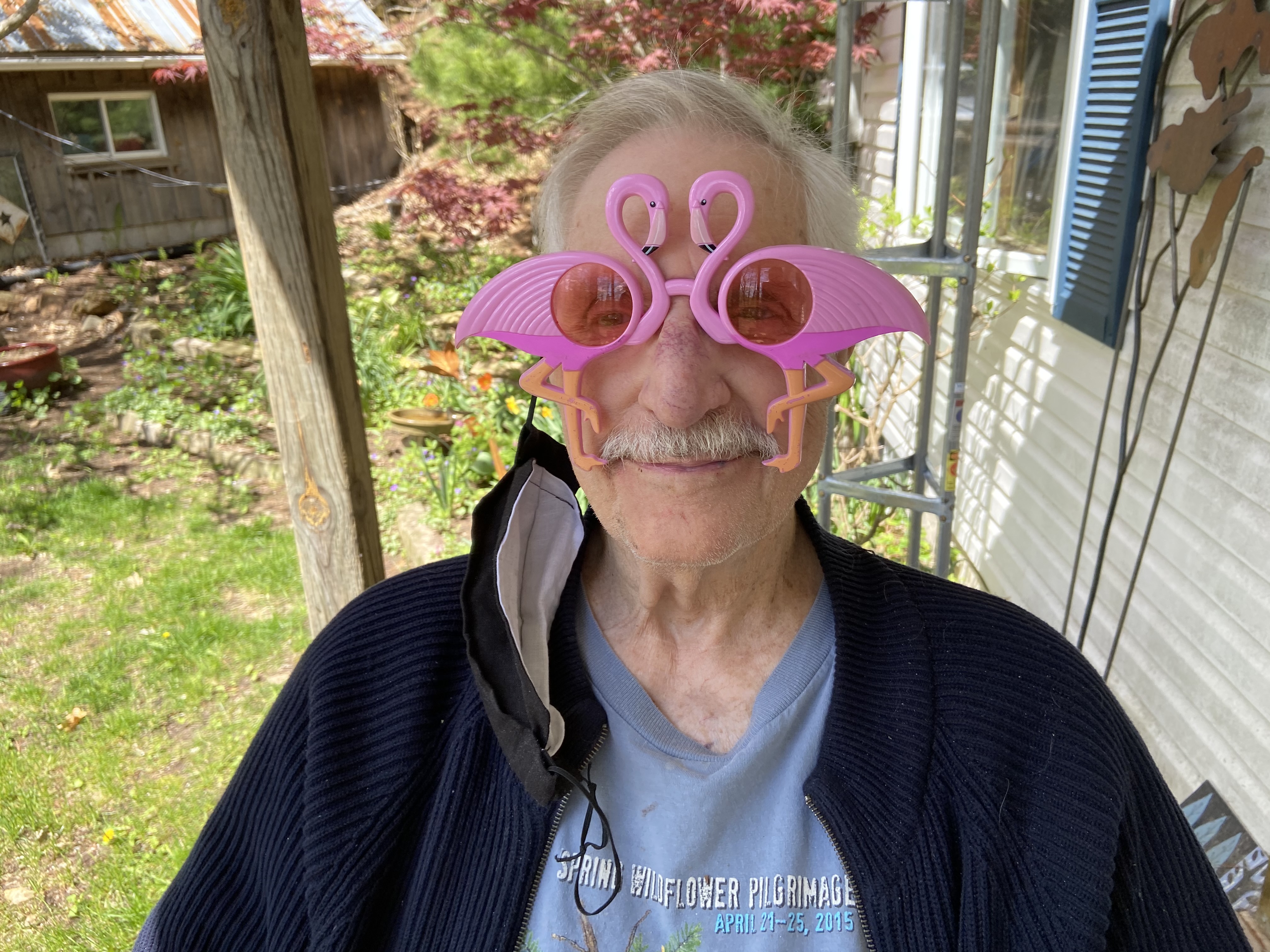
man wearing pink flamingo glasses

There is an epidemic sweeping our country—the epidemic of loneliness.

In our grandparents’ day, the average detached home in Canada had six people in it. For my generation, it was four people. Today it’s 2.1. One of the fastest growing sub-segments in the housing industry today is single homeowners in their 20s. For the first time in modern history, we also have an entire generation of seniors living alone in isolation.

The two age brackets most at risk of being lonely are youth and seniors. According to Statistics Canada’s Canadian Social Survey: Loneliness in Canada, more than 1 in 10 people aged 15 or older say they “always or often” feel lonely. A 2024 study of seniors estimated between 19-24% of Canadians over the age of 65 feel isolated from others and wished they could participate in social activities in their community.

The impacts of loneliness in seniors especially are well known. In addition to depression, emotional distress, and dementia, loneliness can result in increased risks of chronic illness and falls, poor general health and premature death.

Humans were not meant to live alone. We were meant to live in tribes.

So what can we do to battle the epidemic of loneliness? Here are some words of advice people shared in a recent Quora post:

“Have a pet and walk them every day. You’ll meet people on your walks”

“Join a club or activity…check out the nearest seniors centre for programs services” (I’ve really enjoyed the activities I participate in at the Seniors Association of Kingston and have found my tribe there)

Volunteer

“Find people you can text every day”

 “Check out the website meetup.com for a list of groups and activities that may appeal to you” (I looked to see what was listed for my area of Kingston, Ontario and there was everything from guided hikes, to toastmasters groups, to meditation and church groups)

“Nobody is going to come to you. Go out and find a church family, join a gym, go for walks, talk to your neighbours. Don’t spend your senior years being sad. Enjoy every day you have left. If you lived near me I would be your friend.”

“Every time you find yourself thinking about your own loneliness and state, think about someone in the world you can help. A neighbour who needs help, bake some cookies, whatever”

“To have a friend you need to be a friend.”

“I remember this documentary on finding happiness. The director at the beginning of the film said he would sum up the secret of happiness with one 4 letter word. I assumed it would be “love” but was surprised when he said it was risk. It’s all about taking calculated risks and steps to make opportunities happen for yourself and it will pay off. Good luck your future happiness is within you.”

This week’s #HappyAct is to do something to battle the epidemic of loneliness. Reach out to a friend, join a group, visit a senior who lives alone. It’s all about caring and sharing—more on that next week!

Coming up…March 20 is World Happiness Day. This year’s theme is Caring and Sharing. Be sure to check back next week when I dive into the results of the 2025 Report on World Happiness.

Photo: One of my favourite photos of Dave’s Dad who is living proof a youthful heart and spirit will always keep you young at heart and happy. He texts his friends and family every day.

Turn a frown upside down

smile and saying "a smile is the shortest distance between two people"

Several years ago, I was on a business trip with some colleagues. We’d had a long travel day and after checking in to our hotel around 8 pm, wandered down to the hotel bar for a late dinner. We sat for at least ten minutes without any service, so one of my co-workers got up and approached the waitress. He said she was quite surly when he talked to her, but she eventually came over with some menus.

I’ve always been fascinated by how a person’s actions can affect the actions of others, even more so since starting this blog, so I decided to embark on a little experiment. I wondered if I smiled broadly and was overly nice to our server, asking her questions about her day and thanking her every time she came to the table, whether by the end of our dinner, she would provide better service.

We ordered our drinks, and I kept smiling, laughing and making small talk when she brought us our meals. By the end of the evening, she still seemed stressed and unhappy, but was a bit more friendly and attentive.

There are many takeways from this night. The first is if someone is having a bad day, chances are it has nothing to do with you. Our waitress was probably on her feet for eight hours by the time our group strolled in. No doubt she was exhausted and wanting to go home. Who knows what she was dealing with at work or at home—a sick parent or child, mounting bills, an argument with her husband or friend. Since she never shared anything personal, we’ll never know.

The second is our actions did result in her being a bit nicer and attentive, so there was a positive correlation between our efforts to be nice and her actions.

The third takeaway is our group did get better service so it pays to be kind. As one of my old bosses used to say, “You can catch more flies with honey than vinegar”.

Everyone can have a bad day. It seems to me people have short fuses these days and are starting to lose their capacity to show empathy and understanding. Even if you can’t turn someone’s frown upside down, you can give them grace and compassion.

It’s okay to be sad

happy and sad face pictures

People don’t talk about being sad anymore. They talk about being unhappy, struggling with their mental health or being depressed, but they don’t talk about being sad.

It’s like the word has been eradicated from our vocabulary.

This is a dangerous and disturbing trend because it presupposes that when we are sad, we have an illness or problem, when sadness is a natural emotion.

The other day I asked a friend how they were doing after spending the first Christmas without their Mom. My friend naturally admitted there were times she was sad, missing her mother very much.

Last week, we dropped Clare off at the airport in Ottawa. We knew it would be the last time we would see her until spring, and I was very sad for a day or two, missing her terribly as we returned to a quiet, empty house.

Author and happiness researcher Helen Russell in “How to Be Sad” says that in order to be happy, you need to allow yourself to be sad sometimes, but most people are terrified of being sad.

Exacerbating the problem is society’s newfound hyper-focus on mental health. We are so focused on mental health that there is a propensity to self-diagnose a deeper issue or problem when we may just be in fact, experiencing temporary, normal sadness.

We are often sad when we experience grief or loss, all inescapable emotions in life. If we are sad, it is because we’ve been blessed to have held something dear and joyous.

For example, as a parent, it is hard to watch your child experience heartbreak, but if they are sad from having their heart broken, it means they have lived and loved, and sadness and heartbreak are all part of the process of loving and finding the right person.

So the next time you find yourself feeling a little down, remember it’s okay to be sad.

The top 12 Happy Acts of 2024

Author at a work booth before their retirement

Another year of happy acts have come and gone. Here is my round-up of the top happy acts of 2024. Happy reading!

On climate change, work, and the world we live in

Inspiration and mental health

On parenting, retirement and my friend Harry

Find your anchors in life

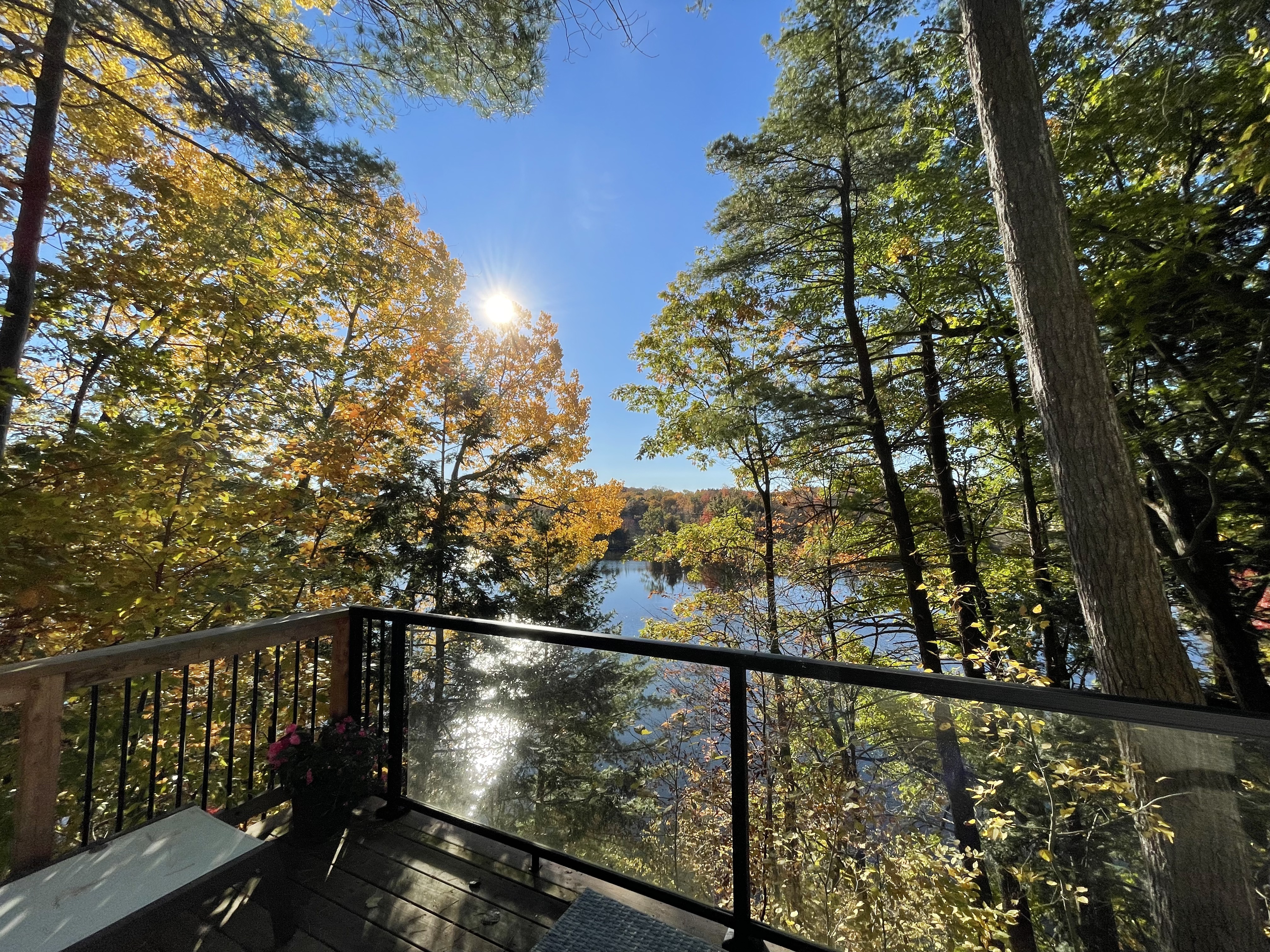
Sun shimmering on a lake as seen from a deck

As I’ve grown older, I’ve come to recognize the importance of anchors in life.

An anchor can be a person, a place, a thing, or something you love to do that lifts you up and feeds your soul. It is anything that grounds you or provides comfort or solace during times of trouble.

For a child, an anchor might be a teddy bear or favourite toy. For a widower, it may be a cherished photo of their spouse sitting on their nightstand.

My anchors are living and being in nature, swimming, music, writing, and Dave.

You really know when something is an anchor in your life when it isn’t there. This past week, Dave had his second knee replaced. Thankfully, the surgery went well and he’s now home resting nicely, but he was in far more pain the day of the operation compared to his first knee replacement and they kept him in the hospital overnight.

I returned home to an empty house that night feeling a bit lost and adrift. Dave has always been a big anchor in my life, and I found myself wandering around the house, restless and anxious. I was never so happy to find him doing much better the next day and ready to come home.

Living and spending time in nature is another key anchor for me. In the summer, I know I need to spend at least an hour or two at the lake every day. If I don’t, I get surly. The trees, the sun glimmering on the water, and spending time outdoors are an essential part of my happiness.

Swimming is an extension of this. I remember a particular Saturday two years ago when Dave’s sister was dying of cancer. Dave and I were helping my brother-inlaw at the house and taking turns driving him to the hospital to see MaryAnne. I spent the morning at the hospital, then we drove back to the house, where I did some chores and took their black flat-coated retriever for a walk. We were waiting for one of their kids who had travelled a long distance to arrive before going back to the hospital, and I slipped away for an hour to go for a long swim at Westport Beach. It was what I needed to face the rest of the day which turned out to be the day MaryAnne died.

Over the years, writing has become an anchor for me. I’ve enjoyed sharing my thoughts on happiness on this blog, and now in retirement, I’m excited to tackle many new writing projects.

This week’s #HappyAct is to reflect on and be grateful for the anchors in your life. What are yours? Leave a comment.

A day at Nordik Spa

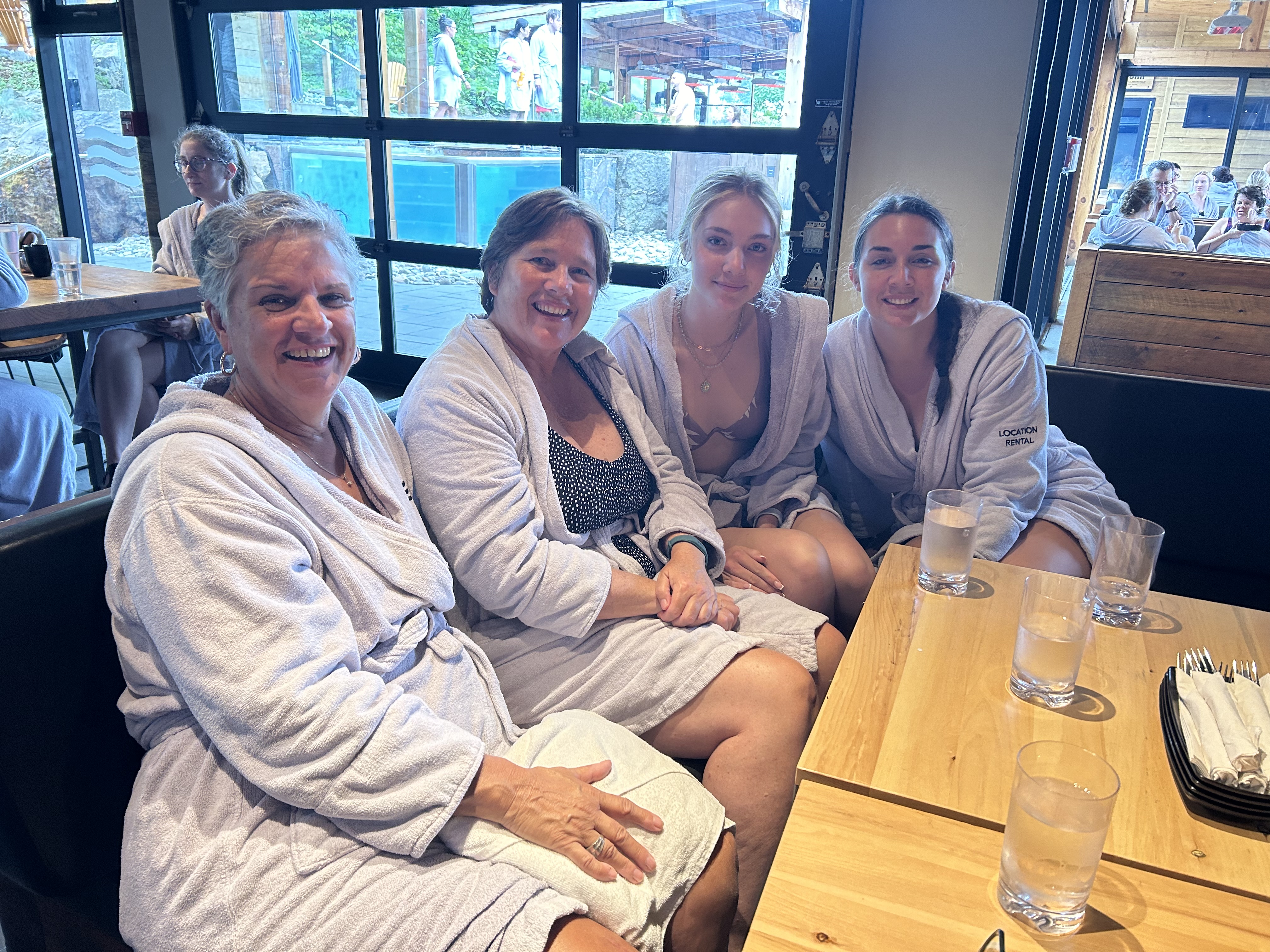
Four ladies in spa robes having lunch at Nordik Spa in Chelsea, QC

Last week, Dave’s sister and I took the girls to Nordik Spa in Chelsea Quebec.

It was a combination graduation gift and final girls’ trip before Grace and Clare leave for university this fall.

A day at Nordik is the ultimate in indulgence and relaxation.

As you walk up the several flights of steps to the impressive main lodge with massive wooden beams, you are welcomed by the sound of trickling waterfalls and the smell of burning wood in the fire pit cradled by bright red Adirondack chairs.

I’ve been to Nordik once before with my girlfriends and I remembered it takes an hour or so to fully embrace the spa experience.

The spa is divided into three main sections, Borea, where you can talk in whispers and low tones, Panorama, where you can chat freely and Kaskad, where there is complete silence. Thermal hot pools, some with waterfalls are interspersed with cold pools and saunas. Lounge chairs, hammocks, hammock chairs, and reading pavilions with wood fires are available for those who just want to sit and read and relax or listen to music.

Nordik spa is designed around the ancient Nordic ritual of thermotherapy, a treatment that alternates between hot and cold temperatures, followed by a rest period.

Thermotherapy deeply cleanses the body, eliminates toxins and can help with injury, chronic pain, rheumatism, arthritis, depression and sleeping. To truly embrace the full spa experience, you’re supposed to complete the entire cycle three times.

We started the morning in the social area with its infinity pool and magnificent views of Gatineau Park and the city of Ottawa. It was a cool, cloudy day, so the warm bubbles of the thermal pool felt wonderful as we chatted and caught up with Dave’s sister.

Clare embraced the full spa experience, opting to do a cold plunge next, but I figured I get enough cold water immersion experience swimming in my lake, so I went for a sauna and some hammock time instead.

Grace’s favourite was the heated rock bed sauna. It was so relaxing, a person fell asleep and was snoring!

After a few hours of thermal pools and saunas, we enjoyed a delicious lunch in their Finalandia restaurant. One of the things I love most about Quebec is you never get a bad meal and their restaurant is excellent. We enjoyed a cheese board, roasted red pepper hummous, broccoli soup, brisket sandwich on focaccia bread topped off with a tiramisu cheesecake and warm chocolate brownie with ice cream.

As the afternoon sun finally peeped out, we finished the day where we started, chatting in the thermal pool and looking over the gorgeous views of Gatineau Park.

Grace kept asking me what we should do next, and I would reply, “Whatever you want, that’s the beauty of this place.”

This week’s #HappyAct is to pamper yourself at a spa day. Enjoy!

Four ladies in front of the entrance to Nordik Spa in Chelsea, QC

My Retirement Pledge

Me at a work event booth for South Frontenac Township

I’m retiring this week. After working for the past two years for my local municipality, I’m hanging up my keyboard (well, at least my work keyboard) and making plans for a future that doesn’t involve paid work.

It’s exciting and daunting at the same time and I realize how lucky I am.

I’ve made some pledges to myself, and because I am a firm believer that if you write down your goals or say them out loud, you’re more likely to stick to them, I am sharing them with you here today. Here are my retirement pledges.

I pledge to…

Not feel guilty if I feel like doing nothing
Embrace each day as a gift
Spend more time in my garden and at my lake
Get more exercise

Help my community
Take advantage of all the events during the day on weekdays I couldn’t attend when I was working
Never spend another minute in a meeting or on Zoom
Spend more time with the people I love

Listen to more live music
Spend less time on my phone
Pursue my passion of writing
Not worry about money

Go outside every day
Visit friends who I haven’t seen in awhile and make some new ones
Travel and embark on new adventures near and far
Take better care of my health

This week’s #HappyAct is to make your own pledge, even if retirement is still a distant dream. What would you pledge to yourself?

Make a wish

Shooting star

I saw two shooting stars from my hot tub the other night. They blazed across the sky above the treetops and disappeared in the dark sky, leaving faint wispy trails in their wake.

Since I was a little girl, I’ve wished upon a shooting star. It’s such a special gift to be granted one wish and moment of truth and clarity, deciding how to use it. For years, I would reserve my wish for Dave or the girls, or a sick family member or friend.

Lately I’ve been selfish and using that one precious wish for myself. I can’t tell you what it is, or it won’t come true. But here’s wishing…

This week’s #HappyAct is to make a wish. You never know, it just might come true. Happy apoco-eclipse day tomorrow!

The comfort of routine

Author reading the Toronto Star

I have a confession to make: I’m a creature of habit.

On the weekends, my morning ritual is to sleep in, wake up, grab a coffee and read the morning papers or flyers (yes, I am a dinosaur). Since I’m not a morning person, it takes me at least an hour or two to get moving. Once up, I’m good with starting my day, whether that’s running off to hockey, walking the dog, meeting a friend for coffee or working around the house.

I come by this trait honestly—I inherited it from my father who was the very epitome of routine. Dave used to say you could set your watch by Dad and know the exact hour and minute when he would walk the dog, read the papers and have his first rye of the day.

I used to feel like I had to apologize for my habitual tendencies until I read an article from Northwestern Medicine linking the positive mental and physical health benefits of having routines. The article stated having a routine can help with stress, sleeping better, eating healthier and being active. Routines can help us achieve balance in our lives and make time to do the things we love and that keep us healthy.

Of course, my routines are the butt of my family’s jokes, but even that has become weirdly predictable and reassuring.  

I couldn’t care less about the science and what my family says. For me, there is just something so comforting and relaxing about the routines I love. They are a safe haven in a crazy world. Even writing this blog on Sunday mornings has become a welcome routine.

This week’s #HappyAct is stick to your guns and the routines you love. Gotta go. My second coffee of the morning awaits.