They say people resemble their dogs. This is definitely true for Bentley and me. During the summer months, we know it’s been a good day if we’re wet and bedraggled.
Bentley of course, wears the look much better than me. After a day of swimming at the lake, his gorgeous russet brown fur glistens in the sunshine, making swirly patterns on his back.
I’m more on the bedraggled side, but I come by this look naturally. I have fond memories of my Mom, wet and bedraggled after a day at the beach at Lake Simcoe.
She’s been gone almost 40 years now, but I can still picture her walking back from the beach, in beat up old running shoes filled with sand, her short brown hair tousled with a few strands falling across her face. She wore an old one-piece bathing suit with a towel draped around her neck with a big smile on her face. We were always happy up at that old beach cottage.
I think about my Mom as I trudge up our wooded path from the lake, my feet squishing in my crocs feeling clean and refreshed. I’m in my happy state, wet and bedraggled.
Dear friends. This week, I’m asking for your advice.
All my life, I’ve struggled with my weight. The reason? I love food and I’m not willing to give it up.
Until now, it hasn’t been a problem. I’ve always been fairly active and healthy, and it was an easy choice to keep eating what I want and not worry about my body size or image to be happy. We also tend to eat relatively healthy: no processed foods or fast food.
But as the years have gone by, I’m finding it harder to feel good about my weight. Breaking my ankle this winter was also a breaking point. All of a sudden, I couldn’t walk to keep the pounds off.
Maybe I need to do something drastic or crazy like Kevin Maginnis. The 57-year old Nashville man was a TikTok and talk show sensation after eating at McDonalds three times a day for 100 days. He lost 58 pounds and says he’s never felt healthier (and his blood work proved it). He said the key was eating less—in contrast to the famous SuperSized documentary, he ordered whatever he wanted, but downsized all his meals.
When he was asked by the Today Show hosts how he was going to sustain his weight loss, he said, “Half a plate to lose the weight, three quarters of a plate to maintain your weight.”
Actress Jamie Lee Curtis once said in an interview, the key to being healthy and fit as you age is simple: eat less, move more.
Sounds simple, right? But if it’s that simple, then why do so many of us struggle with losing weight, especially as we age? At least I know I’m not alone. It’s the only thing Oprah and I have in common.
This week’s #HappyAct is to weigh in and lay it on me thick, like butter: what is your best advice for keeping your weight in check?
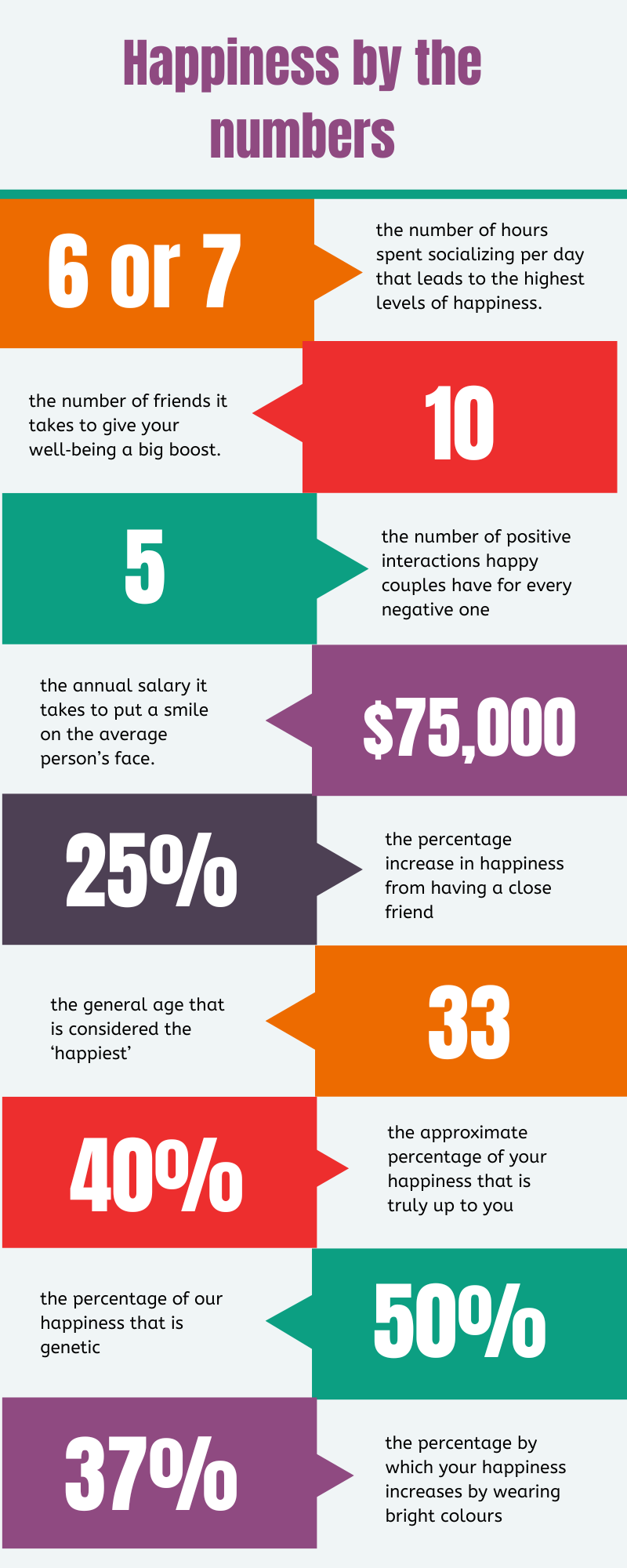
Some time ago, I stumbled across these statistics on happiness.
There’s not much we can do about our age and genetic disposition, but we can make an effort to reach out to friends, spend time with our loved ones and focus on what’s most important in our lives: developing positive relationships.
If all else fails, wear something orange or yellow.
My mother-in-law once said the biggest change she had seen in her lifetime was no one just sits anymore.
On my last sunny beach day in South Carolina a few weeks ago, I just sat on the beach and watched the world go by.
There were families who lugged their beach carts to the same spot they had the day before, filled to the brim with plastic sand shovels, coolers, colourful beach chairs and umbrellas. Before the adults could set up even one chair, the kids would grab the beach toys and run with glee towards the water and furiously start digging in the sand.
There were surf fisherman who sat close to shore, the water lapping up on their toes as their lines bounced in the white-flecked waves.
There were lots and lots of dogs, since it was a pet friendly beach. German shepherds, labs, a grizzled old golden retriever that lay beside its owners in a small patch of shade beside their chair, and breeds I never even knew existed like the German Elo (who was named Murphy, by the way, just like our old dog Murph).
There were osprey soaring in the brilliant blue skies, splashing into the surf to catch their lunch, then lifting slowly and wobbily, a fresh catch in their talons. There were pelican armies flying in formation patrolling the picturesque shoreline, and gulls, terns and sandpipers tiptoeing in the grainy sands.
And best of all there were dolphins. Spied first far, far out in the ocean. Their fins cresting out of the water in graceful intervals. Then closer to shore, coming near my two teenagers splashing in the waves. I try to yell at them to look, but they just wave back, oblivious of the magnificent creatures sharing the ocean’s expanse.
I couldn’t believe how many dolphins I spied that day. There were multiple pods, some playing in the waves, leaping in the white crests of the surf and blowing and chuffing as they came up for air. They must have known the weather was about to change and decided to enjoy their final day on the beach frolicking in the waves.
Yes, spending a day watching the world go by is a bit of a luxury in today’s world, but I highly recommend it…especially at the beach.
Ed. note: The photos below were all taken in the evening since I didn’t bring my phone to the beach during the dayso they don’t capture the images I’ve described above, but I hope you enjoy them anyway.
The Toronto Star used to run a column on a neighbourhood tree. I’ve always loved trees, maybe that’s why I married a lumberjack.
By my count, I’ve either directly or indirectly had a hand or shovel in planting tens of thousands of trees in my lifetime.
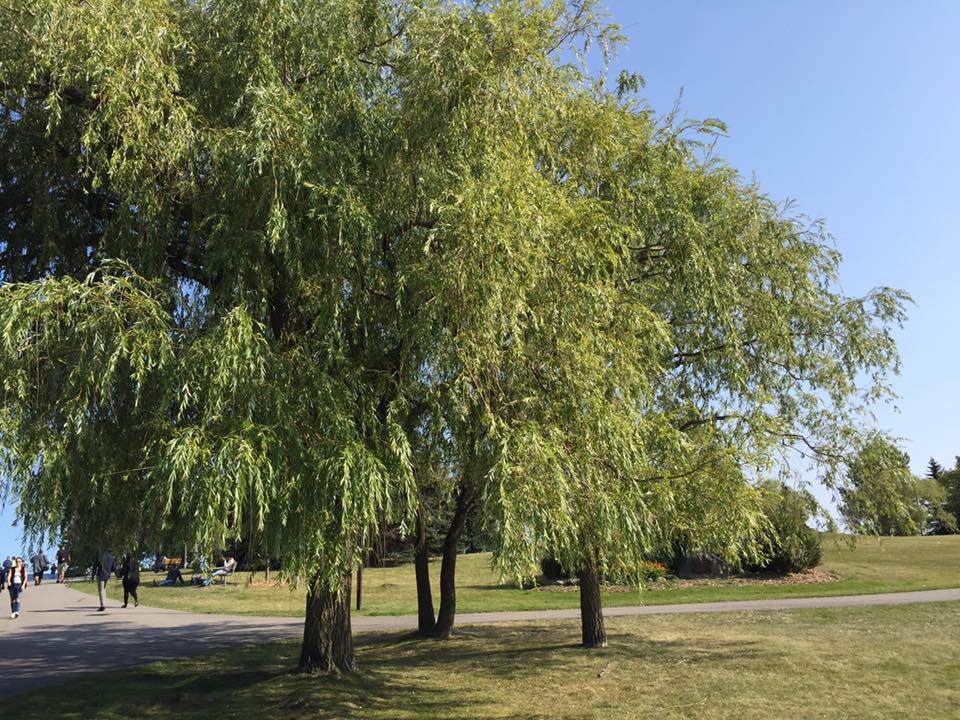
As a summer student in the Forestry department at the City of Mississauga, we reforested city parks, my favourite being Saddington Park, a former landfill and now one of the prettiest parks in Mississauga with beautiful willows we planted swaying in the lake breezes.
My family has planted trees every spring and fall at Lemoine’s Point Conservation area as part of their annual tree planting program.
And for the past seven years or so, I’ve sold seedlings as a fundraiser for local non-profit organizations like the Sydenham Lake Canoe Club. I’m looking forward to seeing my regular clients again this spring and hearing where they planted their trees from last year, how big they’ve grown, and what their plans are for this year’s seedlings.
Some days when I’m feeling down about the effects of climate change and our inertia as a global community to address it, I think about the trees I’ve helped to plant and it makes me feel better.
So this week’s #HappyAct is a photo essay, a tribute if you will, to the trees of my life.
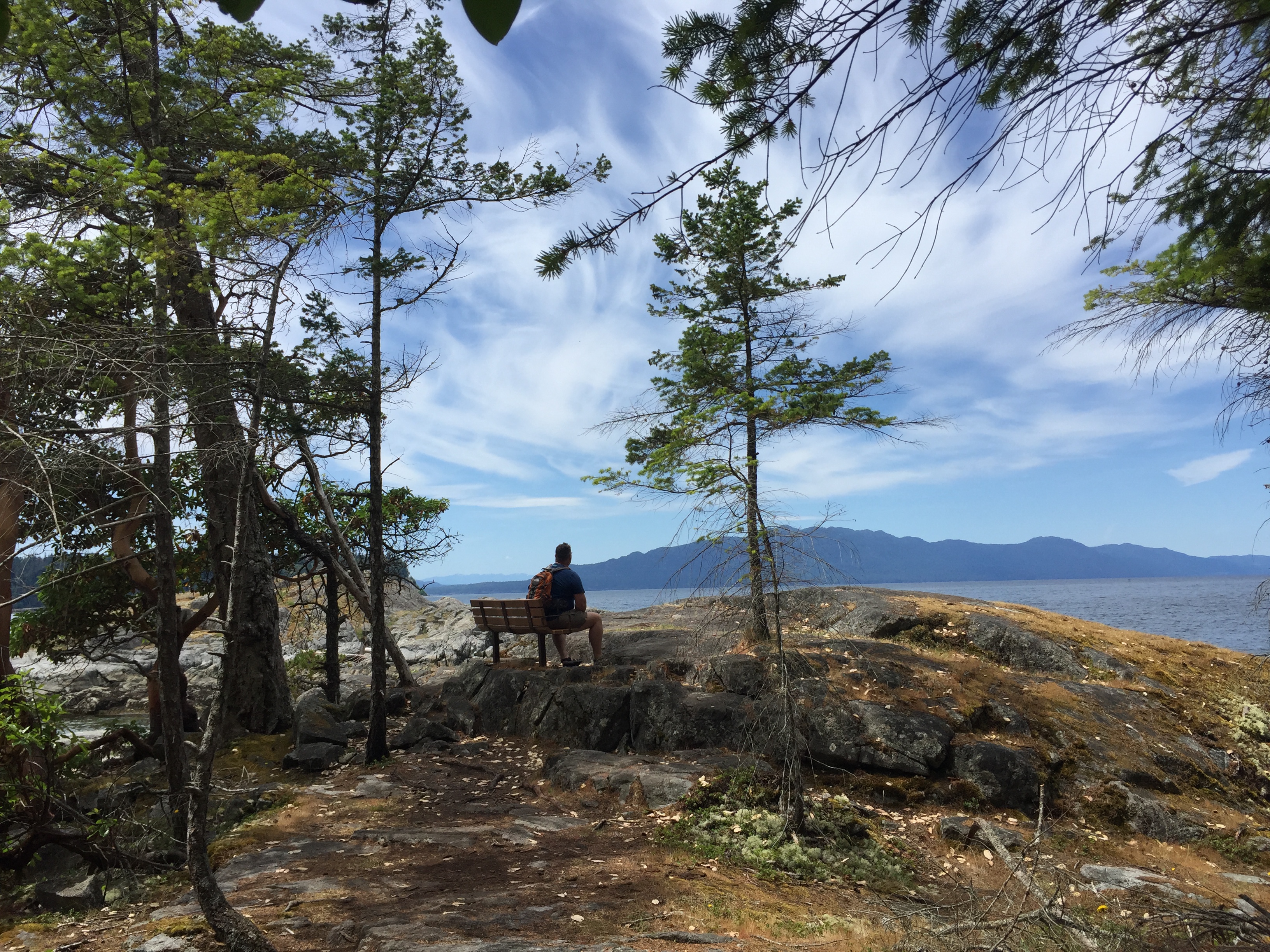
Above: Dave beside arbutus trees on the Sunshine Coast in British Columbia
The beautiful pine trees off my back deck
I always loved this pine tree at the 18th green at our local golf course in Verona. It came down in a storm a few years ago.
Magnolia trees in Chez Piggy courtyard, one of my favourite patios in Kingston
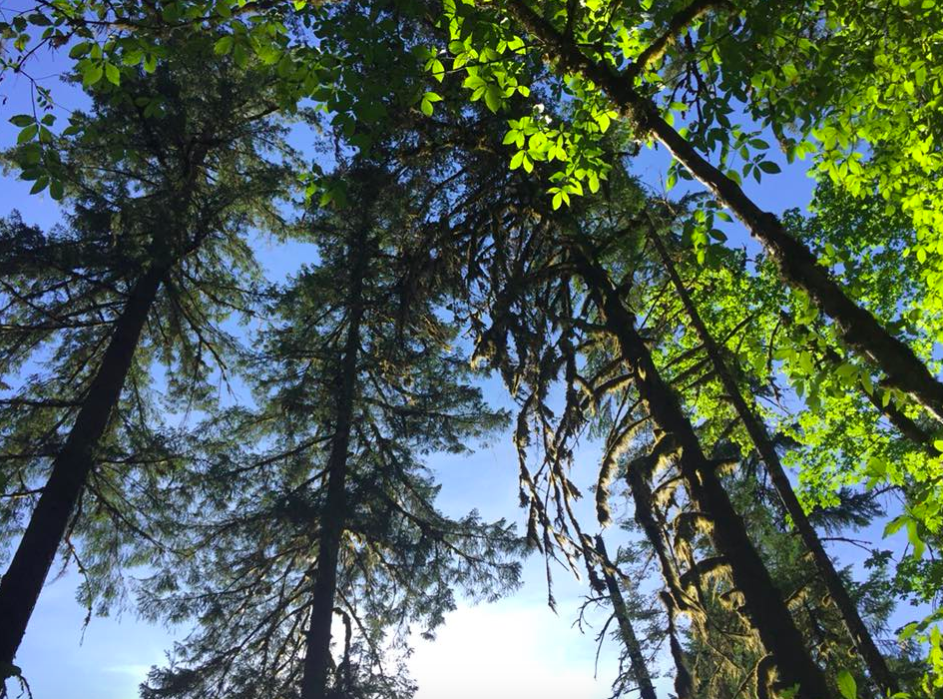
Tree canopy in Stamp River Provincial Park in Alberni, BC
Trees near the magic waterfall in the woods where I walk
Clare helping me sell trees as a fundraiser
Palm trees from the Carolinas, where we vacation every year
Trees I planted 30 years ago in Saddington Park, Mississauga
I’ve always believed that North Americans are workaholics. As a society, we allow work to rule our lives, from our waking hours to our sleeping thoughts (see my recent blog on sleep). In my heart, I’ve always felt more European when it comes to work.
In the past five years, I’ve been encouraged to see a growing trend of countries and businesses shifting to a four-day work week.
What’s interesting is in the UK and Europe, companies adopting a four-day work week are generally working less hours than before: between 30 to 32 hours a week.
In North America, not surprisingly, companies experimenting with a four-day work week in some cases are simply proposing to eke the same number of working hours out of employees, but in four days instead of five.
The four-day work week movement 4dayweek.co.uk says it is campaigning “for a four-day, 32-hour work week with no loss of pay which would benefit workers, employers, the economy, our society, and our environment”.
The UK recently published the results of one of the largest pilot studies on a four-day work week. About 2,900 employees across the UK took part in the pilot. Calling it a “major breakthrough”, 56 of the 61 companies extended the pilot and 18 companies made the arrangement permanent.
Of employees surveyed before and after the pilot, 39% said they were less stressed, 40% were sleeping better and 54% said it was easier to balance work and home responsibilities.
The number of sick days taken during the trial fell by about two-thirds and 57% fewer staff left the firms taking part compared with the same period a year earlier.
“The vast majority of companies reported that they were satisfied with productivity and business performance over the trial period.”
In Ontario, a growing number of rural municipalities are starting to transition to a four-day week. There are now seven municipalities offering employees the option of working a four-day week, the latest being Algonquin Highlands.
The executive director of the Ontario Municipal Administrators Association says it’s easier for rural municipalities to adopt a four-day work week because they are smaller, more nimble, and have more difficulty attracting and retaining talent, so it’s to their benefit to offer more flexibility in the workplace.
In Algonquin Highlands, one group of employees works Monday to Thursday, with another group working Tuesday to Friday. All employees worked an extra hour a day. It’s been a success. As Mayor Liz Danielsen says, “There’s nothing better than having happy staff.”
This week’s #HappyAct is to start the conversation in your workplace. Ask your leaders about a four-day work week.
If you imagine a ladder whose rungs are numbered zero to 10, and zero represents your worst possible life and 10 represents your best, which rung would you be on?
This is the question asked of people around the world every year for the World Happiness Report. Last year marked the tenth anniversary of the report which uses global survey data to report how people evaluate their happiness in more than 150 countries. The study researchers will reveal the results of the 2023 report at noon tomorrow, March 20, the International Day of Happiness.
What’s interesting is Finland has ranked #1 for the past five years in a row, followed by Denmark and Iceland in second and third place in last year’s report. Switzerland, Netherlands, Luxembourg, Sweden, Norway, Israel and New Zealand all ranked among the top 10 ‘happiest’ countries in the world. Canada ranked 15th and the US 16th.
I dug a little deeper to understand why Finns have ranked #1 for the past five years. I’ve never been to Finland, and have only had a few Finnish friends over the years.
Finns are not exactly known for their exuberance. There is a Finnish saying, ‘If you’re happy, you should hide it”. Their happiness manifests itself as more of a deep contentment, part of their hygge culture.
One thing the study illuminates, and is true in all the northern European nations who rank the happiest every year, is having access to the basics is a strong baseline for happiness.
In Finland, everyone has access to guaranteed health care, tuition-free school, a living wage, affordable housing, and free universal daycare from eight months until the start of formal education at age seven. It also doesn’t hurt that all Finns get five weeks of vacation every year.
But a key reason why Finland ranks #1 each year is their emphasis on family, friends, relationships and not on accumulating wealth or material possessions. They have their priorities straight.
This week’s #HappyAct is to watch for tomorrow’s report and ask yourself the question, which rung would you be on?
Ed note: If you’d like to read the full report, go to worldhappiness.report. I highly recommend taking 20 minutes to read a few of the sub-reports which are fascinating. For instance, in the report “Exploring the biological basis of happiness”, the researchers concluded that genetics does play a role in happiness. In fact, one study that tracked the lives of identical and fraternal twins found remarkably, that identical twins who were reared apart (100% genetically identical, no shared environmental influences or experiences) turned out to be more similar with respect to their well-being than fraternal twins who grew up together.
Another study on optimism during the pandemic found that while most participants experienced decreases in their optimism and meaning in life during COVID-19, for more than a third of the participants, their levels of optimism and meaning in life remained stable. Fascinating stuff.
A couple of years ago, Dave got a CPAP machine. When he sleeps, it sounds like the white noise through a stormtrooper’s mask. I keep hearing “Luke, I’m not your father” in my dreams. The good news is I don’t have to listen to him snoring anymore.
But the machine has helped him sleep which is a good thing.
You see the problem is, we’ve become a nation of insomniacs.
Experts from the Royal Ottawa Institute of Mental Health Research estimate that half the population in Canada now struggles with some sort of sleep-related problem. This week, we’ll all feel the pain of sleep deprivation thanks to the time change.
March 17 is World Sleep Day. While most Canadians will be focused on the luck ‘o the Irish and swilling back green beer, we’d have far more luck in life if we took steps towards better sleep health.
Sleep is one of the three pillars of good health, along with nutrition and exercise.
The guidelines recommend adults between the ages of 18-24 get 7 to 9 hours of good-quality sleep a night and 7 to 8 hours for adults aged 65 and older.
The worst part is we all know the drill on what we should be doing to get a good night’s sleep: go to bed at the same time every night, limit alcohol, caffeine consumption and screen time before bedtime, get plenty of exercise so we’re naturally tired. So why are so many of us up at night and exhausted all the time?
A century ago, we were a far more active society. There were also no screens in the early twentieth century. You don’t need a research study to confirm the obvious: sleep disorders have burgeoned with the use of electronic devices.
Just as modern devices are hindering our ability to sleep, some devices are helping our ability to sleep. It seems every Tom, Dave and Harry these days has a CPAP machine (I say Tom, Dave and Harry because sleep apnea is overwhelmingly diagnosed more in males).
CPAP machines actually have only been around for 40 years and came about thanks to man’s best friend.
In 1980, Dr. Colin Sullivan noticed his dog was having breathing issues. He used a vacuum cleaner motor and hose contraption attached to his dog’s snout to increase the airway and breathing for his pooch when it was sleeping. Sullivan later did research at the University of Toronto on SIDS, Sudden Infant Death Syndrome, surmising the cause of death of infants was related to interrupted breathing.
CPAP machines have become a life saving device, so I’ve resigned myself to sleeping on the dark side of the bed, one with the force beside the man behind a mask.
This week’s #HappyAct is to take care of your sleep health. Just be careful not to choke on your aspirations.*
Sharing a pot of tea is a ritual in many cultures. My family has a British-Australian background so I learned how to make a decent cup of tea early on, and our family often made a pot of tea after dinner. My husband’s family is Japanese and my late mother-in-law’s green tea set is a cherished possession in our house, a connection to someone very dear to us.
Morning tea in Australia and New Zealand is a daily tradition at 10:30 or 11:00 am. It is a break at school or work when everyone pauses for a cup of tea (or coffee) and a biscuit or small snack. It is a time to make announcements, welcome new employees, give a shout-out to someone who deserves it, or have a friendly chat with colleagues. Even on a road trip Australians will have a morning tea break with a thermos of tea at a roadside picnic table. No Tim Hortons drive-thru for the Aussies!
Tea is a beverage used to comfort others, a way of saying “everything will be alright”. The acts of boiling the kettle, warming the teapot, letting the tea steep, stirring the tea in the cup are comforting. Teatime reminds us of civility and of the late Queen Elizabeth II who many people viewed in a grandmotherly way. Problems big and small can be shared and solved over a cup of tea and a biscuit.
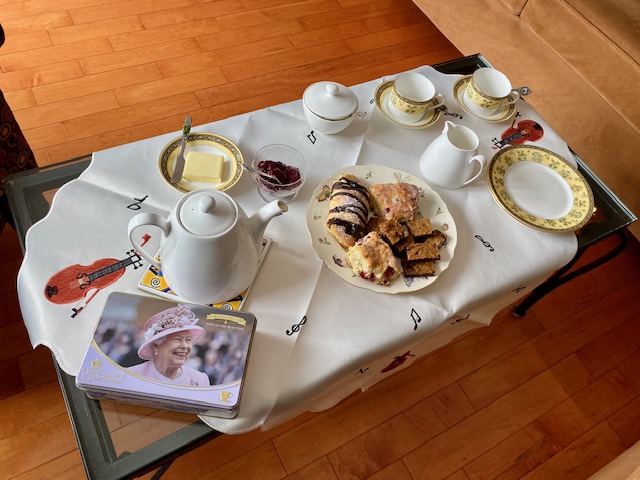
I have a friend who suffered a loss over the holidays. I wanted to offer her some comfort and a chance to sit and relax for a bit. It was fun for me to assemble a plate of sweet treats, get out all my finest teacups, saucers and spoons, and open up the tin of English tea that was a holiday gift.
We whiled away the afternoon with warm tea and conversation while the cold winter snow piled up outside the door. In a busy, chaotic world the tradition of sharing tea is just one way to maintain connections with friends. Consider it part of the shared effort that one puts into relationships that makes them cherished and lasting, and a way of showing that we care.















 Happy Act