A new measuring stick for what to believe online

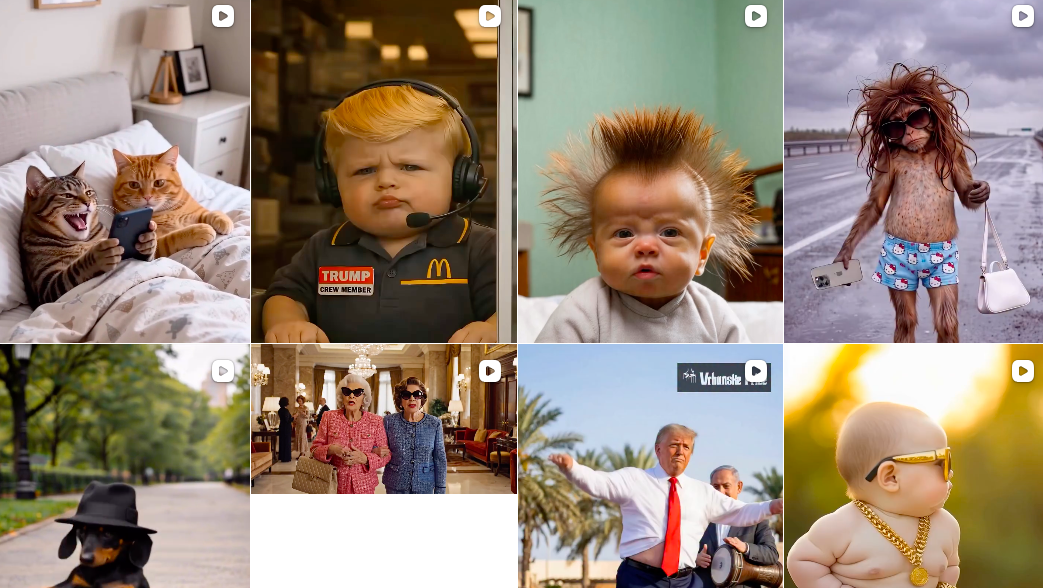
Different ai instagram sites

Here’s a philosophical question for our omniprescient digital world: should you believe what you see online if it makes you happy?

The online world is now a dangerous minefield of falsehoods, fiction and fakes thanks to artificial intelligence, disreputable news sites, content creators and citizen journalism. AI has amplified this trend, creating a wild wild west frontier of fake news. What do you believe any more?

Maybe it’s not as important to know what to believe, as it is to know how the content you consume makes you feel. If it makes you happy, maybe we allow ourselves the grace and the joy to believe in it. If it makes you sad, angry or anxious, don’t believe it and stop reading it.

A simplistic theory fraught with perils, perhaps. But there are precedents. H.G. Wells 1938 radio broadcast of The War of the Worlds, where listeners believed aliens were invading the earth. JibJab videos of your co-workers dressed as elves dancing to Jingle Bells. Cheap Rolex watches and Gucci purses you can buy for $15. A child’s belief in Santa Claus and the Easter Bunny. If it brings you joy, go ahead and believe.

Of course, it’s better if you know what you are watching is fake. One of my favourite fake AI video series on Instagram are the absurd_ai_videos of two toddlers, Kai and Bella who travel the world, rating the places they visit and their experiences out of 10. The videos are obviously fake (it helps when ai is in the handle name) and the posts obviously sponsored by brands, but I don’t care, I believe them. You can even ask the toddlers to craft a custom message for your Aunt Charlotte’s 80th birthday for a price. Witty. Creative. Brilliant marketing. I give them a 10 out of 10.

Who hasn’t seen and loved animali.tr’s hilarious chimpanzee playing the cheese grater and pots and pans in the kitchen? Or cats cooking spaghetti in the kitchen? Guaranteed to make you smile every time. I think the monkey’s real and they trained him to play percussion.

And I’m constantly amazed and amused by the plethora of videos starring the Toddler in Chief. Maybe fiction is more real than fact.

A massive caveat. You must apply the happiness measuring stick with caution. If a beautiful woman by the name of Cameron Diaz connects with you online and agrees to be your girlfriend making you feel happy, but needs money for her grandmother’s surgery, let your common sense override your desire for happiness.

And as long as we live in a world where wars rage, there will always be content we see and consume that is very, very real that makes us angry, sad and anxious. We need to believe it to learn from our mistakes and our past.

This week’s #HappyAct is to apply a healthy dose of skepticism to what you read and see online, and believe it if it makes you happy. Just beware of the dangers.
Findings from the 2026 World Happiness Report

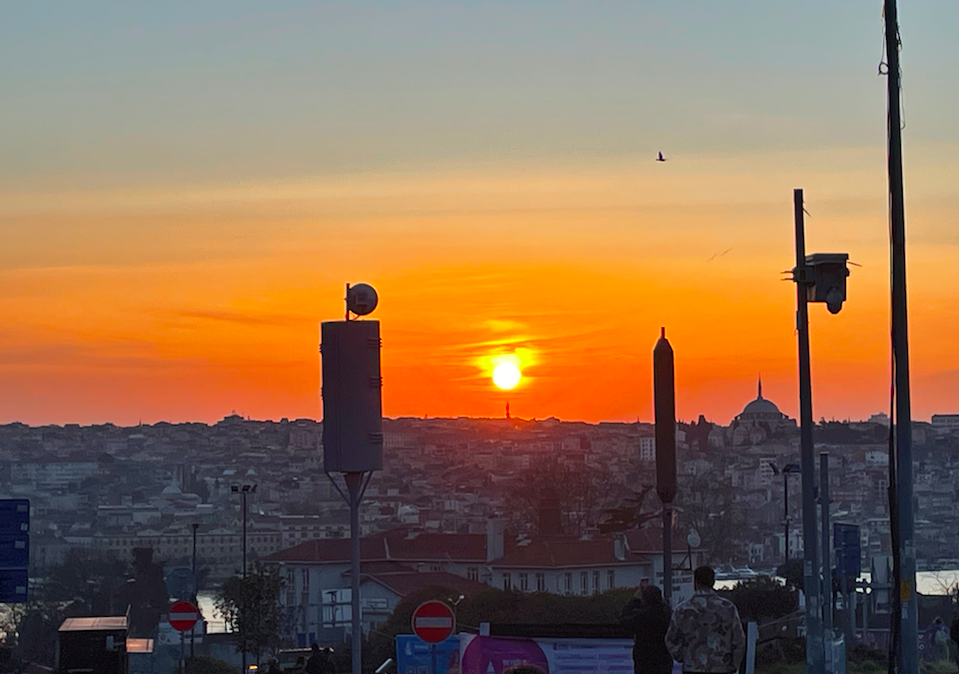
Istanbul at sunset

In North America and Western Europe, young people are much less happy than they were a year ago.

That’s the startling first sentence in this year’s World Happiness Report, issued on March 20, World Happiness Day.

This year’s report sheds a light on the alarming use of social media, especially among young people and its negative impact on happiness.

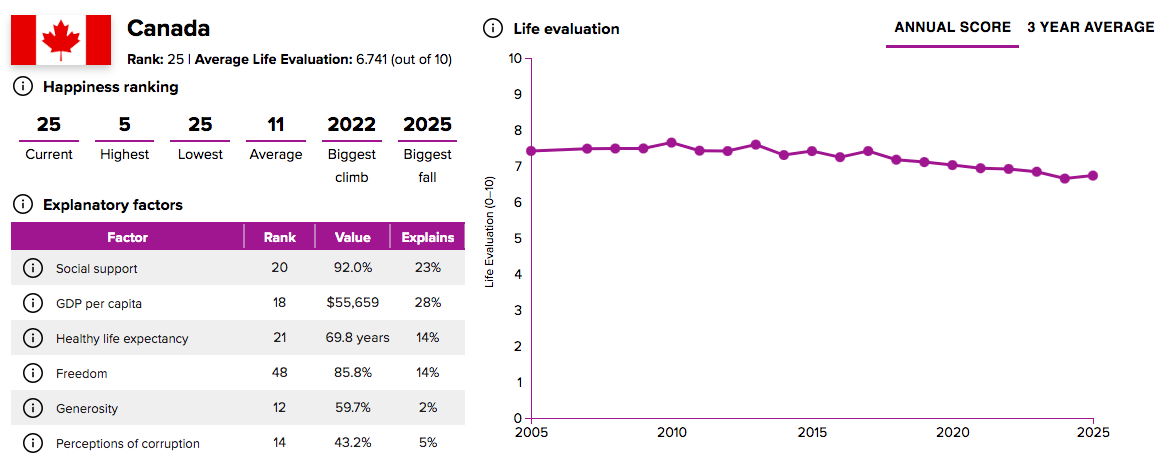
Canada fell to 25th place in in this year’s report, continuing a decade long decline. Finland ranked #1 again for the ninth year in a row. The US ranked 23rd and Britain 29th. For the second year in a row, no English speaking countries appear in the top ten.

Social media use was cited as a troubling factor especially for teenage girls in English speaking countries and teenagers.

Some disturbing findings from this year’s report.

  • In general, most Western industrial countries are now less happy than they were between 2005 and 2010. Fifteen of them have had significant drops, compared to four with significant increases.
  • In a ranking of happiness changes for under-25s, the United States, Canada, Australia, and New Zealand (the NANZ region) rank between 122 and 133 in the list of 136 countries.
  • In a sample of US college students, the majority wish social media platforms didn’t exist. They use them because others are using them, but they would prefer it if no one did.
  • In regards to social media, “there is now overwhelming evidence of severe and widespread direct harms (such as sextortion and cyberbullying), and compelling evidence of troubling indirect harms (such as depression and anxiety).”

The report found that the nature of internet use and which age group and gender use it has a direct correlation to happiness and wellbeing. It is strongly negative for Gen Z, moderately negative for Millennials, near zero for Gen X, and slightly positive for Baby Boomers. 

One of the studies the report cited was of 15-year olds in 45 countries, where they found life satisfaction is highest at low rates of social media use and lower at higher rates of use.

Platforms designed to facilitate social connections show a clear positive association with happiness, whereas those driven by algorithmically curated content tend to demonstrate a negative association at high rates of use.

Communications, news, learning, and content creation are associated with higher life satisfaction. Social media, gaming, and browsing for fun are associated with lower life evaluations.

Last year, Australia banned social media for youth under the age of 16. Other countries say they are considering following their lead.

There was some good news in this year’s report.

  • Looking at changes in happiness from 2006–2010 compared to 2023–2025, nearly twice as many countries have had significant gains (79) than significant losses (41), the biggest winners being in Central and Eastern Europe and the biggest losers being in or near zones of conflict.
  • In eight of the ten global regions covering roughly 90% of the world’s population, those in the youngest age group have higher life evaluations now than in 2006–2010, either in absolute terms or relative to those over 25.
  • Positive emotions continue to be twice as frequent as negative emotions.
  • Outside the English-speaking world and Western Europe, the links between social media use and wellbeing are more positive, and depend greatly on the platforms used. Data from Latin America for example show that platforms with algorithmic feeds and featuring influencers are more likely to be negatively linked to life satisfaction than platforms that mainly facilitate communication.

Congratulations to Costa Rica, who jumped to fourth place (the report’s editors surmised this could be due to the quality of their social lives). Here is the list of top 10 happiest countries in the world.

  1. Finland
  2. Iceland
  3. Denmark
  4. Costa Rica
  5. Sweden
  6. Norway
  7. Netherlands
  8. Israel
  9. Luxembourg
  10. Switzerland

This week’s #HappyAct is to take a page from this year’s study and spend less time on social media. Delete an app or two. Stay happy.

Canada's ranking in 2026 World Happiness Report

Wanderlust

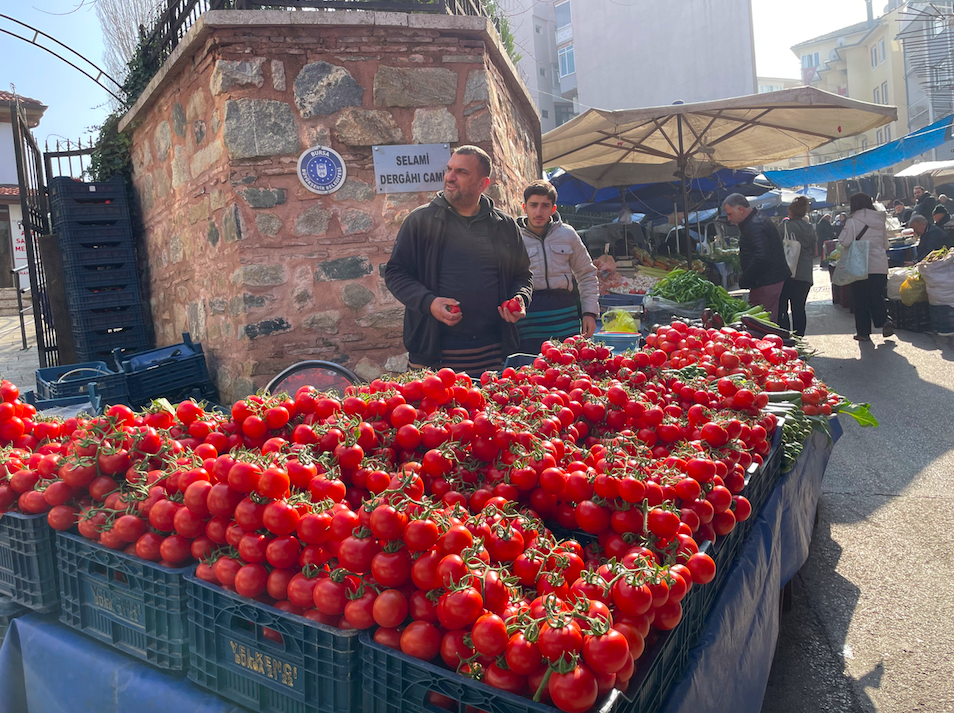
Men selling tomatoes in a market in Bursa, Turkey

J.R.R. Tolkien wrote in The Fellowship of the Rings, “All who wander are not lost.”

Does anybody get lost anymore? Not often. With the advent of Google maps and GPS, we’ve become glued to a screen on our dashboard or in our hands that tells us exactly where we need to go. We’ve lost the joy of getting lost.

There is a freedom and excitement to discovering what’s around the next corner when you are lost. Of course, you need to pick your times. If you are on a strict time schedule, or travelling with a group who would not appreciate your meanderings, it may not be the best time to wander at will.

But if your goal is simply to explore and discover, put your phone away and let whim and desire lead you.

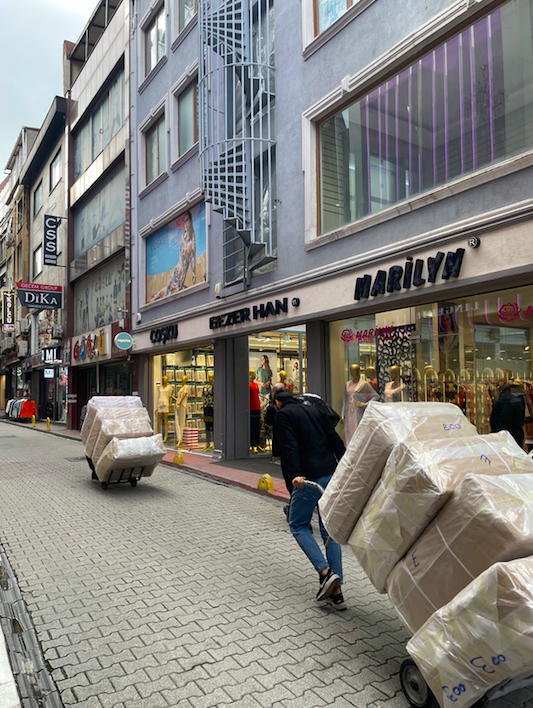
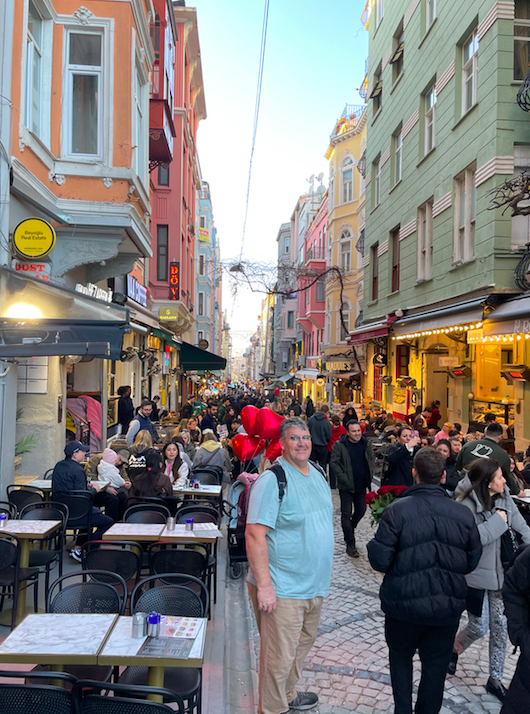
On our recent trip to Turkey, Dave and I made the conscientious decision to put our phones away and get lost in Istanbul. In the touristy Sultanahmet neighbourhood, we wandered down back streets where locals shopped for daily necessities like cheap undergarments, work clothes and shoes. We passed by Turkish grandmothers “nenes” wearing scarves over their heads and peasant skirts, shopping for socks and underwear, and workers hauling merchandise up the narrow alleyways on carts.

In the Taksim district, we got lost in alleyways selling art and musical instruments and were surprised when we popped out directly in front of the Galata Tower, one of the historic landmarks on the modern side of the Bosphorus.

We spent another afternoon poking around Kadikoy, a neighbourhood on the Asian side of the Bosphorous. We found spices, tea and coffee half the price they were selling it for in the touristy Spice Market and had one of the best meals of our entire trip.

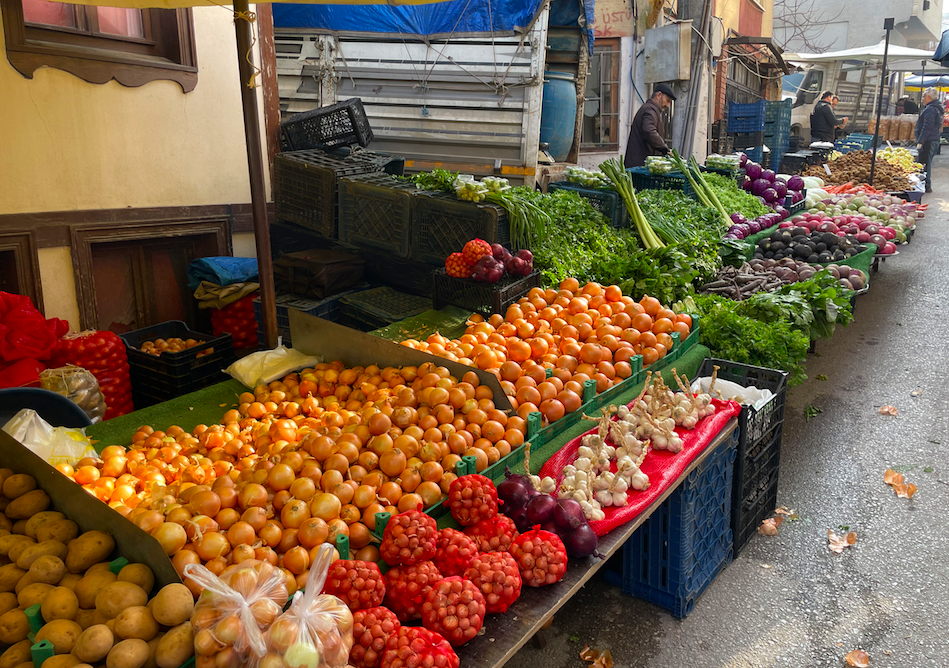
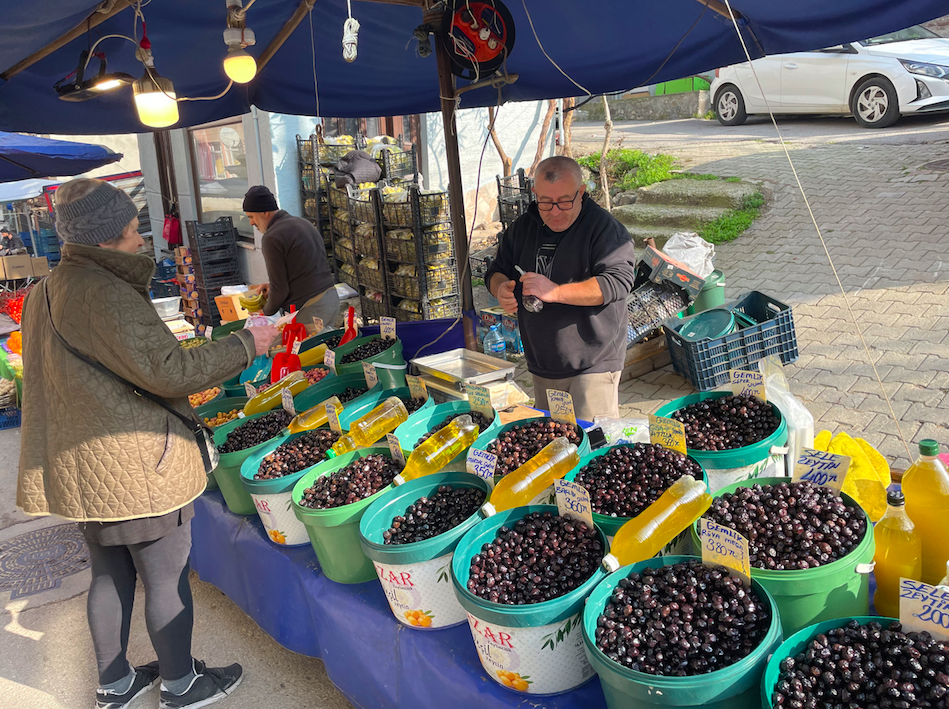
In the ancient town of Bursa, near the Mediterranean, we went exploring when we noticed a man setting up a vegetable stand. We discovered to our delight it was market day, and spent the next hour browsing stalls that snaked up and down narrow alleyways filled with fish, fresh produce, pure olive oil in unmarked bottles, tobacco, and more. It was one of the most amazing produce markets I’ve ever been to, and we just happened to stumble upon it.

This week’s #HappyAct is to put your GPS away and get lost. On foot, by car, it’s your choice. See what adventures and treasures you can find.

Farmers market in Bursa Turkey
Olives and olive oil in Bursa farmer's market in Turkey
Dave lost in the streets in Taksim near the Galata Tower
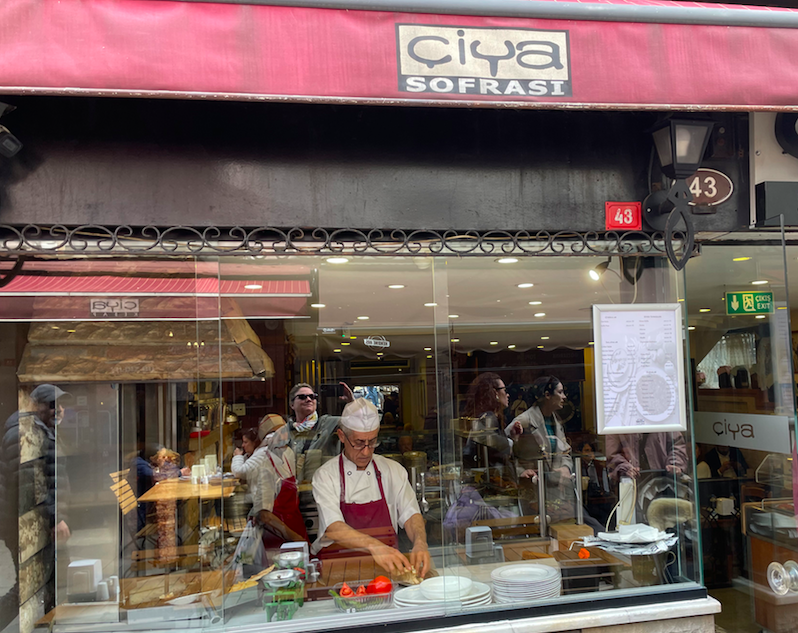
Ciya Sofrasi restaurant in the Kadikoy district of Istanbul

Photos: At top and above: every type of produce imaginable at the Bursa market. Note the selection of olives and unmarked bottles of olive oil. Workers carrying merchandise by hand in the back streets of Sultanahment. Dave in one of the alleyways near the Galata Tower. And finally, one of the chefs working in the window at Ciya Sofrasi in the Kadikoy neighbourhood of Istanbul. They own three restaurants, and can bring kebabs from their restaurant across the street over to include in your order. It was one of the best meals we had in Turkey. If you look closely, you can see my reflection in the window!

Finding happiness in the me age

girls taking selfies at a garden

They say the road to hell is paved with the best intentions. For almost a decade now, I’ve been blogging about happiness. I started this blog as an outlet for my writing and because I was fascinated by the juxtaposition of people living in a world with so much wealth, but struggling more than ever to be happy.

I’ve learned much about what makes me happy, the science of happiness and the intrinsic benefits of having purpose, showing gratitude and helping others.

I now fear instead of helping people live a happier life, I’ve contributed to the navel-gazing narcissistic culture our society has become.

Forget the #MeToo movement. We’re living in the age of #JustMe.

I know what you’re thinking. Every generation has claimed that the next generation is more selfish and self-absorbed than they were. Perhaps, but the advent of computers, cell phones, celebrity culture and the seismic shift in how we work and play in the past fifty years has propelled us into a whole new level of egocentricity.

Honestly, if I see another selfie of a 20-something posing sideways in front of a bathroom mirror holding up their cell phone with pouty lips, accentuated hips, and frosted tips, I think I’m going to lose it.

And don’t even get me started on the hyper-focus on resilience. Try telling a farmer living a hundred years ago in rural Canada with six mouths to feed and no running water you’re taking a break to “practice self-care” or going on a “forest therapy walk”, they’d mock you until their cows came home.

A sad and disturbing product of this #JustMe movement is we all have become more polarized in our views and unaccepting of other people’s opinions. What’s more, we don’t hesitate to share our views in the most public of forums. “We” are always right and everyone else is wrong.

It’s time we went from taking selfies to choosing selflessness, from practicing self-care to caring for others.

It was Ghandi who said, “The best way to find yourself is to lose yourself in the service of others.”

This week’s #HappyAct is to change the #JustMe narrative and find happiness by looking outward instead of in.

Happy Birthday to me

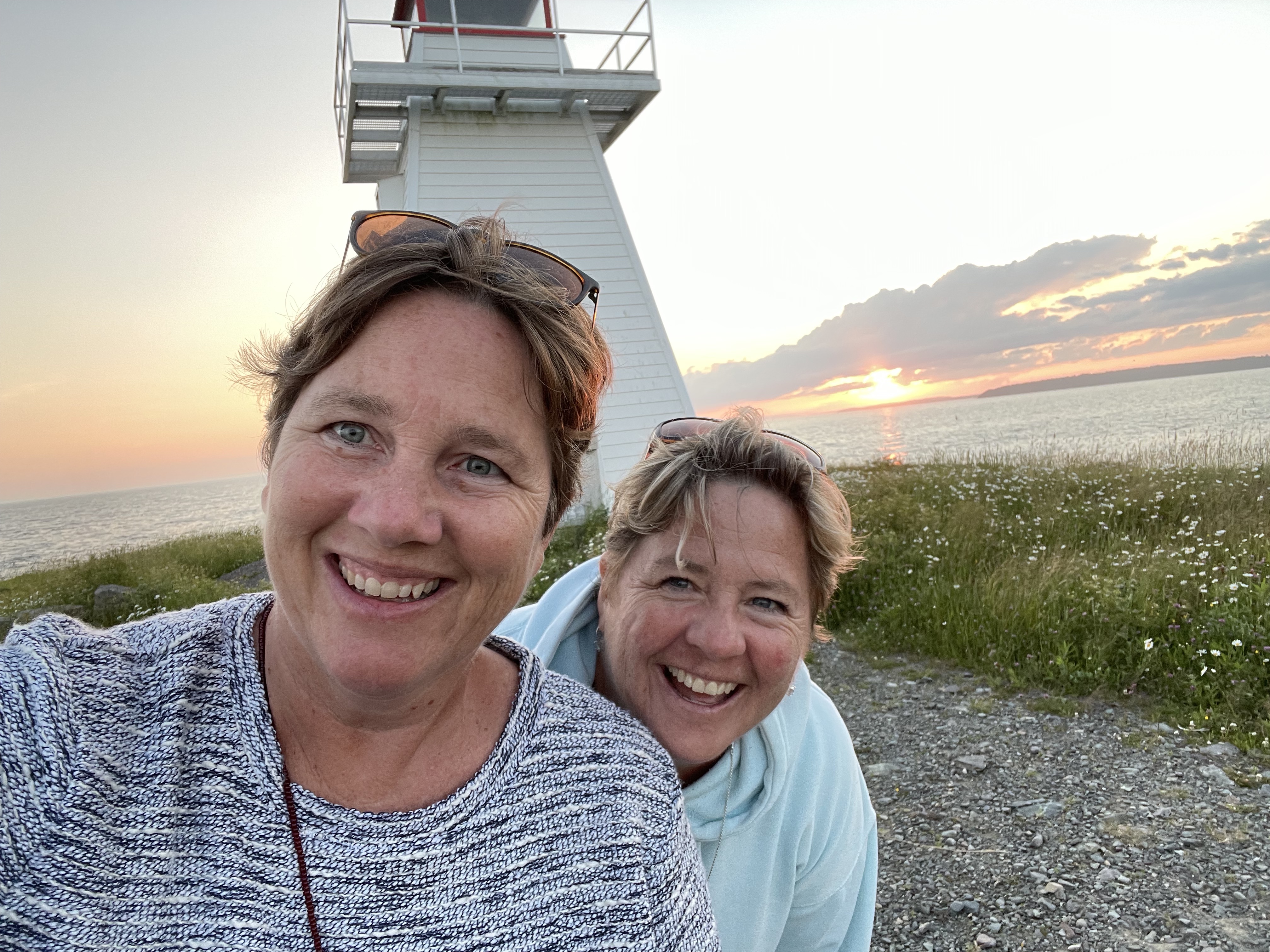
Author and friend in front of a lighthouse

Why is it so many of us hate birthdays?

I’ve always been rather agnostic about my birthday. I like getting presents and eating cake, whatever the occasion, but when you are an adult, a birthday never feels like a day to celebrate for some reason. It’s probably because for many of us, it’s just another day and reminds us of our age and of all the negative physical aspects of aging.

That’s why I was pleasantly surprised when I saw on Facebook yesterday a post by a friend of mine that started with the words “Happy Birthday to Me”. She shared that she was celebrating another year, another day, another opportunity to enjoy life, and was so thankful for all the blessings in her life.

It was so refreshing to see someone truly embrace their birthday and its true meaning: a celebration of being alive.

So this year, I’ve decided I’m going to celebrate my birthday, not with balloons or cupcakes or presents (although a Dairy Queen ice cream cake would be scrumpdillyicious).

I’m going to celebrate me…still here, still dreaming, still contributing, still loving, still planning my next adventure, still laughing, still alive.

Live in the cloud

Stunning orange clouds

In What if your best friend was a bot, we asked Siri what she looked like. She replied, “In the cloud, nobody cares what you look like”.

The height of irony? Maybe. But what a wonderful world it would be.

Adopt Happytalism

International Day of Happiness poster

A decade ago, the United Nations held its first ever conference on happiness and established an International Happiness Day to remind us that being happy is a human right and worth celebrating.

This year the significance of International Happiness Day on March 20 and the belief that happiness is a fundamental human right is playing out on the world stage as we watch millions of Ukranians refugees and citizens who have had their happiness ripped from them overnight with every Russian rocket, bomb and artillery strike.

In 2011, the UN General Assembly adopted a resolution that made it a “fundamental human goal” to give happiness as much priority as economic opportunity. In 2015, the UN launched the 17 Sustainable Development Goals, which seek to end poverty, reduce inequality, and protect our planet. It also recognized the need for a more inclusive, equitable and balanced approach to economic growth that promotes sustainable development, poverty eradication, happiness and the well-being of all peoples.

What’s interesting in all these resolutions is there is no mention of war or conflict and its impact on happiness; the focus is solely on economic factors.

Most likely that’s because in war, there is no happiness.

As we face this global crisis, let’s find positive ways to look after ourselves and each other and adopt Happytalism.

The UN secretariat for the International Day of Happiness is calling on all 7.8 billion people and all 206 nations and territories in our global community to take the “Ten Steps to Global Happiness” challenge and call to action. You can find all ten steps here. I’ve listed my top five, with the last one being my own:

  1. Celebrate the day. Do something special, just don’t let it pass by.
  2. Attend a world happiness event. There are live and virtual events on almost every topic imaginable, from education, health, technology, self and work. See the full list of events here. There’s a small cost to the virtual events, but in many cases, the proceeds go to helping others, like sponsoring a teacher that is helping underserved populations.
  3. Do what makes you happy. Happiness is about practicing self love, mindfulness, acting consciously, and with purpose and intention, positive energy and mindset, and celebrating the things you love that make you happy.
  4. Tell everyone. Spread the word and mission of #InternationalDayOfHappiness. Post something that makes you happy on social media, write a song or letter, make a poster.
  5. Support the people of the Ukraine. Make a donation. This CBC story lists charities you can support.

This week’s #HappyAct is to adopt and spread a more holistic, inclusive, equitable and balanced approach to the world order that promotes sustainable development, eradicates poverty and war, and focuses on the happiness and the well-being of all peoples.

#HappinessForAllForever.

Believe in the illusion

Daughter Grace with a drink

Last weekend, Clare had a hockey tournament in Barrie. It was supposed to be a fun-filled family weekend of shopping, eating out, spending time with her team and celebrating Grace’s birthday since my baby turned 19 last week.

It was probably one of our worst family weekends ever.

Clare woke up the Friday morning with a stuffy nose, claiming it was allergies. After 5-6 hours of driving, it had developed into a full-fledged head cold. She was miserable. Grace was upset because her big birthday weekend was ruined and we spent the next 24 hours in the car or hotel room yelling at each other or sulking before turning around and driving home the next day.

There was one shining moment during that wash of a weekend. After buying drive-through Wendy’s for Clare to eat in the hotel room by herself, Dave and I did take Grace out for a nice birthday dinner at Milestones. We bought her first drink: a bellini.

If you saw any of my posts on Facebook last weekend, you’d never know our weekend was such a bust. You’d see a funny video of the kids acting silly during the car ride, a picture of Grace smiling at the restaurant with her bellini, and the pathetic Santa display in the lobby of our crappy hotel that made us laugh.

That’s the beauty of Facebook, social media and our memories. Ten years from now, we may look back on those posts and only remember those happy moments, not the tears, fighting and miserable parts of the weekend.

Not a bad thing, really.

This week’s #HappyAct is to believe in the illusion. Tis the season of believing, after all, and who knows, someday, at least in our minds and memories, it may become the truth.

Putting the social in social distancing

inspirational message

For many of us, social media has been a haven these past weeks. It has allowed us to stay connected, share fears, laughter, stories and uplift one another.

Here are some of my favourite posts from friends and strangers that have brought little rays of sunshine into my day. Thanks in advance to everyone for letting me share your photos and messages–I used first names only to protect your privacy, but you know who you are!

Two dogs looking at a bed

This photo from my friend Trish with the caption, “Is there any room in that bed? That’s actually our bed—you should be at work.”

The wonderful music videos artists and everyday people are posting to share their talents and creativity. Here is my favourite: a couple at their piano singing a parody of Simon and Garfunkel’s Homeward Bound. Thanks to my friends Leslie and Jill for sharing.

#socialdistancingpickuplines on Twitter:

  • From Will Ferrell @itsWillyFarell: “You can’t spell quarantine without “u r a q t”
  • “Like the last roll of toilet paper, I’d roll with you any day”
  • “You smell so good, is that Purell you’re wearing?”
  • “Looking for your Prince Charmin? I’ve got a six pack”

A quote from my friend Kellie who has been posting #100daysofgratitude on Facebook:

“i thank You God for most this amazing day; for the leaping greenly spirits of trees and a blue true dream of sky; and for everything which is natural which is infinite which is yes.”

E.E. Cummings

This post from my friend Mark who always makes me laugh.


The daily video jokes my friend Jill is sharing on Facebook from her “Great Big Book of Jokes”.

Photos posted by my friend Cathy of inspirational chalk messages on the sidewalk, seen on her morning walk.

sidewalk message "party at my house when this is over"

And finally, these beautiful words of hope, shared by a fellow hockey Mom on TeamSnap posted above.

This week’s #HappyAct is to put the social in social distancing. Keep them coming everyone. Let’s continue to brighten our days.

Like a #HappyAct, only better

Bernese Mountain dog funeral home therapy dog

One of the great things about the blogging community is we try to support each other.

Last week, Dave shared a blog, mypositiveoutlooks.com that he said was similar to my blog. His exact words were, “It’s like a Happy Act, only better”.

If you need a reminder of all that’s good in this world, definitely add it to your list of weekly reads. Its tagline is, “News and stories that will make you feel better after reading.”

There’s a story about a local police officer who escorted an 8-year old girl whose father just passed away to her school father-daughter dance.

A 17-year old teen who built a tiny house from scratch using all recycled materials.

And a 98-year old girl scout in in Wernersville, Pennsylvania who still sells girl guide cookies.

One of my favourites was the story of a friendship that blossomed between Herman, the pigeon and Lundy an 8-week-old Chihuahua, who met at The Mia Foundation, a New York-based rescue dedicated to giving pets with congenital disabilities a chance at having a regular life.

The story Dave shared was about a funeral home in Macon, North Carolina that has a Bernese Mountain dog puppy as a therapy dog. The pictures of Mochi are adorable.

In a world where negative news seems to dominate, mypositiveoutlooks.com is a breath of fresh air—check it out. One thing to note—the site uses Google ads, so be prepared for advertising.

Ed. note: Last week I featured a photo of Steve the cat on my blog. To be politically correct and fair to all creatures, this week I chose a picture of Mochi the pup.