“One day you’re waiting for the sky to fall The next you’re dazzled by the beauty of it all”
I was listening to a cool chill mix on Spotify the other day, and they played Bruce Cockburn’s Lovers in a Dangerous Time. This line seemed to personify how we’re all feeling right now, waiting for the sky to fall like Chicken Little*.
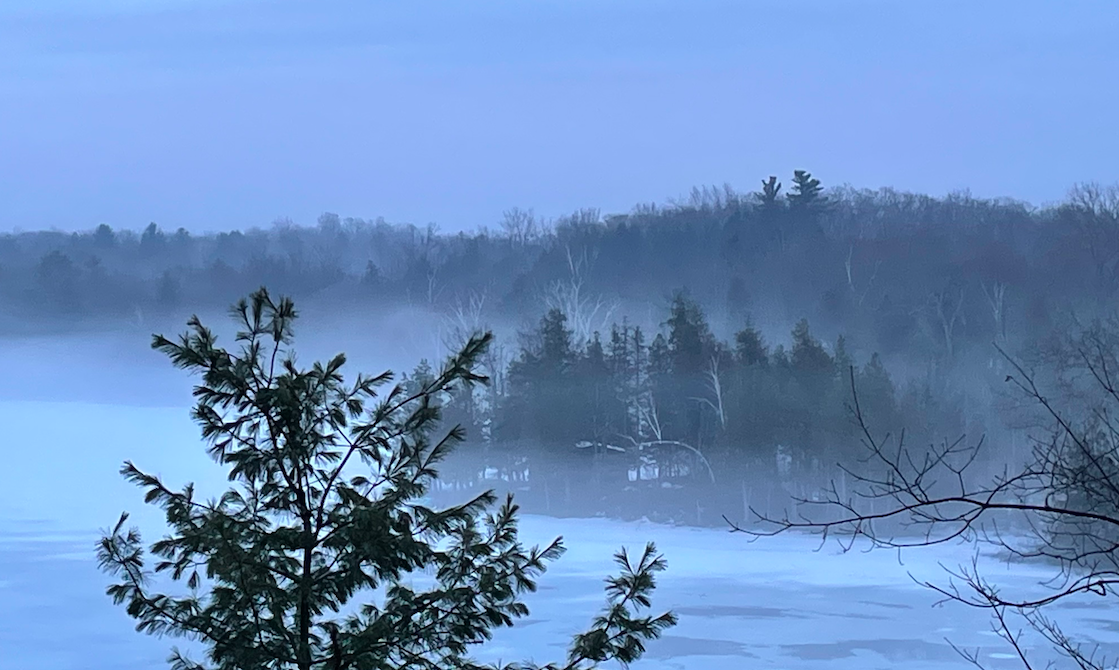
We all have different coping mechanisms. I’m ashamed to admit mine is to retreat into my writing and to my little lake where I can watch the mist rise on the shoreline, listen to the birdsong, and wait for the spring crocuses to appear. Escapism at its finest.
In my heart, I know this is no solution. I wish I was a better person. I wish I was like Carol, the wife of a fellow proctor at Queen’s University who officially retired years ago but keeps working at an outreach program operating out of one of the churches in Kingston, helping people on the street get warm food and shelter. Her response to the unfathomable problem of homelessness and drug use is to volunteer and make a difference.
Or like the millions of Americans in all 50 US states who took to the streets in the No Kings protests yesterday to raise their voices against Trump and his administration’s policies.
That’s not me. I choose to cope by living my small life, making a difference where I can.
Perhaps the ever wise and socially and environmentally conscious Cockburn has provided us with the answer. When the world seems out of control, look for the dazzling beauty in it all.
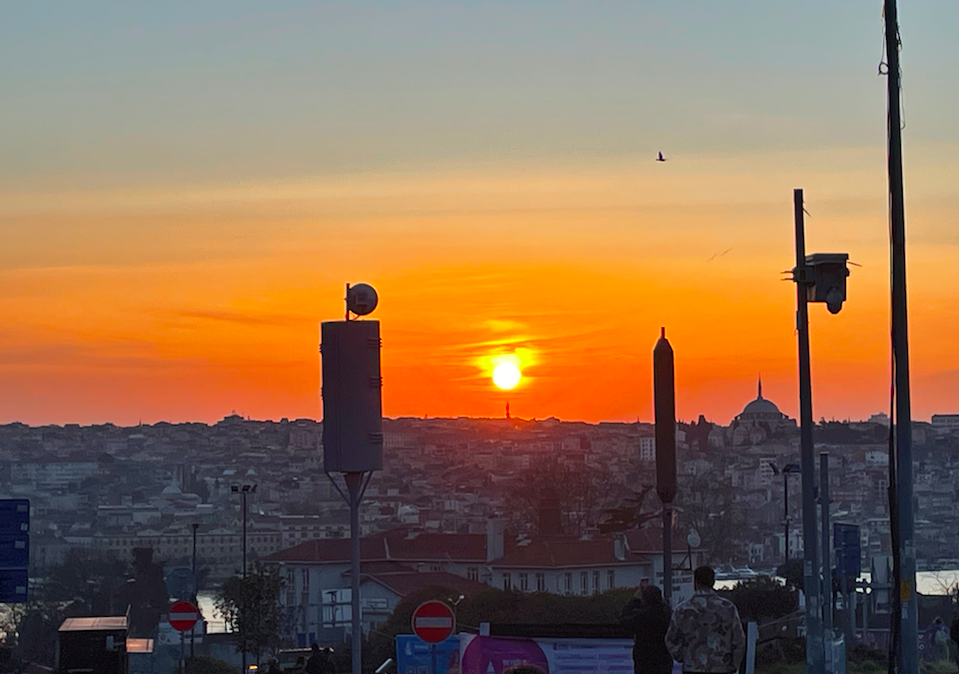
A magnificent sunrise or sunset. A child’s smile or laughter. The first snow drops or bluebells peeping through the frozen ground. Signs of hope and renewal.
Now it’s your turn to share. What do you do to cope when the world seems to be falling apart and you’re waiting for the sky to fall? Leave a comment below.
*a European folk tale about a chicken who believes the world is ending
In North America and Western Europe, young people are much less happy than they were a year ago.
That’s the startling first sentence in this year’s World Happiness Report, issued on March 20, World Happiness Day.
This year’s report sheds a light on the alarming use of social media, especially among young people and its negative impact on happiness.
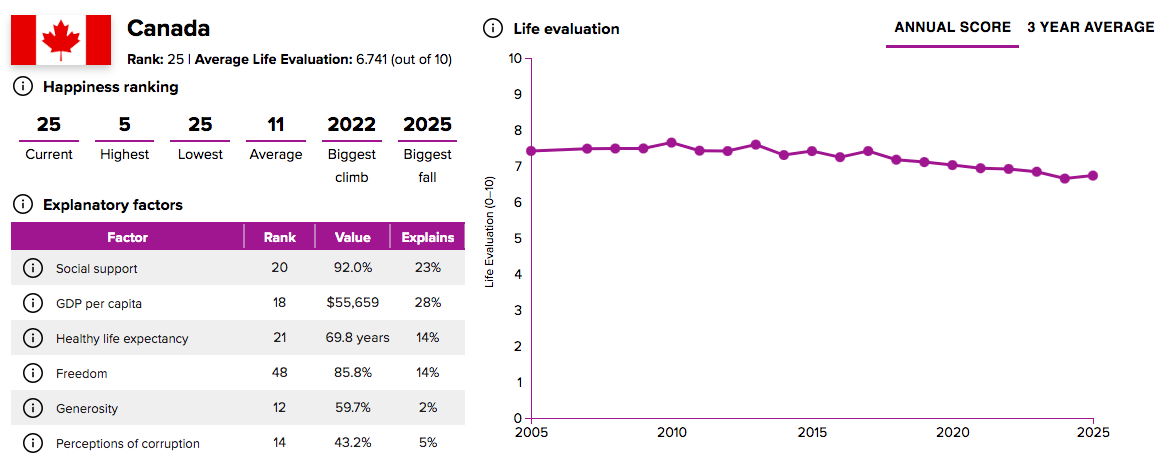
Canada fell to 25th place in in this year’s report, continuing a decade long decline. Finland ranked #1 again for the ninth year in a row. The US ranked 23rd and Britain 29th. For the second year in a row, no English speaking countries appear in the top ten.
Social media use was cited as a troubling factor especially for teenage girls in English speaking countries and teenagers.
Some disturbing findings from this year’s report.
In general, most Western industrial countries are now less happy than they were between 2005 and 2010. Fifteen of them have had significant drops, compared to four with significant increases.
In a ranking of happiness changes for under-25s, the United States, Canada, Australia, and New Zealand (the NANZ region) rank between 122 and 133 in the list of 136 countries.
In a sample of US college students, the majority wish social media platforms didn’t exist. They use them because others are using them, but they would prefer it if no one did.
In regards to social media, “there is now overwhelming evidence of severe and widespread direct harms (such as sextortion and cyberbullying), and compelling evidence of troubling indirect harms (such as depression and anxiety).”
The report found that the nature of internet use and which age group and gender use it has a direct correlation to happiness and wellbeing. It is strongly negative for Gen Z, moderately negative for Millennials, near zero for Gen X, and slightly positive for Baby Boomers.
One of the studies the report cited was of 15-year olds in 45 countries, where they found life satisfaction is highest at low rates of social media use and lower at higher rates of use.
Platforms designed to facilitate social connections show a clear positive association with happiness, whereas those driven by algorithmically curated content tend to demonstrate a negative association at high rates of use.
Communications, news, learning, and content creation are associated with higher life satisfaction. Social media, gaming, and browsing for fun are associated with lower life evaluations.
Last year, Australia banned social media for youth under the age of 16. Other countries say they are considering following their lead.
There was some good news in this year’s report.
Looking at changes in happiness from 2006–2010 compared to 2023–2025, nearly twice as many countries have had significant gains (79) than significant losses (41), the biggest winners being in Central and Eastern Europe and the biggest losers being in or near zones of conflict.
In eight of the ten global regions covering roughly 90% of the world’s population, those in the youngest age group have higher life evaluations now than in 2006–2010, either in absolute terms or relative to those over 25.
Positive emotions continue to be twice as frequent as negative emotions.
Outside the English-speaking world and Western Europe, the links between social media use and wellbeing are more positive, and depend greatly on the platforms used. Data from Latin America for example show that platforms with algorithmic feeds and featuring influencers are more likely to be negatively linked to life satisfaction than platforms that mainly facilitate communication.
Congratulations to Costa Rica, who jumped to fourth place (the report’s editors surmised this could be due to the quality of their social lives). Here is the list of top 10 happiest countries in the world.
Finland
Iceland
Denmark
Costa Rica
Sweden
Norway
Netherlands
Israel
Luxembourg
Switzerland
This week’s #HappyAct is to take a page from this year’s study and spend less time on social media. Delete an app or two. Stay happy.
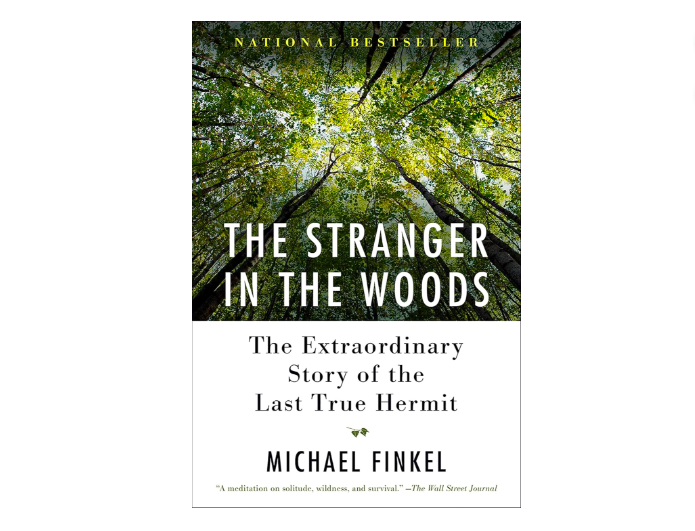
It’s the story of Christopher Knight, an average guy who at the age of 26, decided to live in the Maine woods on his own and didn’t talk or interact with another human being for the next 27 years.
He didn’t create art, he never kept a journal, he didn’t even talk to himself. He just spent his days in his clearing (the guy didn’t even have a cabin) surviving and existing.
Knight was never lonely during his time in the woods. He would sometimes read or listen to the radio, but spent the majority of his free time sitting in a lawn chair “in quiet contemplation” thinking about wherever his mind went. He claimed he was never bored and didn’t understand the concept of boredom. Boredom only applied to people “who felt they had to be doing something all the time.”
In considering Knight’s motives, Finkel explores various ancient beliefs and customs centred around living a life of solitude.
The first great literary work about solitude was written by a hermit protestor Lao-tzu in the sixth century. In Tao Te Ching, Lao-tzu wrote 81 verses about the pleasure of forsaking society and living in harmony with the seasons. Lao-tzu believed that only through retreat rather than pursuit, through inaction, rather than action, that we acquire wisdom and peace.
Finkel quotes the eighteenth-century philosopher Jean-Jacques Rousseau. “I have become solitary because to me the most desolate solitude seems preferable to the society of wicked men which is nourished only in betrayals and hatred.”
Carl Jung said that only an introvert could see the “unfathomable stupidity of man.” Sartre wrote “Hell is other people.”
Herman Melville who wrote Moby Dick withdrew from public life for 30 years. He wrote, “All profound things are preceded and attended by Silence.”
The greatest philosopher of all time, Dave says, “I prefer to spend my time with dogs than people.”
Knight related to the Greek philosophy of stoicism that held self-control and harmonious existence with nature constituted a virtuous life and you must endure hardship without complaint.
He also felt a kinship with Socrates who said, “Beware the barrenness of a busy life. You become free not when you fulfill your desires, but by eliminating desire. Those with less become content; those with more become confused.”
So what learnings can we take away from these philosophies and Knight’s experience? I’m not suggesting we turn our back on society, but perhaps we can experience a greater peace, stillness and happiness by seeking moments of solitude.
I asked at the start how many days can you go without speaking to another soul? I’ve learned for me the answer is three days. I can spend three days quietly at home, at peace in nature and be happy. After three days, I seek human interaction and connection and will reach out to friends or plan some social activity.
I have blogged before about the epidemic of loneliness. It’s important to delineate between being alone and being lonely.
Solitude when chosen, can be bliss, but when it is forced upon mankind, it can be torturous and is still to this day one of the great punishments inflicted on people.
Finkel makes this point in the book, quoting US Senator John McCain who spent more than five years as a prisoner of war in Vietnam, two of them alone. McCain described his experience as “awful. It crushes your spirit. The onset of despair is immediate.”
Solitude must be a choice.
It seems only fitting to bestow the final words to Knight: “If you like solitude, you are never alone. What I miss most in the woods is somewhere in between quiet and solitude. What I miss most is stillness.”
“Solitude bestows an increase in something valuable…Solitude increased my perception. But here’s the tricky thing: when I applied my increased perception to myself, I lost my identity. There was no audience, no one to perform for. There was no need to define myself. I became irrelevant.”
His isolation felt like a communion. “My desires dropped away. I didn’t long for anything. I didn’t even have a name. To put it romantically, I was completely free.”
This week’s #HappyAct is to experience solitude. Be happy and be free.
Leave a comment: how many minutes, hours or days could you go without talking to someone?
It’s 10 degrees and raining right now in Finland, and yet those crazy Finns are all probably happily curled up inside in their cozy houses in front of a roaring fire with their thick, brightly-coloured woolen socks, sipping a cup of hot coffee or glogi.
Finland has been named the happiest country in the world for the last eight consecutive years in a row, according to the World Happiness Report.
Now you too can channel your inner finn and learn the Finnish methods of happiness by taking Finland’s free Masterclass of Happiness course online this fall.
After watching five online videos narrated by expert coaches on four central themes, you’ll be tasked with an assignment. The four central themes are connection to nature, health and balance, design and the everyday, and food and wellbeing.
After you complete each lesson, you’ll receive a certificate.
To give you a flavour of what to expect, in the first lesson, Petri Kokkonen, a wilderness guide who lives in the remote Vätsäri region, will help you experience the peace and tranquility of nature in daily life and help you become one with nature.
In the segment on design, design professional Taina Snellman-Langenskiöld talks about how much our homes and the spaces we visit affect our well-being.
Full disclosure: this course and site is run by Visit Finland, the country’s tourism operator and it will suggest how you can further your happiness journey with travel suggestions at the end. I became aware of it when they ran a contest the first year it was offered and held in person in Finland. The success of the course and contest made Visit Finland realize they were on to something, and they made it available to everyone online. Now the tagline “Visit Finland—the happiness country in the world” features predominantly in their advertising.
This week’s #HappyAct is to find your inner Finn and take the Masterclass in Happiness.
Related: Read about hygge, the ancient Danish tradition of creating a warm atmosphere to relax in with friends and family.
It’s been a year since I retired, and other than taking on a few gig jobs, I’ve fully embraced my new life of leisure.
I know some people struggle with the decision. I remember years ago sitting in a retirement seminar with some colleagues. One of my friends said, “I don’t think I’ll retire anytime soon—I just don’t know what I’d do with my days.” This is a common refrain and fear. The experts all say the same thing, you need to retire to something, not just from work.
I thought it might be helpful to share what I’ve learned about retirement to help anyone thinking about taking the big leap.
If you think you will miss work, think again. Unless you’re an artist or have a super cool job like a back-country ski instructor, pilot, or amusement park ride inspector (we have a friend who does this for a living and is constantly posting pictures of riding awesome rollercoasters), you won’t miss the work. I stopped thinking about the office about 10 seconds after leaving it. I still miss some of the people though.
Structure is good. Most people need some structure in their lives. Choose some regular weekly activities that get you out of the house and give you structure in your day.
On the flip side, don’t overbook yourself, especially in the first year. You want to have the flexibility to explore, do fun things, and try new activities.
Try not to worry about money. This was one of the best pledges I made to myself in retirement. Nearly every retiree, unless you’re uber rich worries about money. It just comes with the territory. Be aware of your spending, have a budget and try to stick to it, but know that there are options, like taking part-time jobs, looking at your investment income, or downsizing your home if need be.
Time moves on a different continuum when you’re retired. Before if you were packing for a trip, you might only have an evening free to get ready. Now you might have two or three days and it still doesn’t seem like enough. Embrace the slower pace—you’ve been rushing all your life.
Don’t be surprised if you don’t do some of the activities or things you thought you wanted to do. I always pictured myself golfing once a week in a ladies league, but I’ve discovered I’m not as passionate about golf as I thought I was.
You may get bored from time to time. What a wonderful problem. Seize the opportunity to go somewhere and see or do something new, or just veg for the day. Call or meet up with a friend or family member you haven’t seen in awhile. I know it sounds corny, but I have a jar with ideas for day trips, overnight trips and bigger trips. When we have a free day, and feel like doing something, we grab an idea from the jar and off we go. The world is your oyster.
Women tend to transition better to retirement than men. One of my friends attended a retirement planning session and the facilitator said to the women in the room, “Go get a coffee, this segment doesn’t apply to you, you’ll be fine, but men listen up. You will struggle more.” That has certainly been the experience for Dave and me and many of our friends. I’m not sure if it’s because a man’s identity is more closely linked to his work, or that women are more social, but men struggle more with what to do and how to fill their days. Go back to point two: have a structure.
For me, retirement has been a huge blessing. I’ve enjoyed having the freedom to do the things I’ve wanted to do, get more active, and help out in my community. The one thing that has been difficult is we transitioned to empty nesters at the same time we retired. We miss the kids terribly sometimes, but then we look out and see the sun shimmering on the lake, and hear the loons and fish calling our names, and we head out, grateful for the gift of time to enjoy each day.
Are you retired and have advice to share, or is there anything that has surprised you in retirement? Leave a comment.
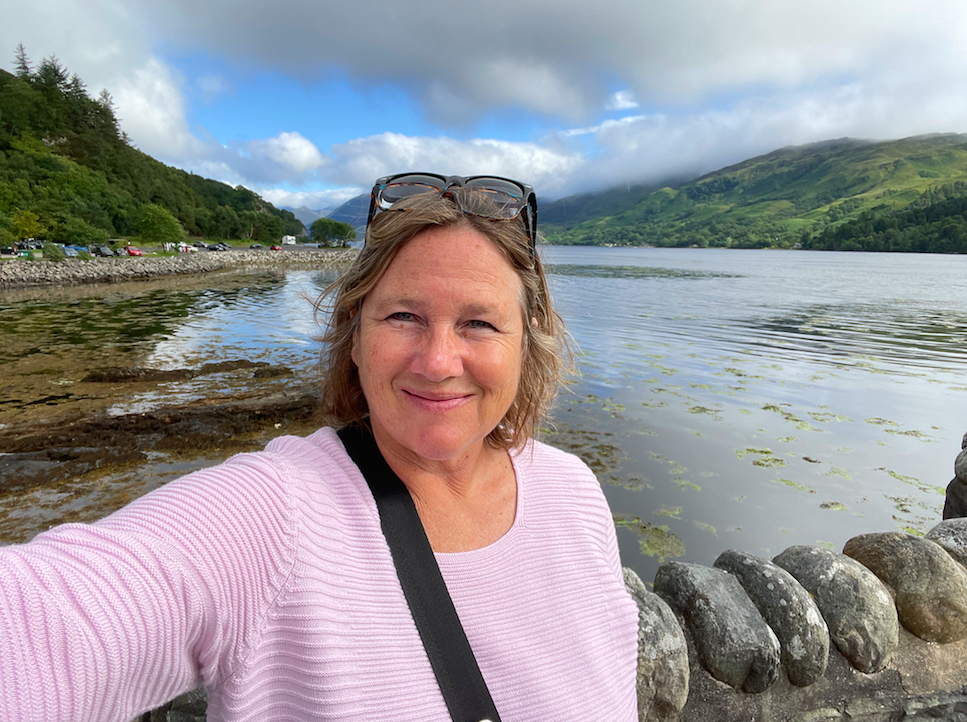
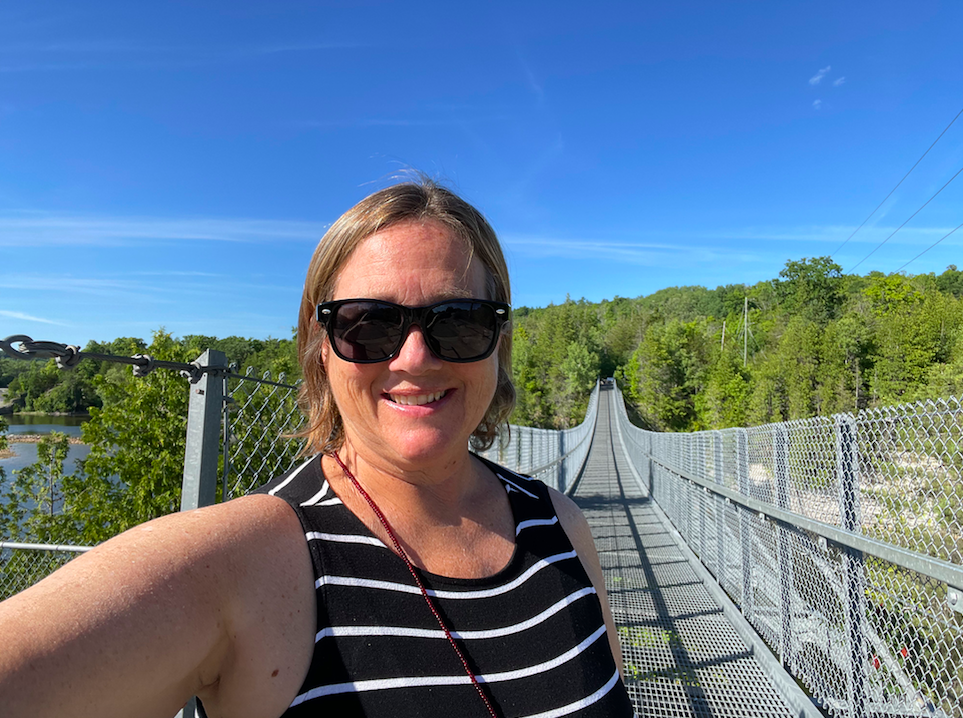
Photos: Above: me in Scotland this July and below, on the Ranney Gorge Suspension Bridge in Campbellford. The suspension bridge was one of the ideas in my day trip jar, so I stopped to check it out on the way home from Peterborough one day.
Tomorrow, Canadians will go to the polls in what could be one of the most historically significant elections of our generation.
Trump aside, I’ve been thinking of the key issues most Canadians are concerned about in 2025: the cost of living, affordable housing, mental health and health care, climate change, and the economy. I’ve been very fortunate to consider these issues from a new lens, thanks to a group of young PhD international students I’ve been working with as a proctor this past month at Queen’s University.
Two of the graduate students I worked with were from Ethiopia, one doing his PhD in rehabilitation research and the other in nursing. Another was from Syria, doing his PhD in nuclear engineering. They had all done their undergraduate and Masters degrees in different countries around the world and were extremely kind, bright, perceptive, and willing to share their thoughts and experiences of their time in Canada.
They all agreed Canada is a very beautiful, safe country and they particularly loved Kingston. They appreciated the hard work ethic of Canadians and the fact that we are a law abiding country. They did not like our winters!
Some of the things that surprised them is how expensive it is to live here, especially housing. (The one fellow told me he paid $900 a month for a two bedroom apartment in Germany where he did his Masters degree in a city the same size as Kingston. His rent here is $1,700. According to Studying in Germany.org, housing prices are 47% lower than in the US). They’ve also been surprised to see the number of homeless people and people with mental health and drug problems in Canada.
This led to a discussion on the shrinking middle class, a phenomenon that seems to be happening in all countries (my new friends said it was the case in Ethiopia and Egypt too).
However, the biggest culture shock and negative they’ve encountered is the individualistic aspect of Canadian society. We talked at length about child care, since my one new friend just had a baby and the other had two children and a wife here in Canada. They said at home in Ethiopia, child care is not an issue. If you need to work or go somewhere, there is someone—a relative, neighbour, or friend who will look after the children.
That led to discussions about seniors. Older people in their country are cared for and live with their extended families, unlike here in Canada where many seniors live alone or in nursing homes, and suffer from loneliness (see my blog post from a few weeks ago, “Battling the epidemic of loneliness”).
As we were discussing all of these issues, it occurred to me that if we simply went back to having multi-generational families living together, it would solve many of the problems in our society. There would be more available and affordable housing, and the cost of living would be offset by potentially multiple incomes in one household. People would be financially better off and happier, alleviating the strain on health care systems and improving people’s mental health.
If you study the famous “blue zones” in the world where people live longer, multigenerational living is part of their cultural fabric.
Where and when did we go wrong in North America?
In 2015, one of the best selling business books was a book called Weology: When Everybody Wins When We Becomes Before Me, by Peter Aceto, CEO of Tangerine bank. It was a book on the philosophy of leadership in business, but the concept of Weology is one I think we need to start embracing as a society to address these critical issues. Clearly what we’ve been doing up until now isn’t working.
A new party, let’s call it the Weology Party, committed to implementing policy that fosters a philosophy of taking greater care of each other and multi-generational living might just be the solution. From a tax perspective, this could take the form of tax deductions or income splitting for multi-generational households, not just spouses. There are currently tax breaks for people who have eligible dependents over the age of 18 and a tax credit if you are a caregiver for a spouse or senior, but we could do more. To foster this philosophy in our communities, the government could also offer tax breaks and incentives for volunteering.
Municipalities have started to make strides to make it easier for people to live together, allowing and promoting additional dwelling units on lots.
In business, the government could introduce policy to make it attractive for new start-ups to form as employee-owned cooperatives. There is a large corporation in Spain called Mondragon Cooperation that has 70,000 employees, annual sales of 11 billion euros and is highly profitable. They are committed to putting people before profits (for instance during COVID, instead of laying off employees, they reduced salaries across the board by 5%). The ratio of pay between employees and executives is just 6:1 (in Canada, the ratio is 210:1 for our highest paid CEOs and in the States, it’s even higher). This model is one way to distribute wealth more equitably in society, within the framework of a free market economy.
My new proctor friend who was a research fellow in rehabilitation was working with a professor who was researching the impact and effectiveness of formal versus informal supports for people with disabilities. Their theory is that informal supports are far more important in helping people with disabilities live full and rewarding lives. They are still in the research and data collection phase, but my guess is the data will show that informal supports, people supporting people, will be more important.
Which brings us back to election day. Make sure you vote. You won’t see the Weology party on the ballot this election, but perhaps some day we will. In the meantime, we need to all start thinking about what small changes we can make in our lives to move Canada towards a healthier (both financially and physically), happier, and connected society.
Quick Poll: Would you rather friends call or text in advance before they come for a visit or just drop by? Leave a comment with your answer.
Personally, I love it when people just drop by for a visit. Here are my reasons:
I love the joy and surprise of a spontaneous visit—it makes it more fun
If I know in advance people are coming, I feel obligated to clean and I hate cleaning—I prefer to visitors to just pop in and not worry about how the house looks
I like the sense of people coming and going—it makes for a joyful, happy house
Now for those of you who voted call or text in advance, I get it: you can make sure you’re home, have supplies in the house (beer, wine, munchies—but at our house there’s always beer and wine in the fridge), and you can suggest a time convenient for your schedule.
I’ll always prefer the spontaneous visit. Down east, where my friend Danette’s parents live in Antigonish, all the neighbours pop in anytime. You never know who you’re going to see each day and there’s always a laugh to be had. It makes for a wonderful community.
This week’s #HappyAct is to throw caution to the wind and drop in on someone unannounced. And remember, you can always bring the beer!
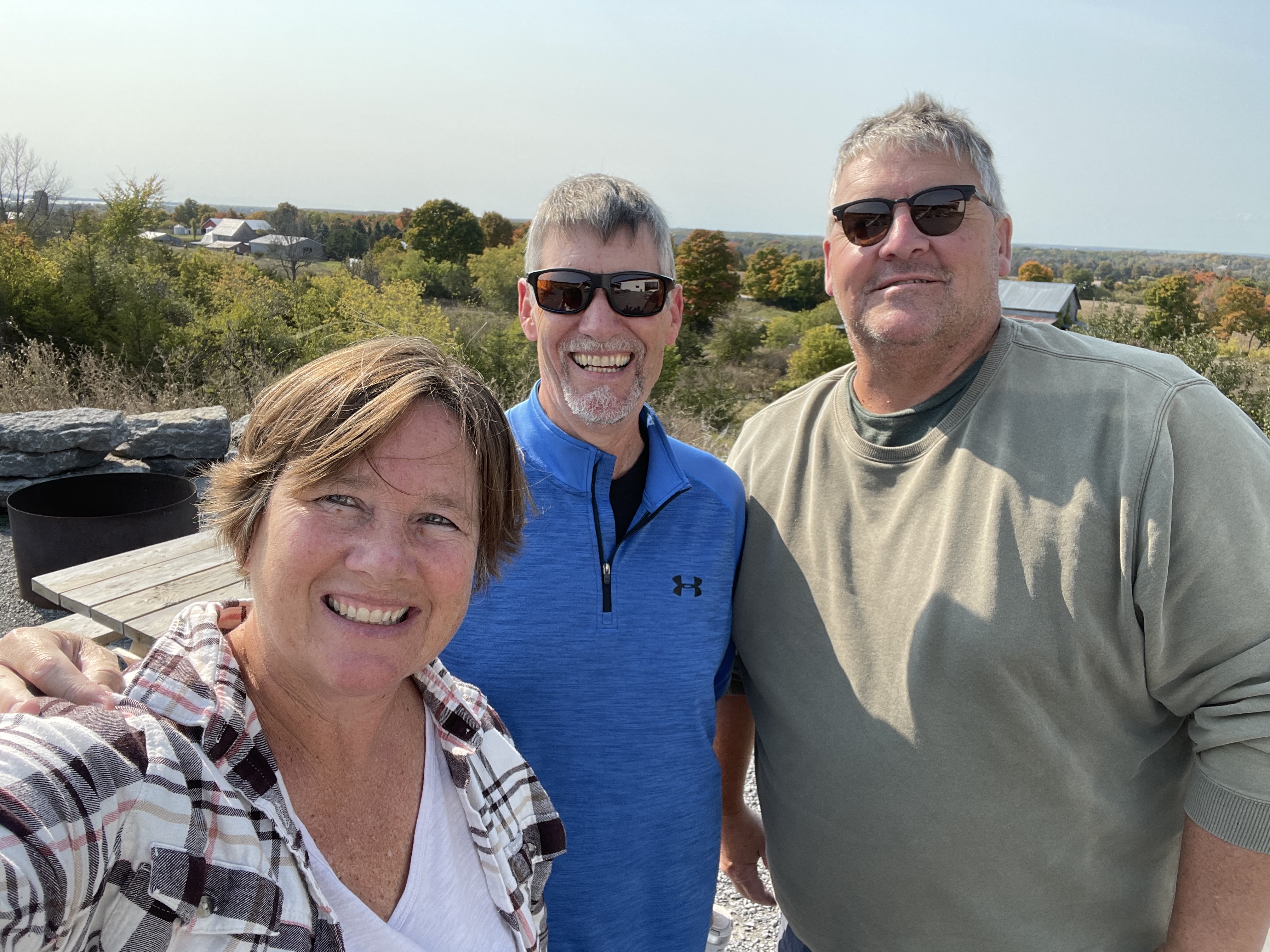
(The photo above is of me, Dave and my brother Don, one of our most frequent visitors. He doesn’t just drop in, but that’s because he lives three hours away!)
There is an epidemic sweeping our country—the epidemic of loneliness.
In our grandparents’ day, the average detached home in Canada had six people in it. For my generation, it was four people. Today it’s 2.1. One of the fastest growing sub-segments in the housing industry today is single homeowners in their 20s. For the first time in modern history, we also have an entire generation of seniors living alone in isolation.
The two age brackets most at risk of being lonely are youth and seniors. According to Statistics Canada’s Canadian Social Survey: Loneliness in Canada, more than 1 in 10 people aged 15 or older say they “always or often” feel lonely. A 2024 study of seniors estimated between 19-24% of Canadians over the age of 65 feel isolated from others and wished they could participate in social activities in their community.
The impacts of loneliness in seniors especially are well known. In addition to depression, emotional distress, and dementia, loneliness can result in increased risks of chronic illness and falls, poor general health and premature death.
Humans were not meant to live alone. We were meant to live in tribes.
So what can we do to battle the epidemic of loneliness? Here are some words of advice people shared in a recent Quora post:
“Have a pet and walk them every day. You’ll meet people on your walks”
“Join a club or activity…check out the nearest seniors centre for programs services” (I’ve really enjoyed the activities I participate in at the Seniors Association of Kingston and have found my tribe there)
“Volunteer”
“Find people you can text every day”
“Check out the website meetup.com for a list of groups and activities that may appeal to you” (I looked to see what was listed for my area of Kingston, Ontario and there was everything from guided hikes, to toastmasters groups, to meditation and church groups)
“Nobody is going to come to you. Go out and find a church family, join a gym, go for walks, talk to your neighbours. Don’t spend your senior years being sad. Enjoy every day you have left. If you lived near me I would be your friend.”
“Every time you find yourself thinking about your own loneliness and state, think about someone in the world you can help. A neighbour who needs help, bake some cookies, whatever”
“To have a friend you need to be a friend.”
“I remember this documentary on finding happiness. The director at the beginning of the film said he would sum up the secret of happiness with one 4 letter word. I assumed it would be “love” but was surprised when he said it was risk. It’s all about taking calculated risks and steps to make opportunities happen for yourself and it will pay off. Good luck your future happiness is within you.”
This week’s #HappyAct is to do something to battle the epidemic of loneliness. Reach out to a friend, join a group, visit a senior who lives alone. It’s all about caring and sharing—more on that next week!
Coming up…March 20 is World Happiness Day. This year’s theme is Caring and Sharing. Be sure to check back next week when I dive into the results of the 2025 Report on World Happiness.
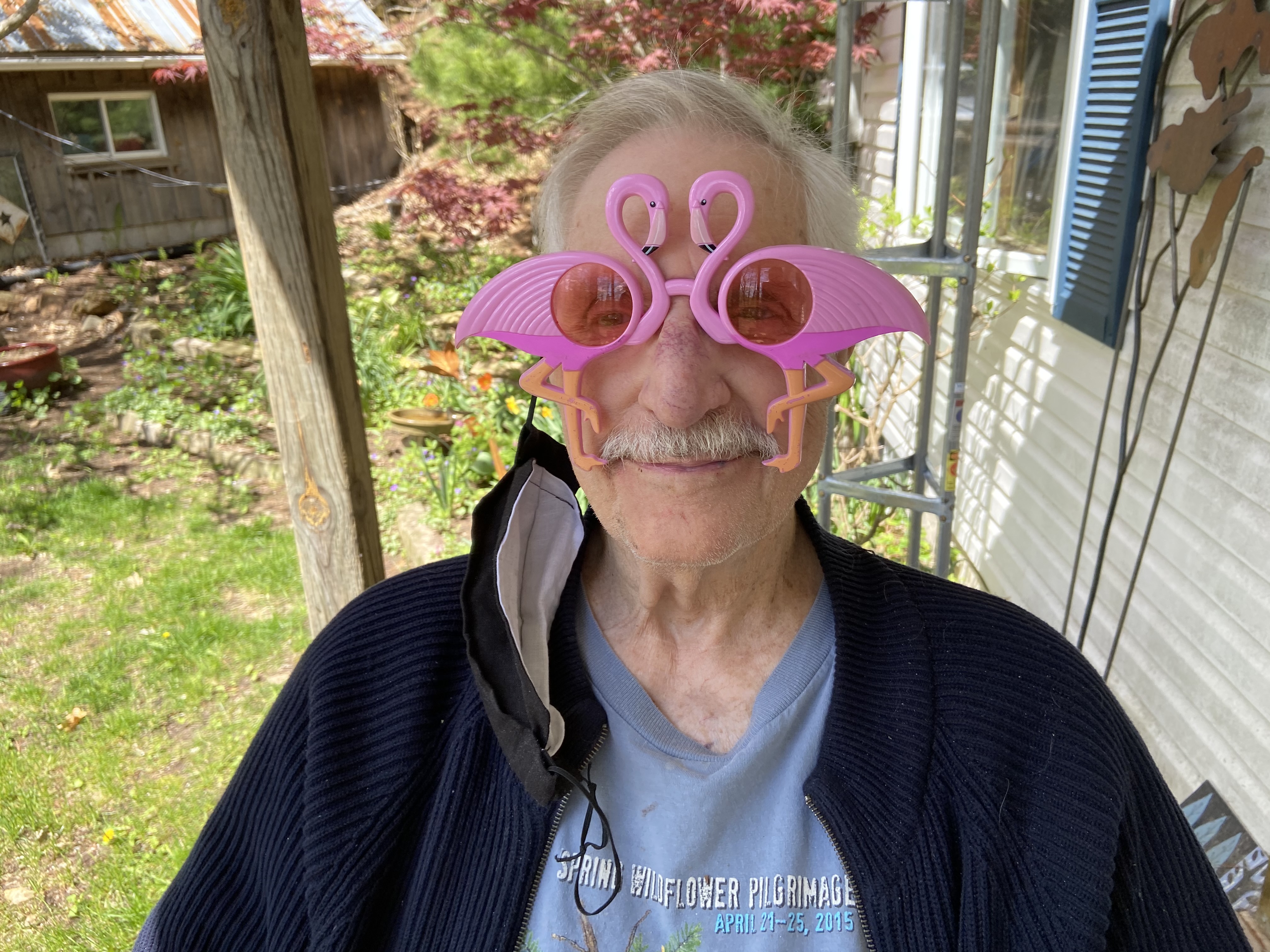
Photo: One of my favourite photos of Dave’s Dad who is living proof a youthful heart and spirit will always keep you young at heart and happy.He texts his friends and family every day.
As humans, we are constantly in a state of internal conflict. Indulge (and then usually feel guilty about it) or abstain, get up and move or laze on the couch, push ourselves outside our comfort zone or stay within the confines and comfort of routine.
It is an art and balance we need to master in order to be happy.
With age comes a new wrinkle in this ever-changing struggle of understanding and respecting your physical limitations.
As I’ve aged, I’ve tried to navigate the art of pushing by deciding what is important to me, and what I enjoy doing with realistic expectations of what I’m capable of doing.
I’ve never been one of those extreme sports enthusiasts or had any desire to push myself to the limit, whether its running, car racing or facing the wilds. For me, it’s not about iron mans, marathons or the Canadian Death Race (yes, it’s an actual ultramarathon held in Alberta each year in the Rockies where a very small field of 1,000 certifiably insane racers run non-stop for 24 hours through the mountains, sponsored by sinistersports.ca—the name itself should send you running and screaming in the opposite direction.)
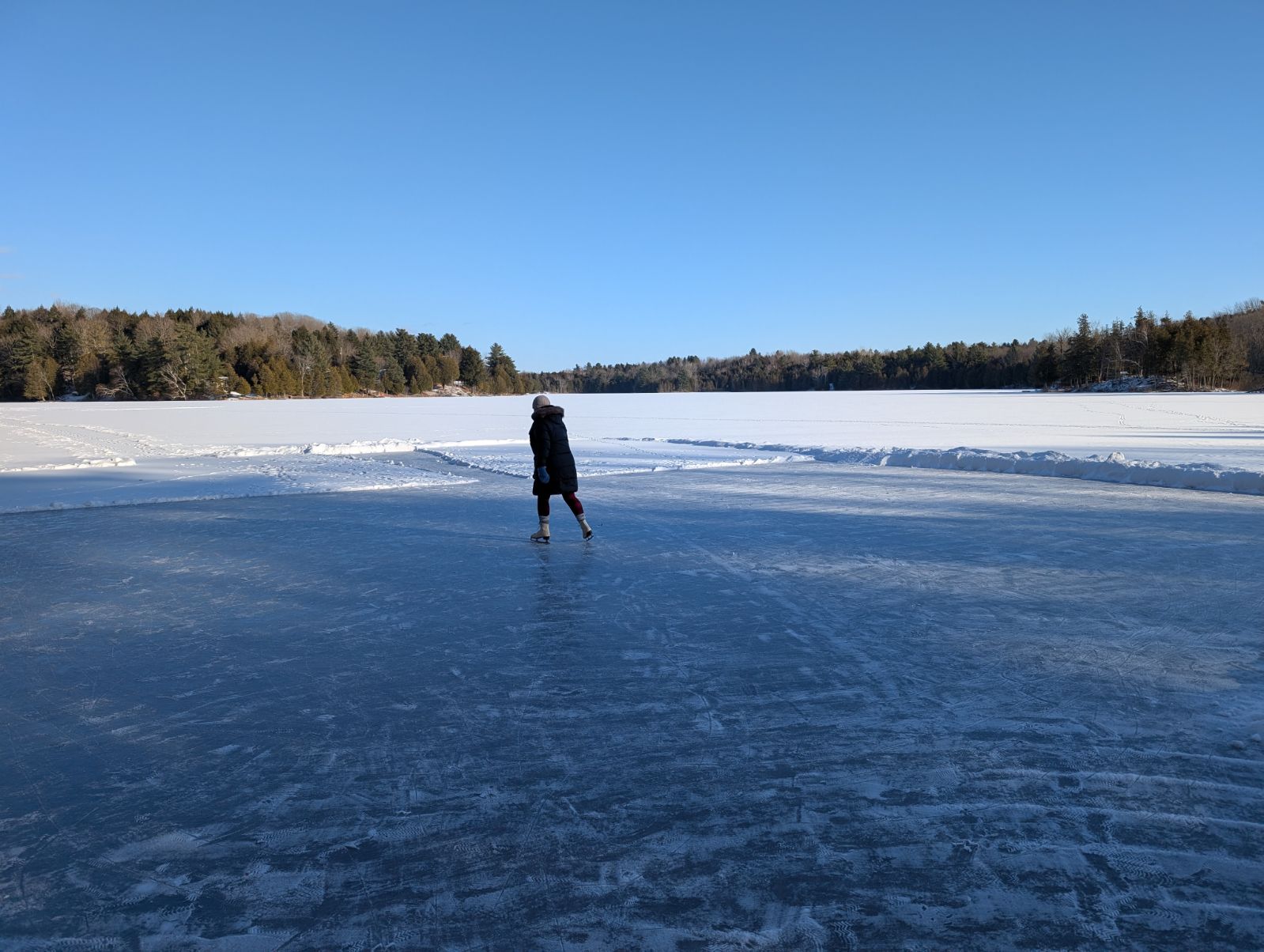
My idea of a fun afternoon is skating and ice fishing on my lake, followed by a nice glass of Merlot in front of my woodstove while watching the Bills hopefully beat the Chiefs tonight.
The art of pushing for me is forcing myself to continue to do the things I love to do and not kill myself.
Now, when we go on an interior canoe trip to Algonquin Park, we plan a route that doesn’t involve portaging or we might rent an outpost cabin.
I still love to hike, play hockey and skate on lakes, but my days of doing pirouettes, lunges, or racing like crazy to beat the neighbours’ kids to the puck are over.
I will continue to push myself to experience new things, new places and meet new people even if it feels awkward at first.
Martin Luther King said, “Keep pushing forward, even when the path is uncertain, for greatness awaits those who persist”.
Well, if not greatness, hopefully a nice glass of Merlot.
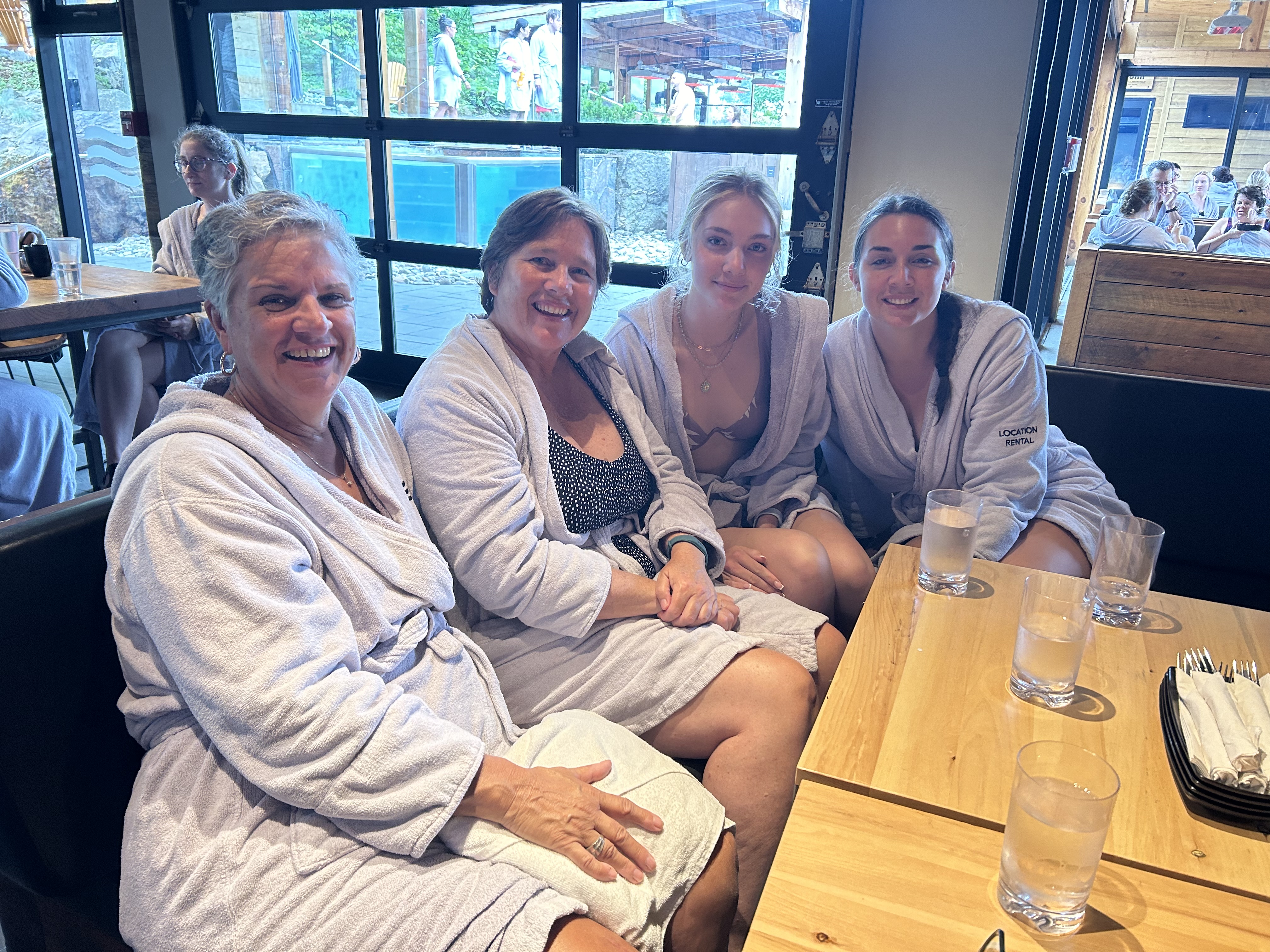
Last week, Dave’s sister and I took the girls to Nordik Spa in Chelsea Quebec.
It was a combination graduation gift and final girls’ trip before Grace and Clare leave for university this fall.
A day at Nordik is the ultimate in indulgence and relaxation.
As you walk up the several flights of steps to the impressive main lodge with massive wooden beams, you are welcomed by the sound of trickling waterfalls and the smell of burning wood in the fire pit cradled by bright red Adirondack chairs.
I’ve been to Nordik once before with my girlfriends and I remembered it takes an hour or so to fully embrace the spa experience.
The spa is divided into three main sections, Borea, where you can talk in whispers and low tones, Panorama, where you can chat freely and Kaskad, where there is complete silence. Thermal hot pools, some with waterfalls are interspersed with cold pools and saunas. Lounge chairs, hammocks, hammock chairs, and reading pavilions with wood fires are available for those who just want to sit and read and relax or listen to music.
Nordik spa is designed around the ancient Nordic ritual of thermotherapy, a treatment that alternates between hot and cold temperatures, followed by a rest period.
Thermotherapy deeply cleanses the body, eliminates toxins and can help with injury, chronic pain, rheumatism, arthritis, depression and sleeping. To truly embrace the full spa experience, you’re supposed to complete the entire cycle three times.
We started the morning in the social area with its infinity pool and magnificent views of Gatineau Park and the city of Ottawa. It was a cool, cloudy day, so the warm bubbles of the thermal pool felt wonderful as we chatted and caught up with Dave’s sister.
Clare embraced the full spa experience, opting to do a cold plunge next, but I figured I get enough cold water immersion experience swimming in my lake, so I went for a sauna and some hammock time instead.
Grace’s favourite was the heated rock bed sauna. It was so relaxing, a person fell asleep and was snoring!
After a few hours of thermal pools and saunas, we enjoyed a delicious lunch in their Finalandia restaurant. One of the things I love most about Quebec is you never get a bad meal and their restaurant is excellent. We enjoyed a cheese board, roasted red pepper hummous, broccoli soup, brisket sandwich on focaccia bread topped off with a tiramisu cheesecake and warm chocolate brownie with ice cream.
As the afternoon sun finally peeped out, we finished the day where we started, chatting in the thermal pool and looking over the gorgeous views of Gatineau Park.
Grace kept asking me what we should do next, and I would reply, “Whatever you want, that’s the beauty of this place.”
This week’s #HappyAct is to pamper yourself at a spa day. Enjoy!



 Happy Act