The party you won’t see on the ballot we should all be voting for

elections canada vote sign

Tomorrow, Canadians will go to the polls in what could be one of the most historically significant elections of our generation.

Trump aside, I’ve been thinking of the key issues most Canadians are concerned about in 2025: the cost of living, affordable housing, mental health and health care, climate change, and the economy. I’ve been very fortunate to consider these issues from a new lens, thanks to a group of young PhD international students I’ve been working with as a proctor this past month at Queen’s University.

Two of the graduate students I worked with were from Ethiopia, one doing his PhD in rehabilitation research and the other in nursing. Another was from Syria, doing his PhD in nuclear engineering. They had all done their undergraduate and Masters degrees in different countries around the world and were extremely kind, bright, perceptive, and willing to share their thoughts and experiences of their time in Canada.

They all agreed Canada is a very beautiful, safe country and they particularly loved Kingston. They appreciated the hard work ethic of Canadians and the fact that we are a law abiding country. They did not like our winters!

Some of the things that surprised them is how expensive it is to live here, especially housing. (The one fellow told me he paid $900 a month for a two bedroom apartment in Germany where he did his Masters degree in a city the same size as Kingston. His rent here is $1,700. According to Studying in Germany.org, housing prices are 47% lower than in the US). They’ve also been surprised to see the number of homeless people and people with mental health and drug problems in Canada.

This led to a discussion on the shrinking middle class, a phenomenon that seems to be happening in all countries (my new friends said it was the case in Ethiopia and Egypt too).

However, the biggest culture shock and negative they’ve encountered is the individualistic aspect of Canadian society. We talked at length about child care, since my one new friend just had a baby and the other had two children and a wife here in Canada. They said at home in Ethiopia, child care is not an issue. If you need to work or go somewhere, there is someone—a relative, neighbour, or friend who will look after the children.

That led to discussions about seniors. Older people in their country are cared for and live with their extended families, unlike here in Canada where many seniors live alone or in nursing homes, and suffer from loneliness (see my blog post from a few weeks ago, “Battling the epidemic of loneliness”).

As we were discussing all of these issues, it occurred to me that if we simply went back to having multi-generational families living together, it would solve many of the problems in our society. There would be more available and affordable housing, and the cost of living would be offset by potentially multiple incomes in one household. People would be financially better off and happier, alleviating the strain on health care systems and improving people’s mental health.

If you study the famous “blue zones” in the world where people live longer, multigenerational living is part of their cultural fabric.

Where and when did we go wrong in North America?

In 2015, one of the best selling business books was a book called Weology: When Everybody Wins When We Becomes Before Me, by Peter Aceto, CEO of Tangerine bank. It was a book on the philosophy of leadership in business, but the concept of Weology is one I think we need to start embracing as a society to address these critical issues. Clearly what we’ve been doing up until now isn’t working.

A new party, let’s call it the Weology Party, committed to implementing policy that fosters a philosophy of taking greater care of each other and multi-generational living might just be the solution. From a tax perspective, this could take the form of tax deductions or income splitting for multi-generational households, not just spouses. There are currently tax breaks for people who have eligible dependents over the age of 18 and a tax credit if you are a caregiver for a spouse or senior, but we could do more. To foster this philosophy in our communities, the government could also offer tax breaks and incentives for volunteering.

Municipalities have started to make strides to make it easier for people to live together, allowing and promoting additional dwelling units on lots.

In business, the government could introduce policy to make it attractive for new start-ups to form as employee-owned cooperatives. There is a large corporation in Spain called Mondragon Cooperation that has 70,000 employees, annual sales of 11 billion euros and is highly profitable. They are committed to putting people before profits (for instance during COVID, instead of laying off employees, they reduced salaries across the board by 5%). The ratio of pay between employees and executives is just 6:1 (in Canada, the ratio is 210:1 for our highest paid CEOs and in the States, it’s even higher). This model is one way to distribute wealth more equitably in society, within the framework of a free market economy.

My new proctor friend who was a research fellow in rehabilitation was working with a professor who was researching the impact and effectiveness of formal versus informal supports for people with disabilities. Their theory is that informal supports are far more important in helping people with disabilities live full and rewarding lives. They are still in the research and data collection phase, but my guess is the data will show that informal supports, people supporting people, will be more important.

Which brings us back to election day. Make sure you vote. You won’t see the Weology party on the ballot this election, but perhaps some day we will. In the meantime, we need to all start thinking about what small changes we can make in our lives to move Canada towards a healthier (both financially and physically), happier, and connected society.

Just drop by

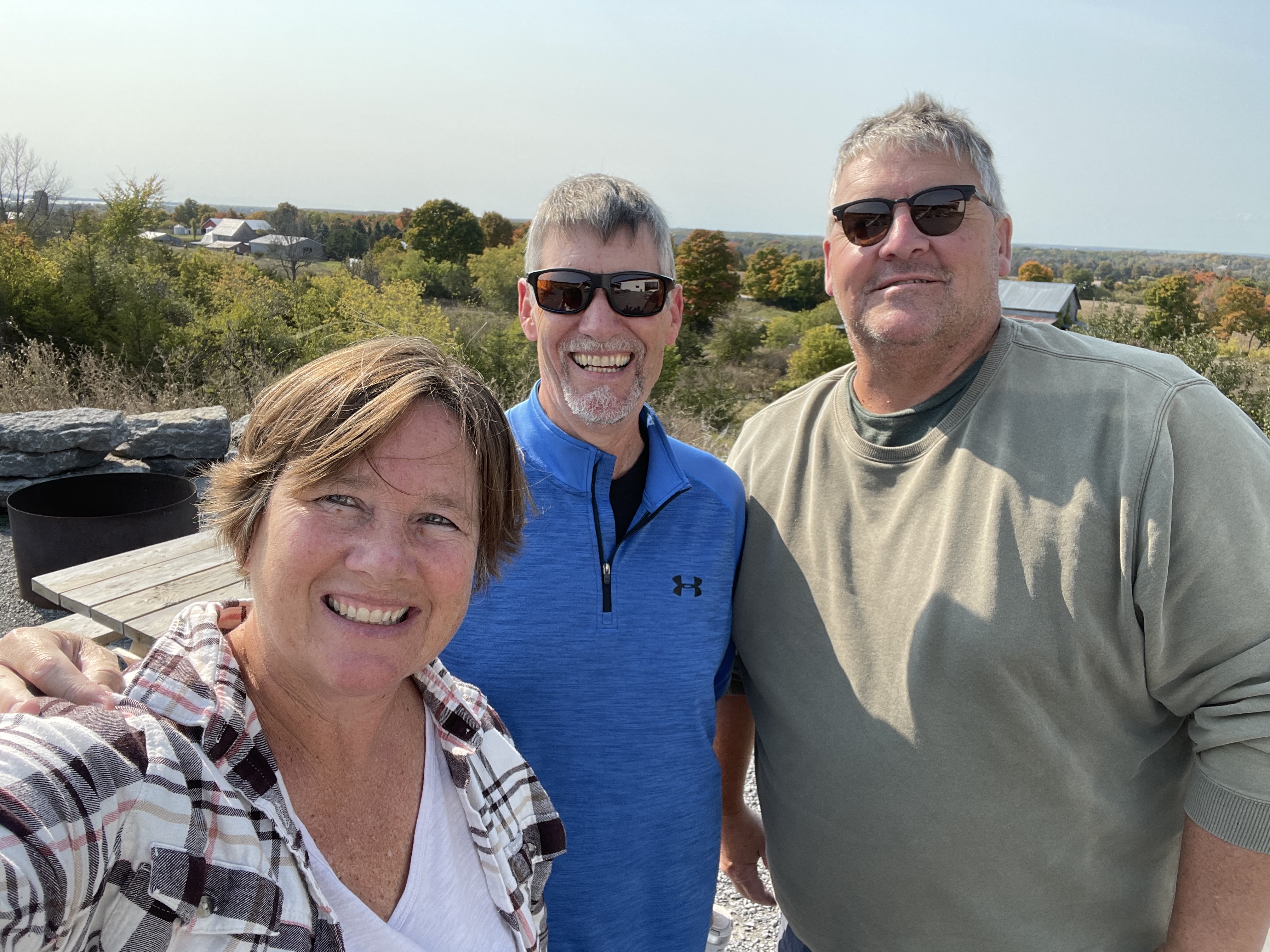
My brother, Dave and me visiting

Quick Poll: Would you rather friends call or text in advance before they come for a visit or just drop by? Leave a comment with your answer.

Personally, I love it when people just drop by for a visit. Here are my reasons:

  • I love the joy and surprise of a spontaneous visit—it makes it more fun
  • If I know in advance people are coming, I feel obligated to clean and I hate cleaning—I prefer to visitors to just pop in and not worry about how the house looks
  • I like the sense of people coming and going—it makes for a joyful, happy house

Now for those of you who voted call or text in advance, I get it: you can make sure you’re home, have supplies in the house (beer, wine, munchies—but at our house there’s always beer and wine in the fridge), and you can suggest a time convenient for your schedule.

I’ll always prefer the spontaneous visit. Down east, where my friend Danette’s parents live in Antigonish, all the neighbours pop in anytime. You never know who you’re going to see each day and there’s always a laugh to be had. It makes for a wonderful community.

This week’s #HappyAct is to throw caution to the wind and drop in on someone unannounced. And remember, you can always bring the beer!

(The photo above is of me, Dave and my brother Don, one of our most frequent visitors. He doesn’t just drop in, but that’s because he lives three hours away!)

Take in the best of Canadian film this Wednesday

This Wednesday, April 16 is National Canadian Film Day, a day to celebrate the best in Canadian film.

As a big fan and regular attendee of the Kingston Canadian Film Festival, I can attest that Canadian film is alive and well. I also believe now, more than ever, we must support Canadian arts and films.

There are local events happening across the country and several streaming services are highlighting Canadian films. You can find a list of local screenings near you at canfilmday.ca.

Here are ten great Canadian films to check out this week:

  • The Queen of My Dreams: a young Queer Pakistani-Canadian woman returns to Pakistan for her father’s funeral, learning about her mother’s past in this romantic comedy/drama. My favourite film from last year’s KCCF screenings. Now streaming on Crave, Amazon Prime and Apple TV+
  • The Swearing Jar: I loved this sweet romantic comedy about a high school music teacher who hires a guitar player to play at her husband’s birthday party. Watch on Prime Video.
  • Scarborough: Catherine Hernandez’s poignant novel is brought to life in this captivating film about children growing up in poverty in Scarborough. Now streaming on Paramount Plus.
  • Blackberry: Jay Baruchel portrays CEO Mike Lazaridis in this fascinating tale of the rise and fall of one of the greatest Canadian success stories. Available on CBC Gem, Prime Video and Crave.
  • Shepherds: this year’s opening night feature at the Kingston Canadian Film Festival is a stirring story of a Quebec man who decides to leave big city life behind to become a shepherd in France. Now streaming on Crave.
  • One Week: this 2008 film starring Joshua Jackson follows Ben Tyler who takes a road trip across Canada after being diagnosed with cancer and scored Jackson the Best Actor nod at the 2010 Genie awards. Streaming on Amazon Prime Video or Paramount Plus.
  • Peace by Chocolate: inspired by a true story of a Syrian refugee in Nova Scotia who is torn between his dream of becoming a doctor and his love for making chocolate. Watch free on Plex.
  • Just Friends: while technically not a Canadian film (it was an international production between Canada, US and Germany), this hilarious comedy featuring Ryan Reynolds and Anna Faris is still one of my favourites and will appeal to every Canadian who loves pond hockey, wintry weather and Christmas. Streaming on Amazon Prime Video.
  • You are Here: The Come From Away Story: this heartwarming documentary returns to Gander 20 years after this small Newfie town became a safe haven for travellers stranded in the aftermath of 911. The friendships forged will restore your faith in US/Canadian relations.
  • Meatballs: still a Canadian classic, this 1979 film about a bunch of goofy camp counsellors starring Bill Murray will leave you in stitches and chanting, “Spaz, spaz, spaz…”. Watch free on CTV with ads.

This week’s #HappyAct is to support Canadian film. Happy viewing!

Never lose faith

April 1 Montreal Canadiens game vs Florida Panthers

It’s been a rough couple of weeks in our household. We were out of power off and on for five days during the “Ice Storm of 2025”, the Montreal Canadiens lost a few critical games in their bid for a wild card spot in the Stanley Cup playoffs, and I was struggling with some of my writing projects.

A bit of backstory. I’ve been taking a writing course through the Seniors Association of Kingston on refining and editing your work. The instructor brought in a bunch of “how to” books and I borrowed one called “The Essential Guide to Writing a Novel” by James Thayer. It had some great insights and tips, but I discovered to my horror that I’ve made every rookie mistake a wannabe author makes when writing their first novel and that publishers look for before tossing the manuscript in the “no” pile.

As I tried to apply the learnings from the book—include backstory, but not too much or too soon; describe your characters, don’t describe your characters, let the dialogue show who they are–I became more and more confused and started second guessing everything I wrote. Every word I put down on the page sounded like crap and I found it very humbling and demoralizing.

I put my laptop away and turned on the TV. It was April 1st, April Fool’s Day and the Montreal Canadiens were playing the Florida Panthers one of the best teams in the league. The Canadiens were down 2-1 and Dave, whose nickname in our household is “Worst Habs Fan Ever” was about to say, “Turn it off, I can’t watch them lose again” when Nick Suzuki tied it with nine seconds left in the third period, sending the game into overtime. 29 seconds into overtime, Suzuki scored again with a class wraparound play to win the game 3-2.

Now I’ve been a hockey fan all my life and I never, EVER give up on my team until the buzzer goes (and just for the record, I cheer for the Leafs, Habs and Sens or any one of the Canadian teams once the playoffs start). I have always believed “it’s not over until the fat lady sings*”. The Canadiens proved that night you just need to have faith.

Later that week, I was back on the couch watching an interview on Late Night with Jimmy Fallon with Elton John and Brandi Carlisle who have just released a new album called Who Believes in Angels. They went into the recording studio without a single song written in advance with the goal of writing the entire album in 20 days. The first few days of recording were a disaster and Elton said he experienced moments of serious self-doubt. When Fallon expressed surprise that someone like him Elton John, could experience self-doubt, Elton replied, “You’re not a creative artist if you don’t doubt yourself”.

So I’ve decided I am going to embrace my self-doubt about my writing and see it as part of the creative process. I will continue to have faith in myself and keep writing.

This week’s #HappyAct is to never lose faith: in your team, in others, and most importantly, in yourself.

Ed note: The famous idiom, “It ain’t over until the fat lady sings” can be traced back to different sources, including when the lead soprano would sing in operas, but became a common saying in sports and hockey when Kate Smith would sing God Bless America at Philidelphia Flyers games in the 1970s. Go Habs/Leafs/Sens go!

#HappyAct the NextGen

Girl driving Ontario Parks boat

As a parent, all you really want is for your kids to be happy. Helping my kids find happiness was one of the reasons I started this blog, but I quickly realized I couldn’t help them be happy, they had to chart their own path in finding joy and happiness in their lives.

So my heart soared when we received a phone call from Grace last week. She was in the Starbucks drive-through and saw a police car pull up behind her. She decided to pay it forward and buy the police officers a coffee.

They pulled up beside her and rolled down their windows to thank her, saying it was so nice (and sadly rare) when members of the community expressed their appreciation for what they did. Since Grace is a Park Warden with Ontario Parks and often works with the OPP on incidents, she has immense respect for police officers.

It made my day to hear the happiness in Grace’s voice as she related how good it felt to do this one small act of kindness that made such a big difference in the day of these police officers.

And it made me smile to think, maybe, just maybe, the Nextgen of #HappyActs is alive and well.

Findings from the 2025 World Happiness Report

man sharing a meal in Africa with others

The 2025 World Happiness Report was released on March 20, the International Day of Happiness. The first World Happiness Report was published in 2012 after Bhutan, a country that measures its success based on the happiness of its people urged the UN and national governments to “give more importance to happiness and well-being in determining how to achieve and measure social and economic development.”

Since then, the report has been measuring which countries in the world have the happiest citizens and exploring various themes related to global happiness including age, generation, gender, migration, sustainable development, benevolence, and the effects of the COVID-19 pandemic on global well-being.

As always, the results of this year’s report are fascinating (you can read the full report here.) The authors chose the theme “Caring and Sharing”, delving into how caring and sharing and specifically three benevolent acts, donating, volunteering and helping strangers can make people happier.

The Happiest Countries

Finland ranked #1 for the eighth year in a row while Canada ranked 18th. The US fell off the list of the top 20 happiest countries to #24. One troubling statistic is that in general, the western industrial countries are now less happy than they were between 2005 and 2010 with the US, Canada and Switzerland experiencing the biggest drops.

Here are the top 20 happiest countries in order:

Finland
Denmark
Iceland
Sweden
Netherlands
Costa Rica
Norway
Israel (if you’re wondering about Israel, it scored highest in several areas, including the quality of social connection amongst youth)
Luxembourg
Mexico
Australia
New Zealand
Switzerland
Belgium
Ireland
Lithuania
Austria
Canada
Slovenia
Czechia

Key findings

Beyond health and wealth, simple acts of caring and sharing can influence happiness, including sharing meals with others, having somebody to count on for social support, and household size.

  • While it’s well documented that people who live alone are unhappier, research shows that happiness rises with household sizes up to four people, but above that happiness declines.
  • We are too pessimistic about kindness in our communities, and this pessimism is contributing to our unhappiness. For example, when wallets were dropped in the street by researchers, the proportion of returned wallets was far higher than people expected.
  • One interesting piece of research and a positive from the global pandemic is we’ve seen a “benevolence” bump of 10% since COVID-19. The pandemic taught us to think and care for others more, and that benevolence has continued.
  • One disturbing trend is young people in North America and Western Europe now report the lowest well-being and happiness among all age groups. In 2023, 19% of young adults across the world reported having no one they could count on for social support, a 39% increase compared to 2006. In fact, the fall in the United States’ happiness ranking is largely due to the decline in well-being among Americans under 30.
  • When society is more benevolent, the people who benefit most are those who are least happy. As a result, happiness is more equally distributed in countries with higher levels of expected benevolence

So what does this year’s report tell us and what simple happy acts can we all do to promote caring and sharing?

  • Share meals together: people who eat frequently with others are happier
  • Be kind and don’t underestimate the kindness of others
  • Try not to live alone
  • Build social connections and don’t be afraid to reach out to people
  • Practice benevolent acts–do what you can to volunteer, donate or help a stranger (several African countries reported low scores for donating but scored very high for helping strangers which helped their happiness scores)

Finally remember that caring is “twice-blessed”: it blesses those who give and those who receive. Have a happy week.

Battling the epidemic of loneliness

man wearing pink flamingo glasses

There is an epidemic sweeping our country—the epidemic of loneliness.

In our grandparents’ day, the average detached home in Canada had six people in it. For my generation, it was four people. Today it’s 2.1. One of the fastest growing sub-segments in the housing industry today is single homeowners in their 20s. For the first time in modern history, we also have an entire generation of seniors living alone in isolation.

The two age brackets most at risk of being lonely are youth and seniors. According to Statistics Canada’s Canadian Social Survey: Loneliness in Canada, more than 1 in 10 people aged 15 or older say they “always or often” feel lonely. A 2024 study of seniors estimated between 19-24% of Canadians over the age of 65 feel isolated from others and wished they could participate in social activities in their community.

The impacts of loneliness in seniors especially are well known. In addition to depression, emotional distress, and dementia, loneliness can result in increased risks of chronic illness and falls, poor general health and premature death.

Humans were not meant to live alone. We were meant to live in tribes.

So what can we do to battle the epidemic of loneliness? Here are some words of advice people shared in a recent Quora post:

“Have a pet and walk them every day. You’ll meet people on your walks”

“Join a club or activity…check out the nearest seniors centre for programs services” (I’ve really enjoyed the activities I participate in at the Seniors Association of Kingston and have found my tribe there)

Volunteer

“Find people you can text every day”

 “Check out the website meetup.com for a list of groups and activities that may appeal to you” (I looked to see what was listed for my area of Kingston, Ontario and there was everything from guided hikes, to toastmasters groups, to meditation and church groups)

“Nobody is going to come to you. Go out and find a church family, join a gym, go for walks, talk to your neighbours. Don’t spend your senior years being sad. Enjoy every day you have left. If you lived near me I would be your friend.”

“Every time you find yourself thinking about your own loneliness and state, think about someone in the world you can help. A neighbour who needs help, bake some cookies, whatever”

“To have a friend you need to be a friend.”

“I remember this documentary on finding happiness. The director at the beginning of the film said he would sum up the secret of happiness with one 4 letter word. I assumed it would be “love” but was surprised when he said it was risk. It’s all about taking calculated risks and steps to make opportunities happen for yourself and it will pay off. Good luck your future happiness is within you.”

This week’s #HappyAct is to do something to battle the epidemic of loneliness. Reach out to a friend, join a group, visit a senior who lives alone. It’s all about caring and sharing—more on that next week!

Coming up…March 20 is World Happiness Day. This year’s theme is Caring and Sharing. Be sure to check back next week when I dive into the results of the 2025 Report on World Happiness.

Photo: One of my favourite photos of Dave’s Dad who is living proof a youthful heart and spirit will always keep you young at heart and happy. He texts his friends and family every day.

Turn a frown upside down

smile and saying "a smile is the shortest distance between two people"

Several years ago, I was on a business trip with some colleagues. We’d had a long travel day and after checking in to our hotel around 8 pm, wandered down to the hotel bar for a late dinner. We sat for at least ten minutes without any service, so one of my co-workers got up and approached the waitress. He said she was quite surly when he talked to her, but she eventually came over with some menus.

I’ve always been fascinated by how a person’s actions can affect the actions of others, even more so since starting this blog, so I decided to embark on a little experiment. I wondered if I smiled broadly and was overly nice to our server, asking her questions about her day and thanking her every time she came to the table, whether by the end of our dinner, she would provide better service.

We ordered our drinks, and I kept smiling, laughing and making small talk when she brought us our meals. By the end of the evening, she still seemed stressed and unhappy, but was a bit more friendly and attentive.

There are many takeways from this night. The first is if someone is having a bad day, chances are it has nothing to do with you. Our waitress was probably on her feet for eight hours by the time our group strolled in. No doubt she was exhausted and wanting to go home. Who knows what she was dealing with at work or at home—a sick parent or child, mounting bills, an argument with her husband or friend. Since she never shared anything personal, we’ll never know.

The second is our actions did result in her being a bit nicer and attentive, so there was a positive correlation between our efforts to be nice and her actions.

The third takeaway is our group did get better service so it pays to be kind. As one of my old bosses used to say, “You can catch more flies with honey than vinegar”.

Everyone can have a bad day. It seems to me people have short fuses these days and are starting to lose their capacity to show empathy and understanding. Even if you can’t turn someone’s frown upside down, you can give them grace and compassion.

A stranger walks into a bar

Two people sitting in a bar

I made a new friend last night. His name was Alan.

Alan was sitting alone reading the Globe and Mail and sipping a pint of Stella when Dave and I wandered into the Toucan pub in Kingston last night, killing time between two movies at the Kingston Canadian Film Festival.

We got to talking, as strangers are wont to do in a bar, the conversation starting with Trump and the situation in the US, then veering into Alan’s fascinating life.

A son of a diplomat, Alan spent his childhood living around the world in countries like Afghanistan, Pakistan, the Belgian Congo, Lebanon, Portugal, Spain, and Sweden. He shared one story from the time when he was a boy in Pakistan of one of the British dignitaries’ wives separating the children into teams of colonials versus locals for games at a British garden party.

When he graduated from university, he became a land technician with the Ministry of Natural Resources, a job he said he absolutely adored. One project he led was researching all the treaties to create Petroglyphs Provincial Park in Peterborough. He shared how for thousands of years, the various Indigenous peoples of that region took turns scraping the moss from the Teaching Rocks, passing down the teachings from generation to generation.

When I had jokingly said we’d be better off if women were in leadership positions around the world when we were talking about Trump, he smiled and leaned in and talked more about the belief of Indigenous Peoples in Gitche Manitou, the “goddess of supreme being” and how women in Indigenous cultures were tasked with the most important role, taking care of the home and children.

After his time with the MNR, Alan founded his own communications company and started doing documentary work. He travelled to the Congo in 1995 to document the outbreak of Ebola. The stories he shared were fascinating. He said both the US and Russian armies were present, but not to help the dying and suffering. They were there to see if they could weaponize the virus. That never made it into the film.

Over the course of a few hours and pints, we talked about fishing, travelling, our children, the Montreal Canadiens, Canada-US relations and how lonely it can be living alone.

As we paid our bill and gathered up our coats to head out into the chilly February night, I gave Alan a big hug and said I hope we meet again. Two barflys, no longer strangers, now friends after sharing a special bond in a bar.

This week’s #HappyAct is to wander into a bar and make a new friend. Here are a few bar jokes to leave you smiling:

Three vampires walk into a bar. The first one says, “I’ll have a pint of blood.”
The second one says, “I’ll have one, too.”
The third one says, “I’ll have a pint of plasma.”
The bartender says, “So, that’ll be two Bloods and a Blood Lite?”

A bartender says, “We don’t serve time travelers in here.”
A time traveler walks into a bar.

A three-legged dog walks into a saloon, his spurs clinking as he walks, his six-shooter slapping at his furry hip. He bellies up to the bar, stares down the bartender, and proclaims, “I’m looking for the man who shot my paw.”

Never stop singing

Audience at Choir Choir Choir event

Last week, I was lucky enough to attend a Choir Choir Choir performance at the Grand Theatre in Kingston, featuring the songbook of Queen and Freddie Mercury.

In case you are unfamiliar with Choir, Choir, Choir, it’s a performance where a duo called Daveed and Nobu sing and play guitar and conduct the audience in harmonies of their favourite songs. At a triple C performance, the audience is the star.

Choir Choir Choir is uniquely Canadian. It started in Toronto 14 years ago as a weekly drop-in for people who were looking for an outlet to sing. Since then, it has grown to be a popular mainstage show, the duo having performed at Carnegie Hall, Radio City Music Hall, and Massey Hall. They describe the experience as equal parts singing, comedy, and community building. Their motto is “Never stop singing”.

It was surprising to see how quickly the audience came out of their shell. As adults, we tend to be self-conscious when we sing, especially if we aren’t blessed with a great voice, but the sheer joy of the music and the experience quickly drowned out our fears and feelings of self-consciousness, and soon everyone was singing in full voice.

It is a powerful thing to hear voices raised in song, singing with passion and commitment. When the crowd sang the Canadian national anthem at the recent Four Nations Cup hockey tournament in Montreal, it was an incredibly moving and galvanizing moment for Canadians. I wish I had been there to experience it.

For “You’re My Best Friend”, they asked the audience to videochat a bestie during the song. My friend Leslie was laughing as I sang to her “been with you such a long time, you’re my sunshine”…

When it came time for the encore, Bohemian Rhapsody, Daveed and Nobu invited people to join them on stage to sing and dance along.

A few interesting facts about Bohemian Rhapsody, arguably the best rock song of all time. When it was first released in 1975, it immediately went to #1 on the charts in almost every country in the world, except the US where it climbed only to #9. The song found a whole new generation of fans and hit #1 on the charts again in 1992 when Canadian Mike Meyers’ Wayne’s World was released.

As we sang Scaramouche, scaramouche can you do the fandango, we were all on our feet, singing at the top of our lungs. Watch the video below to see the crowd erupt on stage during the guitar solo.

I walked out of the theatre feeling joyous and uplifted. People were smiling, laughing, singing and humming, with one lady singing Don’t Stop Believing loudly in a vestibule. Oh, what a night.

This week’s #HappyAct is to never stop singing. Let’s take a pledge going forward to all sing our National Anthem out loud at events instead of standing in respectful silence.