
It occurred to me the other day that in all the years I’ve been blogging about happiness, I have never once defined what happiness means.
Most definitions of happiness focus on two aspects: feeling joy or elation in the “now”, often referred to as hedonic happiness, or experiencing positive feelings and deeper meaning or wellbeing with life, often referred to as eudaimonic happiness.
Here are a few to consider:
“The state of pleasurable contentment of mind; deep pleasure in or contentment with one’s circumstances.”
Oxford Dictionary
“Having both positive emotions and meaning in your life.”
Psychology Today
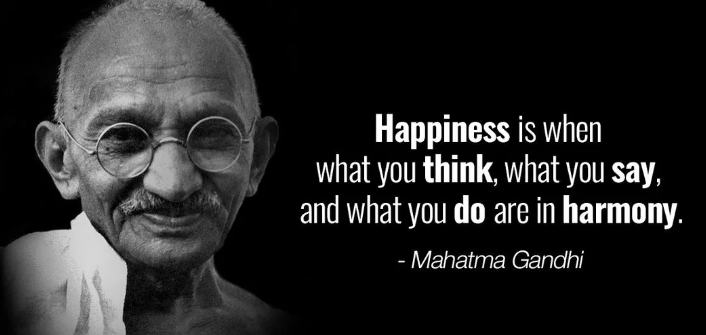
“Happiness is when what you think, what you say, and what you do are in harmony.”
Mahatma Gandhi
Happiness is a complex and multifaceted mental state that encompasses a range of positive feelings, from contentment to intense joy. It is often associated with positive life experiences, such as achieving goals, spending time with loved ones, or engaging in enjoyable activities. However, happiness can also arise spontaneously, without any apparent external cause.
Wikipedia
“The experience of joy, contentment, or positive well-being, combined with a sense that one’s life is good, meaningful, and worthwhile.”
Sonja Lyubormirsky, The How of Happiness, 2007
And finally, my simpler definition of happiness:
“Feeling joy, contentment or fulfillment in any given moment or about life in general.”
Shared experiences, upbringing, and culture can influence how we define happiness. Some studies have found that people from cultures that embrace collectivist ideals define happiness more in terms of harmony and contentment, while cultures that focus on individual achievements and values connect it to feelings of exuberance and joy.
For example, someone who experienced homelessness in their youth may say happiness is having a home while someone who grew up in a region in conflict may say happiness is being able to live in peace.
Of course, the only definition that really matters is yours.
So, how do you define happiness?


If you had asked me in my early twenties, my answer would have been very different. Today, I have come to realize that happiness is not about having more; it is about appreciating the simple freedoms.
Happiness is the freedom to move, to travel, and to walk my dog without worrying about how far I can go. It is the freedom to slow down and to spend time doing things that bring you joy, even if you are just beginning to learn a new hobby. It is also the freedom to say “no” to a social event without feeling guilty, choosing instead to share quiet moments with the people you love.
Most of all, happiness is the freedom to live and enjoy your normal day without comparing yourself with other people.