Golden Happiness: the story of the napalm girl

Photo, The Terror of War taken on March 8, 1972 of the Napalm girl Kim Phuc

On March 8, 1972, a moment caught in time changed the world. It was the photo of 9-year old Kim Phuc, running naked on a road after being severely burned by a napalm attack in the Vietnamese War. The photo, later named “The Terror of War”, would go on to win a Pulitzer Prize and sway the shifting sands of sentiment against the war in Vietnam.

I was very fortunate last week to meet Kim and hear her speak about the day her village was bombed, the famous photo and how it impacted her life, and her path to faith, forgiveness and finding peace in her heart and happiness as a wife, mother and through her work as a UNESCO Global Ambassador for Peace.

Kim, whose name means Golden Happiness in Vietnamese was just nine years old when the Viet Cong invaded her village. The villagers, especially the children, were sent to a nearby temple where they would be safe. When the four bombs hit her village, she ran. The searing heat from the napalm at 1200 degrees Celsius burned the clothes off her body and much of her skin.

Presumed dead, her body was taken to the morgue where she lay motionless, in agony for three days before her parents found her and moved her to a hospital. She was transferred to a burn hospital where she spent the next 14 months.

Ten years later, Kim was studying to be a doctor when the South Vietnamese government had her dismissed from medical school. They wanted her to be a national symbol and puppet spokesperson, but as Kim puts it, she did not want to give them the power over her story and refused to comply. She was sent to Cuba for the next six years, where she met her husband, a North Korean.

Returning from their honeymoon in Moscow, Kim knew one of her only chances for freedom was to defect. When their plane stopped in Gander, Newfoundland for an hour layover and to refuel, she knew what she had to do. She and her husband got off the plane and sought political asylum in Canada.

For many years, the emotional and physical scars of her ordeal (she has undergone 17 surgeries over the years) filled her heart with hatred. But she realized she had two choices, to change her heart, or die from hatred. She said it took years to find peace and forgive her enemies.

She told one story of going to Washington in 1996 and visiting the Vietnam War Memorial. It was a large public event and she was asked to speak. Many Vietnam vets were attending, including the soldier who planned the attack on her village (the pilot who dropped the bombs was actually Vietnamese).

This soldier, named John, came forward and said he had never forgiven himself for the past 24 years for what he did to her and her village. She hugged him, and realized for the first time she was not the only one who suffered that day. They remain close friends to this day.

Kim’s message is still relevant in today’s troubled world: peace, love and forgiveness will always be more powerful than hatred.

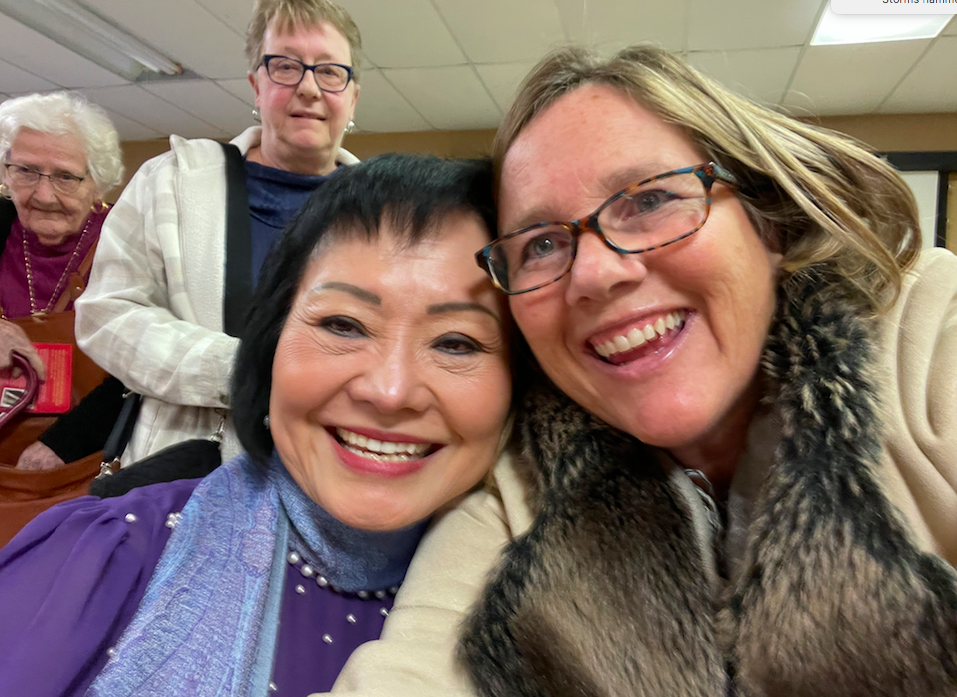
I was struck by how beautiful, inside and out Kim was. She radiated peace, goodness, and loved to laugh. Her favourite saying was “No way, Jose!” and she said “eh?” several times, declaring herself a true Canadian.

In 1997, she founded the Kim Foundation International, a nonprofit organization dedicated to helping child victims of war. She still lives in Ajax, Ontario with her husband, and has three children and several grandchildren.

She also shared her secrets for living a happy, successful life:

Free your heart from hatred
Free your mind from worry
Live simple
Give more
Expect less

This week is Remembrance Day. As we honour the men and women who sacrificed their lives for our country, and the victims of war, remember the words of the napalm girl, that peace, love and forgiveness will always be more powerful than hatred.

Me and Kim Phuc Phan Thi, the Napalm girl

Hit delete

Picture of globe and words "Delete one thing from Earth that you think would make it better"

I read a post on Twitter the other day that asked if you could delete one thing from earth that would make it better, what would you delete?

As always with the internet, the answers were fascinating and insightful.

Three old men destroying the world with pictures of Putin Trump and Netanyahu
Mosquito biting a man
Evolution of man saying "Go back we fucked up everything"
Woody and Buzz from Toy Story saying "Assholes, Assholes, Everywhere"

Some people said racism, social media, war, hatred.

Still more: fossil fuels, lies, nuclear weapons, cell phones.

One person said, “The necessity of money to survive”.

I laughed at the guy who said, “Beers, I’ve been trying to delete them one at a time.”

It made me wonder, if you could delete one thing from your own life, what would it be?

Findings from the 2025 World Happiness Report

man sharing a meal in Africa with others

The 2025 World Happiness Report was released on March 20, the International Day of Happiness. The first World Happiness Report was published in 2012 after Bhutan, a country that measures its success based on the happiness of its people urged the UN and national governments to “give more importance to happiness and well-being in determining how to achieve and measure social and economic development.”

Since then, the report has been measuring which countries in the world have the happiest citizens and exploring various themes related to global happiness including age, generation, gender, migration, sustainable development, benevolence, and the effects of the COVID-19 pandemic on global well-being.

As always, the results of this year’s report are fascinating (you can read the full report here.) The authors chose the theme “Caring and Sharing”, delving into how caring and sharing and specifically three benevolent acts, donating, volunteering and helping strangers can make people happier.

The Happiest Countries

Finland ranked #1 for the eighth year in a row while Canada ranked 18th. The US fell off the list of the top 20 happiest countries to #24. One troubling statistic is that in general, the western industrial countries are now less happy than they were between 2005 and 2010 with the US, Canada and Switzerland experiencing the biggest drops.

Here are the top 20 happiest countries in order:

Finland
Denmark
Iceland
Sweden
Netherlands
Costa Rica
Norway
Israel (if you’re wondering about Israel, it scored highest in several areas, including the quality of social connection amongst youth)
Luxembourg
Mexico
Australia
New Zealand
Switzerland
Belgium
Ireland
Lithuania
Austria
Canada
Slovenia
Czechia

Key findings

Beyond health and wealth, simple acts of caring and sharing can influence happiness, including sharing meals with others, having somebody to count on for social support, and household size.

  • While it’s well documented that people who live alone are unhappier, research shows that happiness rises with household sizes up to four people, but above that happiness declines.
  • We are too pessimistic about kindness in our communities, and this pessimism is contributing to our unhappiness. For example, when wallets were dropped in the street by researchers, the proportion of returned wallets was far higher than people expected.
  • One interesting piece of research and a positive from the global pandemic is we’ve seen a “benevolence” bump of 10% since COVID-19. The pandemic taught us to think and care for others more, and that benevolence has continued.
  • One disturbing trend is young people in North America and Western Europe now report the lowest well-being and happiness among all age groups. In 2023, 19% of young adults across the world reported having no one they could count on for social support, a 39% increase compared to 2006. In fact, the fall in the United States’ happiness ranking is largely due to the decline in well-being among Americans under 30.
  • When society is more benevolent, the people who benefit most are those who are least happy. As a result, happiness is more equally distributed in countries with higher levels of expected benevolence

So what does this year’s report tell us and what simple happy acts can we all do to promote caring and sharing?

  • Share meals together: people who eat frequently with others are happier
  • Be kind and don’t underestimate the kindness of others
  • Try not to live alone
  • Build social connections and don’t be afraid to reach out to people
  • Practice benevolent acts–do what you can to volunteer, donate or help a stranger (several African countries reported low scores for donating but scored very high for helping strangers which helped their happiness scores)

Finally remember that caring is “twice-blessed”: it blesses those who give and those who receive. Have a happy week.

A letter to my American friends

Canada Flag on the Rideau Canal

Dear friends. I hope you are well. I’m writing this letter to let you how very, very unhappy the people of Canada feel towards you right now.

I’ve enjoyed and valued our friendship over the years. Getting to know you at conferences and enjoying lively conversations over dinner and fun nights out exploring your cities, and the adventures during our travels in your beautiful country.

We’ve shared memories, values, and beliefs, but now it seems you want to pick a fight.

It hurts us when you refer to Canada as the 51st state and want to slap tariffs on all our goods, destroying decades of prosperous free trade for both our countries.

As Canadians, we feel hurt, betrayed, and angry.

If this is how you treat your friends, I shudder to think how you treat your enemies.

We understand your pain and frustration. During our travels, we’ve seen first-hand the economic decay of your country, from the derelict empty storefronts in your small towns to the abandoned factories and the “rust belt” of America.

You believe you will make America great again, a formidable global superpower. But you are misguided. The world has changed and your place has changed in it. Your power has waned. And while you think tariffs will restore your prosperity and place you at the top of the world pedestal of power, it won’t. That ship has sailed.

You’ve always sensed but never understood why the rest of the world dislikes you.

I remember years ago when I was backpacking in Europe hearing a young American boy say to someone, “Oh, you speak American!” The person replied, “No, I speak English”.

Later that night at the hostel, the European travellers tried to explain to him why Americans weren’t liked. That to the rest of the world, it always seemed like you had a chip on your shoulder, that you were arrogant.

That you meddled in other people’s affairs, sometimes overtly, sometimes covertly if there was something of value at stake like oil or natural resources, but were nowhere to be seen when wars or atrocities happened in poor countries.

I never knew if you didn’t know how people truly felt about you or if you knew but just didn’t care.

Some of you may be under the false impression that we are essentially the same, but you just have to look to our national anthems to understand how we are different. Yours is about battles and armaments with rockets glaring and bombs bursting in air. Ours is about patriot love, glowing hearts and being strong and free.

We will never be the 51st state. Canada will always be strong and free.

You have slapped us in the face, so we will look for new friends. Friends we can trade with, visit, and work with to create a better world.

I can’t help reflecting on two important anniversaries.

On February 24, 2022, Russian forces invaded the Ukraine. While the invasion was ordered by Vladimir Putin, the Russian people have been complicit in this flagrant breach of international law and aggression and have been silent. Perhaps they are misinformed, believing whatever propaganda their government is feeding them, or believing that if Ukraine had joined NATO it would somehow be a threat to Russia’s sovereignty. The bottom line is the Russian people have allowed it to happen.

January 27, 2025 marked the 80th anniversary of the liberation of Auschwitz. The liberation of this most famous of the concentration and extermination camps that killed six million Jews during the Second World War shed light on the atrocities and evil of Adolph Hitler and the Nazi regime.

The German people could have prevented Hitler’s rise to power, but they too stood silent despite early signs. In November, 1923 the Nazi Party led by Adolf Hitler attempted to overthrow the government using violence. It resulted in Hitler’s arrest and a temporary ban on the Nazi Party. And yet, the German people voted for the Nazi Party a decade later when Adolph Hitler was appointed Chancellor.

Hitler systematically destroyed democracy in Germany in his first two months of power through constitutional means by changing laws or looking for weakness in laws. The German people did nothing.

My American friends, you don’t have the excuse of not knowing what is happening in your own country. And you have the power to do something about it. You still live in a democratic society. For now.

Take action. Write to your elected representatives. Organize or join a protest. Refuse to implement edicts that hurt others, either within your own country or outside its borders. Don’t turn your back on Canada. Don’t turn your back on the world.

I wanted to end this letter by sharing this photo of our Canadian flag being unfurled yesterday in Ottawa, on its 60th birthday. We are and always will be #CanadaStrong.

P.S. Please know when we are booing your national anthem at sporting events, we are not booing the players, the team, or your anthem. We are raising our voices in political protest to be heard. Make your voice heard too.

Canada flag in Ottawa

A winter celebration at Rideau Hall

Author and winterlude mascots outside of Rideau Hall

Yesterday, my South Frontenac Stocksport Club at the invitation of the Austrian embassy in Ottawa participated in a Winter Celebration at Rideau Hall as part of Winterlude, followed by dinner at the Austrian ambassador’s house.

It was a frosty bone-chilling day—one of the smiling volunteers who greeted us had icicles hanging from his moustache!, but the sun was shining, the skies were blue and everyone was in high spirits despite the looming threat of a trade war brewing with the US.

Even though I lived in Ottawa for a year, I had never been to the residence of the Governor General located in the beautiful Rockcliffe neighbourhood near the Prime Minister’s residence. The original stone villa was built in 1838 by Thomas MacKay who was one of the contractors on the Rideau Canal. Rideau Hall has been home to the Governor General, the Queen’s representative in Canada every year since Confederation. Rideau Hall is free to tour year-round, although reservations are required in the off-season.

I took a break from helping demonstrate ice stock (for more on the sport of ice stock, see this post) to tour the expansive grounds. There were booths and exhibits from several embassies and organizations. The Embassy of Finland had kicksledding, the Embassy of Norway skiing, and the Embassy of the Kingdom of the Netherlands showcased Dutch shuffleboard.

All the booths were handing out free treats and drinks native to their country and there were live musical performances and dancing . Since our club was set up on Rideau Hall’s skating rink, a nice alternative when the canal is chock-a-block full of people, we got to see a figure skating demonstration presented by Can-Skate Canada.

At one point, the Governor General herself, Her Excellency the Right Honourable Mary Simon came by, threw a stock and had her picture taken with our club members. I met her husband Whit Fraser and enjoyed petting their friendly lab pup Neva. I later saw them watching an Indigenous square dance at one of the other exhibits. You can learn more about the incredible work Mary Simon and her husband have done on Indigenous and northern issues on the Governor General’s website.

Our Stocksport Club with the Governor General

Above: Our Stocksport Club with Her Excellency, Mary Simon, the Governor of General, pictured third from the right. Below: our club President, Karl Hammer chats with her excellency and representatives from the Austrian embassy

Governor General Mary Simon and Karl Hammer, president of the South Frontenac Stocksport Club

Everyone was so lovely and kind, and I enjoyed meeting people from all over the region—students, government workers, military and security personnel who braved the cold to enjoy the outdoor activities.

After the event was over, we went to the Austrian ambassador’s house for a delicious Austrian meal of goulash, gluwhhein or glogg, a mulled wine, and fluffy Austrian pastry. Our hosts were His Excellency Andreas Rendl and his lovely wife Ava, and I enjoyed chatting with them to learn more about a day in the life of an ambassador and their experiences in Canada, their final posting before Andreas retires in a few years.

It was a wonderful day and experience and made me especially proud to be Canadian on a day that I’m sure will define us as a nation in the years ahead.

This week’s #HappyAct is twofold: visit one of Canada’s beautiful heritage properties or museums and get out and enjoy the last vestiges of winter since according to the groundhog, it will be an early spring! Winterlude continues in Ottawa from now until February 17.

man skating on ice
Indigenous dancing at Rideau Hall

Her Excellency Mary Simon watching Indigenous dancing at Rideau Hall

Rideau Hall in Ottawa
People in the living room of the Austrian embassy
men standing in front of a fireplace

Karl Hammer, President of our South Frontenac Stocksport Club with our unofficial club ambassador Tyler, with Andreas Rendl, the Austrian ambassador to Canada.

Happier Together

child smiling in Kinshasa

This Wednesday, March 20 is the International Day of Happiness. The day was declared by the UN in 2012 to recognize that happiness is a fundamental human right and to encourage nations and individuals to spread happiness and make happiness a priority.

The theme the UN has chosen this year is #HappierTogether. Here is a picture from their photo album of people from all over the world smiling, happier together.

It’s such a poignant theme. As individuals and societies, we’ve withdrawn from human connection, partly out of necessity from COVID-19, but also self-imposed.

Technology has only exacerbated this trend. We delude ourselves into thinking we’re more connected now by cell phones and technology, but these devices have somehow divided us, becoming platforms for discordant voices and viewpoints or have become something we hide behind instead of doing the real work of connecting with people in person.

Even our work lives have become more isolating with millions of workers now not even leaving their homes to experience human connection.

There are certain groups that are at higher risk of being unhappy in isolation, seniors and youth being two critical demographics.

After COVID, I blogged about “languishing” and wondering why I wasn’t chomping at the bit to get out and reconnect with people again. I concluded that it wasn’t because I had social anxiety and didn’t miss people, I just didn’t have the energy to re-enter the world.

It’s time. Time for us to reach out, be kind to each other, and understand that without human connection, most of us will never truly be happy.

It’s time to find the energy and make a conscious effort to be happier together.

This week’s #HappyAct is to do something to be happier together. Volunteer in your community, invite a neighbour over for a drink, check in on a senior. Post a picture of you smiling this week with people who make you happy and who you enjoy spending time with.

Happy International Day of Happiness!

My family smiling and acting goofy

Hopeful for the future: flattening the curve of climate change

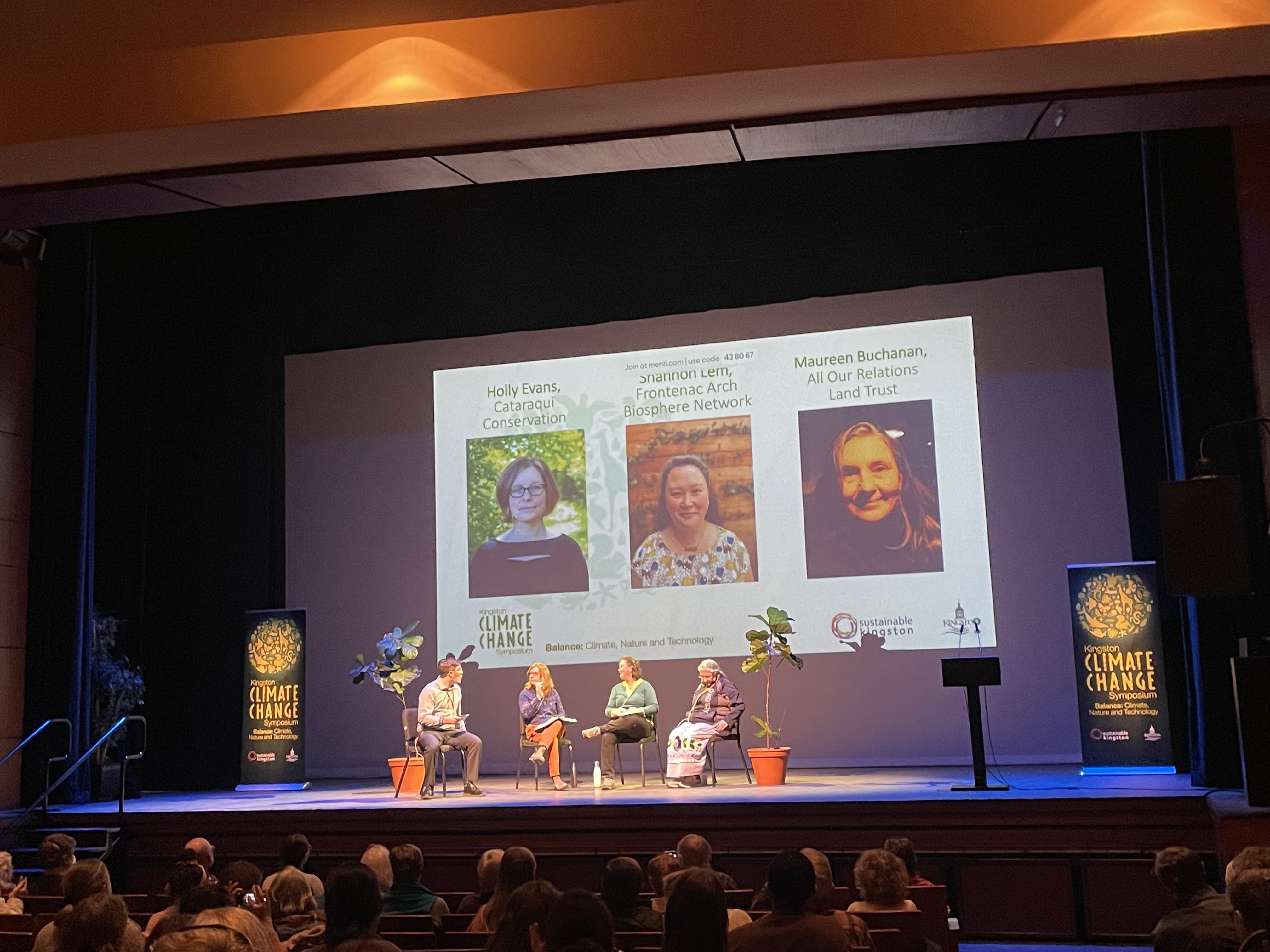
panel on biodiversity at the Kingston Climate Change Symposium

I didn’t expect to walk away from a climate change symposium feeling hopeful.

Hope is a good word. It inspires action.

The seventh annual Kingston Climate Change Symposium was held in person for the first time since Covid at the Grand Theatre at the end of January. More than 400 people from all different walks of life attended. That in itself gave me hope.

The key note speaker was Bob Macdonald from CBC’s Quirks and Quarks and author of one of the latest books on climate change, The Future is Now.

His message was optimistic–we now have the technology and the know-how to solve the climate problem. From micro-nuclear technology, to solar, wind and electricity, we’ve come leaps and bounds in our ability to develop alternative clean energies and make existing energy sources like oil and gas cleaner.

I came away hopeful that we are listening and learning from Indigenous cultures and peoples about how we are all connected to each other and to Mother Earth, and how we need to deprogram ourselves and our colonial attitude to the land and treat it and its creatures with respect and we must approach this work with open minds and open hearts.

I also came away feeling positive about my personal actions in thinking globally and acting locally, from the geothermal heating/cooling system we installed in our house, to buying my first hybrid vehicle, to all the trees I’ve sold and planted in my lifetime, to participating in one of the world’s largest citizen scientist projects, the Christmas bird count every year. One individual’s actions can make a difference.

Macdonald finished his talk drawing a parallel between the world’s response to COVID-19 to our response to climate change. In both cases, the global community had to come together to flatten a curve–in the case of the pandemic, of transmission of the disease and hospitalizations, and in the case of climate change, rising temperatures and greenhouse gas emissions.

During COVID, scientists developed vaccines in record time, governments acted swiftly, businesses pivoted and the populace took action to protect the spread.

The science of climate change and the technology to address it has advanced. We now simply need the collective will of governments, business and people to take action.

I’m hopeful we will flatten the curve once again.

Adopt Happytalism

International Day of Happiness poster

A decade ago, the United Nations held its first ever conference on happiness and established an International Happiness Day to remind us that being happy is a human right and worth celebrating.

This year the significance of International Happiness Day on March 20 and the belief that happiness is a fundamental human right is playing out on the world stage as we watch millions of Ukranians refugees and citizens who have had their happiness ripped from them overnight with every Russian rocket, bomb and artillery strike.

In 2011, the UN General Assembly adopted a resolution that made it a “fundamental human goal” to give happiness as much priority as economic opportunity. In 2015, the UN launched the 17 Sustainable Development Goals, which seek to end poverty, reduce inequality, and protect our planet. It also recognized the need for a more inclusive, equitable and balanced approach to economic growth that promotes sustainable development, poverty eradication, happiness and the well-being of all peoples.

What’s interesting in all these resolutions is there is no mention of war or conflict and its impact on happiness; the focus is solely on economic factors.

Most likely that’s because in war, there is no happiness.

As we face this global crisis, let’s find positive ways to look after ourselves and each other and adopt Happytalism.

The UN secretariat for the International Day of Happiness is calling on all 7.8 billion people and all 206 nations and territories in our global community to take the “Ten Steps to Global Happiness” challenge and call to action. You can find all ten steps here. I’ve listed my top five, with the last one being my own:

  1. Celebrate the day. Do something special, just don’t let it pass by.
  2. Attend a world happiness event. There are live and virtual events on almost every topic imaginable, from education, health, technology, self and work. See the full list of events here. There’s a small cost to the virtual events, but in many cases, the proceeds go to helping others, like sponsoring a teacher that is helping underserved populations.
  3. Do what makes you happy. Happiness is about practicing self love, mindfulness, acting consciously, and with purpose and intention, positive energy and mindset, and celebrating the things you love that make you happy.
  4. Tell everyone. Spread the word and mission of #InternationalDayOfHappiness. Post something that makes you happy on social media, write a song or letter, make a poster.
  5. Support the people of the Ukraine. Make a donation. This CBC story lists charities you can support.

This week’s #HappyAct is to adopt and spread a more holistic, inclusive, equitable and balanced approach to the world order that promotes sustainable development, eradicates poverty and war, and focuses on the happiness and the well-being of all peoples.

#HappinessForAllForever.

Why women should rule the world

Vladimir Putin

Like all of you, I have been watching in horror and disbelief the unconscionable war in Ukraine. I have my Master’s degree in Russian history, did I ever mention that? Anyone who has studied Russian history might contend that this war was inevitable.

For centuries, Russian tsars and leaders have annexed territories, withdrawn freedoms, broadcast propaganda, and imposed their will in the name of Russian nationalism, for the greater good of “mother Russia”. When Gorbachev ushered in the era of glasnost, for many Russians, it was seen as a sign of weakness.

On Tuesday, I’ll be participating in some International Women’s Day events, and this past week, I can’t help thinking that if only we elected women rulers, we’d have a better chance at peace.

History is replete with male dictators: Attila the Hun, Genghis Khan, Joseph Stalin, Adolf Hitler, Uganda’s Idi Amin.

And then you only have to look at the modern-day roster of dictators: Omar Al-Bashir of Sudan who has been accused of war crimes and crimes against humanity for tragedies in Darfur, Kim Jong-II of North Korea, Muammar al-Quaddafi of Libya, and Vladimir Putin.

There have been a handful of cruel women monarchs and leaders throughout history. The religious crusades against Protestants of Queen Mary of England in the 1500’s earned her the nickname Bloody Mary.  Madame Mao persecuted her enemies to further the Cultural Revolution of communist China in the early 1900s. But there are very few examples of modern female leaders who have committed atrocities, started wars or committed crimes against humanity.

In this Forbes article, If Women are Better Leaders, Then Why Are They Not in Charge?, scientific studies have consistently shown that on most of the key traits that make leaders more effective, women tend to outperform men. For example, humility, self-awareness, self-control, moral sensitivity, social skills, emotional intelligence, kindness, a prosocial and moral orientation, are all more likely to be found in women than men.

Further, “men score higher than women on dark side personality traits, such as aggression (especially unprovoked), narcissismpsychopathy, and Machiavellianism, which account for much of the toxic and destructive behaviours displayed by powerful men who derail”.

This week’s #HappyAct is to elect a woman the next time you go to the polls and pray for the people of Ukraine, and all of Europe.

Sleeping with an elephant

On Tuesday, Americans will go to the polls in what some are calling the most historic U.S. election since Abraham Lincoln was elected President in 1860.

As the tiny mouse living next to the mammoth elephant*, Canada is holding its breath to see who will be President when all the votes are counted on Tuesday night.

There is so much at stake, but I won’t waste time recounting the issues that have filled our airwaves and papers for the past six weeks.

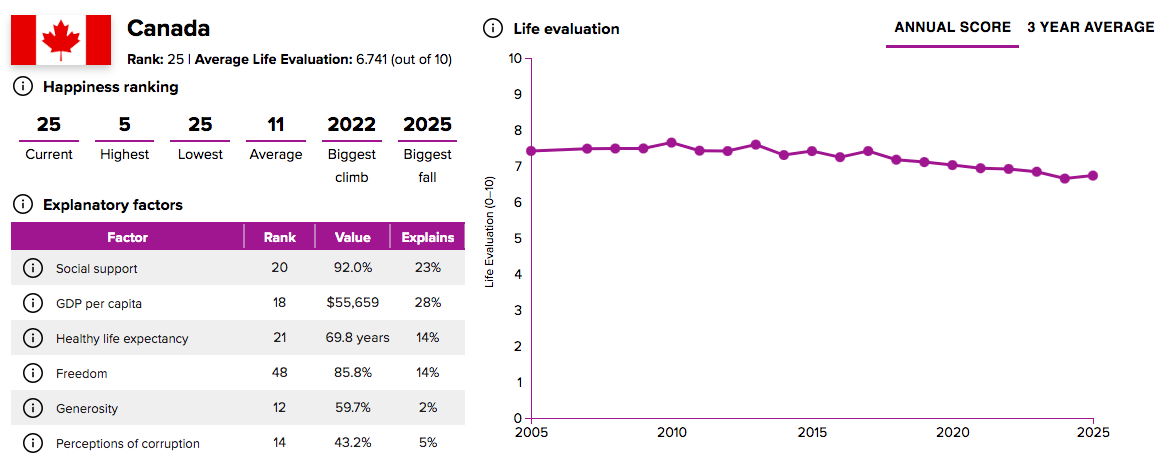
One thing is certain, I have never been more happy to be Canadian.

Over the past decade and the past year in particular, it feels like the great divide between our two countries has deepened to a wide chasm.

We have been physically divided by a closed border due to COVID-19. Our countries have been divided on foreign policy, racial injustice and climate change. The greatest divide, I’ve come to realize, is cultural.

If America had a motto, other than America First, it would be “every man for himself”. In Canada, it would be “all for one, and one for all.”

I don’t think it would have mattered who was President during the pandemic—the country would have wound up in exactly the same place. The culture of, I’m going to do what I want, it’s my god-given right and no one can stop me, has resulted in the U.S. having the highest infection rate in the world.

So as we hold our breaths and await the results Tuesday night, let’s collectively give thanks and continue to cherish and hold dear what makes us uniquely Canadian. We the north, all for one and one for all.

*In 1969, Prime Minister Pierre Elliott Trudeau, in a speech to the Washington Press Club, described living next to the United States by saying, “Living next to you is in some ways like sleeping with an elephant. No matter how friendly and even-tempered is the beast, if I can call it that, one is affected by every twitch and grunt.”