I remember it clearly. The year was 1992. Dave and I had just got married on a beautiful fall day, October 3rd and returned home from our honeymoon to watch the final games of the World Series in two lawn chairs in our empty apartment in Port Credit. 41-year old Dave Winfield swings and hits a two-run double in the eleventh inning of Game 6 against the Atlanta Braves to win the game, making the Toronto Blue Jays the first Canadian team ever to win the World Series of baseball.
Growing up in Toronto, I’ve been cheering on the boys in blue since their first at bat in April 1977, when they won their first game against the Chicago White Sox in a snowstorm at the old Exhibition Stadium. I remember going to quite a few of those early games with snowflakes in the air. In those days, Dominion grocery offered $4 tickets and all of us Ryerson students would skip classes and pile into the stadium to eat 60-cent hot dogs and drink $2 beers. When the Skydome and its retractable roof opened its doors in 1989, we felt like we were watching games in luxury, pure luxury.
Now the Jays are making another run at the coveted crown of baseball. It’s a Cinderella story. A bunch of rag-tag guys who started the season playing less than 500 ball, guys like Nathan Lukes who almost gave up the game after playing in the minors for many years and Addison Barger who just started playing in the majors in 2024.
This team has heart and a deep love for each other and the game.
My favourite moment so far was when Vladimir Guerrero Jr. fanned Alejandro Kirk with a towel after his epic run from second base to score home in Game 5 of the ALS championship series against Seattle. That’s love.
Or this TSN post-game interview with Davis Schneider after Game 1 of the World Series who confessed that Barger, the night before hitting Friday night’s grand slam in Game 1 against LA slept on Schneider’s couch since his own place was full of visiting family.
Yes, this band of Boys in Blue deserve our respect. They deserve to win.
This week’s #HappyAct is to wear your bandwaggoner badge with pride and cheer on the boys in blue. Go Jays Go!
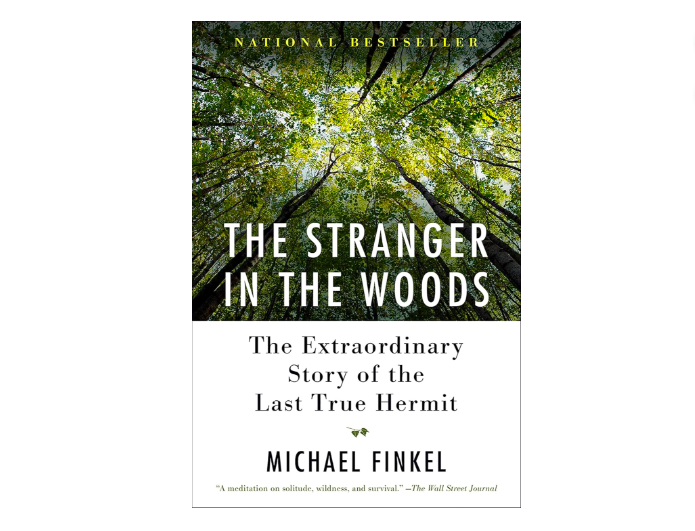
It’s the story of Christopher Knight, an average guy who at the age of 26, decided to live in the Maine woods on his own and didn’t talk or interact with another human being for the next 27 years.
He didn’t create art, he never kept a journal, he didn’t even talk to himself. He just spent his days in his clearing (the guy didn’t even have a cabin) surviving and existing.
Knight was never lonely during his time in the woods. He would sometimes read or listen to the radio, but spent the majority of his free time sitting in a lawn chair “in quiet contemplation” thinking about wherever his mind went. He claimed he was never bored and didn’t understand the concept of boredom. Boredom only applied to people “who felt they had to be doing something all the time.”
In considering Knight’s motives, Finkel explores various ancient beliefs and customs centred around living a life of solitude.
The first great literary work about solitude was written by a hermit protestor Lao-tzu in the sixth century. In Tao Te Ching, Lao-tzu wrote 81 verses about the pleasure of forsaking society and living in harmony with the seasons. Lao-tzu believed that only through retreat rather than pursuit, through inaction, rather than action, that we acquire wisdom and peace.
Finkel quotes the eighteenth-century philosopher Jean-Jacques Rousseau. “I have become solitary because to me the most desolate solitude seems preferable to the society of wicked men which is nourished only in betrayals and hatred.”
Carl Jung said that only an introvert could see the “unfathomable stupidity of man.” Sartre wrote “Hell is other people.”
Herman Melville who wrote Moby Dick withdrew from public life for 30 years. He wrote, “All profound things are preceded and attended by Silence.”
The greatest philosopher of all time, Dave says, “I prefer to spend my time with dogs than people.”
Knight related to the Greek philosophy of stoicism that held self-control and harmonious existence with nature constituted a virtuous life and you must endure hardship without complaint.
He also felt a kinship with Socrates who said, “Beware the barrenness of a busy life. You become free not when you fulfill your desires, but by eliminating desire. Those with less become content; those with more become confused.”
So what learnings can we take away from these philosophies and Knight’s experience? I’m not suggesting we turn our back on society, but perhaps we can experience a greater peace, stillness and happiness by seeking moments of solitude.
I asked at the start how many days can you go without speaking to another soul? I’ve learned for me the answer is three days. I can spend three days quietly at home, at peace in nature and be happy. After three days, I seek human interaction and connection and will reach out to friends or plan some social activity.
I have blogged before about the epidemic of loneliness. It’s important to delineate between being alone and being lonely.
Solitude when chosen, can be bliss, but when it is forced upon mankind, it can be torturous and is still to this day one of the great punishments inflicted on people.
Finkel makes this point in the book, quoting US Senator John McCain who spent more than five years as a prisoner of war in Vietnam, two of them alone. McCain described his experience as “awful. It crushes your spirit. The onset of despair is immediate.”
Solitude must be a choice.
It seems only fitting to bestow the final words to Knight: “If you like solitude, you are never alone. What I miss most in the woods is somewhere in between quiet and solitude. What I miss most is stillness.”
“Solitude bestows an increase in something valuable…Solitude increased my perception. But here’s the tricky thing: when I applied my increased perception to myself, I lost my identity. There was no audience, no one to perform for. There was no need to define myself. I became irrelevant.”
His isolation felt like a communion. “My desires dropped away. I didn’t long for anything. I didn’t even have a name. To put it romantically, I was completely free.”
This week’s #HappyAct is to experience solitude. Be happy and be free.
Leave a comment: how many minutes, hours or days could you go without talking to someone?
Conversation with Clare over FaceTime this morning. She’s cooking a turkey for the first time for her friends in Halifax. We’re in the car driving to our local conservation area to walk off last night’s Thanksgiving dinner:
“I’m cooking a turkey for our Friendsgiving tonight. How long do I cook it for?”
Dave: “How many pounds is it?”
“18 pounds.”
“6 hours at 350 then.”
“6 hours? I ain’t got time for dat.”
“I hope it’s unfrozen. Did you take it out of the freezer?”
“I don’t know, it’s been in the fridge.”
“You better check to make sure it’s unfrozen or it won’t be ready in time. What time are you having dinner?”
“6 pm” (it’s 12 noon in Halifax already). Yells to her roommates: “Make sure you turn the fire alarm off”. Then, “How do I tell if it’s unfrozen?”
“Stick your hand inside it and see if it’s hard.”
“Oh lordie, lordie that’s cold. It’s a little hard but I think it’s mainly unfrozen. What do I do next?”
“You have to look for the neck and giblets and take them out.”
“Jib what?”
“Giblets. They’ll be in a little bag.”
“Okay, I got them. What was the other thing?”
“The neck.”
“Huh?”
“It looks like 4-inch penis. You have to pull it out.”
“I don’t see anything that looks like that.”
I’m laughing so hard at this point I miss the turn to the conservation area. Dave has to stop giving turkey instructions to give me road directions.
Dave: “There might not be a neck. Not all turkeys come with the neck and it’s okay to cook it with the neck in if it is there.”
“Okay, now what do I do?”
“Just add some water to the bottom of the pan, cover it up and put it in the oven.”
At this point, she gets distracted and starts talking to Grace about her outfit. “Is that a pink Lululemon top? I love it.”
Grace: “Yeah, I’ll bring it to Halifax when I come see you on the weekend so you can steal it from me.”
She finally finishes covering up the turkey with foil and puts it in the oven. She holds up her happy face oven mitts wide with pride.
“Happy Turkey Day guys.”
To all my loyal readers, I hope you have a wonderful Thanksgiving. We were grateful for the family, friends and laughter around our table last night but missed our loved ones far away.
It’s 10 degrees and raining right now in Finland, and yet those crazy Finns are all probably happily curled up inside in their cozy houses in front of a roaring fire with their thick, brightly-coloured woolen socks, sipping a cup of hot coffee or glogi.
Finland has been named the happiest country in the world for the last eight consecutive years in a row, according to the World Happiness Report.
Now you too can channel your inner finn and learn the Finnish methods of happiness by taking Finland’s free Masterclass of Happiness course online this fall.
After watching five online videos narrated by expert coaches on four central themes, you’ll be tasked with an assignment. The four central themes are connection to nature, health and balance, design and the everyday, and food and wellbeing.
After you complete each lesson, you’ll receive a certificate.
To give you a flavour of what to expect, in the first lesson, Petri Kokkonen, a wilderness guide who lives in the remote Vätsäri region, will help you experience the peace and tranquility of nature in daily life and help you become one with nature.
In the segment on design, design professional Taina Snellman-Langenskiöld talks about how much our homes and the spaces we visit affect our well-being.
Full disclosure: this course and site is run by Visit Finland, the country’s tourism operator and it will suggest how you can further your happiness journey with travel suggestions at the end. I became aware of it when they ran a contest the first year it was offered and held in person in Finland. The success of the course and contest made Visit Finland realize they were on to something, and they made it available to everyone online. Now the tagline “Visit Finland—the happiness country in the world” features predominantly in their advertising.
This week’s #HappyAct is to find your inner Finn and take the Masterclass in Happiness.
Related: Read about hygge, the ancient Danish tradition of creating a warm atmosphere to relax in with friends and family.
I’ve always been jealous of people who are really great at something.
I know I’ve been dealt more than a fair hand at life. I’m average-looking with average intelligence and am generally considered to be a nice person.
I was a good student but never Mensa or Harvard material. I can hold my own in most sports, but never competed provincially or at a higher competitive level. I can make a mean stew and banana bread, but would never cut it on Master Chef Canada.
I can write passably, but nowadays with ChatGPT, Bing and Gemini, any human and now machine can spew out the drivel I share each week in my little Crappy Act as Dave likes to call it.
The list of things I suck at is even longer. I can’t sew or hem, I wouldn’t know where to begin on any building or home renovation project and I’ve inherited my father’s innate inability at wrapping presents. (One of my favourite things to do on Christmas Eve was watch my father make a batch of wrapping every one of my Mom’s presents while drinking a few glasses of rye and ginger.)
It doesn’t help that the entertainment industry flaunts in our faces the many talents of celebrities who seem to be great at everything. Jim Carrey is an accomplished artist. Actresses like Anna Kendrick, Anne Hathaway and Kate Hudson can act, dance and sing like songbirds plus have successful businesses on the side. Anthony Hopkins writes symphonies for gods’ sake. And those Helmsworth brothers, Chris and Liam. It’s not enough they’re gorgeous and talented actors, they can even dance.
When I retired, I hoped I would discover something I’m great at. I tried painting since my Mom was an accomplished painter.
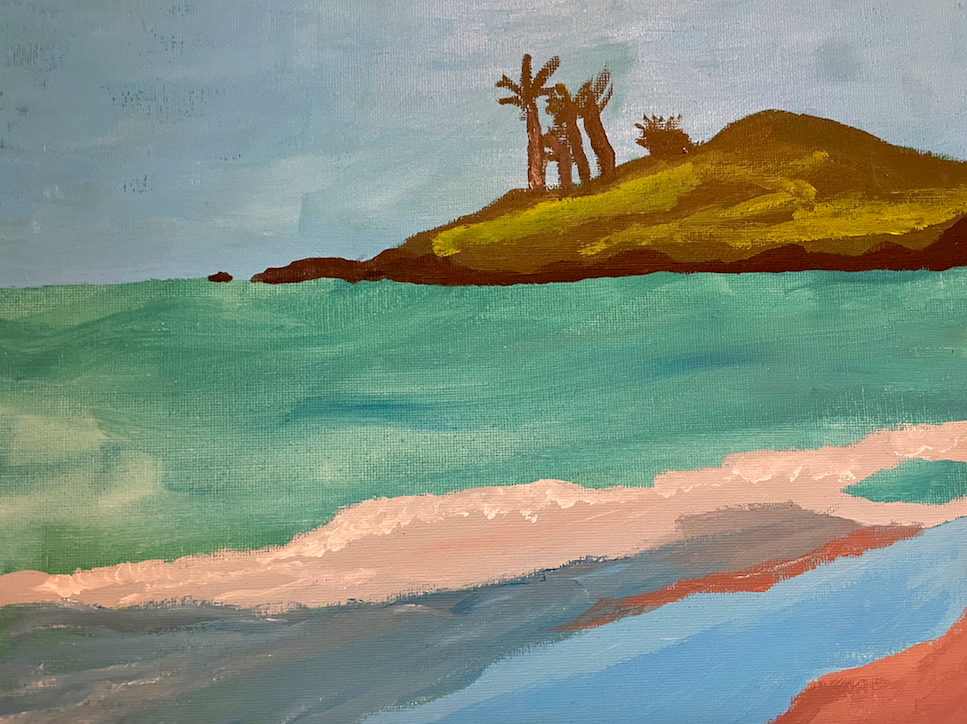
I signed up for a 3-hour workshop where the theme was painting a beach scene, since it was the dreary winter months. Using a photo as our inspiration, my friend Angela and I spent the next three hours practising our brush strokes painting white sand beaches, blue waters and palm trees. While people ooh’ed and aah’ed over each other’s canvases, mine somehow ended up resembling L.A. after the wildfires. One guy actually said to me, “Yeah, those palm trees aren’t good.”
I tossed the finished painting on my dresser for a couple of weeks, trying to decide whether I should fix it, paint over it or just throw it out. One day I came home and it wasn’t there. Dave had hung it as a joke in the kitchen above the stove. It’s still hanging there. A true masterpiece. Judge for yourself.
Okay, so maybe painting isn’t my thing. But just maybe it’s not as important to discover what you are great at, so much as what you are most passionate about and love to do.
Dave asked me a funny question the other day. He asked what my followers are called.
Gaga has her little monsters. Taylor Swift has her Swifties.
Now I realize my little blog isn’t exactly on the same scale as these music legends, but it got me to thinking my followers deserve a moniker too, so I’ve decided to call you, my loyal readers, The Happy Actors.
There is something to be said for faking it til you make it, or in this case, pretending to be happy to achieve happiness.
In fact, in response to last week’s blog on what people’s personal mantras were, a friend of mine who was away replied hers was “Fake it til you make it”. She said, “You probably know more than you give yourself credit for. At work, in other situations, smile and give it your best shot and you’ll probably do just fine!”
I believe the same applies to happiness to an extent. If you pretend you’re happy, you are far more likely to achieve happiness.
Here’s my theory. When we pretend we’re happy, our mood is lighter and our brain is tricked into seeing things in a more positive light. We are apt to be open to new things, and take in the beauty and goodness around us. Through this mindset and our actions, we become happier.
American philosopher and psychologist William James first propounded this theory in the late 1800s, believing that our behaviours create our emotions. Known as the theory of pragmatism, it touts that the practical consequences of ideas and actions evolve through our experiences and interactions with the world. Truths are not fixed, and through our actions, we can find meaning and happiness if we choose.
This week’s #HappyAct is to conduct a little experiment: on a day when you might be feeling a bit down, pretend for the whole day you’re happy, then report back on whether you actually felt happier or had a happy day.
I saw a profile on LinkedIn where someone included their personal mantra. It was, “Passionate for making every day, a good day.”
I asked several friends what their personal mantra was and why they chose it. Here were their answers.
“One day at a time. Sometimes it changes to “one hour at a time”. It helps me through tough times when you have to be strong to support those around you that are struggling. This year I have not only had to support my husband with a progressive disease, but also deal with a death in the family and two friends who are struggling with health issues that live alone and need help.
Sticking to this mantra gives me the encouragement I need, as well remembering that this is just one moment in time and if it is a tough one, maybe in a few hours or the next day it will be better. Take the moments as they come and cherish them.”
“Lead with love.”
“It’s just as easy to be nice. This was the refrain of my childhood. It was my father’s mantra. If I heard it once, I heard it a million times. It was helpful to me over the years in many situations at work. I am trying to remember this now as a menopausal woman. It’s ok to disengage–I don’t have to respond if I can’t be positive.”
“Idiopathic. This word is often used in medical circles ‘to relate to any disease or condition which arises spontaneously or for which the cause is unknown.’ But I like to take it further than that. I like to relate idiopathic to life in general. In a world of left and right, good and bad, sickness and health, sometimes we just need to be present for all of it. Life is more than the hand you are dealt (past). It’s how you deal (present).”
“Think big and you may get something, think small and you will get nothing.”
“I don’t really have a mantra, but I recently heard the following quote which I think is from Anne of Green Gables. “Tomorrow is a day with no mistakes in it..yet”. When I was going through my divorce and everything that came with it, I tried to live by ‘I forgive you, not because you deserve it, but because I deserve it.’ It was helpful to start moving forward and not continue to be angry and resentful about the situation.”
As for mine, it is “Everything happens for a reason.” This belief has helped me accept life’s twists and turns and has provided comfort when the headwinds of life have seemed to have blown me off course.
What’s your personal mantra? And many thanks to my amazing friends who provided such insightful, heartfelt, deeply personal and inspirational responses. Thank you for your willingness to share to help others.
It’s been a year since I retired, and other than taking on a few gig jobs, I’ve fully embraced my new life of leisure.
I know some people struggle with the decision. I remember years ago sitting in a retirement seminar with some colleagues. One of my friends said, “I don’t think I’ll retire anytime soon—I just don’t know what I’d do with my days.” This is a common refrain and fear. The experts all say the same thing, you need to retire to something, not just from work.
I thought it might be helpful to share what I’ve learned about retirement to help anyone thinking about taking the big leap.
If you think you will miss work, think again. Unless you’re an artist or have a super cool job like a back-country ski instructor, pilot, or amusement park ride inspector (we have a friend who does this for a living and is constantly posting pictures of riding awesome rollercoasters), you won’t miss the work. I stopped thinking about the office about 10 seconds after leaving it. I still miss some of the people though.
Structure is good. Most people need some structure in their lives. Choose some regular weekly activities that get you out of the house and give you structure in your day.
On the flip side, don’t overbook yourself, especially in the first year. You want to have the flexibility to explore, do fun things, and try new activities.
Try not to worry about money. This was one of the best pledges I made to myself in retirement. Nearly every retiree, unless you’re uber rich worries about money. It just comes with the territory. Be aware of your spending, have a budget and try to stick to it, but know that there are options, like taking part-time jobs, looking at your investment income, or downsizing your home if need be.
Time moves on a different continuum when you’re retired. Before if you were packing for a trip, you might only have an evening free to get ready. Now you might have two or three days and it still doesn’t seem like enough. Embrace the slower pace—you’ve been rushing all your life.
Don’t be surprised if you don’t do some of the activities or things you thought you wanted to do. I always pictured myself golfing once a week in a ladies league, but I’ve discovered I’m not as passionate about golf as I thought I was.
You may get bored from time to time. What a wonderful problem. Seize the opportunity to go somewhere and see or do something new, or just veg for the day. Call or meet up with a friend or family member you haven’t seen in awhile. I know it sounds corny, but I have a jar with ideas for day trips, overnight trips and bigger trips. When we have a free day, and feel like doing something, we grab an idea from the jar and off we go. The world is your oyster.
Women tend to transition better to retirement than men. One of my friends attended a retirement planning session and the facilitator said to the women in the room, “Go get a coffee, this segment doesn’t apply to you, you’ll be fine, but men listen up. You will struggle more.” That has certainly been the experience for Dave and me and many of our friends. I’m not sure if it’s because a man’s identity is more closely linked to his work, or that women are more social, but men struggle more with what to do and how to fill their days. Go back to point two: have a structure.
For me, retirement has been a huge blessing. I’ve enjoyed having the freedom to do the things I’ve wanted to do, get more active, and help out in my community. The one thing that has been difficult is we transitioned to empty nesters at the same time we retired. We miss the kids terribly sometimes, but then we look out and see the sun shimmering on the lake, and hear the loons and fish calling our names, and we head out, grateful for the gift of time to enjoy each day.
Are you retired and have advice to share, or is there anything that has surprised you in retirement? Leave a comment.
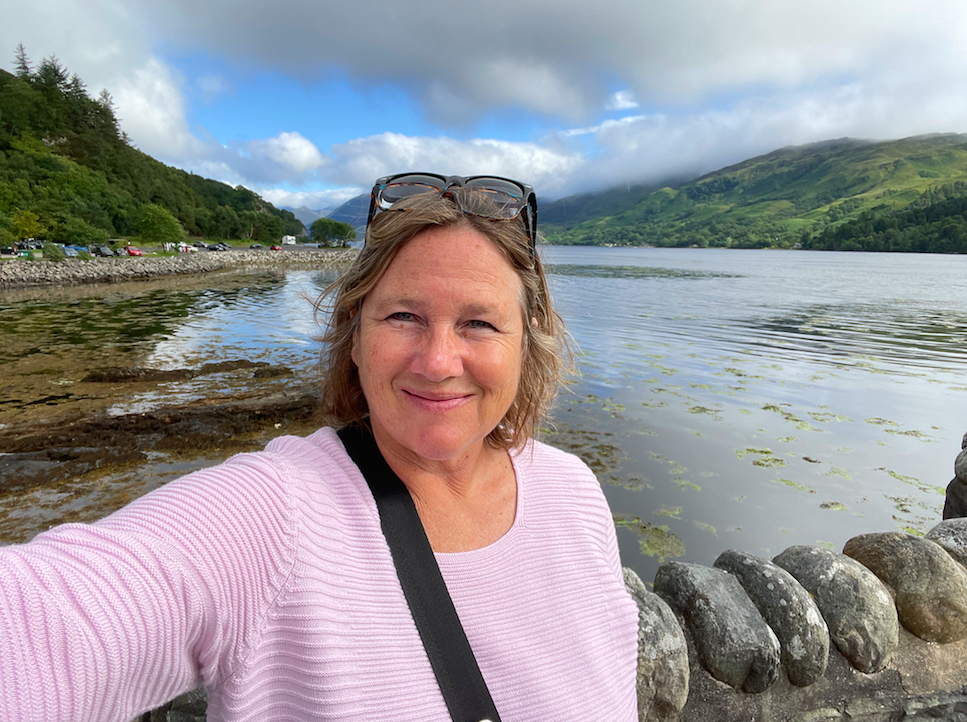
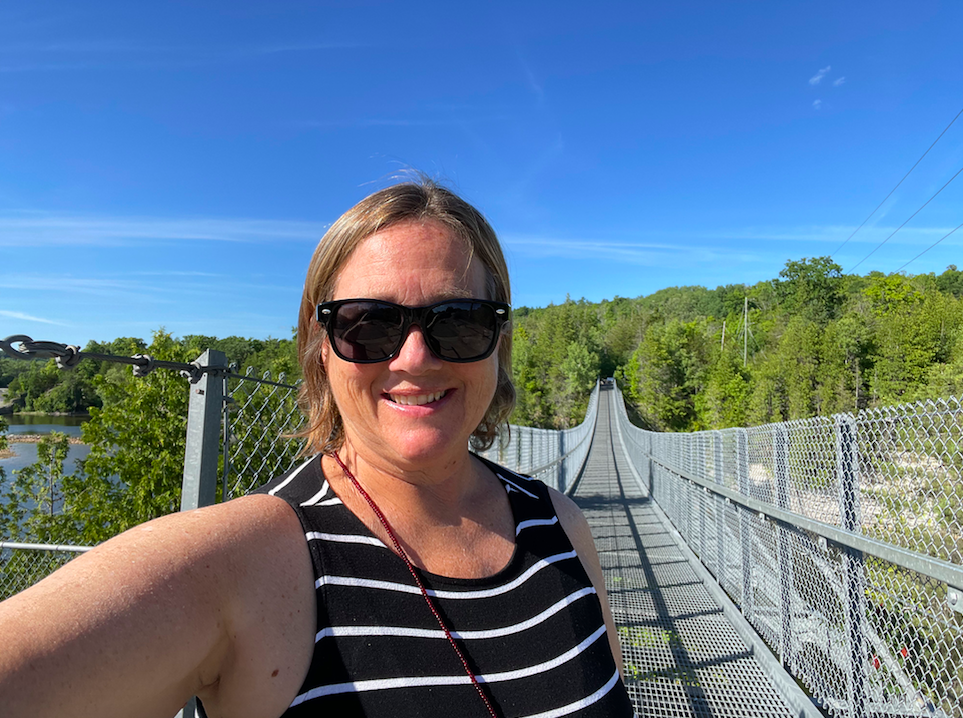
Photos: Above: me in Scotland this July and below, on the Ranney Gorge Suspension Bridge in Campbellford. The suspension bridge was one of the ideas in my day trip jar, so I stopped to check it out on the way home from Peterborough one day.
A career spanning decades Accumulated stress from years of working Secrets from your past
A relationship that drains you instead of filling your cup Regrets, many or few Self-doubt
Lying awake in bed worrying about your children when they’re out late at night instead of home safe in their beds Missing your children when they’ve left the nest to conquer the world on their own
So many feelings (the hard ones the hardest to let go) Pent-up guilt or resentment Inhibitions holding you back
Caring too much what people think of you Not caring enough to take action when action is warranted. Being envious of riches others have








 Happy Act