A funny thing happened on the way to my improv class

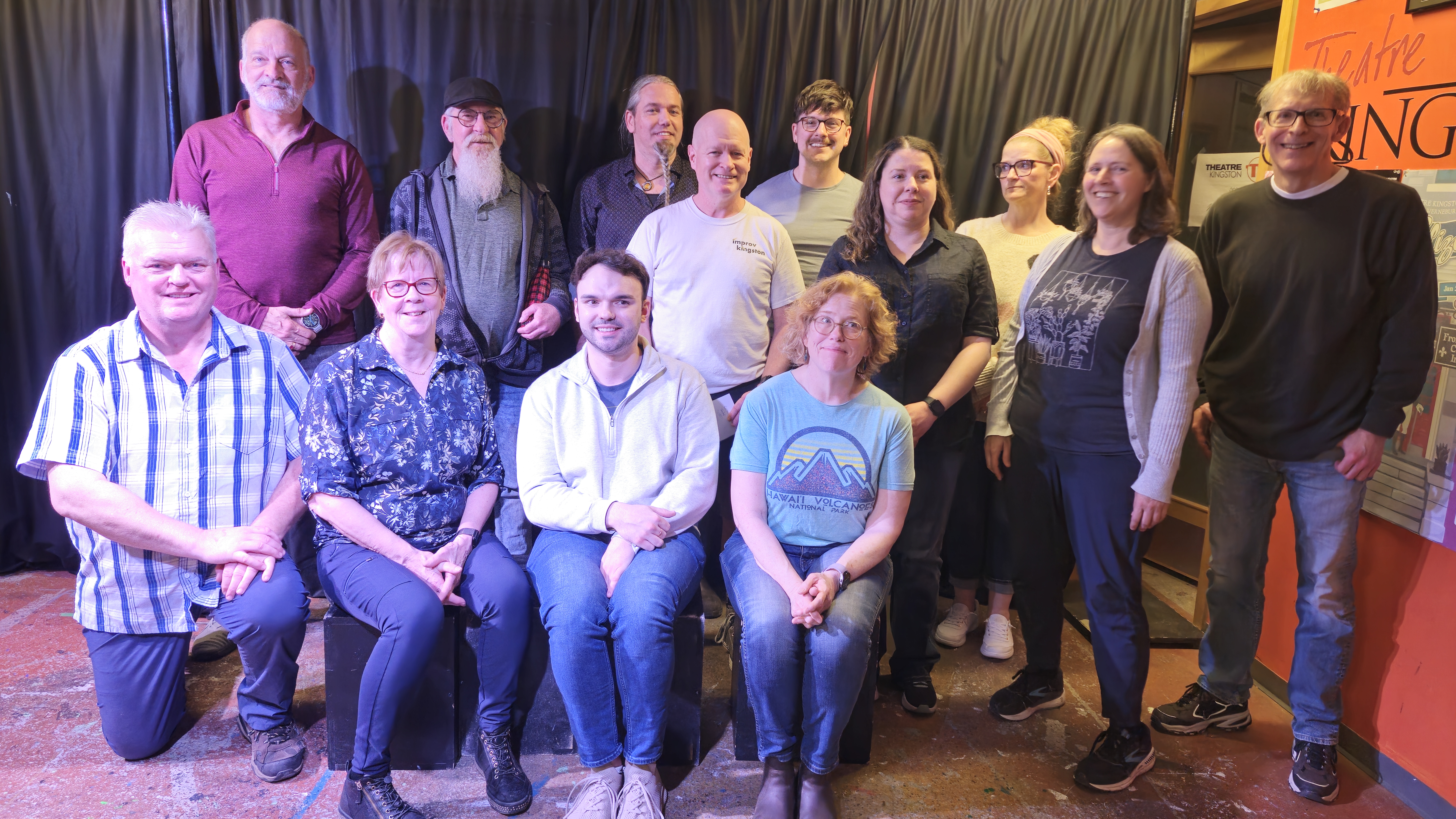
Group of people from improv class

Special guest post by Jon Begg

Our bus hit a polar bear. Someone was giving the bear CPR and my head was stuck in its jaws and no one was helping me. Seriously.

Fear. Absolute fear. How did I get myself into this situation?

Well, I signed up for it, a Level One improv class at the Tett Centre in Kingston.

I was a longtime fan of Whose Line is it Anyway so when I saw the ad for improv classes pop up on my Facebook feed I thought ‘Why not’?

I sent the payment, put all the dates on my calendar, told my wife I would be busy Tuesday nights, poured myself a tall glass of red wine and thought to myself “What have I done….?’

The class will probably be filled with quick-thinking Queen’s students… and me. I’m almost 62. I forget people’s names, I can’t think of the right word now and then, I never remember where I put my wallet and keys and the list goes on.

Now I’m going to be put in odd situations with people I don’t know, with no prep time, and have to make a 3-4 minute scene flow seamlessly by blurting what comes to mind first! “Don’t think” they tell you, the gold is what comes out first. Oh, and it helps if you get a few laughs along the way. No pressure at all.

It turns out there was no pressure.

I wasn’t the oldest in the class which for some reason made me feel good.

And there was laughter. Every class. We laughed with others and we laughed at ourselves.

Reader’s Digest had a section called Laughter is the Best Medicine. Turns out it’s true. Laughter is a wonderful thing. Studies around the world have shown laughter boosts immunity, lowers stress hormones, decreases pain, relaxes your muscles, and can help prevent heart disease. Those are just the physical benefits. Mentally, laughter eases anxiety, tension and stress, and can improve your mood. It checked a lot of boxes for me.

Improv was a great way for me to challenge myself, but more importantly, a great way to laugh at myself and at others sweating it out on stage!

For two hours a week I gave no thought to divisive politics, inflation, how to survive retirement, or the long list of social issues we hear about on our daily news feeds. I just laughed. I highly recommend it.

I hope that polar bear is doing okay.

Jon Begg

Jon Begg is a communications specialist, husband, father, grandfather, and fisherman who’s been telling jokes and laughing all his life.
Rainy day people

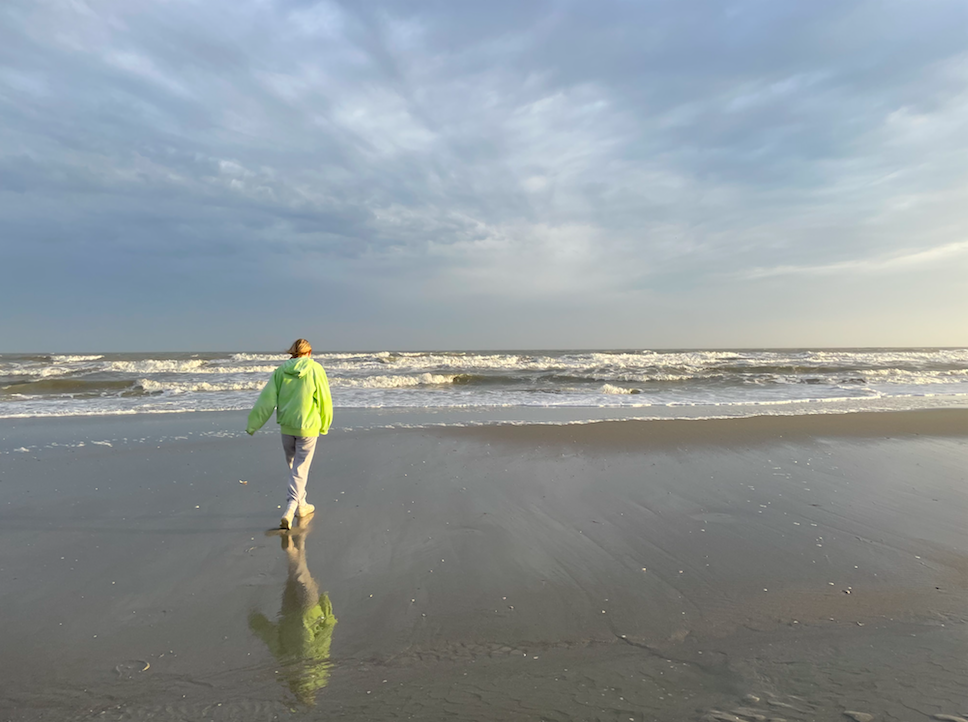
Girl walking on the beach in the rain

It feels like it’s been raining cats and dogs and elephants this spring. The grass and yellow dandelions in the yard are a foot high, the plants from the garden centre sit shivering in our driveway, and muddy shoes lay strewn across the front porch caked with mud. Everyone I talked to is fed up with the rain.

It begs the question, how does rain affect our happiness and mood?

Rain can make some people sad or depressed. We can’t (or won’t) get outside to do the things we enjoy which puts a damper on our mood. This is true and well-documented for people who are more prone to suffer from Seasonal Affective Disorder (SAD) in the winter months. Lack of sunlight decreases the production of serotonin, a neurotransmitter proven to help regulate anxiety, happiness, and mood.

But you may be surprised to learn rain can have a positive impact on our mental health and happiness and there are some of us who love the rain. They even have a name: pluviophiles. For these people, rain can be rejuvenating, calming, and restorative. Let’s dive into the science.

When it rains, negative ions are released. These are odourless, invisible molecules which are created in moving water. When it rains and water hits a hard surface, the drops break up and pick up a charge. If it is a negative charge, it can generate electrons that can be picked up by molecules in the air, such as oxygen and carbon dioxide, forming negative ions. Research on the effects of negative ions indicates they boost mood, relieve stress, and give us more energy.

Then there is the impact on our olfactory senses. The earthy scent after a rain has a name too. It’s called petrichor, from the Greek words petra, meaning “stone”, and ichor, meaning “the fluid that flows in the veins of the gods”. Petrichor includes a chemical called geosmin, which is made by bacteria in soil. Inhaling it can have a calming effect.

I personally love the sound of rain. On a rainy day, I’m quite happy to sit in my screen porch and listen to the steady drumming of the raindrops on our steel roof. Relaxation and meditation videos use the sound of rain and buildings include features such as artificial fountains and indoor waterfalls for their relaxing sounds and calming effects.

There are even benefits to the grey skies that come with rainy days. With less light, the body tends to produce more melatonin, a hormone that regulates sleep, helping you rest better. 

And yet we tend to be wet blankets when it comes to rain, hiding ourselves indoors until the stormy skies pass.

If you live on the West coast or in Great Britain, you make the best of the rain, dress for the weather and get on with your day.

I once spent six weeks in England and Scotland in November and December. It rained almost every day. That didn’t stop the intrepid Brits. The streets of London were bustling with shoppers, brollies in hand, and the parks were filled with young families with babies in strollers covered in plastic and little ones dressed in bright yellow and red raincoats, splashing in puddles.

Sure, there were days I was tired of the grey skies and panda-sized puddles on the slippery sidewalks, but I remember the wonderful feeling of coming in from the cold, and warming up with a hot cup of tea or enjoying a pint in a cozy pub with some friends.

This week’s #HappyAct is to become a pluviophile and get out for a walk in the rain. Time to go, I see the sun is starting to come out…

Related reading: Swimming in the rain (a poem)

Photo: Clare walking on the beach in the rain in South Carolina

It’s okay to be sad

happy and sad face pictures

People don’t talk about being sad anymore. They talk about being unhappy, struggling with their mental health or being depressed, but they don’t talk about being sad.

It’s like the word has been eradicated from our vocabulary.

This is a dangerous and disturbing trend because it presupposes that when we are sad, we have an illness or problem, when sadness is a natural emotion.

The other day I asked a friend how they were doing after spending the first Christmas without their Mom. My friend naturally admitted there were times she was sad, missing her mother very much.

Last week, we dropped Clare off at the airport in Ottawa. We knew it would be the last time we would see her until spring, and I was very sad for a day or two, missing her terribly as we returned to a quiet, empty house.

Author and happiness researcher Helen Russell in “How to Be Sad” says that in order to be happy, you need to allow yourself to be sad sometimes, but most people are terrified of being sad.

Exacerbating the problem is society’s newfound hyper-focus on mental health. We are so focused on mental health that there is a propensity to self-diagnose a deeper issue or problem when we may just be in fact, experiencing temporary, normal sadness.

We are often sad when we experience grief or loss, all inescapable emotions in life. If we are sad, it is because we’ve been blessed to have held something dear and joyous.

For example, as a parent, it is hard to watch your child experience heartbreak, but if they are sad from having their heart broken, it means they have lived and loved, and sadness and heartbreak are all part of the process of loving and finding the right person.

So the next time you find yourself feeling a little down, remember it’s okay to be sad.

The top 12 Happy Acts of 2024

Author at a work booth before their retirement

Another year of happy acts have come and gone. Here is my round-up of the top happy acts of 2024. Happy reading!

On climate change, work, and the world we live in

Inspiration and mental health

On parenting, retirement and my friend Harry

The Crap Joy Ratio

Penny Marshall quote, "If you're not having a good time, find something else that gives you some joy in life."

Sometimes you find inspiration in the least likely of places.

I often glance at the obituaries in my local newspaper. This morning, I was reading the obit from an accomplished doctor, Dr. Nicholas Evans. The caption under his photo read, “I have used my days well.”

He was Chief of Gastroenterology at The Toronto Western Hospital and a world leader in the research of the gut-brain interaction. What struck me the most was the majority of the column was devoted to his family and life outside of work. One paragraph in particular captured my attention.

His family wrote, “He shared his life-long belief in the ‘Joy/Crap’ ratio with generations of family, friends and colleagues in need of guidance. Everything in life can be distilled down to one simple question—does the crap outweigh the joy? If so, you have your answer, follow the joy, ditch the crap and change what you can to ensure the joy always outweighs the crap.”

So my friends, what is your crap/joy ratio? This week’s #HappyAct is to make one change to achieve a healthier ratio. Ditch the crap. Find the joy.

And if you need a smile, along the same vein of dealing with life’s crap:

Live in the cloud

Stunning orange clouds

In What if your best friend was a bot, we asked Siri what she looked like. She replied, “In the cloud, nobody cares what you look like”.

The height of irony? Maybe. But what a wonderful world it would be.

Look for a silver lining

light in a dark cloudy sky

I’m into week six of living life indoors with a broken ankle.

Aside from the chronic nerve pain, I’ve been surprised that I’ve been able to keep my spirits up for the most part. And in a strange way, there have been some silver linings.

I’ve started on some writing projects I never seemed to have time for.

I’ve been able to spend days home with Bentley, although he mainly just looks at me with sad, accusing eyes.

I’ve spent time on the phone catching up with friends.

For the first time ever, I’m caught up with my bills, correspondence and filing.

I’ve learned that as long as you have the right system, you can be self-sufficient and do things on your own (although I still say you can’t drink a proper cup of tea from a Yeti).

And finally, I’ve learned that even if someday I am limited in my mobility, I’ll be OK. I used to think that if I didn’t get outside every day, I would literally wither away. I now understand how some seniors choose to stay indoors where it is warm and safe during the winter months.

As I gaze out my sunroom windows on this snowy morning, I’m looking forward to my first walk in the fresh snow, but I also know now that if someday, that walk isn’t possible, I can still be happy.

This week’s #HappyAct is to look for the silver lining.

What’s your once a day?

Lake and clouds

When life is challenging, it’s important to have an escape, something that helps take your mind off things and help you face what’s to come. For me, it’s always been swimming.

Last Saturday was a particularly difficult day. I was in Westport helping my brother-in-law. I knew it was going to be a long, stressful day. In between chores and calls, I slipped down to Westport Beach for 45-minutes and went for a long swim in Sand Lake.

The minute I splashed into the water, all the stresses and sadness began to wash away. My weary eyes concentrated on the beautiful sunshine sparkling on the water and dreamy white clouds floating up above. With each stroke, I swam away from my troubles, towards what I thought was a white buoy bobbing in the water, but on closer inspection was a very large gull. I felt cleansed, refreshed and at peace with what would come.

For my neighbour Kim, her once a day is her garden. As long as she can spend 30 minutes a day in her garden, she feels happy, balanced, ready to face what life brings.

Dave says his once a day is to look at our beautiful lake and remind himself every day how lucky we are, knowing there are so many people in the world who are not so fortunate.

What’s your once a day? Leave a comment.

See past your thoughts

Dog walking in the woods

Have you ever gone for a walk or a drive, and arrived not remembering anything you’ve seen along the way because you were so lost in your thoughts?

It happens to me more than I would like to admit.

I’m conscious of it now, so when it happens, I stop in mid-stride if I’m walking, scold my brain, and start looking at the world around me. I make a conscious effort to be in the moment, listen to the wind in the trees, the birds, see the snow glistening on the pines and just take it all in.

It’s easy to become prisoners of our thoughts. It’s hard work to see past them.

The 75 Easy Challenge

Bentley the dog ready for his 75 Easy Challenge
Bentley ready to take up his 75 Easy Challenge

You may have heard about the 75 Hard challenge that’s taken over TikTok and the internet. Created by fitness guru Andy Frisella, it’s a challenge that is supposed to toughen you up mentally and physically. He calls it “ironman for your brain”. The challenge involves doing five things for 75 days straight:

  1. Drink 3-4 litres of water a day 
  2. Follow a diet with no cheat meals or alcohol
  3. Workout twice a day for 45 minutes, and one of the workouts must be done outdoors 
  4. Read 10 pages of a non-fiction or self-help book each day
  5. Take a progress picture each day

We were talking about the challenge in the car yesterday, and I said, “that’s way too hard and life’s challenging enough right now, I’d rather do a 75-day easy challenge”. Here’s what our 75 Easy challenge would look like:

Laurie’s 75 Easy challenge

  1. Drink two glasses of wine two days a week, one white, one red
  2. Complete one puzzle
  3. Read the newspapers and actually get moving before 10 a.m. on the weekends (shoot, I guess I’ll have to start the challenge tomorrow)
  4. Walk from my home office to the kitchen fridge and back at least twice a day
  5. Wear something other than slippers and leggings at least once a week

Dave’s 75 Easy challenge

  1. Ice fish twice a week
  2. Pet Bentley 10 times a day, including once on the belly
  3. Read 30 pages of either John Sandford, Wilbur Smith or Ken Follett a night
  4. Drink one bottle of Baileys or Cabot Trail maple cream, with or without coffee
  5. Bring his minnows in every night so they don’t freeze on the front porch (to help with #1)

Clare’s 75 Easy challenge

  1. Eat two Mr. Noodles a day, one small bowl and one large bowl
  2. Limit her screen time on her phone to less than four hours per day
  3. Wear an actual winter coat each time she leaves the house
  4. Watch at least one hour of Netflix or DisneyPlus a night
  5. Clean up after herself in the kitchen at least once a week (again, see #1)  

Grace’s 75 Easy challenge

  1. Keep her voice down to under 100 decibels when talking on the phone late at night
  2. Journal every day
  3. Write and re-write her study schedule daily
  4. Pick two items of clothing up off of her floor each day
  5. Learn one new song on the guitar each week

Bentley’s 75 Easy challenge

  1. Chase the squirrels from the bird feeders twice a day
  2. Sleep on one couch at least once every night
  3. Eat two dog treats a day without trying to slobber
  4. Actually come when my humans call, “Come, Bentley”
  5. Bark for only 10 minutes a night on the front porch at absolutely nothing

There you have it. Hey, at least we’ll feel good when we’re all successful at the end of the 75 days. This week’s #HappyAct is to make up your own 75 Hard or Easy Challenge. What will it be? Leave a comment.