
Here’s a philosophical question for our omniprescient digital world: should you believe what you see online if it makes you happy?
The online world is now a dangerous minefield of falsehoods, fiction and fakes thanks to artificial intelligence, disreputable news sites, content creators and citizen journalism. AI has amplified this trend, creating a wild wild west frontier of fake news. What do you believe any more?
Maybe it’s not as important to know what to believe, as it is to know how the content you consume makes you feel. If it makes you happy, maybe we allow ourselves the grace and the joy to believe in it. If it makes you sad, angry or anxious, don’t believe it and stop reading it.
A simplistic theory fraught with perils, perhaps. But there are precedents. H.G. Wells 1938 radio broadcast of The War of the Worlds, where listeners believed aliens were invading the earth. JibJab videos of your co-workers dressed as elves dancing to Jingle Bells. Cheap Rolex watches and Gucci purses you can buy for $15. A child’s belief in Santa Claus and the Easter Bunny. If it brings you joy, go ahead and believe.
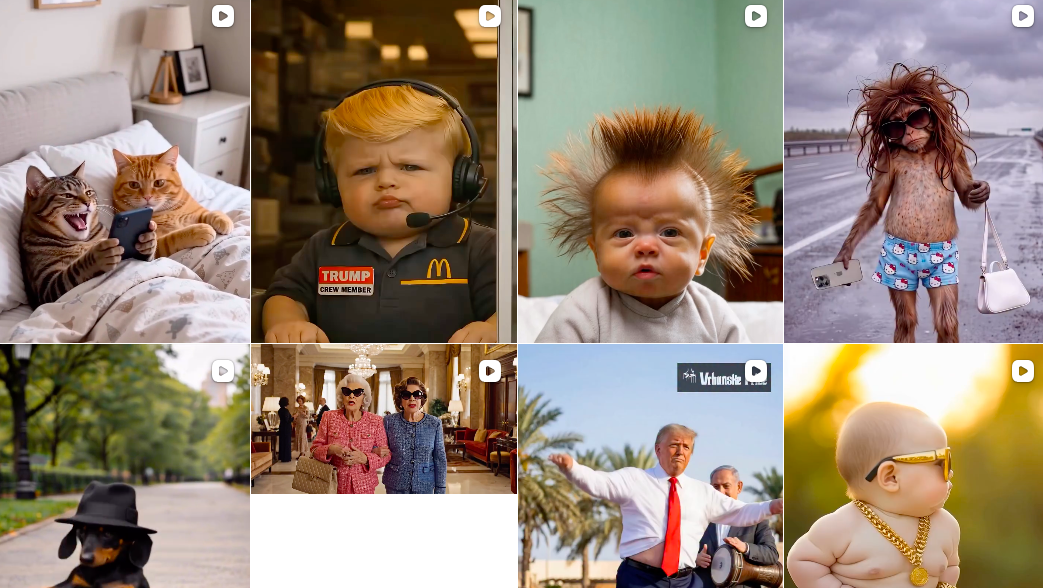
Of course, it’s better if you know what you are watching is fake. One of my favourite fake AI video series on Instagram are the absurd_ai_videos of two toddlers, Kai and Bella who travel the world, rating the places they visit and their experiences out of 10. The videos are obviously fake (it helps when ai is in the handle name) and the posts obviously sponsored by brands, but I don’t care, I believe them. You can even ask the toddlers to craft a custom message for your Aunt Charlotte’s 80th birthday for a price. Witty. Creative. Brilliant marketing. I give them a 10 out of 10.
Who hasn’t seen and loved animali.tr’s hilarious chimpanzee playing the cheese grater and pots and pans in the kitchen? Or cats cooking spaghetti in the kitchen? Guaranteed to make you smile every time. I think the monkey’s real and they trained him to play percussion.
And I’m constantly amazed and amused by the plethora of videos starring the Toddler in Chief. Maybe fiction is more real than fact.
A massive caveat. You must apply the happiness measuring stick with caution. If a beautiful woman by the name of Cameron Diaz connects with you online and agrees to be your girlfriend making you feel happy, but needs money for her grandmother’s surgery, let your common sense override your desire for happiness.
And as long as we live in a world where wars rage, there will always be content we see and consume that is very, very real that makes us angry, sad and anxious. We need to believe it to learn from our mistakes and our past.
This week’s #HappyAct is to apply a healthy dose of skepticism to what you read and see online, and believe it if it makes you happy. Just beware of the dangers.
 Happy Act
Thank you for sharing your article and links. As always, it’s enjoyable to read!