It’s never too late

First-time author Lois Tryon

Sometimes when I get down on my writing, I think of Frank McCourt.

McCourt is best known for his novel Angela’s Ashes which won a Pulitzer Prize in 1997 (one of the most depressing books of all time). What’s interesting about McCourt is he didn’t start writing until he was in his 60’s and published Angela’s Ashes when he was 66.

I read another of his autobiographies, ‘Tis which chronicled his time teaching in the New York City public school system for 30 years. McCourt said while he was working, he had no energy and brain power left at the end of the day to tackle creative writing projects. It was only when he retired did he find the drive and creativity to write his series of award-winning novels.

I was reminded of this yesterday when Dave sent me a text that said “It’s never too late” with a link to an article in last week’s The Kingston Whig-Standard. The article was about a first-time author who at the age of 98 just published a book of poetry about living at Kingsbridge Retirement Community.

Lois Tryon started writing poems to while away the time, and the staff at the retirement residence had the idea to insert her poems in the daily menus to inspire her fellow residents.

This week’s #HappyAct is to remember it’s never too late. If you’re feeling like you should be further ahead in life, or in achieving your goals, keep at it. Here are some more examples of people who achieved greatness later in life:

  • Colonel Harland Sanders of KFC fame was 62 when he franchised his famous secret chicken recipe and opened his first restaurant
  • Julia Child didn’t publish her groundbreaking cookbook, Mastering the Art of French Cooking until she was 50.
  • Ray Kroc was a milkshake device salesman until at the age of 52 when he bought McDonalds and turned it into the world’s largest franchise
  • Henry Ford was 45 when he created the Model T in 1908
  • The great Morgan Freeman didn’t make it big in acting until he was in his 50s.

Photo of Lois Tryon by Elliott Ferguson, Kingston Whig-Standard

Retirement: a man’s perspective

Man with a big fish

Special guest blog by Dave Swinton

Retirement has been a difficult transition for me. I’m coming up on two years now and I still haven’t adjusted as well as some people do. I was sitting this afternoon, watching the rain pelt against the window obscuring a grey fall transition to winter, when it hit me.

Nobody needs me anymore.

I was always in middle management in my career. Always giving vague direction and punishing people for not reading my mind as the old Dilbert cartoon used to read. My specialty was putting out fires. People came to me looking for answers and I tried my best to write a plan on a cocktail napkin and hope it worked well enough to fool my superiors. 

My days were an endless mix of planning, timesheets, scheduling, maintenance and finding the best ways to get the most out of each and every person who worked for me. I loved being needed at work even if I didn’t always love the work itself. Fast forward two years later and the only decisions I have to make are which trail to walk the dog on and what we are having for supper. Work doesn’t need me anymore.

My kids certainly don’t need me either. Both are out living their lives, one almost finished university (so proud) and looking at where she will end up next, the other knee-deep studying whatever biochemistry is. Except for rare conversations about new musical groups (Red Clay Strays and Tyler Childers) and the odd supper, they are completely and utterly embracing their own lives. No more rides to a remote hockey rink on a snowy winter road, no more conversations asking for advice on relationships. They don’t need me anymore.

Honestly the only person who even tolerates me is my life partner. Truthfully, I think if she had to pick between me and the dog, we all know who would win. Bookending Monday badminton and Tuesday line dancing is Friday writing groups and Saturday stock sport tournaments. She has embraced retirement with gusto and I am glad for this. She doesn’t need me anymore.

All the influencers talking about retirement being the golden age should have their heads examined. For some, retirement is a time to worry, to wander aimlessly trying to find direction and meaning in their lives, all the while wondering if their investments will support them until they leave this earthly abode. 

I know that some of you are saying to yourself, what does he have to whine about? Lives on a lake, semi-good looking, gorgeous wife, yada, yada, yada but for some, myself included, the emptiness from not being needed outweighs all aspects in life.

Tread well into retirement my friends, sometimes it’s not all as advertised.

And if you see a white Dodge Cummins diesel with a 30-foot trailer rolling down the 401 at a buck twenty, festooned with Kingston BMW logos on it, know that someone is still depending on me to deliver a car that is worth more than my last annual salary. I guess someone still needs me……….

More on retirement

What I’ve learned a year into retirement

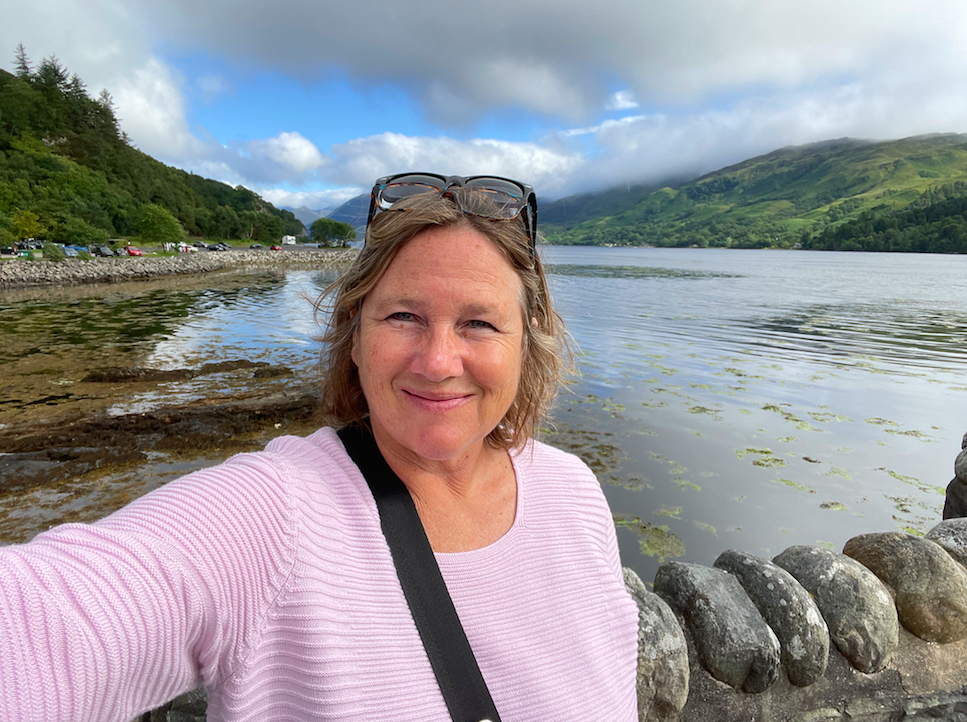
Author in Scotland

It’s been a year since I retired, and other than taking on a few gig jobs, I’ve fully embraced my new life of leisure.

I know some people struggle with the decision. I remember years ago sitting in a retirement seminar with some colleagues. One of my friends said, “I don’t think I’ll retire anytime soon—I just don’t know what I’d do with my days.” This is a common refrain and fear. The experts all say the same thing, you need to retire to something, not just from work.

I thought it might be helpful to share what I’ve learned about retirement to help anyone thinking about taking the big leap.

  • If you think you will miss work, think again. Unless you’re an artist or have a super cool job like a back-country ski instructor, pilot, or amusement park ride inspector (we have a friend who does this for a living and is constantly posting pictures of riding awesome rollercoasters), you won’t miss the work. I stopped thinking about the office about 10 seconds after leaving it. I still miss some of the people though.
  • Structure is good. Most people need some structure in their lives. Choose some regular weekly activities that get you out of the house and give you structure in your day.
  • On the flip side, don’t overbook yourself, especially in the first year. You want to have the flexibility to explore, do fun things, and try new activities.
  • Try not to worry about money. This was one of the best pledges I made to myself in retirement. Nearly every retiree, unless you’re uber rich worries about money. It just comes with the territory. Be aware of your spending, have a budget and try to stick to it, but know that there are options, like taking part-time jobs, looking at your investment income, or downsizing your home if need be.
  • Time moves on a different continuum when you’re retired. Before if you were packing for a trip, you might only have an evening free to get ready. Now you might have two or three days and it still doesn’t seem like enough. Embrace the slower pace—you’ve been rushing all your life.
  • Don’t be surprised if you don’t do some of the activities or things you thought you wanted to do. I always pictured myself golfing once a week in a ladies league, but I’ve discovered I’m not as passionate about golf as I thought I was.
  • You may get bored from time to time. What a wonderful problem. Seize the opportunity to go somewhere and see or do something new, or just veg for the day. Call or meet up with a friend or family member you haven’t seen in awhile. I know it sounds corny, but I have a jar with ideas for day trips, overnight trips and bigger trips. When we have a free day, and feel like doing something, we grab an idea from the jar and off we go. The world is your oyster.
  • Women tend to transition better to retirement than men. One of my friends attended a retirement planning session and the facilitator said to the women in the room, “Go get a coffee, this segment doesn’t apply to you, you’ll be fine, but men listen up. You will struggle more.” That has certainly been the experience for Dave and me and many of our friends. I’m not sure if it’s because a man’s identity is more closely linked to his work, or that women are more social, but men struggle more with what to do and how to fill their days. Go back to point two: have a structure.

For me, retirement has been a huge blessing. I’ve enjoyed having the freedom to do the things I’ve wanted to do, get more active, and help out in my community. The one thing that has been difficult is we transitioned to empty nesters at the same time we retired. We miss the kids terribly sometimes, but then we look out and see the sun shimmering on the lake, and hear the loons and fish calling our names, and we head out, grateful for the gift of time to enjoy each day.

Are you retired and have advice to share, or is there anything that has surprised you in retirement? Leave a comment.

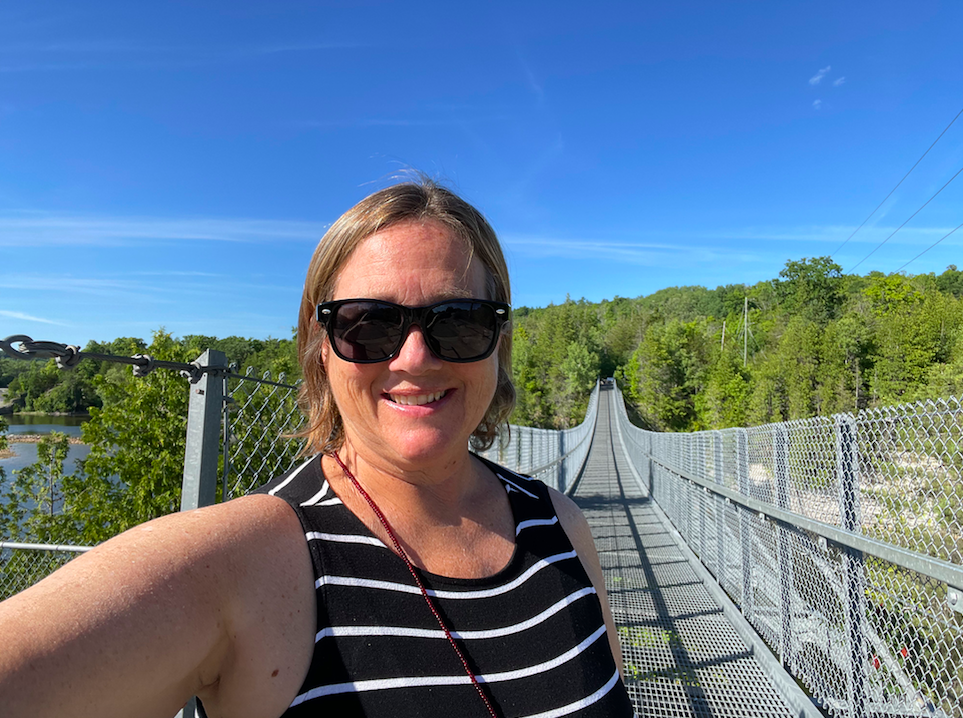
Photos: Above: me in Scotland this July and below, on the Ranney Gorge Suspension Bridge in Campbellford. The suspension bridge was one of the ideas in my day trip jar, so I stopped to check it out on the way home from Peterborough one day.

Author on suspension bridge

How long does it take to let go

picture of waves at a beach and the words, "One of the happiest moments in life is when you find the courage to let go of what you can't change"

How long does it take to let go of…

A career spanning decades
Accumulated stress from years of working
Secrets from your past

A relationship that drains you instead of filling your cup
Regrets, many or few
Self-doubt

Lying awake in bed worrying about your children when they’re out late at night instead of home safe in their beds
Missing your children when they’ve left the nest to conquer the world on their own

So many feelings (the hard ones the hardest to let go)
Pent-up guilt or resentment
Inhibitions holding you back

Caring too much what people think of you
Not caring enough to take action when action is warranted.
Being envious of riches others have

Bitterness
Grief and loss
The past

The timeline is up to you.

Read more: Let it go

Make time for messy exploration and play

Woman standing in a daycare

Do you wish sometimes you never grew up? That you were still a child, with no worries, responsibilities, or never-ending to do lists in your head, just the prospects of a new day of exploratory play and learning?

I found I was mourning the loss of my inner child a bit yesterday when I toured an absolutely amazing facility, the Child Care Centre in Sharbot Lake as part of the 50th anniversary celebrations of Rural Frontenac Community Services. The Centre was founded by my dear friend Audrey Tarasick who served as the Centre’s director for a decade in the 1990s. As part of the celebrations, the Centre dedicated a bench in the playground to Audrey who passed away last year.

As I toured the Centre, I could feel Audrey’s presence in every kiddie cubbyhole, reading nook and painting cranny. There were tiny wood tables and chairs, a big circle carpet with trees and clouds, and toys everywhere. Audrey loved children and she had the unique ability to see the world through a child’s eyes and let children guide their learning by letting them play, explore and take the lead.

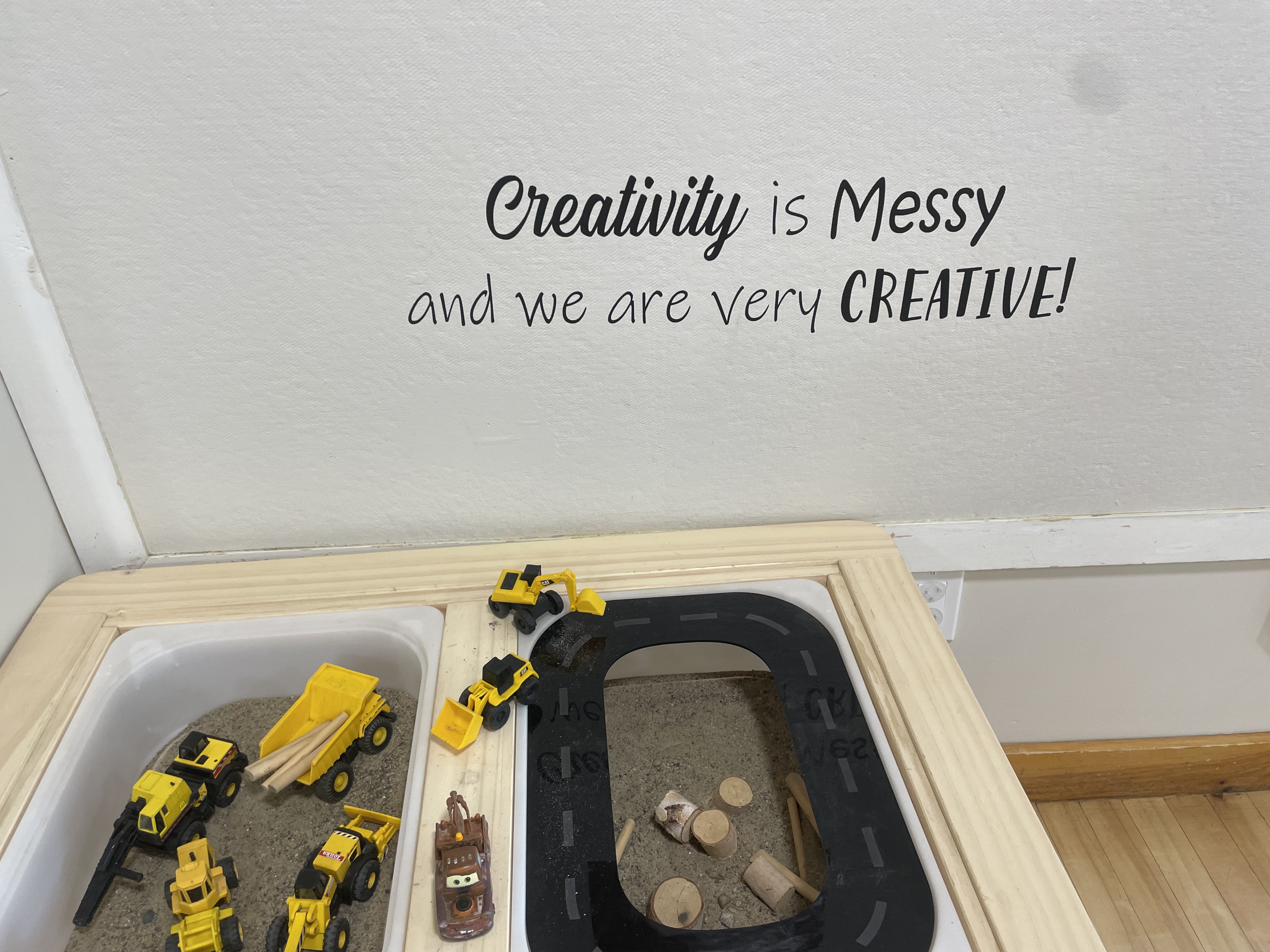
I saw artwork and toys and banners with messages like “Learning is messy business,” “Creativity is messy and we are very messy”, and “Every child is an artist”.

It made me wonder why, as adults, we hate mess and seek out organization and structure, and what impact this has on our creativity, happiness, and ability to learn and play?

I bumped into Marcie Webster who has worked with RFCS for 34 years and who remembered me from the days when I brought my two girls to her play groups. She shared a story about one of her first few days at work. A child had mixed some red paint with yellow paint and Marcie had said to the child, “Try not to mix the colours”. Audrey asked her why she told the child that, and Marcie said so the paints would be intact for the next child. Audrey replied, “But the child was exploring and learning like a scientist. Let them learn.”

Early in my career, I worked as a copywriter for an educational toy company, Discovery Toys. Their motto was “Play is a child’s work” and their belief was children learned through exploration and play. Because I had to write about the toys, we would play with them every day. I literally was paid to be creative with the toys and play. It was a great job.

When it came time to take a photo of Audrey’s family on the bench, instead of sitting normally, one of her great-grandsons hung upside down with his legs flopped over the back of the bench (his family later asked him to “sit properly” for an official photo). I snapped a picture of Walt upside down and thought, “Audrey would have loved that.”

This week’s #HappyAct is to break the chains of adulthood and let your inner child lead this week. Just be messy and explore. You’ll never know what you may learn–or how much fun you’ll have doing it.

Boy hanging upside down on bench

Photos: Main: Marcie Webster, one of the longest-serving employees at the Child Centre in Sharbot Lake in her EarlyON play group room. Above: Walt having fun and exploring upside down on Great Grandma’s bench.

Play area with sign "creativity is messy and we are very creative"

The party you won’t see on the ballot we should all be voting for

elections canada vote sign

Tomorrow, Canadians will go to the polls in what could be one of the most historically significant elections of our generation.

Trump aside, I’ve been thinking of the key issues most Canadians are concerned about in 2025: the cost of living, affordable housing, mental health and health care, climate change, and the economy. I’ve been very fortunate to consider these issues from a new lens, thanks to a group of young PhD international students I’ve been working with as a proctor this past month at Queen’s University.

Two of the graduate students I worked with were from Ethiopia, one doing his PhD in rehabilitation research and the other in nursing. Another was from Syria, doing his PhD in nuclear engineering. They had all done their undergraduate and Masters degrees in different countries around the world and were extremely kind, bright, perceptive, and willing to share their thoughts and experiences of their time in Canada.

They all agreed Canada is a very beautiful, safe country and they particularly loved Kingston. They appreciated the hard work ethic of Canadians and the fact that we are a law abiding country. They did not like our winters!

Some of the things that surprised them is how expensive it is to live here, especially housing. (The one fellow told me he paid $900 a month for a two bedroom apartment in Germany where he did his Masters degree in a city the same size as Kingston. His rent here is $1,700. According to Studying in Germany.org, housing prices are 47% lower than in the US). They’ve also been surprised to see the number of homeless people and people with mental health and drug problems in Canada.

This led to a discussion on the shrinking middle class, a phenomenon that seems to be happening in all countries (my new friends said it was the case in Ethiopia and Egypt too).

However, the biggest culture shock and negative they’ve encountered is the individualistic aspect of Canadian society. We talked at length about child care, since my one new friend just had a baby and the other had two children and a wife here in Canada. They said at home in Ethiopia, child care is not an issue. If you need to work or go somewhere, there is someone—a relative, neighbour, or friend who will look after the children.

That led to discussions about seniors. Older people in their country are cared for and live with their extended families, unlike here in Canada where many seniors live alone or in nursing homes, and suffer from loneliness (see my blog post from a few weeks ago, “Battling the epidemic of loneliness”).

As we were discussing all of these issues, it occurred to me that if we simply went back to having multi-generational families living together, it would solve many of the problems in our society. There would be more available and affordable housing, and the cost of living would be offset by potentially multiple incomes in one household. People would be financially better off and happier, alleviating the strain on health care systems and improving people’s mental health.

If you study the famous “blue zones” in the world where people live longer, multigenerational living is part of their cultural fabric.

Where and when did we go wrong in North America?

In 2015, one of the best selling business books was a book called Weology: When Everybody Wins When We Becomes Before Me, by Peter Aceto, CEO of Tangerine bank. It was a book on the philosophy of leadership in business, but the concept of Weology is one I think we need to start embracing as a society to address these critical issues. Clearly what we’ve been doing up until now isn’t working.

A new party, let’s call it the Weology Party, committed to implementing policy that fosters a philosophy of taking greater care of each other and multi-generational living might just be the solution. From a tax perspective, this could take the form of tax deductions or income splitting for multi-generational households, not just spouses. There are currently tax breaks for people who have eligible dependents over the age of 18 and a tax credit if you are a caregiver for a spouse or senior, but we could do more. To foster this philosophy in our communities, the government could also offer tax breaks and incentives for volunteering.

Municipalities have started to make strides to make it easier for people to live together, allowing and promoting additional dwelling units on lots.

In business, the government could introduce policy to make it attractive for new start-ups to form as employee-owned cooperatives. There is a large corporation in Spain called Mondragon Cooperation that has 70,000 employees, annual sales of 11 billion euros and is highly profitable. They are committed to putting people before profits (for instance during COVID, instead of laying off employees, they reduced salaries across the board by 5%). The ratio of pay between employees and executives is just 6:1 (in Canada, the ratio is 210:1 for our highest paid CEOs and in the States, it’s even higher). This model is one way to distribute wealth more equitably in society, within the framework of a free market economy.

My new proctor friend who was a research fellow in rehabilitation was working with a professor who was researching the impact and effectiveness of formal versus informal supports for people with disabilities. Their theory is that informal supports are far more important in helping people with disabilities live full and rewarding lives. They are still in the research and data collection phase, but my guess is the data will show that informal supports, people supporting people, will be more important.

Which brings us back to election day. Make sure you vote. You won’t see the Weology party on the ballot this election, but perhaps some day we will. In the meantime, we need to all start thinking about what small changes we can make in our lives to move Canada towards a healthier (both financially and physically), happier, and connected society.

Battling the epidemic of loneliness

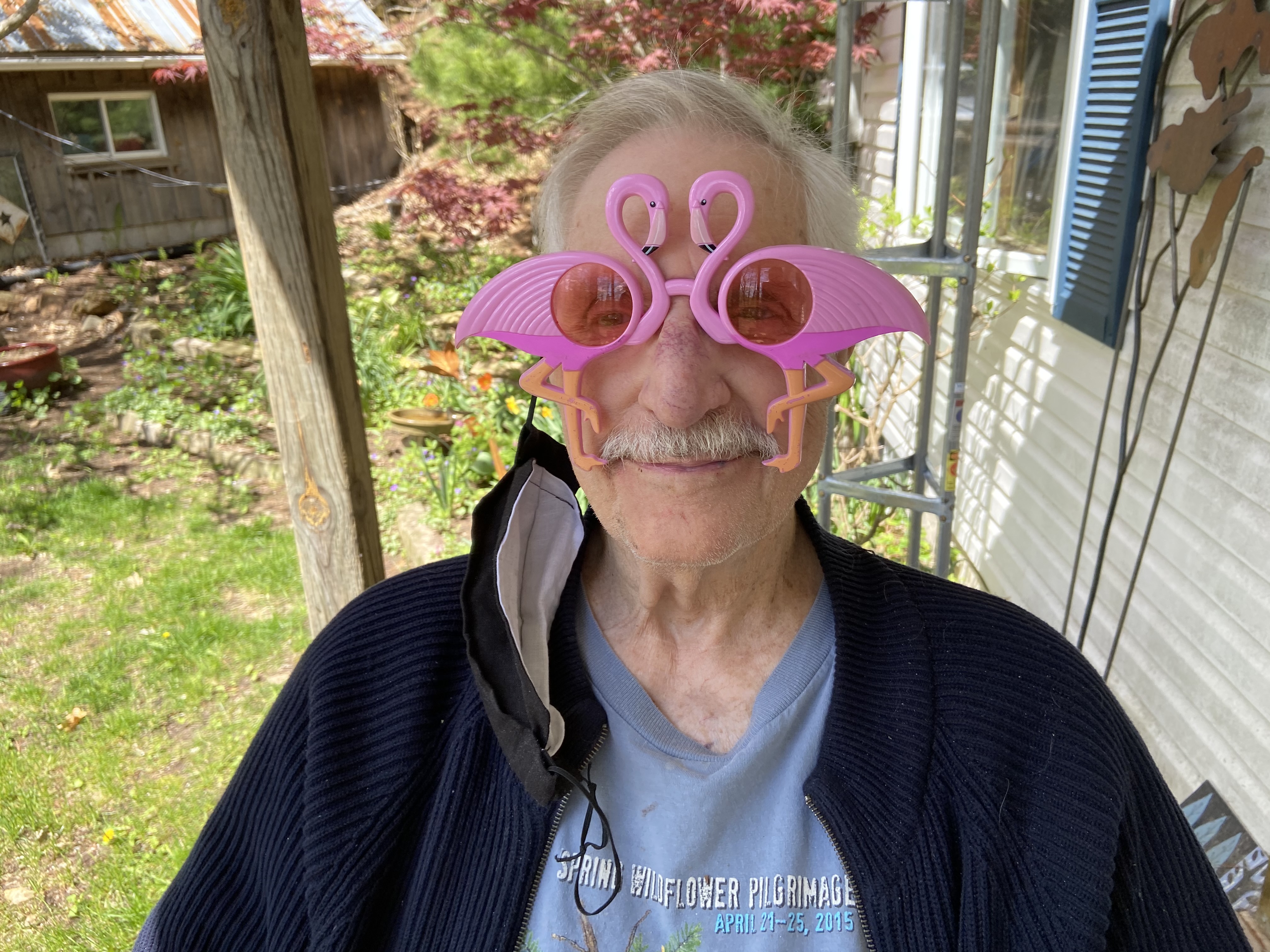
man wearing pink flamingo glasses

There is an epidemic sweeping our country—the epidemic of loneliness.

In our grandparents’ day, the average detached home in Canada had six people in it. For my generation, it was four people. Today it’s 2.1. One of the fastest growing sub-segments in the housing industry today is single homeowners in their 20s. For the first time in modern history, we also have an entire generation of seniors living alone in isolation.

The two age brackets most at risk of being lonely are youth and seniors. According to Statistics Canada’s Canadian Social Survey: Loneliness in Canada, more than 1 in 10 people aged 15 or older say they “always or often” feel lonely. A 2024 study of seniors estimated between 19-24% of Canadians over the age of 65 feel isolated from others and wished they could participate in social activities in their community.

The impacts of loneliness in seniors especially are well known. In addition to depression, emotional distress, and dementia, loneliness can result in increased risks of chronic illness and falls, poor general health and premature death.

Humans were not meant to live alone. We were meant to live in tribes.

So what can we do to battle the epidemic of loneliness? Here are some words of advice people shared in a recent Quora post:

“Have a pet and walk them every day. You’ll meet people on your walks”

“Join a club or activity…check out the nearest seniors centre for programs services” (I’ve really enjoyed the activities I participate in at the Seniors Association of Kingston and have found my tribe there)

Volunteer

“Find people you can text every day”

 “Check out the website meetup.com for a list of groups and activities that may appeal to you” (I looked to see what was listed for my area of Kingston, Ontario and there was everything from guided hikes, to toastmasters groups, to meditation and church groups)

“Nobody is going to come to you. Go out and find a church family, join a gym, go for walks, talk to your neighbours. Don’t spend your senior years being sad. Enjoy every day you have left. If you lived near me I would be your friend.”

“Every time you find yourself thinking about your own loneliness and state, think about someone in the world you can help. A neighbour who needs help, bake some cookies, whatever”

“To have a friend you need to be a friend.”

“I remember this documentary on finding happiness. The director at the beginning of the film said he would sum up the secret of happiness with one 4 letter word. I assumed it would be “love” but was surprised when he said it was risk. It’s all about taking calculated risks and steps to make opportunities happen for yourself and it will pay off. Good luck your future happiness is within you.”

This week’s #HappyAct is to do something to battle the epidemic of loneliness. Reach out to a friend, join a group, visit a senior who lives alone. It’s all about caring and sharing—more on that next week!

Coming up…March 20 is World Happiness Day. This year’s theme is Caring and Sharing. Be sure to check back next week when I dive into the results of the 2025 Report on World Happiness.

Photo: One of my favourite photos of Dave’s Dad who is living proof a youthful heart and spirit will always keep you young at heart and happy. He texts his friends and family every day.

A stranger walks into a bar

Two people sitting in a bar

I made a new friend last night. His name was Alan.

Alan was sitting alone reading the Globe and Mail and sipping a pint of Stella when Dave and I wandered into the Toucan pub in Kingston last night, killing time between two movies at the Kingston Canadian Film Festival.

We got to talking, as strangers are wont to do in a bar, the conversation starting with Trump and the situation in the US, then veering into Alan’s fascinating life.

A son of a diplomat, Alan spent his childhood living around the world in countries like Afghanistan, Pakistan, the Belgian Congo, Lebanon, Portugal, Spain, and Sweden. He shared one story from the time when he was a boy in Pakistan of one of the British dignitaries’ wives separating the children into teams of colonials versus locals for games at a British garden party.

When he graduated from university, he became a land technician with the Ministry of Natural Resources, a job he said he absolutely adored. One project he led was researching all the treaties to create Petroglyphs Provincial Park in Peterborough. He shared how for thousands of years, the various Indigenous peoples of that region took turns scraping the moss from the Teaching Rocks, passing down the teachings from generation to generation.

When I had jokingly said we’d be better off if women were in leadership positions around the world when we were talking about Trump, he smiled and leaned in and talked more about the belief of Indigenous Peoples in Gitche Manitou, the “goddess of supreme being” and how women in Indigenous cultures were tasked with the most important role, taking care of the home and children.

After his time with the MNR, Alan founded his own communications company and started doing documentary work. He travelled to the Congo in 1995 to document the outbreak of Ebola. The stories he shared were fascinating. He said both the US and Russian armies were present, but not to help the dying and suffering. They were there to see if they could weaponize the virus. That never made it into the film.

Over the course of a few hours and pints, we talked about fishing, travelling, our children, the Montreal Canadiens, Canada-US relations and how lonely it can be living alone.

As we paid our bill and gathered up our coats to head out into the chilly February night, I gave Alan a big hug and said I hope we meet again. Two barflys, no longer strangers, now friends after sharing a special bond in a bar.

This week’s #HappyAct is to wander into a bar and make a new friend. Here are a few bar jokes to leave you smiling:

Three vampires walk into a bar. The first one says, “I’ll have a pint of blood.”
The second one says, “I’ll have one, too.”
The third one says, “I’ll have a pint of plasma.”
The bartender says, “So, that’ll be two Bloods and a Blood Lite?”

A bartender says, “We don’t serve time travelers in here.”
A time traveler walks into a bar.

A three-legged dog walks into a saloon, his spurs clinking as he walks, his six-shooter slapping at his furry hip. He bellies up to the bar, stares down the bartender, and proclaims, “I’m looking for the man who shot my paw.”

The art of pushing

Woman skating on a frozen lake

As humans, we are constantly in a state of internal conflict. Indulge (and then usually feel guilty about it) or abstain, get up and move or laze on the couch, push ourselves outside our comfort zone or stay within the confines and comfort of routine.

It is an art and balance we need to master in order to be happy.

With age comes a new wrinkle in this ever-changing struggle of understanding and respecting your physical limitations.

As I’ve aged, I’ve tried to navigate the art of pushing by deciding what is important to me, and what I enjoy doing with realistic expectations of what I’m capable of doing.

I’ve never been one of those extreme sports enthusiasts or had any desire to push myself to the limit, whether its running, car racing or facing the wilds. For me, it’s not about iron mans, marathons or the Canadian Death Race (yes, it’s an actual ultramarathon held in Alberta each year in the Rockies where a very small field of 1,000 certifiably insane racers run non-stop for 24 hours through the mountains, sponsored by sinistersports.ca—the name itself should send you running and screaming in the opposite direction.)

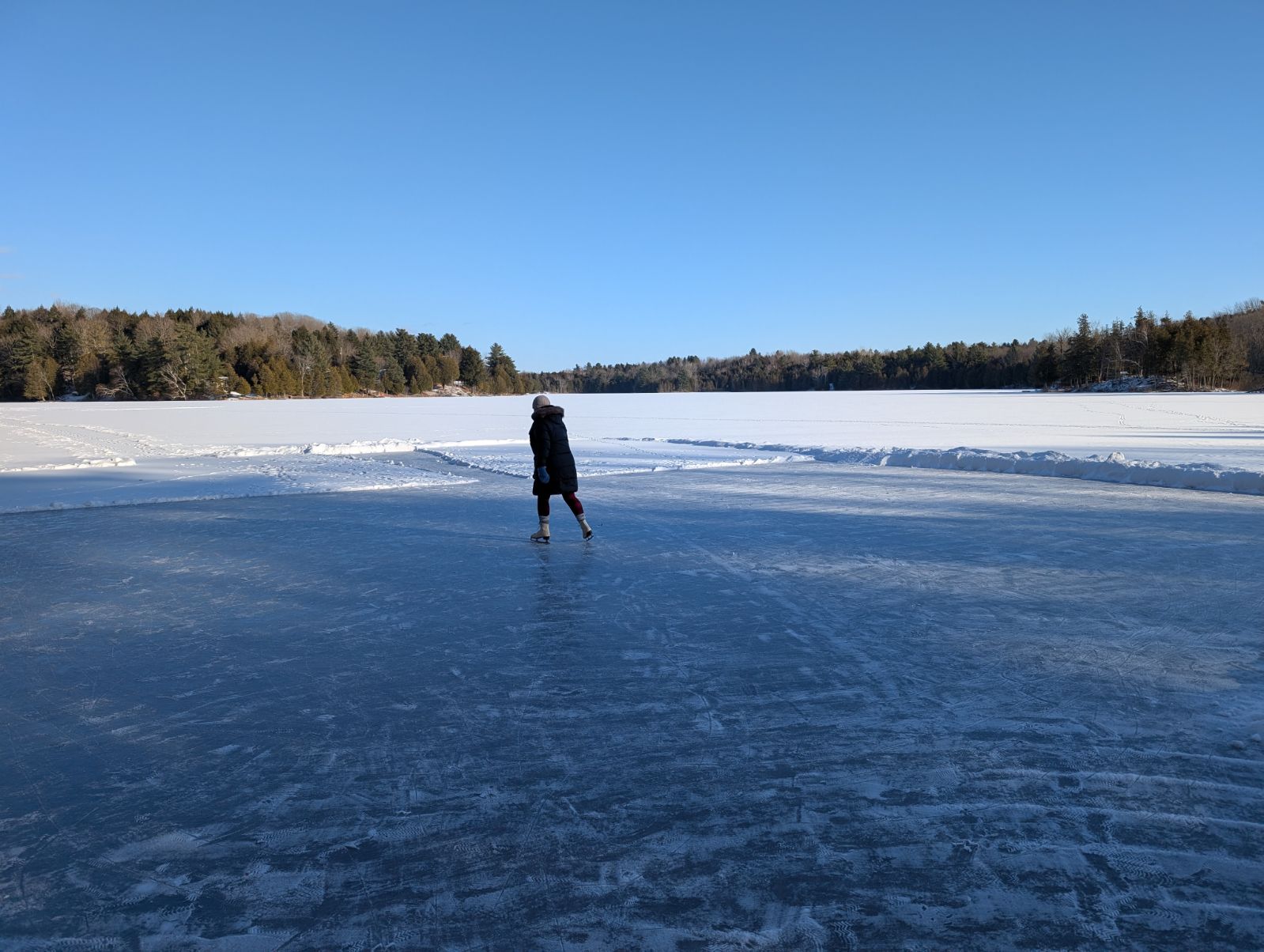
My idea of a fun afternoon is skating and ice fishing on my lake, followed by a nice glass of Merlot in front of my woodstove while watching the Bills hopefully beat the Chiefs tonight.

The art of pushing for me is forcing myself to continue to do the things I love to do and not kill myself.

Now, when we go on an interior canoe trip to Algonquin Park, we plan a route that doesn’t involve portaging or we might rent an outpost cabin.

I still love to hike, play hockey and skate on lakes, but my days of doing pirouettes, lunges, or racing like crazy to beat the neighbours’ kids to the puck are over.

I will continue to push myself to experience new things, new places and meet new people even if it feels awkward at first.

Martin Luther King said, “Keep pushing forward, even when the path is uncertain, for greatness awaits those who persist”.

Well, if not greatness, hopefully a nice glass of Merlot.