What better way to kick off a new year than a top ten list? This year I’ve I’ve chosen 11 posts for all you Spinal Tap fans out there that will hopefully inspire you to make a positive change in the year ahead, with a few fun posts thrown in “for shits and giggles”.
Happy reading and may 2023 bring joy, health and happiness.
#2: As a blogger, you always wonder if your posts resonate with people. In June, after I posted this community success story about the Food Redistribution Warehouse in Kingston, a friend reached out to say they started volunteering there after reading my post.
And finally, before you make your New Year’s Resolutions for 2023, be sure to read
Thanks to all my loyal readers who follow this blog and read my posts on Sunday mornings. If you want to subscribe to receive posts by email, just click on the three dots in the upper right-hand corner and enter your email. Here’s to many #HappyActs in the year ahead.
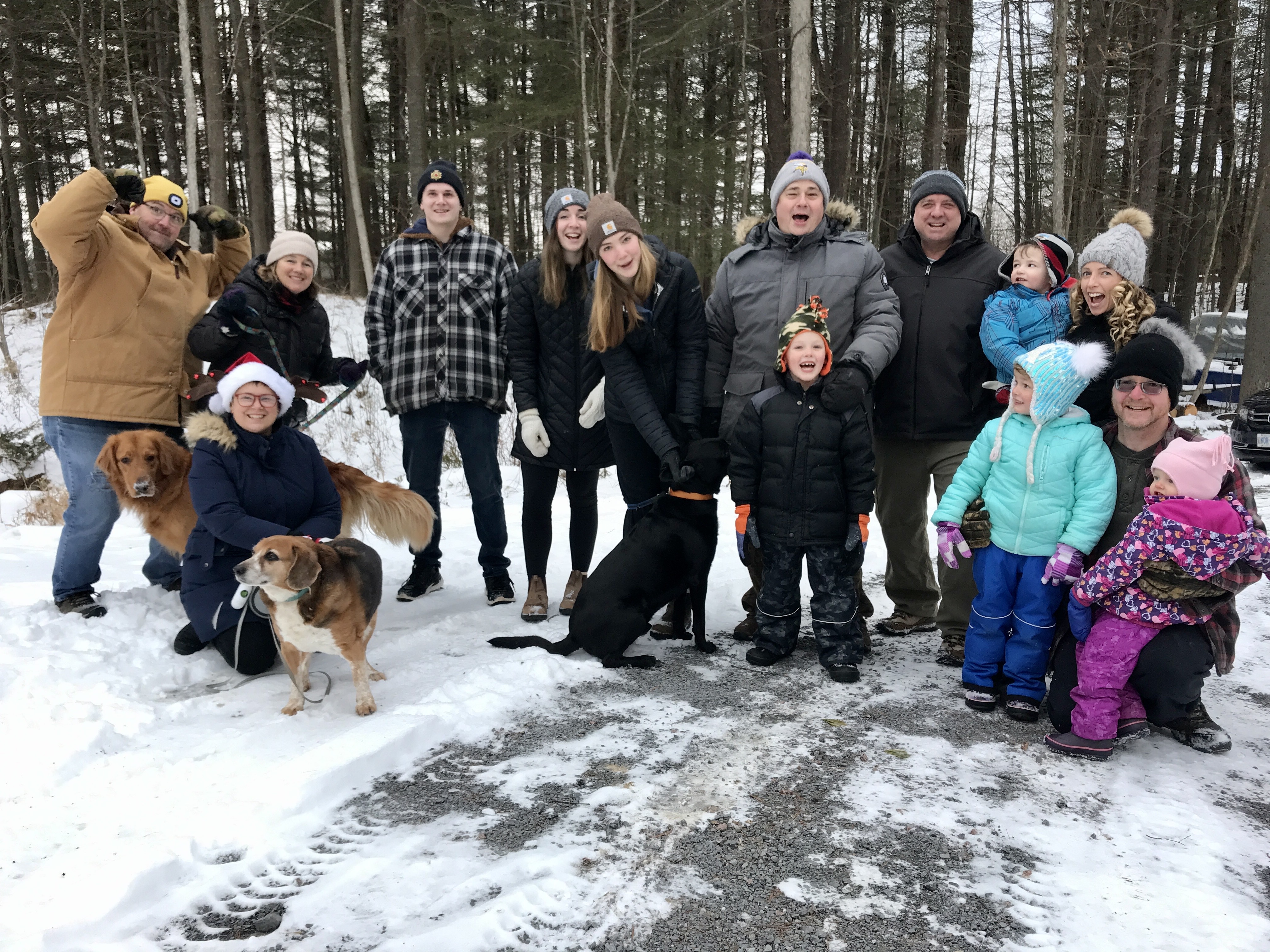
The neighbour’s annual Christmas holiday gathering 2021
Last week after I wrote my blog, I went for a nice walk in the snow to look for the eagles that soar over our lake this time of year. I slipped on a slight skiff of snow on ice and fell and broke my ankle. Two trips to the hospital, one surgery, a cast and crutches later, I’m now staring down 6-8 weeks of sitting on my couch with all our holiday plans scuppered.
As the week wore on, we started getting calls and texts from neighbours who said they were planning to pop by with food. Not just food, full meals of pork roast and potatoes, Morroccan chicken with salad, pulled pork, beef brisket, ribs and chicken wings and treats and wine. We have enough food in the fridge now to last until Christmas without having to cook a meal!
We’ve always been blessed with best neighbours. As a kid growing up in Port Credit, our neighbourhood and the people in it were our entire world. All the neighbourhood kids hung out together playing street hockey in the winter and baseball in the summer. The Moms of the Neighbourhood were a powerful posse, watching over and taking care of us. On the one hand, it was great. If you needed help–you could knock on any door, but the downside was there were about 25 other parents watching your every move who could get you in trouble!
I appreciated this amazing group of women even more as a teenager when my Mom was diagnosed with breast cancer. For seven years, they visited, brought us food and helped drive my Mom to appointments, and then doing the same for my father after she passed away.
In 1995, Dave and I made a huge leap of faith and moved to a small farmhouse outside of the village of Sydenham where we didn’t know a soul. Our first two sets of neighbours were a family of sheep farmers and a single guy, a military communications officer named Kramer.
Kramer was like the Kramer of Seinfeld fame with a big personality and a big heart, but with a lot less hair. He would show up at our door out of the blue with a whiskey bottle in hand or come for dinner, and stay until the wee hours of the morning. We’d push him out the back door, watching him stumble and weave across the lawn in the moonlight and up the steps until he was home safe.
On the other side of us was a lovely family of five called the Orsers. They too became fast friends and we’d visit back and forth, especially during lambing season when Dave and I would spend hours in their barn, petting and holding the baby lambs. During the ice storm of ’98 when we lost power for two days, Neil and Pat and the kids all bunked down at our house since we had a wood stove.
When Kramer moved to the Wasaga Beach area, we said our sad goodbyes and welcomed new neighbours into our midst: a young couple by the name of Jeff and Karrie. Jeff and Karrie became some of our closest friends. It was Jeff who found our beloved cat Angus dead, hit by a car on the road and gently put him in a box and broke the news to us when we came home from work. It was Jeff and Karrie who babysat Grace for the first time, giving us our first afternoon out as new parents. They live in Edmonton now—our kids are all grown up, but we still keep in touch.
When we made the move from Sydenham to Verona, we thought the same thing: there is no way we’ll ever have such great neighbours, but yet again, we were wrong. Our one neighbour Mark Berry reminded me so much of my Dad who had passed away just after we moved into our beautiful lakefront property.
Mark was the inventor of the “unbirthday party”. He’d putter over to our house on his tractor bearing gifts for us and the kids “just because”. His dog Buddy became best friends with our border collie, even sleeping some nights on our deck in our lawn chairs in the summer. We were very sad when he moved back to Toronto to be closer to his children.
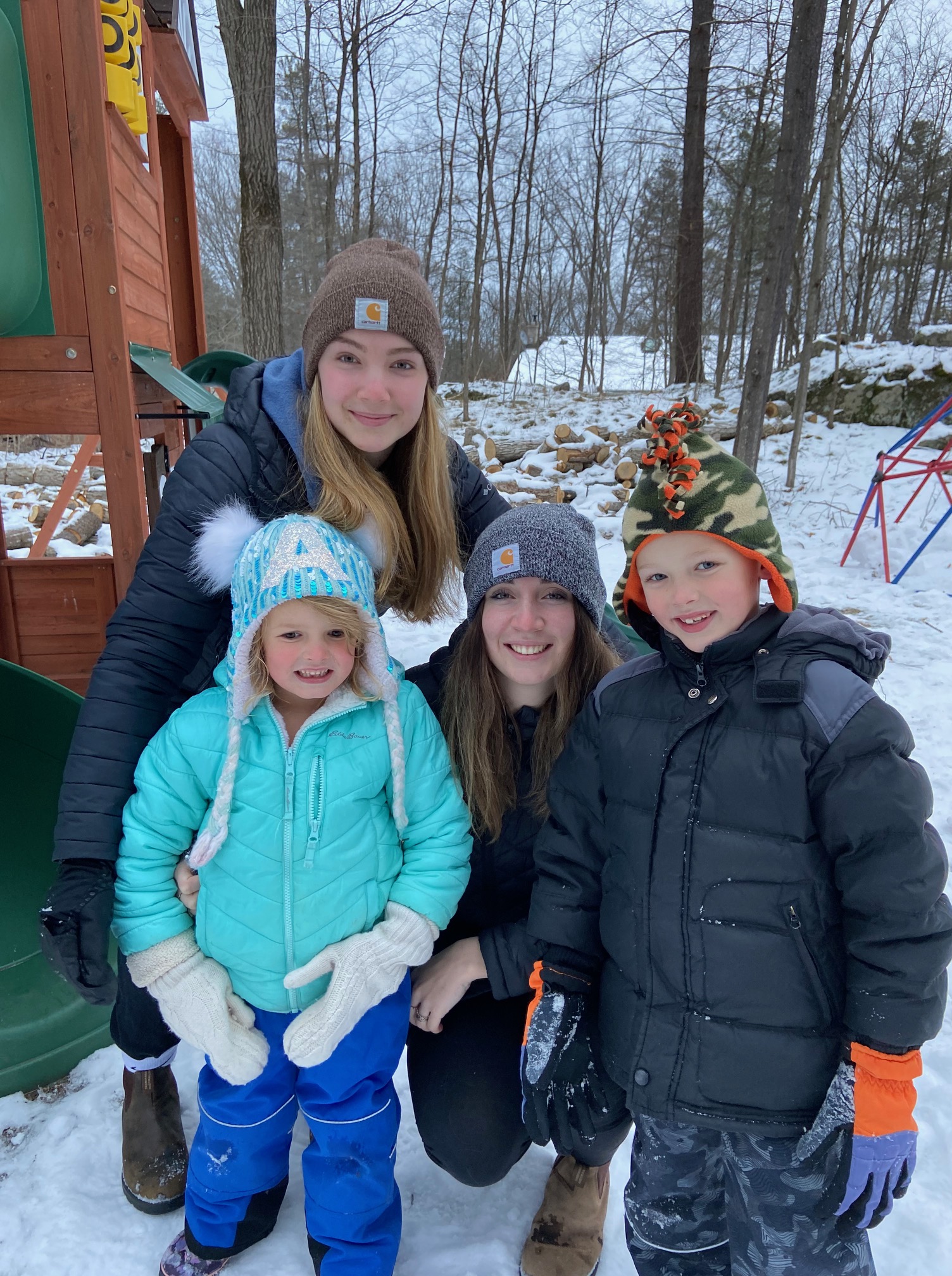
Fast forward to today, when once again we have the best neighbours ever. Through the years, our little tight-knit community has grown even closer. Whether it’s popping by for a drink, getting together to celebrate one of the kids’ birthdays next door, graduation celebrations, Canada Day fireworks, or our Christmas Eve tradition of gathering at one of our houses, our time spent together has become some of my favourite memories here on the lake.
They’ve become extended family, and have been a huge life support for us, especially this year. I honestly don’t know what we would have done without them.
So thanks my dear friends and neighbours, for your love and support, friendship and all the delicious food that is now overspilling from my fridge. I look forward to sharing many more precious memories in the years ahead with my favourite neighbours, the best neighbours in the world!
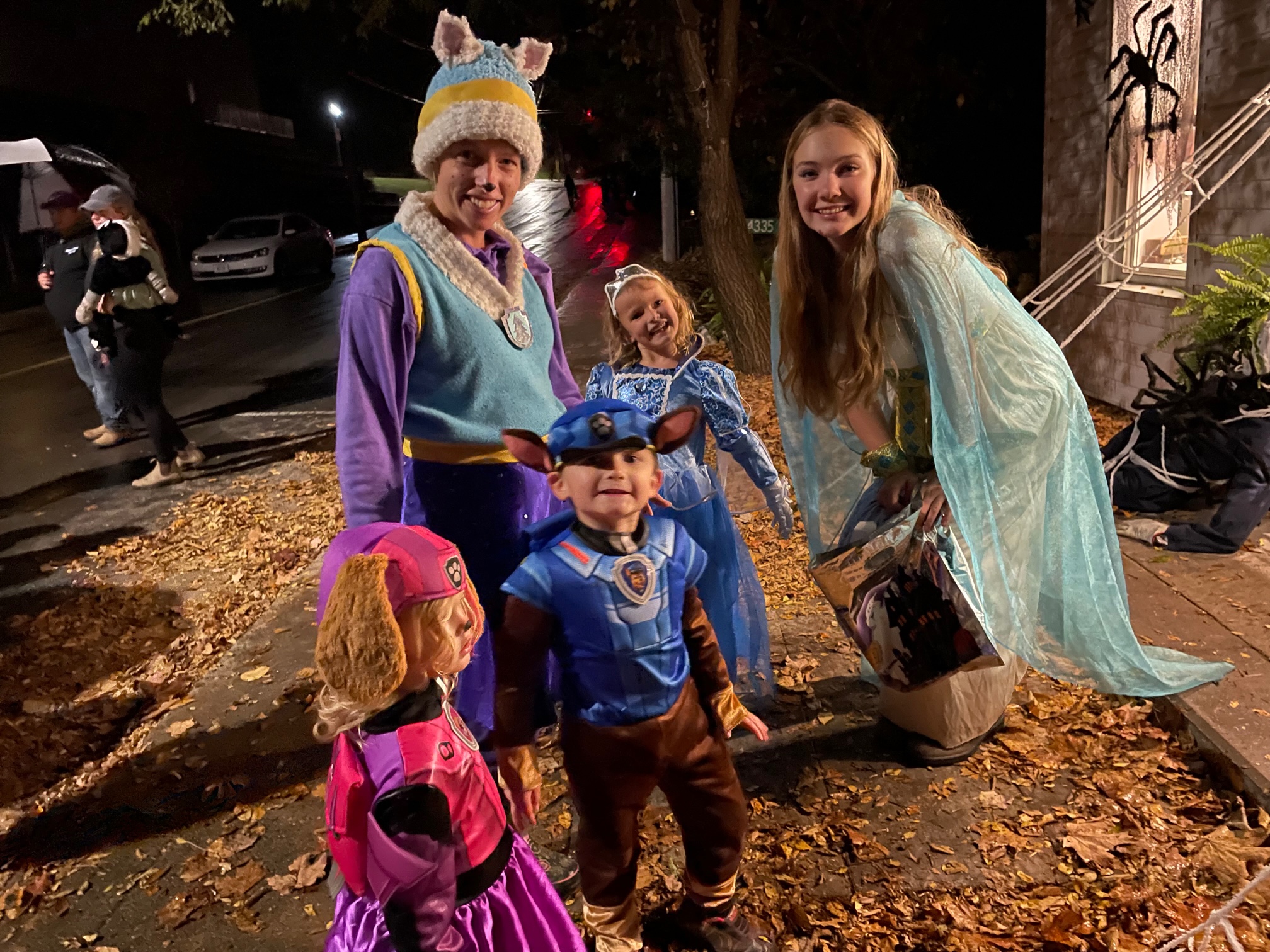
Clare trick or treating with the neighbours’ kids this year
I watched Bad Mom’s Christmas last week. There’s a line in the movie when Moms Amy, Kiki and Carla rebel against the pressure of trying to create the perfect Christmas for their families and declare they are “taking back Christmas”.
I’m not sure at what point Christmas became a thing we needed to take back. If I had to pinpoint a timeframe, I’d say somewhere in the early 2000s, when gifts spiralled into electronics costing hundreds and thousands of dollars, pre-lit trees made an appearance, and suddenly decorating your yard became a Griswold-like affair.
Wise man Dave especially hates how commercialized Christmas has become. I’m still a lover of the holiday season, but admit I sometimes feel the pressure of finding the perfect gift, and especially this year, finding time to decorate, bake, send out cards and all the trappings and wrappings of Christmas.
So this year, I’m pledging to Marie-Kondo-the-flock-of-sheep out of Christmas by only doing things that bring me joy.
This is what brings me joy over the holidays:
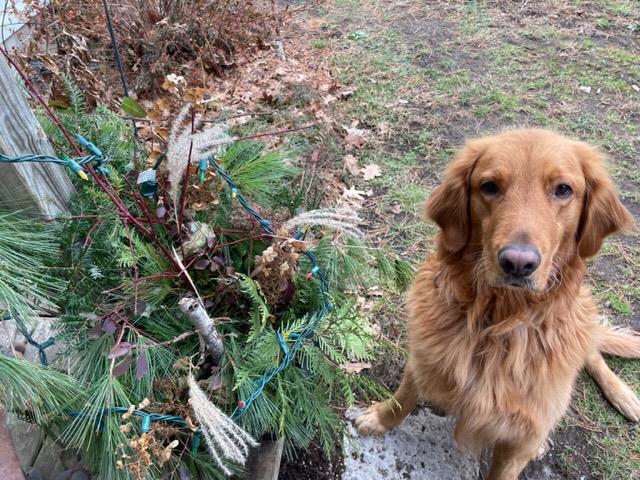
Collecting pine boughs and decorating festive urns (what doesn’t bring me joy? When Bentley eats all the twigs with the red berries I picked)
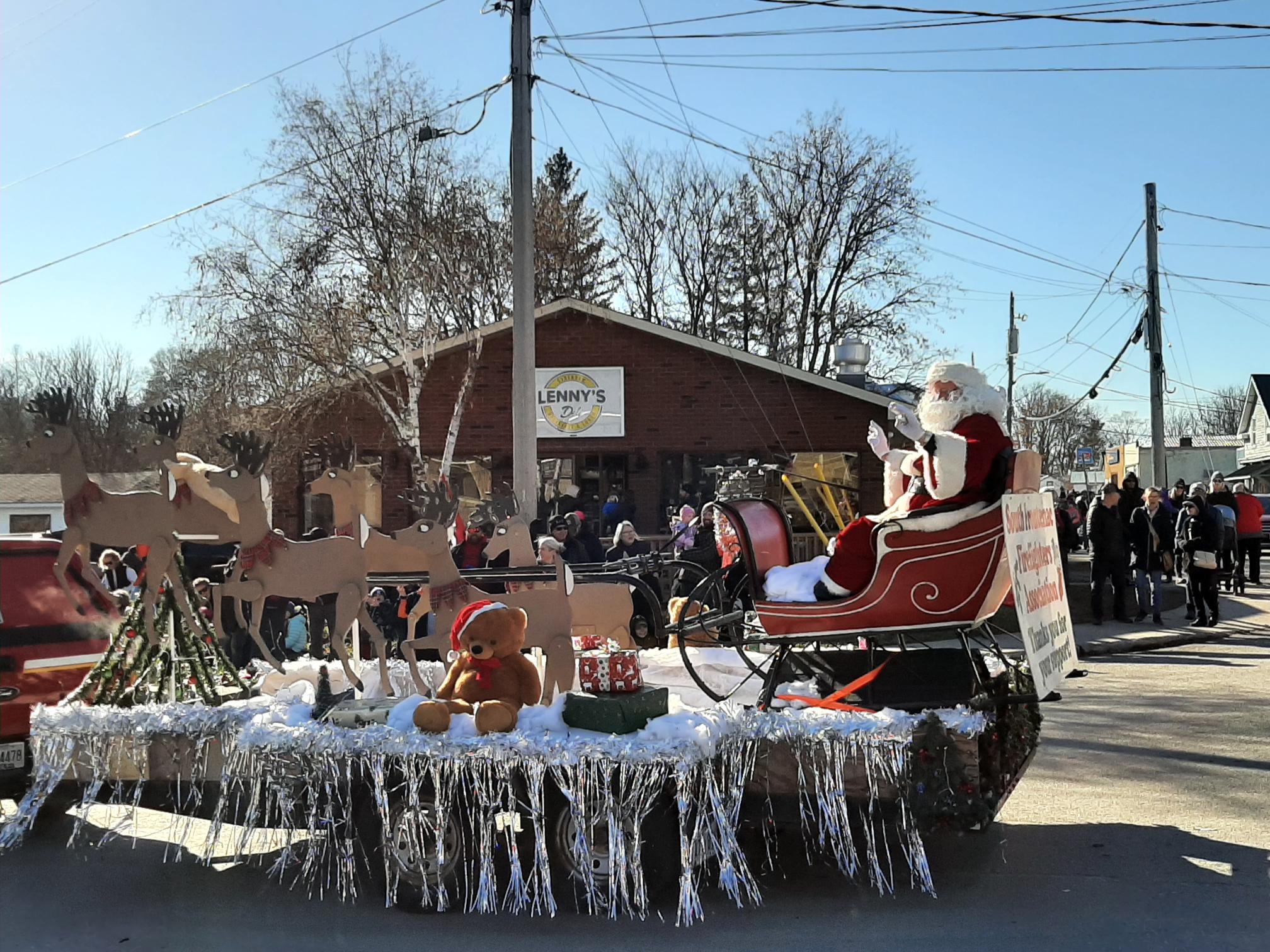
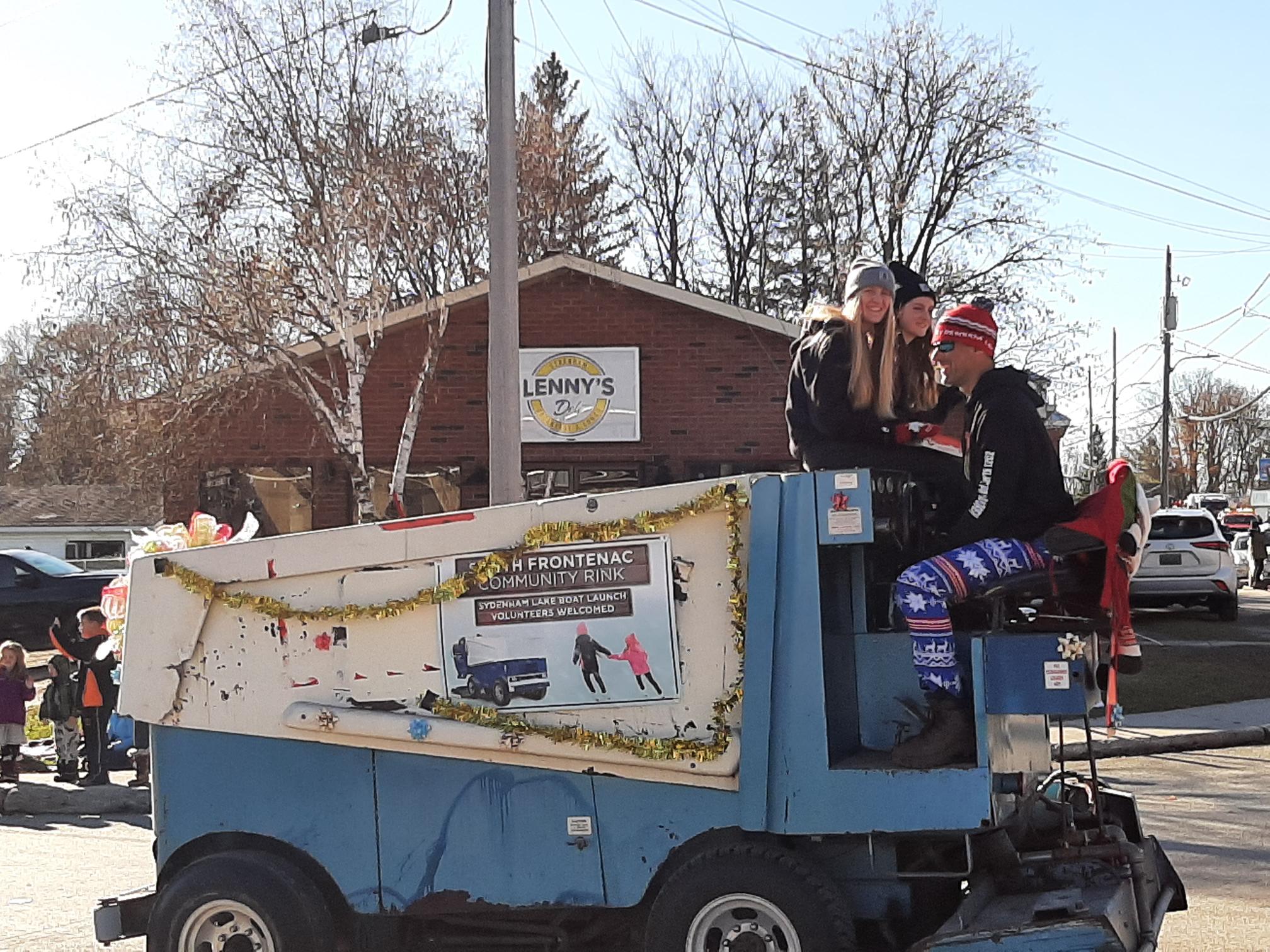
Watching a small town Santa Claus parade—highlights this year were the unicycle club from the local high school, seeing our friend Jay ride the beat up Zamboni they use to clear Sydenham Lake rink, and of course the jolly old elf himself—even Dave was singing Christmas carols
Going to a church cantata or concert and listening to holiday music
Watching Christmas movies eating homemade caramel corn in front of a crackling fire and festive tree
Getting together with the neighbours and of course, spending time with family
You’ll note shopping and wrapping didn’t make my nice list, so I think I’ll cut back this year.
So who’s with me? This week’s #HappyAct is to take back Christmas or Hannukah, or whatever you celebrate. Seek joy and peace this holiday season and avoid the trappings.
“Do things for people not because of who they are or what they do in return, but because of who you are.” – Harold S. Kushner, prominent American rabbi, and author.
Today is World Kindness Day, a day to celebrate and promote good deeds and kindness. Last week I reflected on the state of kindness in the world in “Take the high road”. This week, I’m adjuring all of us to do one #KindAct to spread happiness and kindness in the world. Here are some ideas on how you can kind it forward:
Ways to kind it forward
Reach out to a friend or family member you haven’t spoken to in a while.
If there’s been a rift, forgive them. Apologize and be a good listener.
It seems everyone is sick with some kind of cold or flu right now. Take someone who’s feeling under the weather a bowl of soup, magazine or some baked goods.
Many communities right now are holding food drives for their local food bank. I spoke to our local food bank the other day and their shelves are desperately low and they anticipate higher demand with food prices soaring. South Frontenac Township is holding a food drive during the whole month of November. You can drop off items at the arena, 4432 George Street or 2490 Keeley Road.
This one’s my favourite: do a random act of kindness that will make someone’s day, like buy a coffee for the next person in line or the drive-through or leave a beautiful card with an inspirational saying in a neighbour’s mailbox.
Hug your family and tell them you love them.
Be kind to yourself.
Kindness isn’t a day. It isn’t a single act. It defines who we are as individuals and a society and who we aspire to be.
The best way we can make the world more kind is simply engaging, listening and caring for others.
What will your act of kindness be today? More importantly, what will it be tomorrow, and the next day, and the day after that? Leave a comment—I’d love to hear about how your day went.
Is it just me, or does it feel like nobody takes the high road anymore?
Last week, I was out for my lunchtime walk, and I came across an altercation at the local high school. There was an older student on the one side of the road screaming at two kids across the road. The language was deplorable but it was the intensity and hatred that made me stop in my tracks.
I wasn’t sure whether I should intervene, or just mind my own business and keep walking. I was concerned it could escalate into something far more serious. I hesitated for about half a minute, then walked up to the girl who was yelling and swearing and her friends, asking if there was a problem and whether I could help.
The girl glared at me and said, “Those two have been staring at me non-stop for the past three days. They needed to be put in their place.” She had other choice words for the two kids that I won’t repeat here.
Now, I don’t know what transpired between these two groups of kids, and I know it’s high school, but I will say this whole incident really disturbed me.
First, I can tell you I never once spoke to anyone like that in high school. Sure, there were cliques and kids who didn’t like each other and didn’t get along, but you mainly stuck with your own friends and avoided them. No one ever stood in a street and hurled vitriole and swear words at the top of their lungs for the whole world to witness.
Second, this girl said these kids had been “staring” at her for the past three days. If that was their biggest crime, I can only imagine how this girl will cope some day when she experiences real conflict at home, with her friends or in the workplace.
I think what upset me the most though was this girl thought it was OK to act and speak like that. In fact, not only did she defend herself and her actions, she took pride in her response, saying someone had to stand up to them, they deserved it.
I just couldn’t stop thinking, if this is what our kids think is normal and acceptable behaviour, what hope do we have as a society of being kind to each other and battling the divisiveness that seems to be permeating our culture?
To me, it’s simple. You never know what people are dealing with in their lives. That’s why you should always take the high road and turn the other cheek.
It comes down to two basic tenets: treat others with kindness and respect.
This week’s #HappyAct is to always take the high road. Have a kind week.
If you look around, there are signs everywhere but sadly, not many people stop and read them.
I do, I always have. I’m not sure if it’s the historian in me, or just an innate curiousity–I figure if someone thought it was important enough to erect a sign in a certain place, then it’s worth reading. It’s a trait that drives my family crazy.
On Friday, I went for my usual pre-game walk in Carleton Place before Clare’s hockey game. I was familiar with Carleton Place because Clare had competed in regattas there many times, but the arena was in a different part of town.
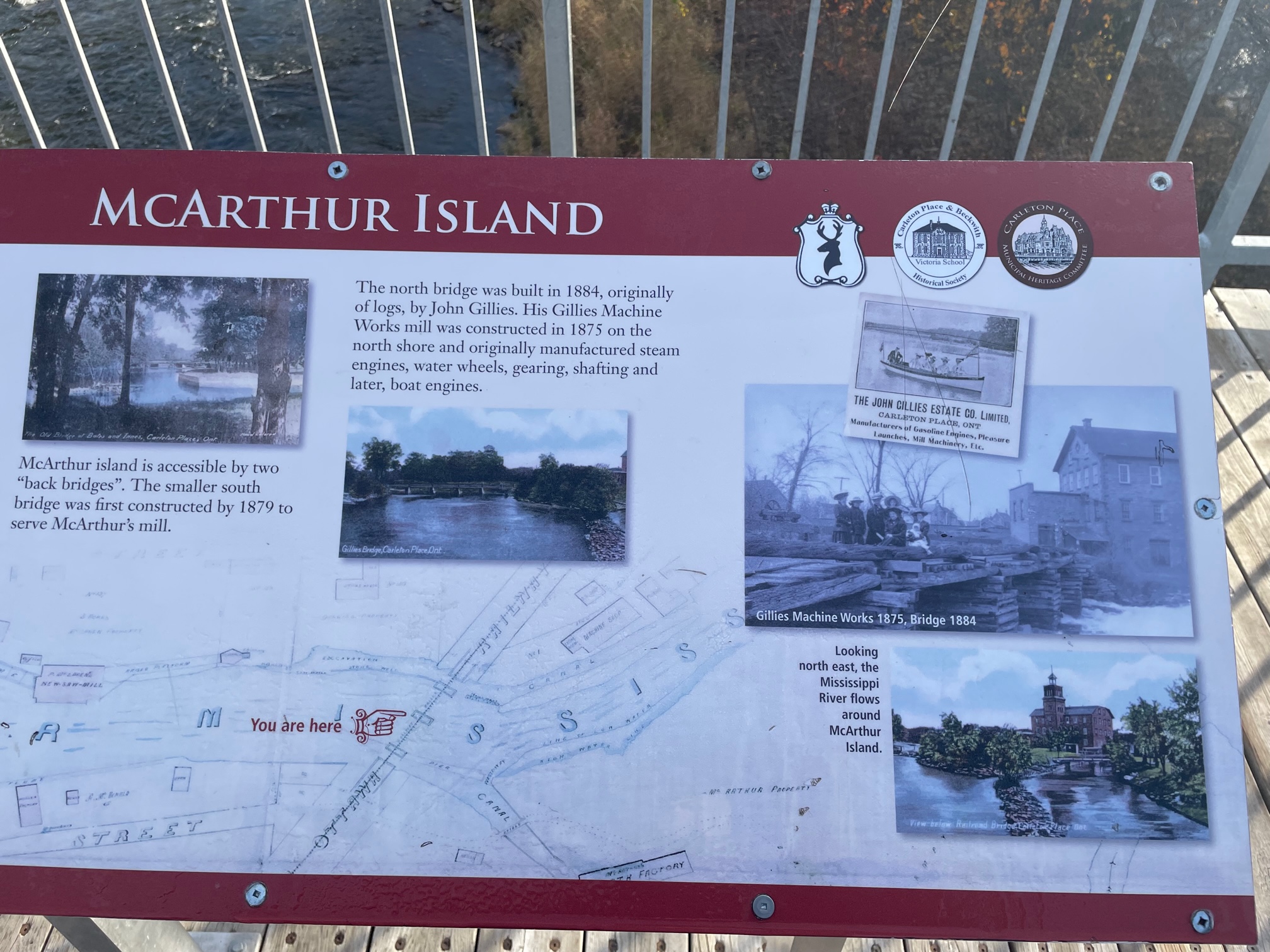
I started walking on a section of the Trans Canada Trail and came across a bridge that spanned the Mississippi River. There were several interpretive signs on the bridge, so I stopped to read them. Directly across from me was another bridge named Gillies Bridge in honour of John Gillies who built it in 1884.
John Gillies was the name of my father. Not the same John Gillies who built the bridge, and no relation to my knowledge, but it immediately caught my interest.
According to the Lanark County tourism website, lumber was king in the Ottawa Valley in the nineteenth century and John Gillies “was one of the industry’s crown princes”. He acquired the first sawmill in Carleton Place in 1866 and built the operation to employ 200-300 men to produce more than 20 million feet of board lumber a year. His mills eventually covered 300 square miles and spanned the greater part of six townships.
His Gillies Machine Works was his retirement project. After selling his mill operation, he built the Machine Works in 1875, manufacturing steam engines, water wheels, gearing, shafting and boat engines.
I thought this was ironic given Dave’s and mine luck with boat motors.
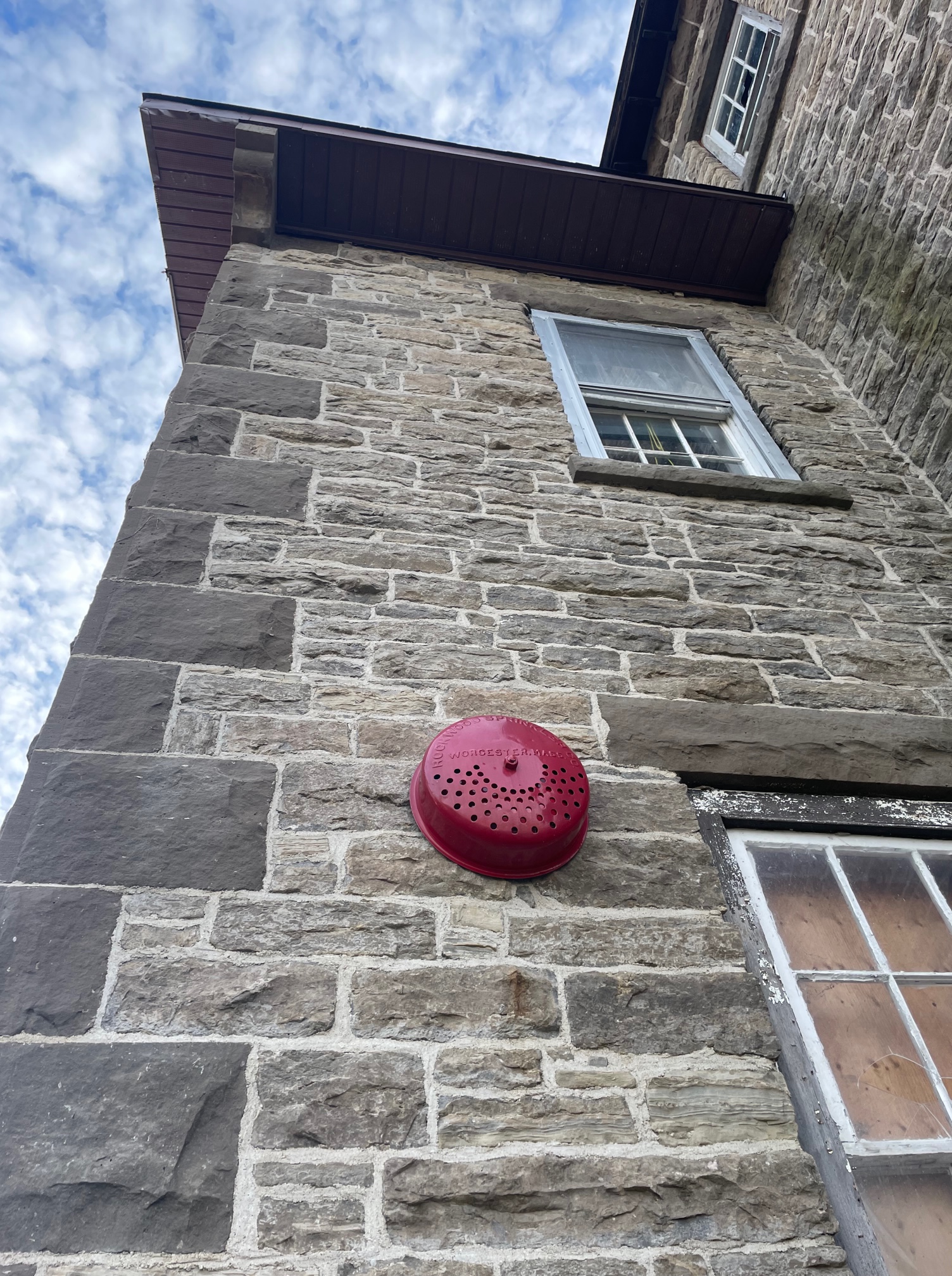
I stopped to admire the old abandoned millworks on the island, and then kept strolling, taking pictures of the old stone buildings since it was such a gorgeous sunny morning.
It was interesting to read about this famous namesake, and in a strange way, made me feel closer to my Dad, who has been gone for more than 20 years.
This week’s #HappyAct is to stop and read the signs some time. You never know what you’ll discover.
The tributes for Her Majesty Queen Elizabeth II continue to pour in. Despite differing opinions on the institution of the monarchy and legacy of colonialism, the world seems united in celebrating a remarkable woman who dedicated her life to public service and who for 70 years was a stable, reassuring presence in turbulent times.
I’ve been thinking quite a bit lately of what it means to live a life of service. Ghandi once said, “The best way to find yourself is to lose yourself in the service of others.”
Most of us live a life of service in small ways, as parents, good neighbours and community members, and in some cases, in our career choices. Health care providers, first responders and elected officials all dedicate their lives to helping or serving others. But for many of us, the concept of living a life of service is not how we would describe our day-to-day life or even our purpose in life.
Living a life of service is different than having purpose. You can have purpose, a passion or focus that makes you happy and feel alive but doesn’t involve serving others.
The world and the people in it seem a bit lost these days. Perhaps the best way to find ourselves again is to be more intentional in leading a life of service.
The West is beautiful, but you can’t beat the warmth, humour and light o’ life attitude of Easterners.
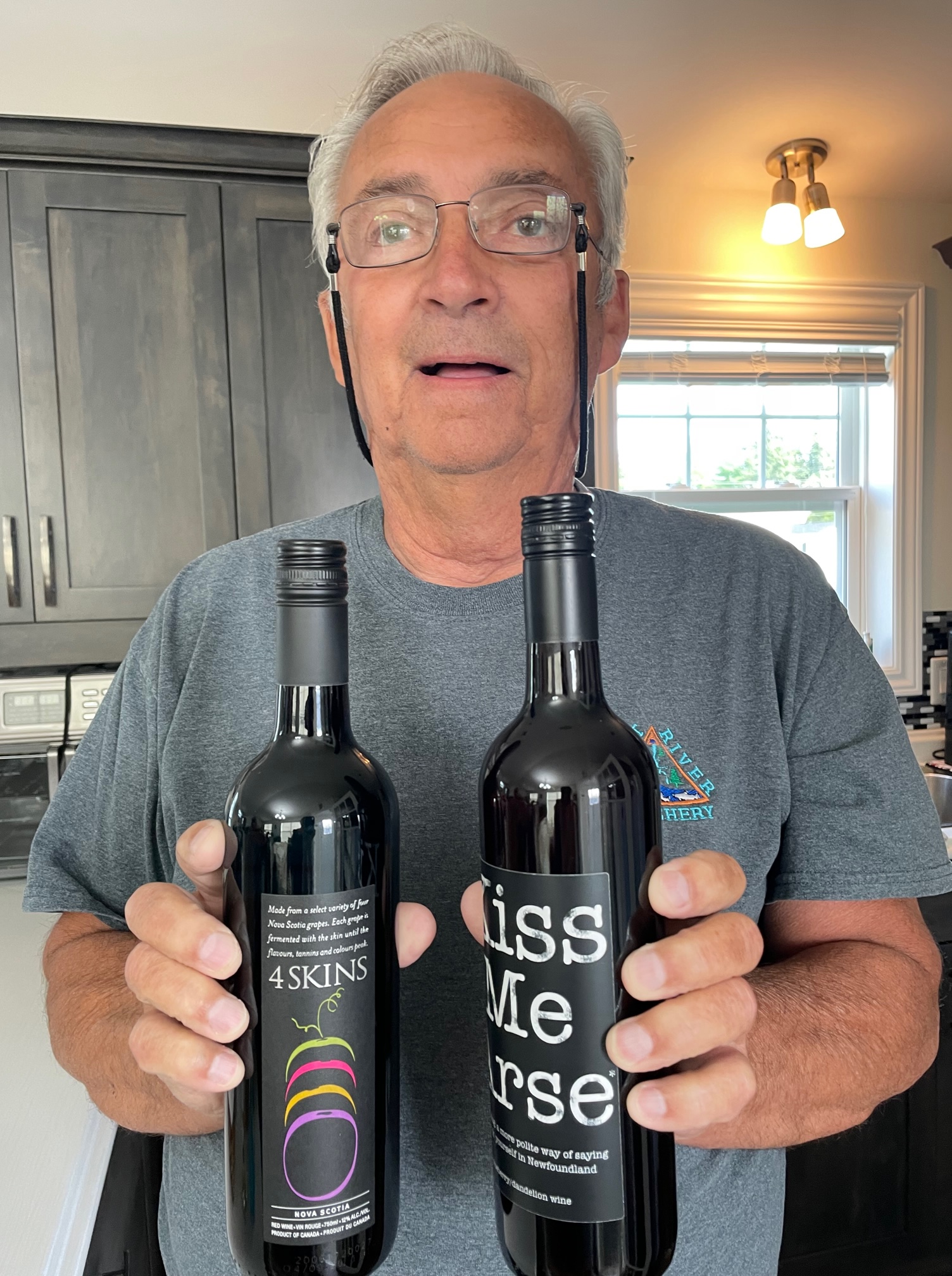
When we arrived in Antigonish a few weeks ago to spend a few days with Danette’s parents, her Dad Terry greeted us with a big hug and holding two bottles of wine in his hands, Four Skins and Kiss Me Arse.
The next day Terry walked out wearing a t-shirt that said, “It’s all shits and giggles until someone giggles and shits”.
We visited one little fishing wharf where every building had a funny sign on it, some even upside down. There was The Lost and Found Bouys shack and the Little River Fisheries and Heritage Museum, Closed for Innovations.
We sure had lots of giggles on our trip and thankfully not the shits. We learned “The older the crab, the tougher its claws” and if someone was running late, they were “off like a herd of turtles”.
Yes, we can all learn a thing or two about keeping life light and happy from our friends down east. And remember, if yer not happy where yer is, yer never will be happy where yer to.
Volunteers Kristine Erdman, France Spence and Anne Newell at Kingston’s Food Redistribution Warehouse
This week I want to tell you about a community success story.
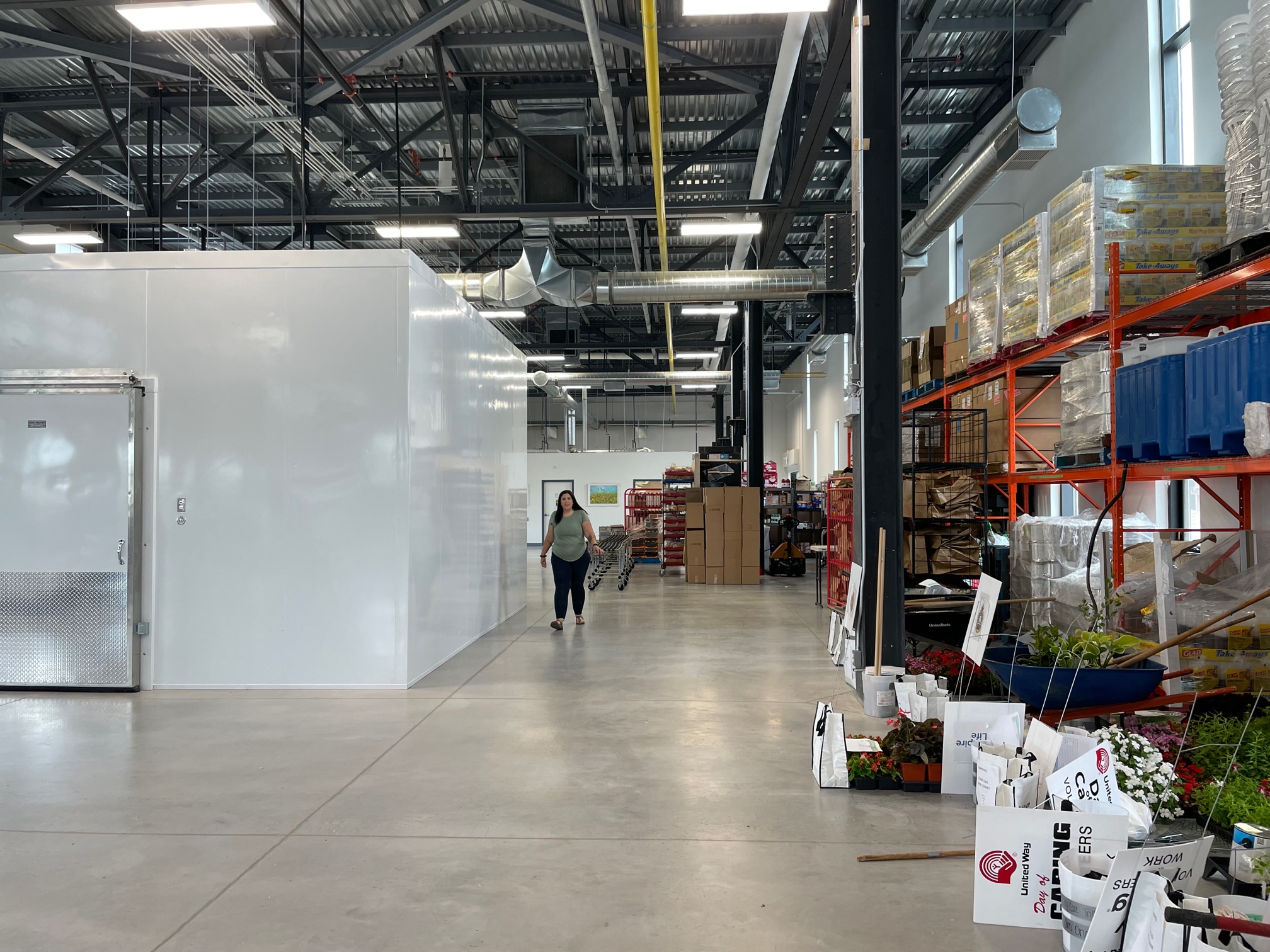
For the past few days, I’ve been working at an amazing facility here in Kingston called the Community Food Redistribution Warehouse. The warehouse officially opened its doors in March and has quickly become a critical hub for collecting and redistributing food to those in need in our community.
I was at the warehouse all day on Wednesday. It was a constant hub of activity with trucks delivering entire skids of oranges, fresh berries, bread and other perishable supplies. I watched a truckload of milk being wheeled into their massive industrial freezers, ready to go to places like the Boys and Girls Club of Kingston and other agencies serving meals in the city. On Tuesday nights, they have a “bread group” that collects all the leftover bread from Cobb’s Bread and brings it to the warehouse.
The warehouse was the brainchild of a dedicated group of partners in Kingston which included the City of Kingston, United Way, Kingston Community Health Centres and Lionhearts who recognized the growing risk to food insecurity during the global pandemic.
Kingston’s Community Food Redistribution Warehouse. The large white structure on the left with the silver doors is one of their massive freezers.
I talked to Shawn Seargeant, Manager, Operations at Lionhearts when I was there. Lionhearts was founded in Kingston in 2014 by a group of community-minded individuals who wanted to help marginalized people in our community. They started serving 50 meals a day which quickly multiplied to 150 meals a day, then 400 meals a day at four different locations during the pandemic.
Shawn said the warehouse has been a godsend. They now have the facilities to take in excess food from restaurants and suppliers across the city, store it properly and redistribute it to agencies and programs in our community.
I asked Shawn and a few other people working there if other cities or centres had a warehouse like this. Guelph, with its large agricultural base has something similar, but for the most part Kingston is one of the few cities on the leading edge of solving the problem of food insecurity and providing universal access to food.
Before I left on Friday, I wandered into another section of the 11,000 square foot warehouse and found my friend France sorting vegetables and fruit with two other dedicated volunteers. France told me she loves working at the warehouse a few hours, three times a week—the volunteers there are a big family. I thanked them for making a difference in our community.
This week’s #HappyAct is to learn more about food insecurity in your community and help be a part of the solution. Here are a few ideas:
Grow your own fruit and vegetables in patio containers—donate extra produce to a neighbour, colleague or local charity.
Make a food donation to your local food bank. Summer is typically a time when the shelves start to empty out.
Build a food lending library in your neighbourhood. Stock it with extra fresh produce, or dried goods, free for the taking.
Roll up your sleeves and spend an hour or two working at your local community garden. Most neighbourhood cities have community gardens now that grow and supply fruit and vegetables to local food banks.
Support your local farmer’s markets—buy and shop local.
Be grateful every day for the food on your table and reduce food waste in your household.
If you’d like to learn more about the incredible work Lionhearts is doing, watch this video…
Street art installation on the Waterfront Trail at the Cataraqui Riverin Kingston
About a month ago, I started a new job. One of the perks of changing jobs is I’ve been able to explore a new area of Kingston on my daily walks at lunch.
This isn’t the touristy part of the Kingston. You won’t find photos of the north side of Princess Street in the glossy travel brochures, but I‘ve found my new little neighbourhood has heart and soul in spades and is full of hidden gems.
My first stroll took me down the Waterfront Trail along the Cataraqui River near the old Woolen Mill. There were dozens of swans gracefully swimming in the river, and turtles basking in the sunshine on the shore. A group of school girls were having their photos taken on the big grassy area by the water and people were out jogging and walking their dogs.
Across the trail was a street art installation with the most amazing graffiti. The sign said people were free to paint over any of the sections, but you could tell the graffiti had been there for some time.
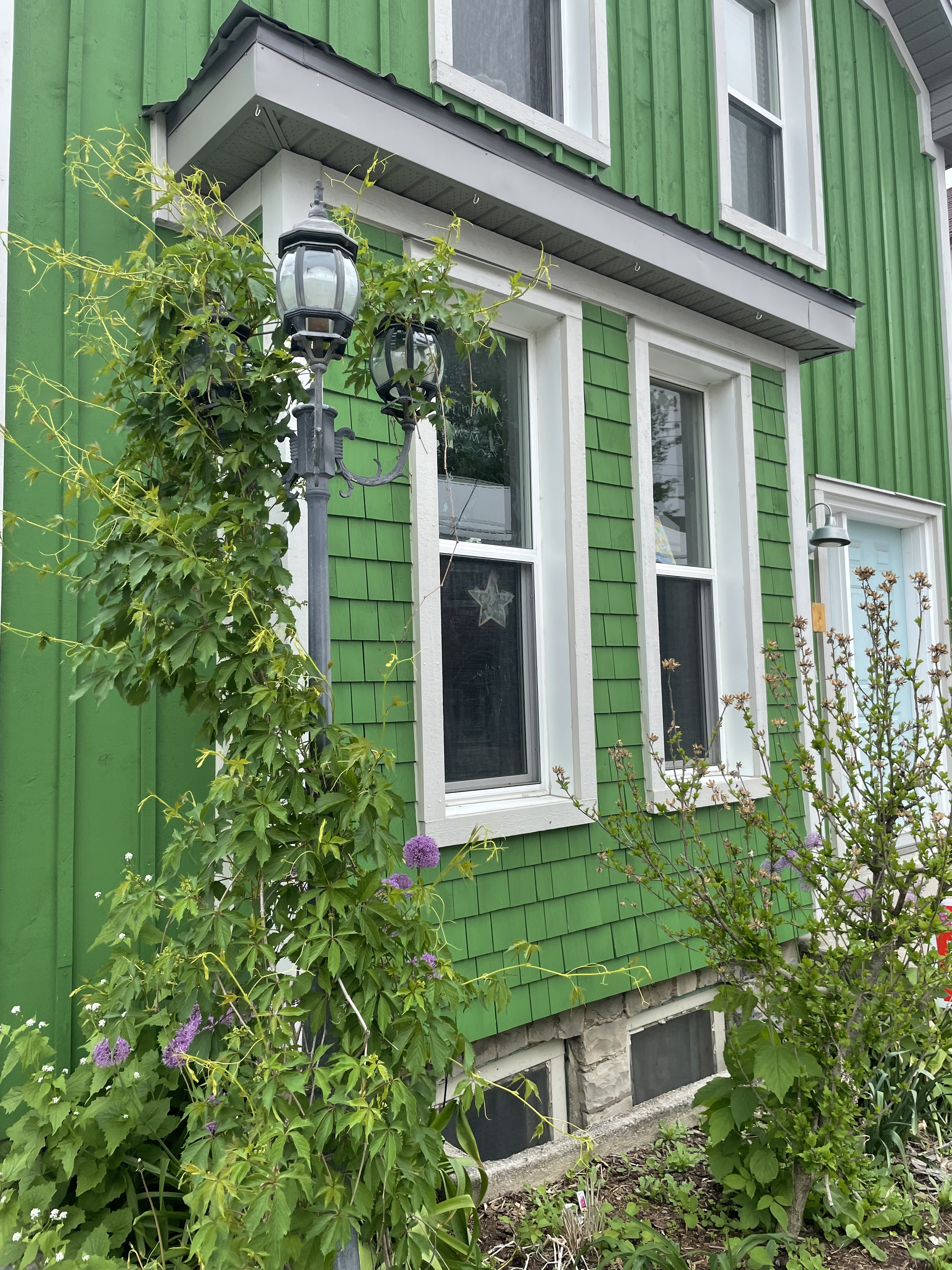
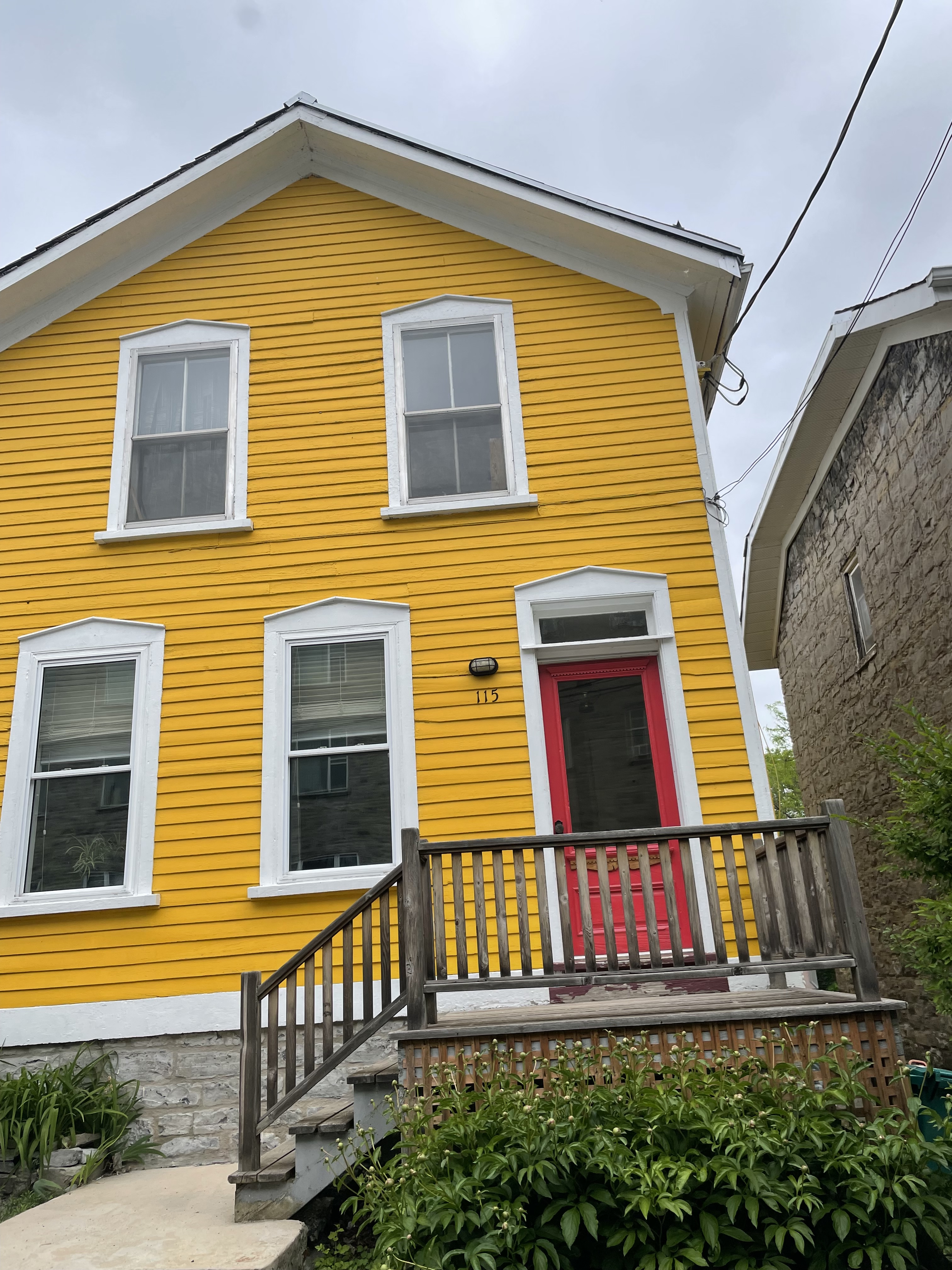
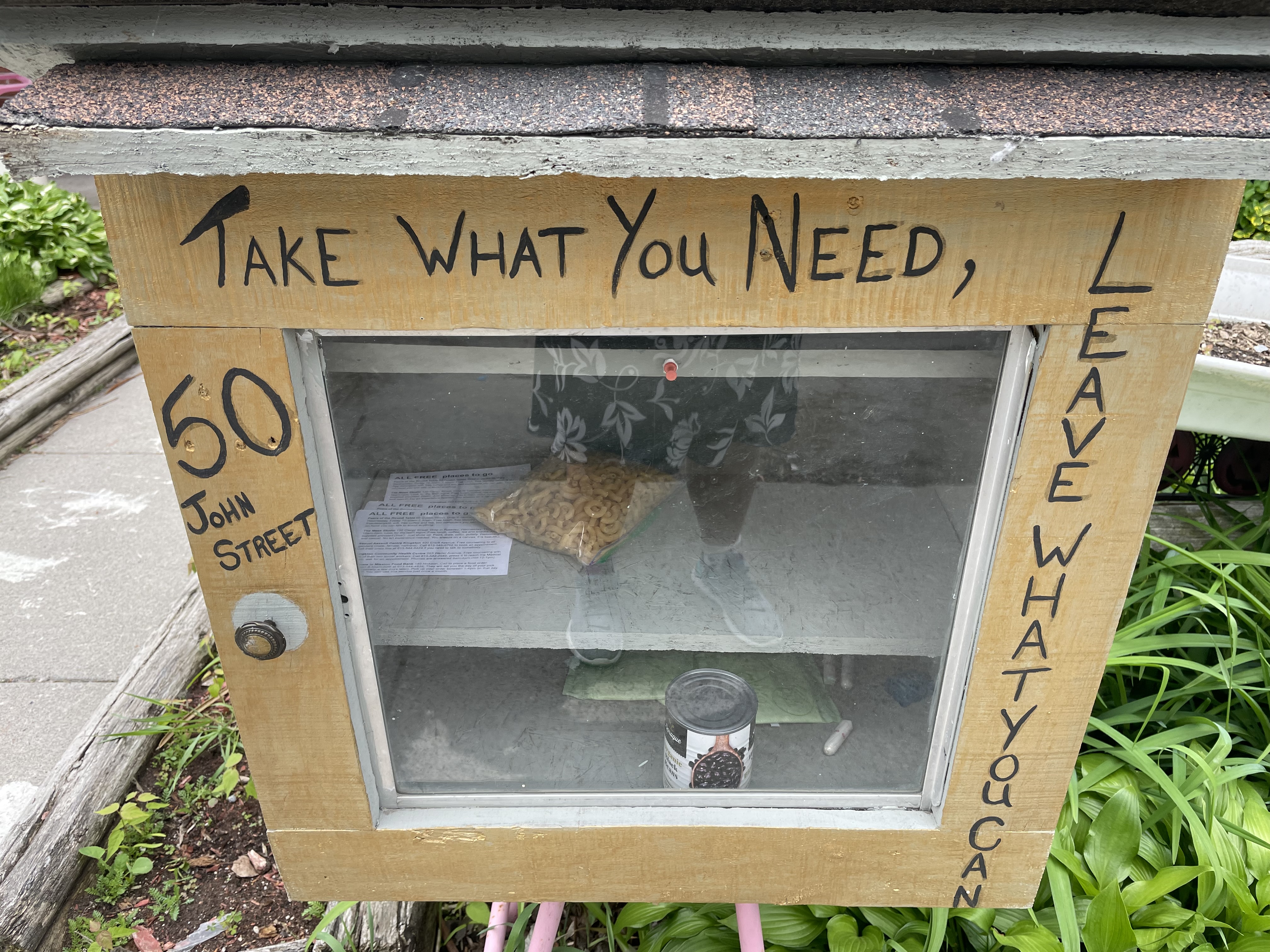
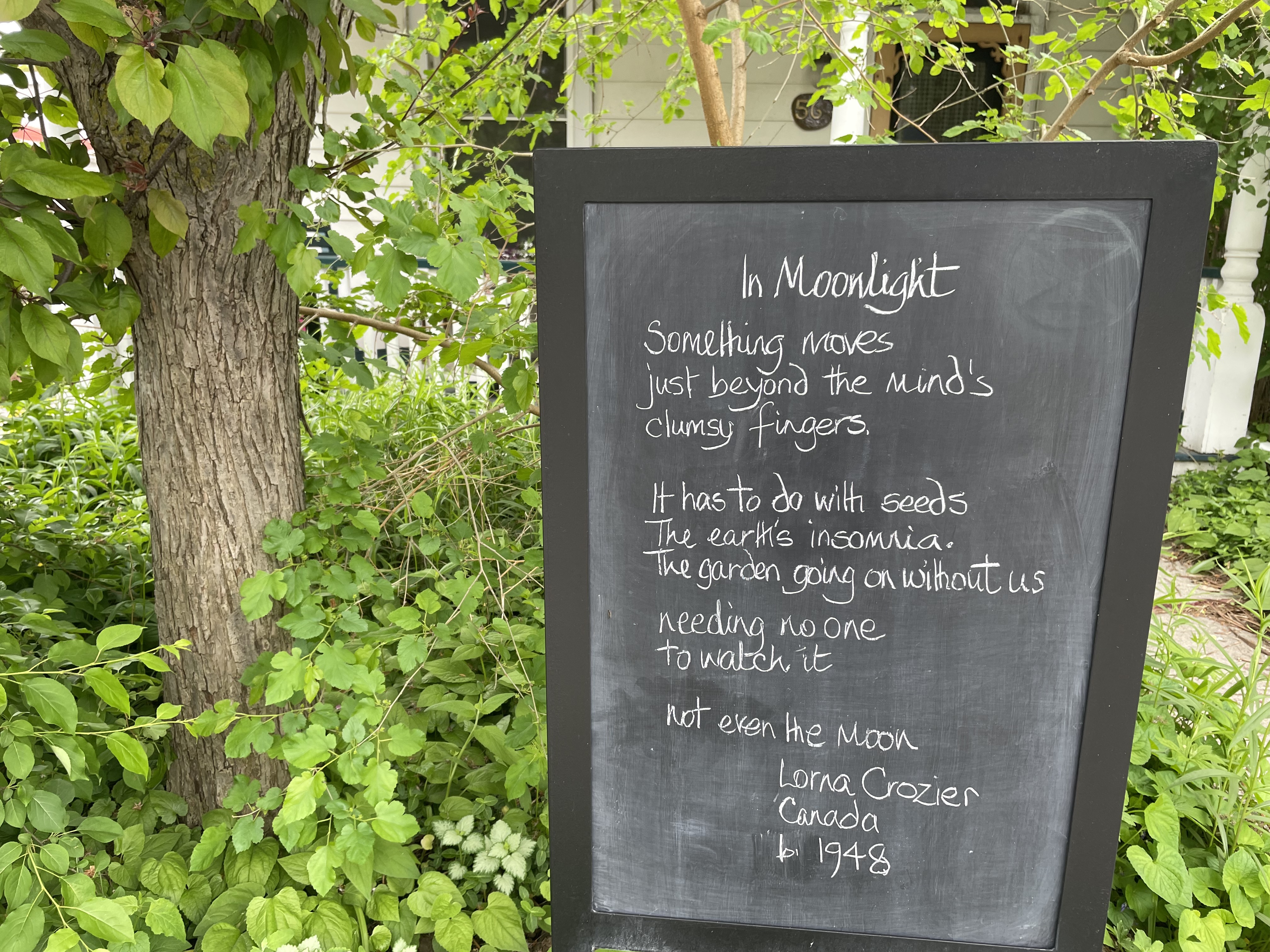
The next day I walked up some of the back streets, past brightly coloured orange, yellow and green houses like you’d find in Newfoundland or Nova Scotia, and homes with kiosks out front saying, “Take what you need, leave what you can”. I found a poetry garden with a poem by Lorna Crozier and sidewalks with chalk signs that offered up lemonade and free dog biscuits.
Another day, I was walking along Rideau Street and saw a young woman walking a dog with gorgeous black, brown and white markings. The dog promptly stopped and sat down at the corner. I was curious why the dog stopped so I stood and watched. The girl looked over and smiled and waited.
The door to a house across the street swung open and another young woman emerged and crossed the road with a plastic bag full of dog treats. It was clear this was a daily routine. It was a beautiful moment that I felt lucky to witness that showed how deep and caring the connections were in my new neck of the woods.
This week’s #HappyAct is to explore a new area of your city. You never know what hidden gems and stories you may find.













 Happy Act