Happier Together

child smiling in Kinshasa

This Wednesday, March 20 is the International Day of Happiness. The day was declared by the UN in 2012 to recognize that happiness is a fundamental human right and to encourage nations and individuals to spread happiness and make happiness a priority.

The theme the UN has chosen this year is #HappierTogether. Here is a picture from their photo album of people from all over the world smiling, happier together.

It’s such a poignant theme. As individuals and societies, we’ve withdrawn from human connection, partly out of necessity from COVID-19, but also self-imposed.

Technology has only exacerbated this trend. We delude ourselves into thinking we’re more connected now by cell phones and technology, but these devices have somehow divided us, becoming platforms for discordant voices and viewpoints or have become something we hide behind instead of doing the real work of connecting with people in person.

Even our work lives have become more isolating with millions of workers now not even leaving their homes to experience human connection.

There are certain groups that are at higher risk of being unhappy in isolation, seniors and youth being two critical demographics.

After COVID, I blogged about “languishing” and wondering why I wasn’t chomping at the bit to get out and reconnect with people again. I concluded that it wasn’t because I had social anxiety and didn’t miss people, I just didn’t have the energy to re-enter the world.

It’s time. Time for us to reach out, be kind to each other, and understand that without human connection, most of us will never truly be happy.

It’s time to find the energy and make a conscious effort to be happier together.

This week’s #HappyAct is to do something to be happier together. Volunteer in your community, invite a neighbour over for a drink, check in on a senior. Post a picture of you smiling this week with people who make you happy and who you enjoy spending time with.

Happy International Day of Happiness!

My family smiling and acting goofy

Overcoming the anxiety that comes with age

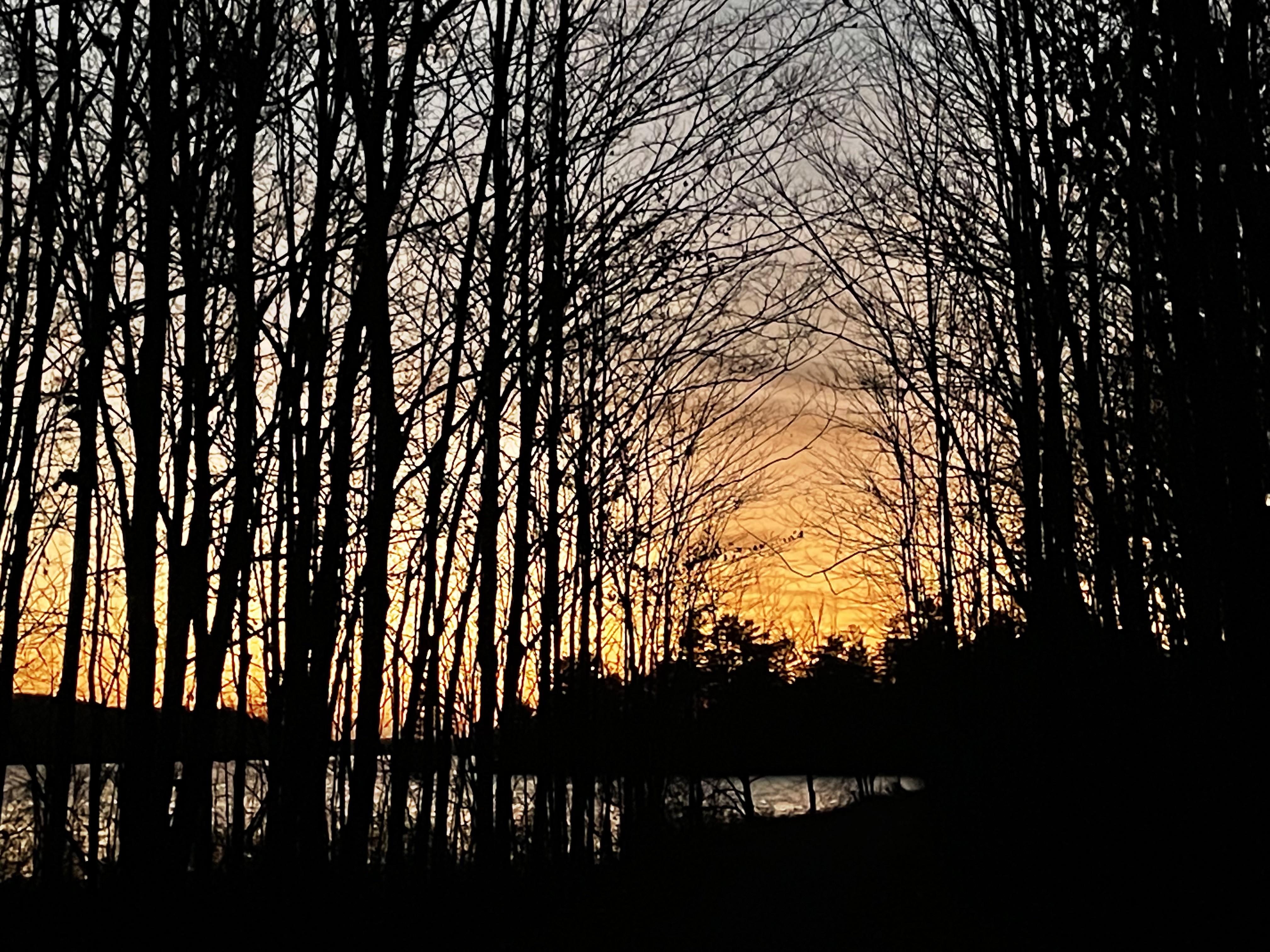
trees at night time

I’ve been a bit more nervous walking at night lately. It’s the strangest feeling and new to me since I’ve always been very comfortable walking at night.

I’m not sure why. Maybe it’s because the coyotes have been very active, with their eerie howls cutting through the stillness of winter nights from across the lake.

For whatever reason, for the first few minutes walking, I’ve felt anxious so I’ve started taking my phone with me. At least this way if I slip and fall and break my other ankle, or the coyotes attack me, they’ll be able to call Dave and let him know where to find my carcass.

As we age, it is only natural to become more tentative and anxious. A few years ago, I had lunch with an elderly friend, and they confessed that for the first time in their life, they were stricken with anxiety. They had confided to their minister, and found talking about it helped, but it was uncharted territory for them and you could tell it had thrown them for a loop.

I’ve never been a worrier—I’ve always considered it a blessing that if Dave was late when the weather was bad or my kids were out god knows where, I never worried about them. But as I age, anxiety is slowly creeping into my psyche bit by bit. I find I need to make a conscious effort to fight through it using deep breathing techniques, telling myself not to worry, and redirecting my thoughts. 

Back to my nightly walks…on the nights when I do feel a bit anxious, I power walk through it. With each step, the tiny morsels of fear in my brain recede, and I embrace and revel in the beauty of the night, the magnificent stars in the sky, and the black silhouettes of the pine trees illuminated by the soft glow of the moon.

I stop and listen for sounds of the woods. There is stillness all around me. I hear an owl swooping up into the trees. His mate hoots in the distance. I am calm and the feeling of anxiety has passed.

Now if the coyotes would just stop howling…

Me and Elmo sending hugs

Elmo from Sesame Street

A few days after Bell Let’s Talk Day, everyone’s favourite furry monster from Sesame Street, Elmo asked a simple 9-word question on Twitter (X): “Elmo is just checking in! How is everybody doing?”

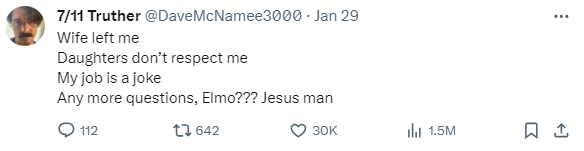
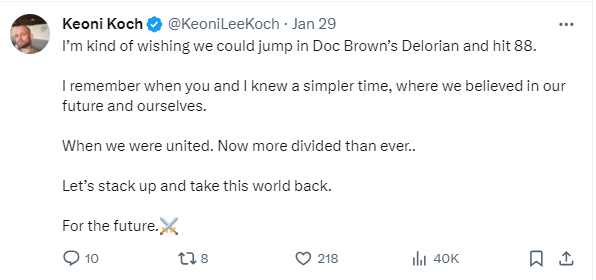
It unleashed a tidal wave of responses, over 55,000 to be exact including celebrities like Chance the Rapper and Rainn Wilson and the usual brands trying to capitalize on what’s trending. They were raw, sad, and hurting. Here were some of the replies.

man's tweet about his wife left him
Oreo cookie tweet "ran out of milk"
Man's tweet about being depressed and broke
man's tweet asking Elmo if he has a mortgage
man's tweet saying he feels like oscar the grouch
Rainn Wilson's response to elmo of being at a crossroads
man's response to Elmo
Depressed winnie the pooh
Dominos pizza oven on fire

As I was reading the comments of people pouring their hearts and souls onto the page, I felt tears well up in my eyes. How can there be so many people feeling so sad and hopeless in the world? Even the brands didn’t try to sugar coat it with Oreo leading the pack saying we ran out of milk.

The one that resonated with me the most was the GIF of a stick character in fast motion getting out of bed, going to their computer, working all day, then going back to bed and doing it over and over again. That’s the way I felt when I was working from home during COVID.

Elmo sent this beautiful note to everyone who took the time to respond:

Elmo saying he's glad he asked and checked in on people

So to all of you reading this who may be feeling sad or disheartened right now, me and Elmo send hugs. I’m giving out free hugs all this week to anyone I see who needs one (the best Valentine’s Day present someone can give).  

Here’s to sunnier days, sweeping the clouds away where the air is sweet, friendly neighbours meet and every door opens wide to happy people like you and me.

Love Laurie and Elmo

The High Beams Story

quote "Give compassion, every day the average person fights epic battles never told just to survive"

If I had one wish for 2024, it would be for the world to be more compassionate.

Yesterday when we were driving to Cobourg for hockey, there was a person driving a bit erratically. As we passed them on the highway, I looked over, expecting to see someone on their phone and noticed they looked distressed.


We started talking about a post we’d seen on our local community Facebook group about high beams. Someone posted an apology to people driving on the highway the night before, saying they just had their new car in for servicing and something happened and they couldn’t unlock their high beams so they were blinding everyone on the drive home. Apparently it’s a known issue with a certain make and model of car.


I can only imagine how many people that night were cursing under their breath, calling them an a**hole and worse, thinking they were doing it on purpose or were just a bad driver.


It’s a good reminder that you never know what is going on in a person’s life and to be compassionate.


So the next time someone is short with you or does something that ticks you off, remember they may be having a bad day or fraught with worry, or something else may be going on that deserves your compassion instead of your censure.


Remember the high beams story.

One simple thing you can do starting today to be happier

I’m a huge fan of TedTalks. Recently, I stumbled across one on the science of smiles by Ron Gutman, a professor from Stanford University whose mission is to help everyone live happier, healthier lives.

Gutman talks about a 30-year old study from the University of Berkeley, California that looked at old photos in school yearbooks and measured the success and well-being of the graduates throughout their lifetime based on their smiles. The students with the biggest smiles tended to lead more successful, well-rounded lives.

Another study involved looking at old baseball cards and the longevity of the ball players in correlation to the smiles on their cards. The ball players with the biggest smiles lived the longest.

Gutman says one-third of people smile more than 20 times a day, but sadly 14% of us smile less than 5 times per day. Children smile more than 400 times per day.

He claims smiling creates the same positive brain stimulation as eating up to 2,000 bars of chocolate!

Smiling is one of the most basic expressions of humans and something we all do every day.

This week’s #HappyAct is to make a conscious effort to smile at least 20 times a day this week and if you see someone sad, struggling or frowning, ask what’s wrong, tell them a joke, or do something to put a smile on their face.

Watch the full Ted Talk, the Hidden Power of Smiling.

Revisiting the four-day work week

Me and my friend Barbara in front of the Thornbury sign

Recently, I’ve moved to a four-day work week. Dave started working four days a week a year ago. It’s all part of our plan to eventually transition into retirement.

I’ve worked a four-day week one other time during my career. It was a short span of three months when the kids were little and we had many doctors and other medical appointments. It was a lifesaver—the perfect mix of having a rewarding, vibrant career, but having enough time to focus on my family and friends and get things done at home.

I can tell you I already feel a difference in both my mental and physical health.

I feel more well-rested, my brain feels like it has more space to breathe, and I’m taking time more slowly.

I’m no longer rushing through the weekend, trying to squeeze in a million things before Sunday night arrives and I have to steel myself up to do it all over again.

I’m making more plans to do the things I want to do, whether it’s having a coffee on a Friday with a friend (a luxury!), tackling a project, a long weekend away, or just spending time with Dave on little day trips here and there.

I’m getting more exercise and already feeling the positive benefits of not sitting at a desk 8 hours a day which has increasingly become more difficult and painful over the past several years.

Yes, I’m liking this four day a week thing.

Now if only more employers would wake up and realize the benefits of a four-day work week and make it happen. The world would be a happier place.

The photo above is a picture of me and my girlfriend Barbara on one of my first three-day weekends this summer when I went to visit her in Thornbury. Read about our day at the Thornbury Cider Company to see the Clark Drag Show

When the heart is heavy

heavy heart emoji

My heart has been heavy this past little while.

I’m fine and Dave and the girls are fine, but there are just too many people I care about that are getting kicked in the teeth by life right now. It’s making me feel overwhelmed and helpless.  

So what can you do when your happiness is being crushed by a heavy heart?

Hug your loved ones and tell them you love them every day.

Have a good cry if you need to.

Be grateful for friends, family, and the people who will be there when you need them most.

Try to find solace in the smallest joys and moments.

And bake a lot of banana bread*.

My heavy heart goes out to all of you right now, you know who you are.

*The banana bread reference is a funny story worth sharing to end this week’s blog with a smile, even if it is a sad smile. When my sister-in-law MaryAnne was sick, I brought food over every week for her and Mac. Their wonderful neighbours in Westport also dropped off meals and baked goods regularly. One day when I showed up with soup and some cookies, Mac said “As long as it isn’t another f**kin banana bread!”

Call a cottage day

deck chairs on a dock

On Friday, when the temperatures were forecasted to soar into the thirties, I said to Dave, “I’m calling a cottage day”.

You don’t need to actually own a cottage to call a cottage day. A cottage day is when you pretend you are at somebody else’s cottage, where there’s no laundry or chores calling your name and you spend the entire day lounging around, relaxing on the deck reading books, playing games, eating and drinking.

It’s a day where you give yourself permission to do whatever you want and not even think about housework or chores.

I slept in, read a magazine while eating my breakfast, did a few things around the house, then headed to the lake. I read my book on the dock, threw the ball endlessly for Benny in the lake, went for a long paddle and three long swims, before heading up to have lunch on the back deck.

After lunch, I took a nap in the screened porch, then we went to our local farmer’s market to stock up on fresh greens and bread for dinner. It was exactly what I needed and the perfect panacea after a busy week and month.

Years ago, after we got married, Dave and I had the great debate. Do we save and buy a cottage property, or buy a home on the water? Two big factors swayed us to our decision to buy a year-round waterfront home.

The first was we were both absolutely useless at home renovations, repairs and maintenance. The idea of maintaining two properties was just not in the cards for us.

The second was our decision to move out of the Greater Toronto Area to north of Kingston where lakefront properties abound. We made it a goal the minute we moved down here to own lakefront and bought our little piece of paradise six years later and have never looked back.

Now Dave’s favourite thing is to go fishing on Sunday nights after supper. When we’re out on the boat, he always says the same thing. “If we were up at a cottage, we’d be stuck in traffic right now driving back to the city.” Then he casts his line into the still waters, the setting sun casting a warm glow behind him, and turns to me and smiles.

The perfect end to the perfect cottage day.

This week’s #HappyAct is to call a cottage day. Enjoy!

Do it for you

Neil Pasricha's Happiness Equation

I’ve just finished reading two books, Neil Young’s biography Wage Heavy Peace and Neil Pasricha’s New York Times Bestseller from 2016, The Happiness Equation.

Both were great reads and even though they were very different books, the authors shared a common message: to be happy and successful in life, you have to do it for you.

I didn’t know much about Neil Young before I read his biography, other than he grew up in Omemee (pronounced Oh-me-me) outside of Peterborough and of course his music, since I’m a big fan.

To say he’s led an interesting, incredible life is an understatement, but I was surprised to learn of all the health challenges, personal tragedy and struggles he’s shared in his life from polio as a child, to back surgeries, grief and loss.

Throughout, music has been his inspiration, solace, escape and passion. I wasn’t aware of his other passions in life–his love of old cars, model trains and his quest to revolutionize sound by developing technology to restore the purity of records through his company Pona and interest in electric vehicles through his Lincvolt project. What an amazing guy.

Did he pursue any of these things because his record labels wanted him to, or to sell records or ingratiate himself with fans? No, he did it for himself.

Young insisted on festival seating for all his indoor shows, even though it meant less money for the band because he wanted people who were stoked to be there at the front of the stage instead of “rich folk on cell phones”, saying the feeling of the shows and experience for the band and audience was much better. He once had his manager rewrite the contracts for a tour already booked because they hadn’t included festival seating.

A writer once accused him of compiling his archives just to further his own legend “whatever that is”. He writes, “What a shallow existence that would be…” and then in classic Neil Young fashion, “it pissed me off.”

In The Happiness Equation, Parischa openly admits he was a victim of his own success early in his career, equating happiness with more book sales, speaking engagements and the number of hits on his blog.

Parischa talks about intrinsic and extrinsic motivators, saying the happiest people are driven by intrinsic motivation. They eschew the critics, the pressure to do what others want them to do, and they forge their own path. He quotes John Lennon who once famously said, “I’m not judging whether ‘I Am the Walrus’ is a better or worse than ‘Imagine’. It is for others to judge. I am doing it. I do. I don’t stand back and judge…I do.”

This week’s #HappyAct is to take it from the Neils and do it for you.

The Crap Joy Ratio

Penny Marshall quote, "If you're not having a good time, find something else that gives you some joy in life."

Sometimes you find inspiration in the least likely of places.

I often glance at the obituaries in my local newspaper. This morning, I was reading the obit from an accomplished doctor, Dr. Nicholas Evans. The caption under his photo read, “I have used my days well.”

He was Chief of Gastroenterology at The Toronto Western Hospital and a world leader in the research of the gut-brain interaction. What struck me the most was the majority of the column was devoted to his family and life outside of work. One paragraph in particular captured my attention.

His family wrote, “He shared his life-long belief in the ‘Joy/Crap’ ratio with generations of family, friends and colleagues in need of guidance. Everything in life can be distilled down to one simple question—does the crap outweigh the joy? If so, you have your answer, follow the joy, ditch the crap and change what you can to ensure the joy always outweighs the crap.”

So my friends, what is your crap/joy ratio? This week’s #HappyAct is to make one change to achieve a healthier ratio. Ditch the crap. Find the joy.

And if you need a smile, along the same vein of dealing with life’s crap: