Believe in the illusion

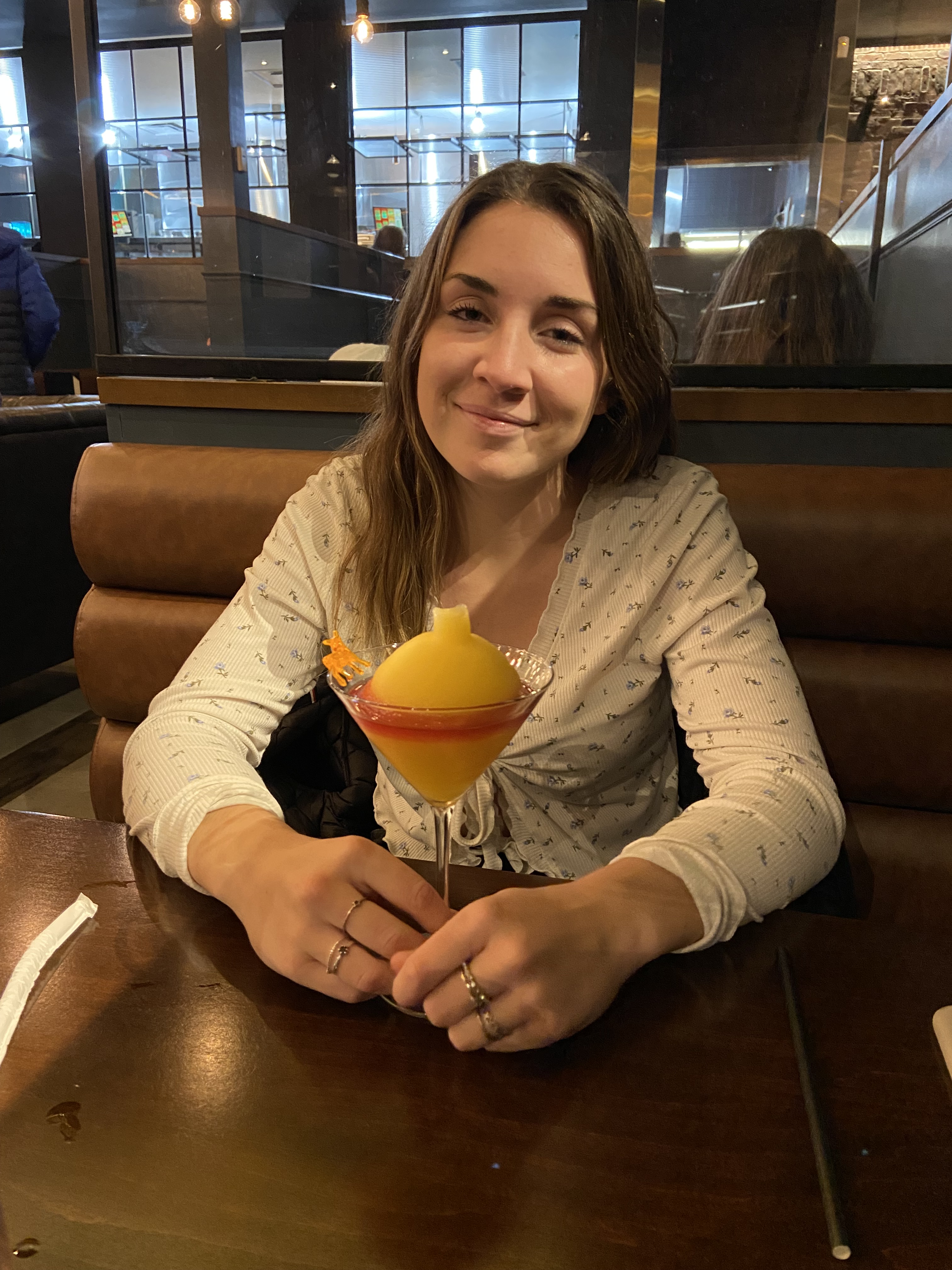
Daughter Grace with a drink

Last weekend, Clare had a hockey tournament in Barrie. It was supposed to be a fun-filled family weekend of shopping, eating out, spending time with her team and celebrating Grace’s birthday since my baby turned 19 last week.

It was probably one of our worst family weekends ever.

Clare woke up the Friday morning with a stuffy nose, claiming it was allergies. After 5-6 hours of driving, it had developed into a full-fledged head cold. She was miserable. Grace was upset because her big birthday weekend was ruined and we spent the next 24 hours in the car or hotel room yelling at each other or sulking before turning around and driving home the next day.

There was one shining moment during that wash of a weekend. After buying drive-through Wendy’s for Clare to eat in the hotel room by herself, Dave and I did take Grace out for a nice birthday dinner at Milestones. We bought her first drink: a bellini.

If you saw any of my posts on Facebook last weekend, you’d never know our weekend was such a bust. You’d see a funny video of the kids acting silly during the car ride, a picture of Grace smiling at the restaurant with her bellini, and the pathetic Santa display in the lobby of our crappy hotel that made us laugh.

That’s the beauty of Facebook, social media and our memories. Ten years from now, we may look back on those posts and only remember those happy moments, not the tears, fighting and miserable parts of the weekend.

Not a bad thing, really.

This week’s #HappyAct is to believe in the illusion. Tis the season of believing, after all, and who knows, someday, at least in our minds and memories, it may become the truth.

I’m an Eeyore and I’m OK with that

Eeyore

When it comes to work, I’m an Eeyore, and I’m OK with that.

When someone proposes a new idea, I immediately begin to think of all the problems or things that would prevent it from succeeding. It’s not that I don’t support the idea, most times I do, but my brain kicks into logistical overload and I think through all the obstacles and challenges that would need to be overcome to make it happen.

It’s a blessing and curse…especially when you’re known as the happy act blogger.

But I’ve come to embrace my Eeyore and I believe it has helped me in my communications work.

It allows me to anticipate problems, think things through, and make better decisions.

It has helped me to develop emotional intelligence and a risk lens, so when the time comes to execute, we’ve done a good job planning and preparing for most contingencies.

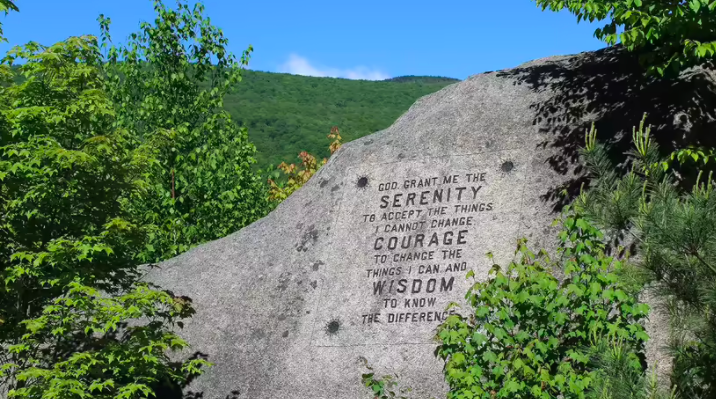
It has also helped me to accept the things I cannot change, courage to try to change the things I can, even if I haven’t mastered the wisdom to know the difference.

Dan Rockwell in his Leadership Freak blog says you can be negative and still succeed. Overly optimistic leaders minimize challenges, fail to anticipate problems and are more likely to throw in the towel when success doesn’t happen quickly.

Being optimistic is great, but blind optimism is dangerous.

This week’s #HappyAct is to embrace your Eeyore but never lose the faith.

Serenity prayer

The missing ingredient in remote work

Work desk

The debate on the future of work rages on (you can read about my vision for it here). This fall, many companies announced they would start bringing people back in the office. With a fourth wave of the pandemic underway, many of those same companies have deferred their plans indefinitely, making remote work here to stay.

For those of us toiling away in our bedrooms and basements, we’ve had plenty of time to contemplate what’s missing in remote work.

The prevailing wisdom is what’s missing from remote work is the four C’s: collIaboration, connection, communication and culture. While all of these things have suffered a decline to varying degress, they are not missing from remote work. We’ve still managed to collaborate, communicate and stay connected with work colleagues.

No, the key ingredient missing in remote work is energy.

There is an undeniable energy in being around and working with people. When you meet or bump into people at the office or work together in person, you feel the energy level in the room rise. Ideas are born, connections are made. Energy fuels creativity, learning, innovation and propels action. We are driven to take action and succeed, which drives a sense of purpose and accomplishment.

It has been said for introverts, this pandemic has been a blessing. It has allowed them to work quietly on their own, focus on their passions and be happy. But for extroverts who rely on the energy of others to give them strength, and help them be the best version of themselves, the pandemic has been crippling.

The problem is introverts and extroverts alike need to be re-energized from time to time, and most remote workers are running on dangerously low batteries.

This week’s #HappyAct is to assess your energy level and needs. How are you doing? Share an idea on how to fill the void so we can all recharge.

Four sayings to help you be at peace with your actions

Whenever I make a mistake or am having a rough day, there are some simple phrases I repeat to myself to help keep me going.

  • One day at a time. This is especially helpful if you’re feeling overwhelmed or stressed. Just focus on one day at a time, and chances are things will get better.
  • This too shall pass. Some people say “Time heals all wounds”. I don’t think that’s the case, but time does have the ability to dull painful memories.
  • Everything happens for a reason. If you believe this, it is far easier to accept things when they don’t go your way.
  • Forgive yourself. This is a new one I’ve adopted during COVID

I hope these sayings help you too. Have a happy week.

Our emotional connection to work

Last week, I listened to an interesting webinar about our emotional connection to work, facilitated by Dr. Laura Hamill from Limeade.

For many of us, our relationship with work has been put to the test this past year. Some workers have grown closer to their employer, building a stronger relationship based on trust, some have struggled with feelings of separation, while others are considering breaking up with their employer.

While intuitively, we’ve always known we have an emotional connection to work, the pandemic has been a coming of age for our relationship with work. It has caused many people to reflect on what they want from their job, where they want to work, and how work contributes to their overall wellbeing.

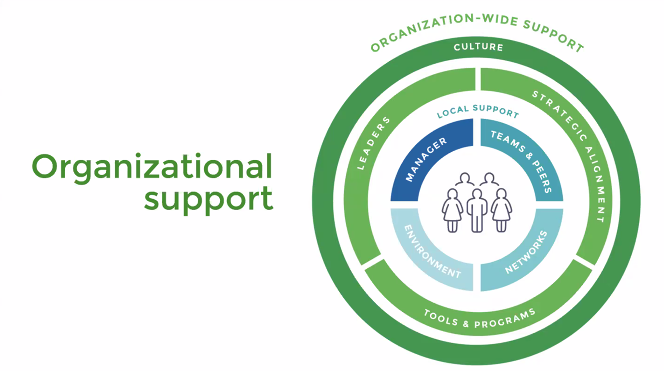
Dr. Hamill talked about the factors that affect our wellbeing. There are some factors we have little control over: our genetics, underlying health conditions, personality, and socioeconomic status. The factors we have more control over include our mindset, habits and behaviours, social supports and relationships, and the organizational supports companies put in place for their employees.

While many companies stepped up during COVID to provide supports for employees coping with the stressors of the pandemic, Dr. Hamill maintains tools and programs are not enough. In order for us to be happy at work and have a positive sense of wellbeing, we need to feel like we belong, valued, productive and contribute to the organization’s success.

For this reason, culture, employee engagement, diversity and inclusion and employee wellbeing are inextricably linked.

As we reimagine the future of work, it will be imperative to put employee wellbeing at the forefront. If we don’t, we could be in for a nasty break up.

Graphic source: Limeade, 2021

What do you do if you’re not sure what makes you happy anymore?

Sign what makes you happy

My horoscope yesterday said, “Do what makes you happy”. The problem is, I’m not sure what that is anymore.

Call it the pandemic blues, call it middle age (okay, I’m being kind to myself here), but I’ve found myself pondering this question the past 24 hours.

What used to make me happy was simple. My family, my beautiful lake and property, visiting with friends and neighbours, little things like the refrains of the piano drifting through the air while I sit on the back deck with a glass of wine.

These things still make me happy, but I’ll admit, it’s more subdued now.

I wish I was one of these people who found a new passion and purpose during COVID. I haven’t. I’ve fallen into the cohort known as “languishers” the term coined by the New York Times to describe those of us feeling joyless and aimless, and “slipping slowly into solitude.”

With things opening up, you’d think I’d be chomping at the bit to reach out and connect with people, but I’m not. I was talking to a friend at work the other day who felt the same way. It’s not that we have social anxiety, it’s not that we don’t miss people and would love to see them again, we just don’t have the energy.  

They say one antidote to languishing is to immerse yourself in a project. But that takes energy too.

So dear readers, this week my #HappyAct is to ask you for advice. How do you figure out what makes you happy again? Please, leave a comment.

The future of work

future of work sign

There is a raging debate going on about the future of work. Companies are considering whether to continue to let employees work remotely, return to the office or adopt some form of hybrid model when the worst of the pandemic is over.

As I said last week, we’ve learned much in the past year. But I fear that as a society, we will let a precious opportunity slip through our fingertips: the opportunity to finally redefine our relationship with work, to seek a greater work-life balance and truly imagine a brighter future, one where we don’t just spend our days making a living, but living our best lives.

Here is my vision for the future of work.

First, employees would be able to choose how many hours they want to work a week. Imagine if you could say to your employer, I want to work 24 hours a week, 30, or 32 hours a week so I can pursue my passion, whether it’s painting, writing, running a side business, or volunteering.

Employees would have more flexibility to choose when they work. 6 a.m. to noon? No problem. I was reading one study where 15% of workers said they’d prefer to work in the evenings or at night so they could do things outside during the day. Depending on the role, why not? It could also help with child care challenges for working families.

We need to discover how to bring joy and fun back into our work world. The reality for many office workers is their day consists of never-ending emails and meetings, distractions and interruptions that is making us unhappy at work. When you feel like your day consists of putting out fires and you haven’t accomplished what you set out to do, it’s disheartening. Even before the pandemic, people were habitually checking email 74 times a day and switching tasks every 10 minutes. 

There are many, innovative solutions to making work fulfilling again.

Let’s start by hiring more people. I believe too many companies are running too lean. There are simply not enough people to do the work. If some people opt for shorter work weeks, there could be the opportunity to hire people and distribute work a bit more equitably to help ease stress and workloads.

We also need to be smarter about how we spend our time during the workday. Companies could establish designated meeting times, and work times to help people concentrate and accomplish meaningful work, without disruption.

Several years ago, a Fortune 500 software company in India tested a simple policy: no interruptions Tuesday, Thursday and Friday before noon. The company experienced a 65 percent increase in productivity but also reported employees experienced an increase in work satisfaction. They discovered the most important factor in daily joy and motivation was a sense of progress.

We’ve also learned working from home this past year the importance of human connection. We miss our colleagues dearly.

The future of work needs to include being together again, but not dictated by arbitrary policies. Being able to collaborate, have fun together, celebrate successes are all great examples of when it will make sense to bring employees together in person. Training is another thing we’ve learned is a much more richer experience in person than remote learning.

Good workplaces will develop a do good culture. Providing opportunities for employees to get involved in their communities, and volunteer for worthy causes will add a new layer of purpose to work. Some companies already offer up to five days a year for employees to volunteer for local charities.

The future of work also includes more vacation. There will be a pent-up demand for travel when borders open up. North Americans could learn from other countries like the UK where residents get 28 days of vacation a year, France 25, and Germany and Australia, with 20 days.   

Finally, companies need to adopt the ner way of business. Ner is the business philosophy where the most important aspect is people and leaders only need to create an environment where people can excel. Companies have no hierarchy, just self-managing teams. Ner companies donate 3% of their profits and 2% of employee time to contribute to social projects and top salaries can’t be more than 2.5X higher the lowest salary. The ner philosophy creates more human, meaningful and entrepreneurial workplaces. And it works. Watch this video to learn more about ner.

Yes, we have a unique opportunity before us: to reimagine the future of work. Companies that are short-sighted will focus on one aspect: place.

Companies that are progressive and visionary will focus on outcomes and a new, more human philosophy towards work.

Who would you rather work for?

Stop being your own worst enemy

skeleton looking at a computer

There’s an enemy we are all facing right now, and it’s the enemy within.

Too many people are working more hours working from home than when they were in the office.

Why are we doing this to ourselves?

Have we programmed ourselves to delete our off buttons, so we don’t know when to shut down at the end of the day? Is it because we can’t separate work life from home life working out of our bedrooms and basements? Is it because there is nothing else to do in lockdown, and things will return to normal when the world rights itself? Or is there simply too much work and never enough hours in the day to get it done so we just keep working?

I think it is all of these things and it’s extolling a price.

Each month, Morneau Shepell publishes their 2021 Mental Health Index Report. It’s no secret mental health across all age groups has taken a dive since COVID began last March, but the most recent report shows two segments: women and managers are particularly at risk of burnout as they struggle to deal with the demands of work, home life and worries about finances and health of family members.

The report indicated employees are finding it more difficult to feel motivated to work and to concentrate. A startling one-quarter of Canadians are considering a career change despite their employers handling the pandemic well.

We’ve learned much in the past year. I’ve had several friends retire or make the brave and bold decision to simply leave their jobs. We’ve realized humans were not meant to spend entire days in dark rooms on devices. It’s not natural. We’ve also learned there is more to life than work.

As we slowly emerge from the darkest days of this pandemic, we will all be faced with choices. Be brave in your choices, and whatever you do, stop being your own worst enemy.

Next week: part two on the Future of Work

Be a child genius

Child in shark costume with sunglasses on

Aldous Huxley once said, “The secret of genius is to carry the spirit of the child into old age which means never losing your enthusiasm.”

I would bet that many of us right now have lost some of our enthusiasm for life. Living in lockdown, not seeing friends and family, and filling our days with work, walks, books and chores without anything to look forward to is tough.

So how do we reignite joy and enthusiasm in our lives? Here are some thoughts, but I’m hoping everyone will leave a comment to help us all through this difficult time.

  1. Spend time with a child. Children help us see the world from a fresh perspective.
  2. Make a goal to try one new thing this week, whether it’s making a new dish, starting a new project, or learning a new hobby. When we learn new skills or focus on something fresh, our enthusiasm naturally emerges.
  3. Be curious and ask questions. The act of asking questions stimulates interest and enthusiasm. You can even ask questions of yourself like, “What do I want?”, “What am I grateful for”, or “What’s missing in my life?”
  4. Do something silly and that makes you laugh.
  5. Make a list of everything you love to do, and then take 15 minutes and do one of them a day.
  6. Plan a trip for when this is all over. It doesn’t have to be a big trip, maybe just an overnight getaway, but it will give you something to look forward to.

This week’s #HappyAct is to rediscover your zest for life. We can all be child geniuses. Now it’s your turn—what are your ideas?

Walk a labyrinth

Me at the Burlington labyrinth

A few months ago, I headed out for my regular lunchtime walk in a foul mood. Something happened earlier that morning and it was still bugging me. Just a stupid misunderstanding, but you know what it’s like when you replay it over and over in your head. Despite saying to myself, it’s stupid, let it go, I couldn’t.

I walked to Central Park in Burlington and to my left at the entrance of the park, there was a labyrinth. I stopped and read the plaque.

It said the Burlington Central Park Labyrinth was patterned after the labyrinth at the Chartres Cathedral in France that dates back to 1200. It is one of the few permanent labyrinths in Canada that is installed in a public place and is wheelchair accessible.

A labyrinth is a design marvel, an ancient, geometric pattern with a single path that leads into the centre. This labyrinth was a circle, the symbol of healing, unity and wholeness. It is meant to be an oasis for your mind, body and soul, and walking a labyrinth can calm the mind and restore balance.

I thought I might as well give it a whirl.

I started to walk the circular paths, and found myself at first focusing closely on each step, and the lines and patterns beneath me. As I continued to walk, I started focusing more on the journey ahead and my final destination. With each step, my mind began to free. I encountered unexpected twists and turns and just when I thought I knew the path to the centre, the path changed.

I became aware that I could take control at any time, by simply stepping outside the winding circle and give up altogether or walk directly to my final destination, but as I continued to walk, I discovered a strong desire to complete the labyrinth and a strange sense of elation and accomplishment when I did.

I stood in the centre and looked up. The weight on my heart and mind was gone.

This week’s #HappyAct is to walk a labyrinth and clear your mind and soul. Need help finding one? Check out this worldwide labyrinth locator. There are literally hundreds in Canada, many located in churches.

Burlington labyrinth