Stewards of the land

view of sea and mountains at sunset in Plockton

As I grow older, I am convinced more than ever that I am just an interloper on this earth. A transient squatter that one day will evaporate, ashes to ashes, dust to dust. The land, however, will live on.

I am reminded of this every day I watch the wildlife in the woods I live in and the lakes I paddle on. They belong to the blue jays, beavers, porcupines, deer, woodpeckers, dragonflies, butterflies and herons. And yet, humankind aspires to own property and claim it as our own, putting up fences and markers to demarcate what is rightfully ours, and keep people and animals out.

I love my property, but I have always believed it is ours to steward and share, not own. I know there are many of my neighbours who would disagree with me.

Since moving to the country, I’ve seen the widely opposing views on property. Some are generous, allowing people to hike, and even hunt on their land and use private water access points. Others are aggressive in their defence of “their land”, putting up gates and guarding their property with shotguns. You better know who you’re dealing with if you wander down a private laneway or path.

One of my favourite walks in Scotland this summer was on private property in the tiny seaside village of Plockton, just off the Isle of Skye. There is an isthmus that juts out to sea, owned by a local family who has granted permission to anyone to hike the trails around their modest farmhouse. It was one of the most beautiful hikes I’ve ever done, and reminded me of the seascape on Vancouver Island.

In 2003, Scotland adopted the Land Reform Act, commonly known as “right to roam” that gives the people of Scotland the right to access and roam the land and inland waterways, including public lands, farmers’ fields, and other private property. Basic principles include respecting people’s privacy, caring for the environment, leaving no trace, and ensuring no damage is caused to crops or livestock.

England has not been as progressive in adopting this principle and we had some interesting conversations with fellow hikers and locals about the right to roam and our relationship to land and property.

As a society, we have been poor stewards of the land. From polluting our oceans, to mismanagement of our forests and the ever-threatening impacts of climate change, we have failed in our attempts to be good stewards of this planet. One writer described it as “soiling our own nest”, an apt description.

We’ve also incurred irreparable harm to our planet and humankind by trying to define borders and territories. Wars have been fought and millions of lives lost from the desire to conquer land.

In this, as in so many things, we can learn from Indigenous peoples who have a deep connection to nature, viewing themselves as part of an interdependent ecosystem with a deep commitment to care for the land and its creatures for future generations. 

This week’s #HappyAct is to do one small thing to care for the land and creatures in your backyard, all the while accepting it’s not really your backyard in the first place.

Deer in garden

Photos: at top: the view from a trail owned by homeowner’s in Plockton, Scotland, looking out over the sea. Above: deer grazing in my garden.
Wisdom and teachings from the two Janes this Earth Day

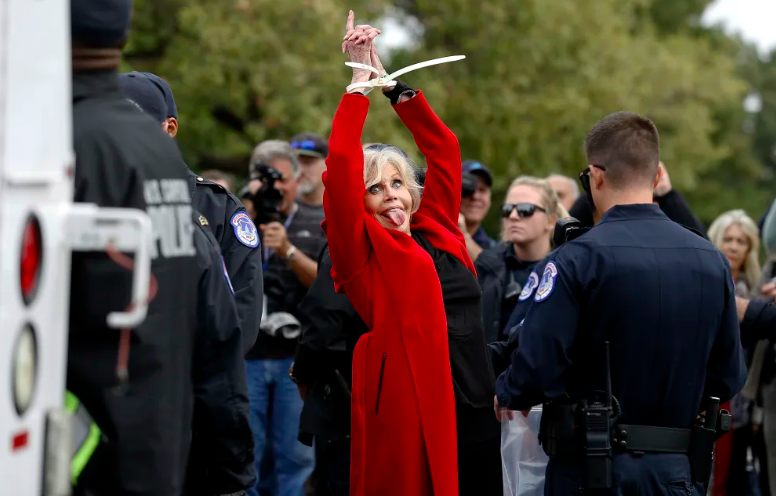
CNN photo of Jane Fonda getting arrested

Last week, I participated in a climate change focus group at work. It was an insightful discussion into our fears and hopes about the state of the climate, and actions we could take in our little corner of the world to address climate change.

As the climate change window narrows (some experts say we need to reach the stated global targets within the next six years), the natural response and mentality may be to give up hope. But we can’t.

We need to look to lifelong activists like Jane Fonda and Jane Goodall for guidance, inspiration and hope.

Fonda, who has been known for her activism since her early days as a successful actress in Hollywood said five or six years ago she was feeling very despondent about climate change and it was hard to get out of bed she was so depressed.

She started Fire Drill Fridays, a pledge to use her platform and celebrity status to get arrested every Friday at a climate change protest and even moved to Washington at the age of 81 to achieve her goal. Soon celebrities like Sally Field, Robert Kennedy Jr. and Ted Danson joined her. Fonda said an unexpected benefit of her activisim was her depression lifted, and was replaced by hope.

With half the world going to the polls in 2024 she is urging young people to “please vote and vote with climate in your heart”. 

English anthropologist Jane Goodall who spent years in the jungle studying gorillas has also shifted her focus at the age of 90 to activism, founding Roots and Shoots, a movement urging young people to create change in their communities and based on the philosophy that every individual has a role to play.

Roots and Shoots is now active in 70 countries with hundreds of thousands of young people spearheading climate-related projects to create a better world.

Jacques Cousteau once said, “We only protect what we love.” This Earth Day, commit to taking one or two actions, no matter how small to address climate change and love our earth. Happy Earth Day!

Hopeful for the future: flattening the curve of climate change

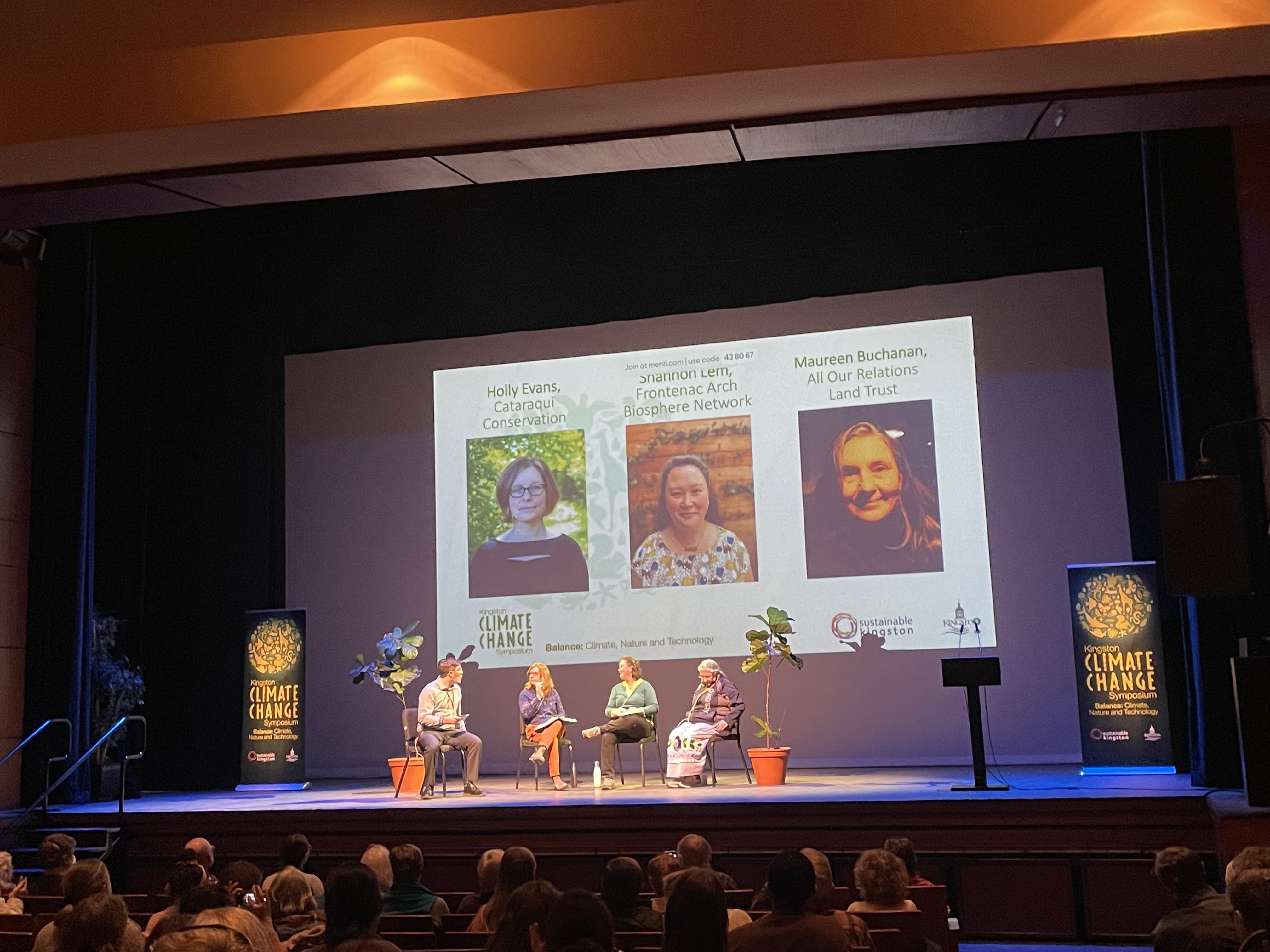
panel on biodiversity at the Kingston Climate Change Symposium

I didn’t expect to walk away from a climate change symposium feeling hopeful.

Hope is a good word. It inspires action.

The seventh annual Kingston Climate Change Symposium was held in person for the first time since Covid at the Grand Theatre at the end of January. More than 400 people from all different walks of life attended. That in itself gave me hope.

The key note speaker was Bob Macdonald from CBC’s Quirks and Quarks and author of one of the latest books on climate change, The Future is Now.

His message was optimistic–we now have the technology and the know-how to solve the climate problem. From micro-nuclear technology, to solar, wind and electricity, we’ve come leaps and bounds in our ability to develop alternative clean energies and make existing energy sources like oil and gas cleaner.

I came away hopeful that we are listening and learning from Indigenous cultures and peoples about how we are all connected to each other and to Mother Earth, and how we need to deprogram ourselves and our colonial attitude to the land and treat it and its creatures with respect and we must approach this work with open minds and open hearts.

I also came away feeling positive about my personal actions in thinking globally and acting locally, from the geothermal heating/cooling system we installed in our house, to buying my first hybrid vehicle, to all the trees I’ve sold and planted in my lifetime, to participating in one of the world’s largest citizen scientist projects, the Christmas bird count every year. One individual’s actions can make a difference.

Macdonald finished his talk drawing a parallel between the world’s response to COVID-19 to our response to climate change. In both cases, the global community had to come together to flatten a curve–in the case of the pandemic, of transmission of the disease and hospitalizations, and in the case of climate change, rising temperatures and greenhouse gas emissions.

During COVID, scientists developed vaccines in record time, governments acted swiftly, businesses pivoted and the populace took action to protect the spread.

The science of climate change and the technology to address it has advanced. We now simply need the collective will of governments, business and people to take action.

I’m hopeful we will flatten the curve once again.

If I were Oprah Winfrey–my commencement speech to the graduating class of 2020–The Next Act

Clare at her Grade 8 graduation

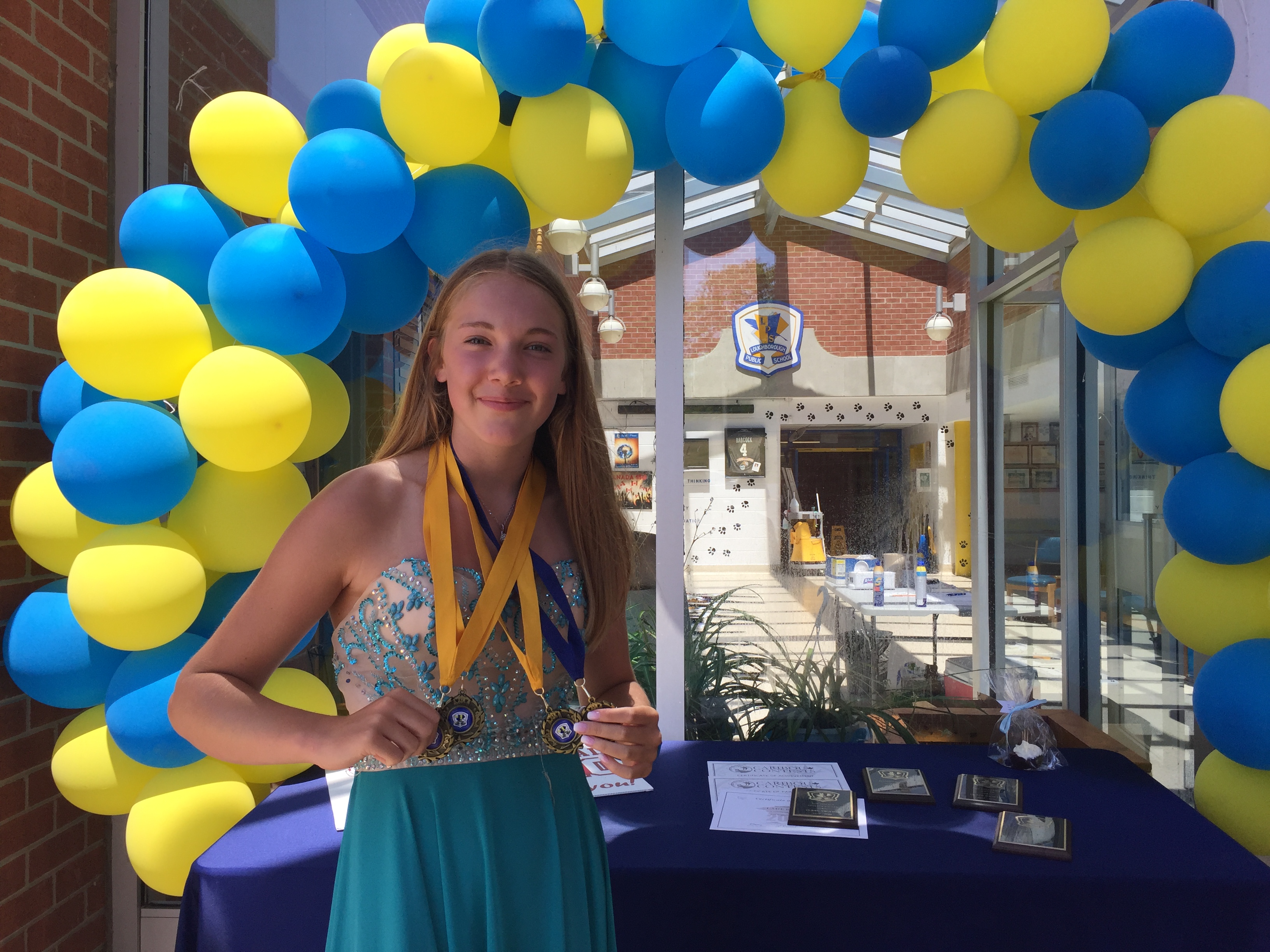
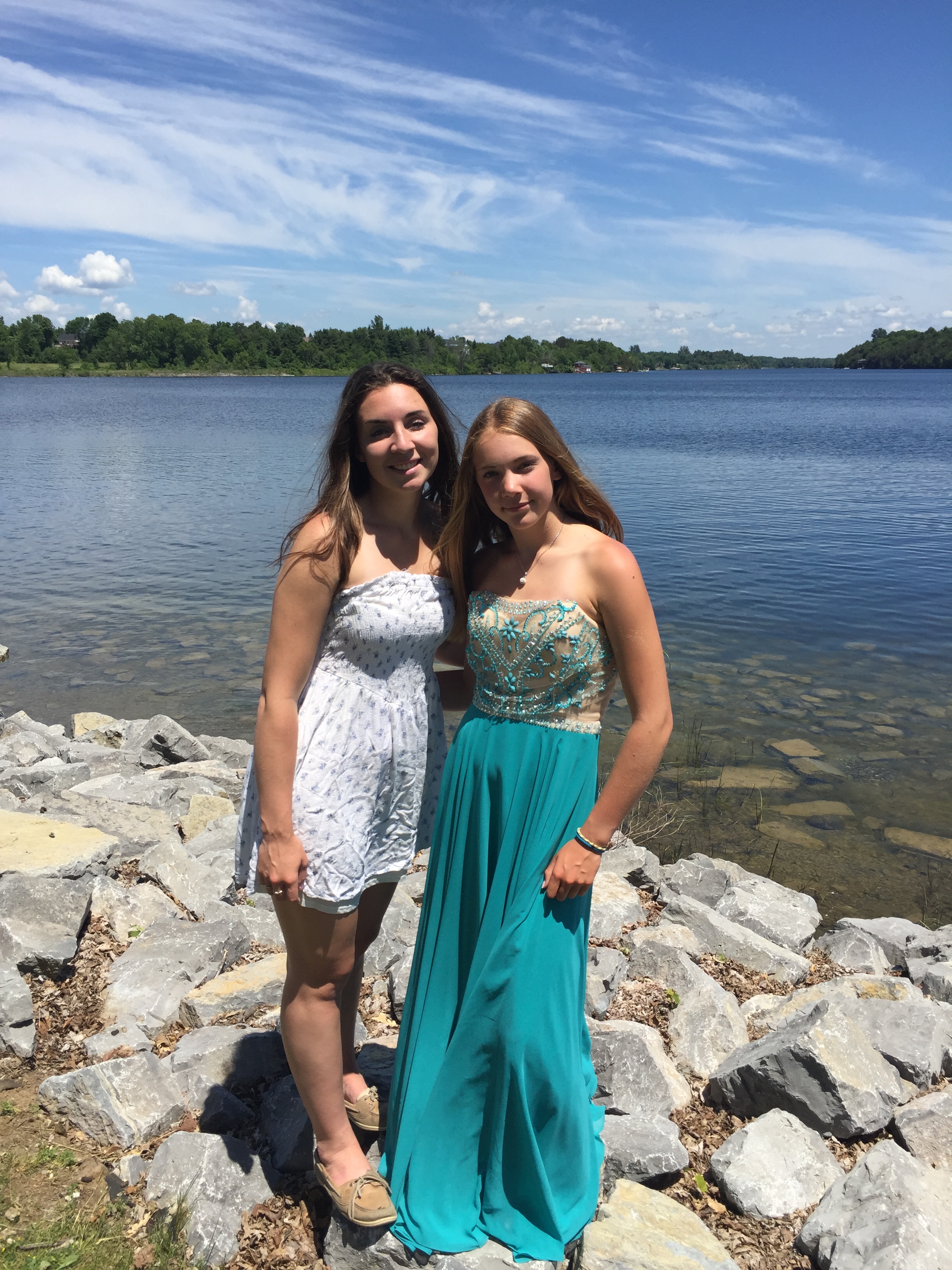
My two beautiful daughters graduated this past week, one from high school, one from elementary school. There were no dances, no proms, no gatherings of proud parents watching graduates parade across a stage in gown and cap. There was a 15-minute interval where they picked up their diplomas and awards and had their picture taken with one or two family members, and then that was it.

My heart goes out to all of these kids, and I couldn’t help thinking, if I was some big celebrity who was asked to deliver a commencement address to the graduating class of 2020, what would I say?

Here would be my Oprah speech:

The Next Act

It wasn’t supposed to end this way.

I know this isn’t the graduation you dreamed of.

You should have been dancing. Hugging. Celebrating with your classmates. Dreaming and looking ahead with excitement and anticipation to the next act in your life.

But you are not the first class to graduate in uncertain times. There have been those before you who have graduated in times of war and economic downturn.

Graduation is by design, a time of uncertainty and change. But we acknowledge this year is different.

in addition to the natural uncertainty of the questions every graduate faces, college or university, work or travel, you have the pressing uncertainties of a world in flux and change.

#BlackLivesMatter. Climate change. Coronavirus.

You will forever be known as the graduating class of COVID-19.

We are so sorry this happened to you.

It shouldn’t have ended this way, but know how proud we are of you and how confident we are that you will come through this stronger, smarter and more resilient.

Although you may not see this now, you have been given a unique graduation gift.

A gift of time to reflect on your goals, dreams, purpose and future.

A gift of clarity of what matters most, human kindness and acceptance, our natural world, and the importance of family and human connection.

These past few months have given you an education no institution ever could.

So what will be your next act?

Whatever it may be, know there is a difference between “purpose” and “a purpose”.

Purpose is sometimes portrayed as one all-consuming passion. You may not all be Greta Thunbergs, but you can find a purpose in everything you do.

Being a good friend. A good student. A good worker. A good mother or father. Someone who cares and gets involved in their community.

Purpose is not a single act.

Finally, be kind to one another. Seek what brings us together as humans, and eschew those that divide and remember you belong to each other. Do better than our generation has done.

Above all, whatever your next act in life, make it a purposeful and happy one.

And if I really was Oprah, “you win a mask, and you win a mask and you win a mask…”

Two girls graduating

Ten super simple things you can do in 2020 to help save the planet

Tesla electric truck

Tesla has finally come out with a new electric truck. If you haven’t seen it yet, it looks like a space-aged DeLorean and costs roughly $50,000. While many of us may not be in a financial position to be on the first buyers’ list, there are things we can all do now to do our bit for the environment and climate change.

Here are ten super simple things you can do in 2020 to help save our planet:

  1. When grocery shopping, place loose fruits and vegetables in a reuseable shopping bag instead of using the thin plastic bags in the store—there’s really no need to bag green onions, lettuce, peppers, etc.
  2. Use recyclable travel mugs instead of disposable cups.
  3. Stop using drive-thru windows to reduce idling and emissions—you’ll also get more exercise if you walk in to get your coffee or treat.
  4. They’re saying grocery prices will skyrocket in 2020. If you’re a meat eater, try reducing your meat consumption by 10-20% and save on grocery bills too.
  5. Stop buying bottled water.
  6. Recycle clothes by donating old clothes to local clothes initiatives. Why not shop there too? Some of my favourite finds have been at used or community clothes places.
  7. Get crafty: instead of throwing household items out, see what you can make with them instead. I have a couple of friends at work who make gorgeous furniture and household items with recycled stuff.
  8. Don’t buy or use plastic straws or cutlery. At work, keep a mug, plate and fork and spoon on hand for work celebrations and potlucks.
  9. Get serious about commuting—if you live in the city, try taking the bus or biking to work. If you’re in the country, see if you can ride-share a couple of days a week with a neighbour or co-worker. Or, negotiate with your employer to see if you can work from home from time to time.
  10. Compost. I’m shocked at how many people don’t compost. Not only does it redirect items from landfill, you get beautiful, rich soil for your garden.

This week’s #HappyAct is for all of us to start making little changes in our buying and consuming habits, because if there’s one thing we’ve learned, it’s that we all need to take action now. I pledge to focus on #1-3 and #9 this year since we’re already doing most of the others.

What are you doing to save the planet? Leave a comment below.

Top ten happy acts of 2019

Girl walking in fall leaves

Welcome to the final happy act of 2019 where I recap the top happy acts of the year. I’ve come to learn my little blog, where I share a piece of inspiration or something we can all do to be happy each week has also become a chronicle of sorts: of my travels, family life, and of current issues on the minds of Canadians. I hope you still enjoy reading it as much as I enjoy writing it each week. Here’s my top 10 happy acts of 2019.

  1. Take the self-care pledge. If you’re looking for a New Year’s resolution to start off 2020 on the right path, this post may inspire you.
  2. Always look on the bright side of life: a tribute to Monty Python
  3. Living in the country has its charms. One of them is Funny country signs.
  4. Plan a red hot date night. Read about my steamy date with one of the last of the red hot lovers.
  5. Harvest the Grape. One of my favourite days this year was spent picking grapes at a local vineyard. Read about the harvest and what goes into making a truly remarkable vintage.
  6. Already missing the crisp cool days of fall? Check out Autumn ablaze, a photo essay with my favourite photos of eastern Ontario this spectacular fall.
  7. In Screams and curtain calls, guest blogger Ray Dorey shares his experience in local theatre.
  8. In Eat from a Dish with one Spoon, I explored native culture and what we can learn from First Nations people.
  9. A discovery of an old box of newspaper clippings of my Dad’s led to this photo essay and tribute to Toronto the good in photos, a must read if you live in the GTA.
  10. If there was one issue that galvanized the world in unity and action in 2019, it was climate change. In #FridaysforFuture and Lessons from Frome, learn about what one town in England is doing to take action.

There you have it. Thanks for continuing to join me each week in this journey. Here’s to many more happy acts in 2020.

Dear Santa: All I Want for Christmas

author on lake

Dear Santa. I started this note to you on Facebook the other day, but had to cut it short since I had to get to work.

I saw Rudolph on the ice this morning crossing the lake with Dancer and Prancer.  I think they were here on a recon mission. It’s a good thing our lakes are frozen, that way you can travel faster Christmas Eve. I messed up in the kitchen the other night so you may get store bought cookies left out. Hope that’s OK. By the way, the kids were hoping you could define naughty for them. I think they’re getting nervous.

I’m a little late sending you my Christmas wish, but most of the items on it are things you can work on year-round after you deliver toys to all the good girls and boys on Tuesday night. Here it is.

All I Want for Christmas

  • An electric vehicle that’s four wheel or all wheel drive with long driving ranges for people who live in the country who want to do their part to reduce greenhouse emissions
  • A new grocery retailer in Kingston that is environmentally friendly. Santa, since you travel a lot you probably have seen these new zero-waste food stores that have opened in Europe and around the world. Please help bring them to Canada and help us to do our part to reduce excess packaging.
  • An end to exorbitant bank fees—I think it’s highway robbery they charge $3 every time you take money out of a machine if it’s not your bank. I hope all the banks are on your naughty list this year
  • A new dryer that automatically sorts and matches socks (this one has been on my list before)
  • An end to homelessness; everyone deserves a warm, inviting place to call home
  • A hockey rink heater that actually works
  • Most of all, I want you to do what you can for a special group of people who are constantly in my heart and thoughts who are dealing with serious health issues right now; you know who they are. Please help them get better and bring them joy and happiness this Christmas season.

Sincerely,
Laurie

#FridaysforFuture and lessons from Frome

Sign that says Electile dysfunction: The inability to be aroused by any of the political parties

On Friday, more than four million people in cities and towns across the globe marched in the streets for climate change. The #FridaysforFuture movement was started by 15-year old Greta Thunberg who sat in the Swedish parliament demanding action on climate change in 2018 using the revolutionary rally cry, “This is an emergency. Our house is on fire”.

Here in Kingston, the turnout was meagre—only a few hundred people turned out in the bright warm September sunshine to protest despite the global awakening and awareness on the devastating impacts of climate change.

In October, Canadians will go to the polls yet again in our next federal election. We are at a crossroads in history and yet, no one seems to be offering real change.

It’s time to we take a lesson from Frome. Situated on the banks of the Frome river in Somerset, England, a few years ago, the residents of Frome said enough. They met in a local pub and decided to run as independents in their next election. They won 10 seats on the 17-seat council. In 2015, they swept all 17 seats.

Adopting the philosophy of community and climate first, they’ve been able to transform their village. Their Share shop allows residents to borrow tools and gears at low rates. They started a community fridge, where people can donate food and garden produce, and they’ve opened shops dedicated to selling locally made goods that are environmentally friendly. The town recently raised $300,000 pounds to install solar panels on roofs.

In a powerful statement, the town residents have recently petitioned the British government to grant the River Frome the status of a person so it has rights.

Some are calling it the #MeToo Movement for Mother Nature. The goal is to ensure we respect and protect the natural world around us.

So what does all of this mean for us here in Canada? It means we are not doing enough to make real change.

Every day, fertile farmland is being developed for cookie cutter subdivisions. On Saturdays, we drive in our big cars to shop at Costco, the land of excess packaging and food shipped from thousands of miles. Those of us who are driving electric vehicles can’t find enough charging stations. We dump raw sewage into rivers and streams (unthinkable in 2019).

This week’s #HappyAct is not a happy act at all. It is a call to action. It’s time we make real change. If our politicians won’t be brave or strong enough to do it, it’s up to us.