The party you won’t see on the ballot we should all be voting for

elections canada vote sign

Tomorrow, Canadians will go to the polls in what could be one of the most historically significant elections of our generation.

Trump aside, I’ve been thinking of the key issues most Canadians are concerned about in 2025: the cost of living, affordable housing, mental health and health care, climate change, and the economy. I’ve been very fortunate to consider these issues from a new lens, thanks to a group of young PhD international students I’ve been working with as a proctor this past month at Queen’s University.

Two of the graduate students I worked with were from Ethiopia, one doing his PhD in rehabilitation research and the other in nursing. Another was from Syria, doing his PhD in nuclear engineering. They had all done their undergraduate and Masters degrees in different countries around the world and were extremely kind, bright, perceptive, and willing to share their thoughts and experiences of their time in Canada.

They all agreed Canada is a very beautiful, safe country and they particularly loved Kingston. They appreciated the hard work ethic of Canadians and the fact that we are a law abiding country. They did not like our winters!

Some of the things that surprised them is how expensive it is to live here, especially housing. (The one fellow told me he paid $900 a month for a two bedroom apartment in Germany where he did his Masters degree in a city the same size as Kingston. His rent here is $1,700. According to Studying in Germany.org, housing prices are 47% lower than in the US). They’ve also been surprised to see the number of homeless people and people with mental health and drug problems in Canada.

This led to a discussion on the shrinking middle class, a phenomenon that seems to be happening in all countries (my new friends said it was the case in Ethiopia and Egypt too).

However, the biggest culture shock and negative they’ve encountered is the individualistic aspect of Canadian society. We talked at length about child care, since my one new friend just had a baby and the other had two children and a wife here in Canada. They said at home in Ethiopia, child care is not an issue. If you need to work or go somewhere, there is someone—a relative, neighbour, or friend who will look after the children.

That led to discussions about seniors. Older people in their country are cared for and live with their extended families, unlike here in Canada where many seniors live alone or in nursing homes, and suffer from loneliness (see my blog post from a few weeks ago, “Battling the epidemic of loneliness”).

As we were discussing all of these issues, it occurred to me that if we simply went back to having multi-generational families living together, it would solve many of the problems in our society. There would be more available and affordable housing, and the cost of living would be offset by potentially multiple incomes in one household. People would be financially better off and happier, alleviating the strain on health care systems and improving people’s mental health.

If you study the famous “blue zones” in the world where people live longer, multigenerational living is part of their cultural fabric.

Where and when did we go wrong in North America?

In 2015, one of the best selling business books was a book called Weology: When Everybody Wins When We Becomes Before Me, by Peter Aceto, CEO of Tangerine bank. It was a book on the philosophy of leadership in business, but the concept of Weology is one I think we need to start embracing as a society to address these critical issues. Clearly what we’ve been doing up until now isn’t working.

A new party, let’s call it the Weology Party, committed to implementing policy that fosters a philosophy of taking greater care of each other and multi-generational living might just be the solution. From a tax perspective, this could take the form of tax deductions or income splitting for multi-generational households, not just spouses. There are currently tax breaks for people who have eligible dependents over the age of 18 and a tax credit if you are a caregiver for a spouse or senior, but we could do more. To foster this philosophy in our communities, the government could also offer tax breaks and incentives for volunteering.

Municipalities have started to make strides to make it easier for people to live together, allowing and promoting additional dwelling units on lots.

In business, the government could introduce policy to make it attractive for new start-ups to form as employee-owned cooperatives. There is a large corporation in Spain called Mondragon Cooperation that has 70,000 employees, annual sales of 11 billion euros and is highly profitable. They are committed to putting people before profits (for instance during COVID, instead of laying off employees, they reduced salaries across the board by 5%). The ratio of pay between employees and executives is just 6:1 (in Canada, the ratio is 210:1 for our highest paid CEOs and in the States, it’s even higher). This model is one way to distribute wealth more equitably in society, within the framework of a free market economy.

My new proctor friend who was a research fellow in rehabilitation was working with a professor who was researching the impact and effectiveness of formal versus informal supports for people with disabilities. Their theory is that informal supports are far more important in helping people with disabilities live full and rewarding lives. They are still in the research and data collection phase, but my guess is the data will show that informal supports, people supporting people, will be more important.

Which brings us back to election day. Make sure you vote. You won’t see the Weology party on the ballot this election, but perhaps some day we will. In the meantime, we need to all start thinking about what small changes we can make in our lives to move Canada towards a healthier (both financially and physically), happier, and connected society.
Won’t you be my neighbour

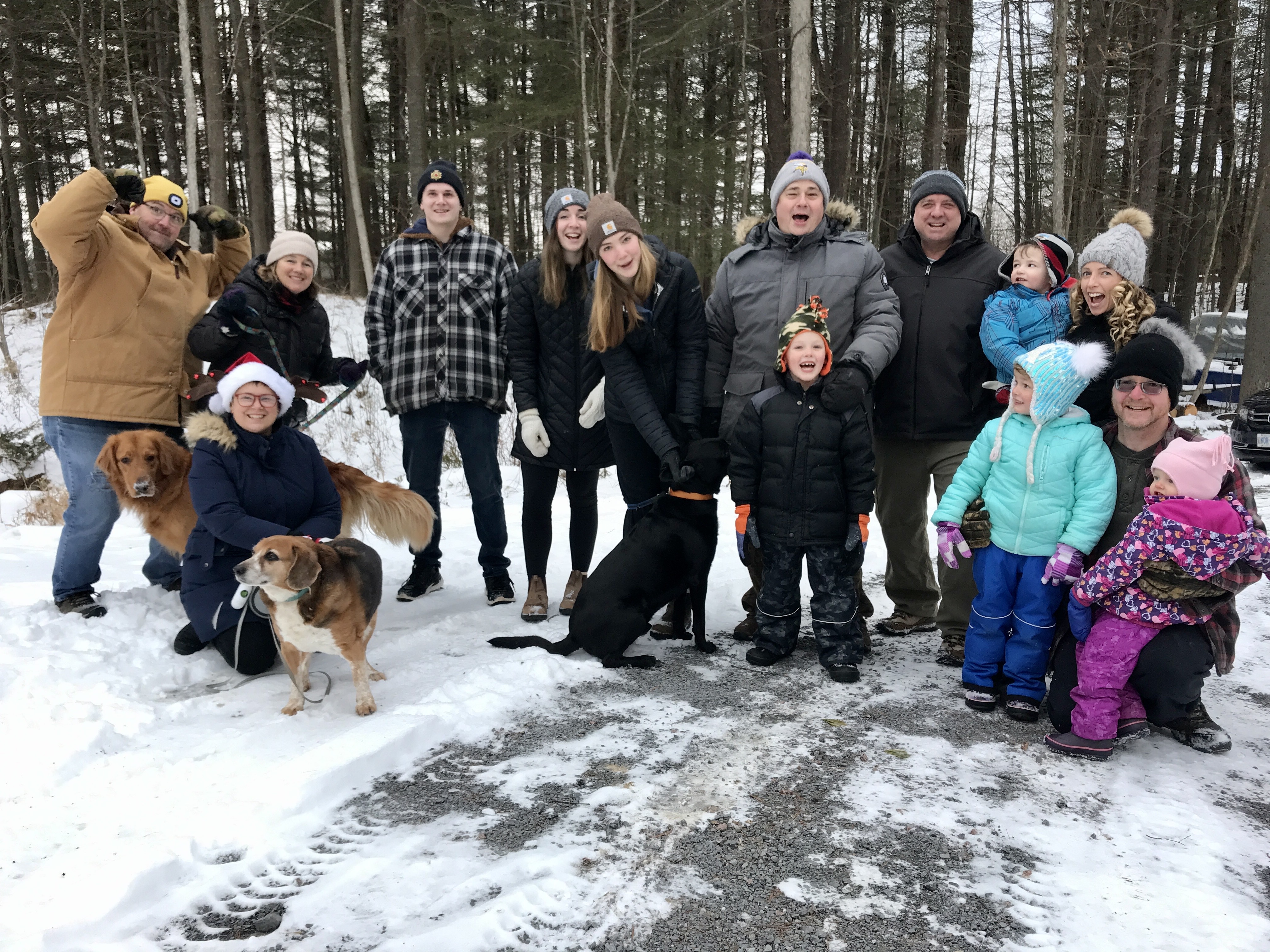
Group of neighbours

The neighbour’s annual Christmas holiday gathering 2021

Last week after I wrote my blog, I went for a nice walk in the snow to look for the eagles that soar over our lake this time of year. I slipped on a slight skiff of snow on ice and fell and broke my ankle. Two trips to the hospital, one surgery, a cast and crutches later, I’m now staring down 6-8 weeks of sitting on my couch with all our holiday plans scuppered.

As the week wore on, we started getting calls and texts from neighbours who said they were planning to pop by with food. Not just food, full meals of pork roast and potatoes, Morroccan chicken with salad, pulled pork, beef brisket, ribs and chicken wings and treats and wine. We have enough food in the fridge now to last until Christmas without having to cook a meal!

We’ve always been blessed with best neighbours. As a kid growing up in Port Credit, our neighbourhood and the people in it were our entire world. All the neighbourhood kids hung out together playing street hockey in the winter and baseball in the summer. The Moms of the Neighbourhood were a powerful posse, watching over and taking care of us. On the one hand, it was great. If you needed help–you could knock on any door, but the downside was there were about 25 other parents watching your every move who could get you in trouble!

I appreciated this amazing group of women even more as a teenager when my Mom was diagnosed with breast cancer. For seven years, they visited, brought us food and helped drive my Mom to appointments, and then doing the same for my father after she passed away.

In 1995, Dave and I made a huge leap of faith and moved to a small farmhouse outside of the village of Sydenham where we didn’t know a soul. Our first two sets of neighbours were a family of sheep farmers and a single guy, a military communications officer named Kramer.

Kramer was like the Kramer of Seinfeld fame with a big personality and a big heart, but with a lot less hair. He would show up at our door out of the blue with a whiskey bottle in hand or come for dinner, and stay until the wee hours of the morning. We’d push him out the back door, watching him stumble and weave across the lawn in the moonlight and up the steps until he was home safe.

On the other side of us was a lovely family of five called the Orsers. They too became fast friends and we’d visit back and forth, especially during lambing season when Dave and I would spend hours in their barn, petting and holding the baby lambs. During the ice storm of ’98 when we lost power for two days, Neil and Pat and the kids all bunked down at our house since we had a wood stove.

When Kramer moved to the Wasaga Beach area, we said our sad goodbyes and welcomed new neighbours into our midst: a young couple by the name of Jeff and Karrie. Jeff and Karrie became some of our closest friends. It was Jeff who found our beloved cat Angus dead, hit by a car on the road and gently put him in a box and broke the news to us when we came home from work. It was Jeff and Karrie who babysat Grace for the first time, giving us our first afternoon out as new parents. They live in Edmonton now—our kids are all grown up, but we still keep in touch.

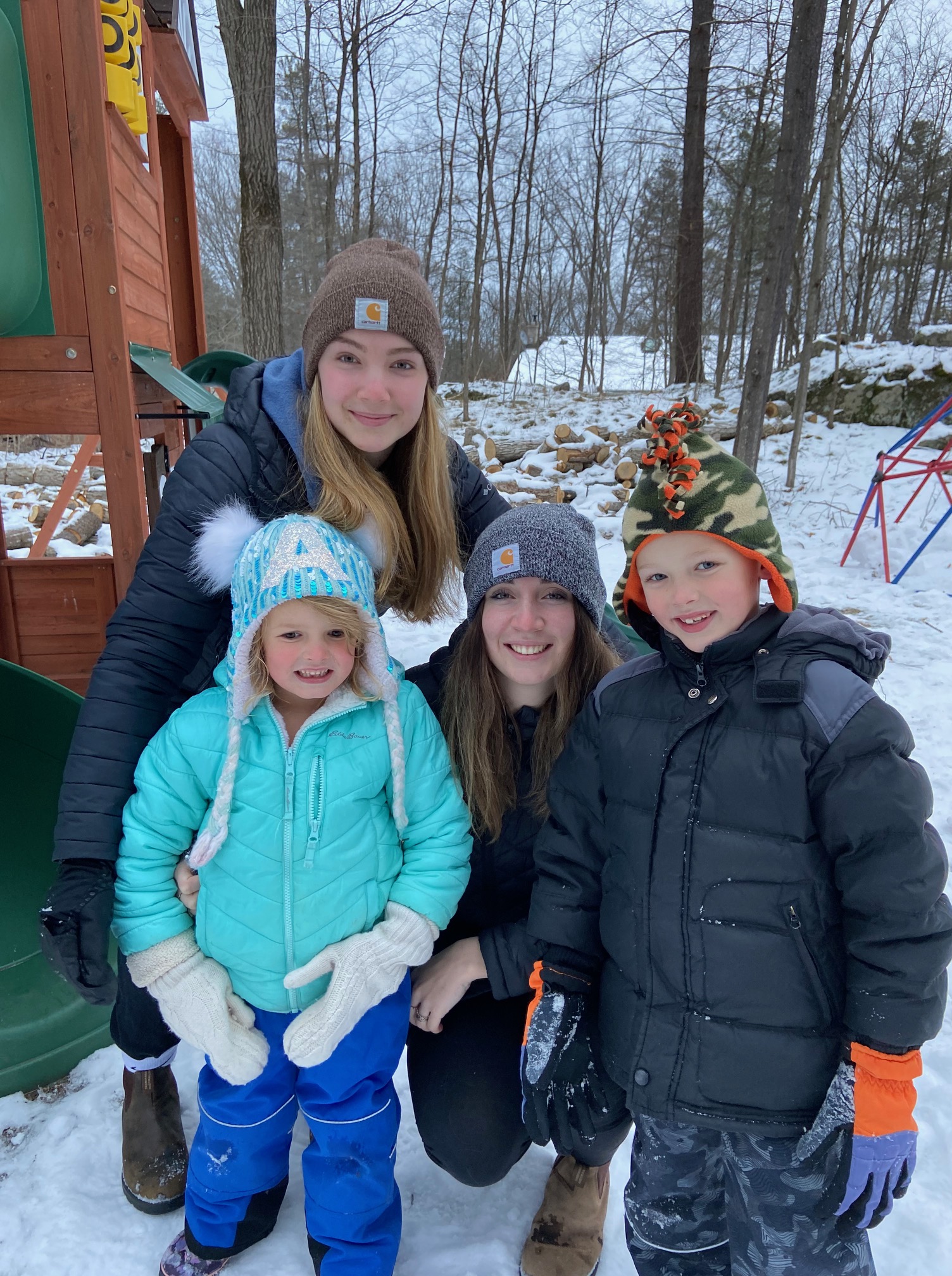
Teenagers Grace and Clare with two children next door

When we made the move from Sydenham to Verona, we thought the same thing: there is no way we’ll ever have such great neighbours, but yet again, we were wrong. Our one neighbour Mark Berry reminded me so much of my Dad who had passed away just after we moved into our beautiful lakefront property.

Mark was the inventor of the “unbirthday party”. He’d putter over to our house on his tractor bearing gifts for us and the kids “just because”. His dog Buddy became best friends with our border collie, even sleeping some nights on our deck in our lawn chairs in the summer. We were very sad when he moved back to Toronto to be closer to his children.

Fast forward to today, when once again we have the best neighbours ever. Through the years, our little tight-knit community has grown even closer. Whether it’s popping by for a drink, getting together to celebrate one of the kids’ birthdays next door, graduation celebrations, Canada Day fireworks, or our Christmas Eve tradition of gathering at one of our houses, our time spent together has become some of my favourite memories here on the lake.

They’ve become extended family, and have been a huge life support for us, especially this year. I honestly don’t know what we would have done without them.

So thanks my dear friends and neighbours, for your love and support, friendship and all the delicious food that is now overspilling from my fridge. I look forward to sharing many more precious memories in the years ahead with my favourite neighbours, the best neighbours in the world!

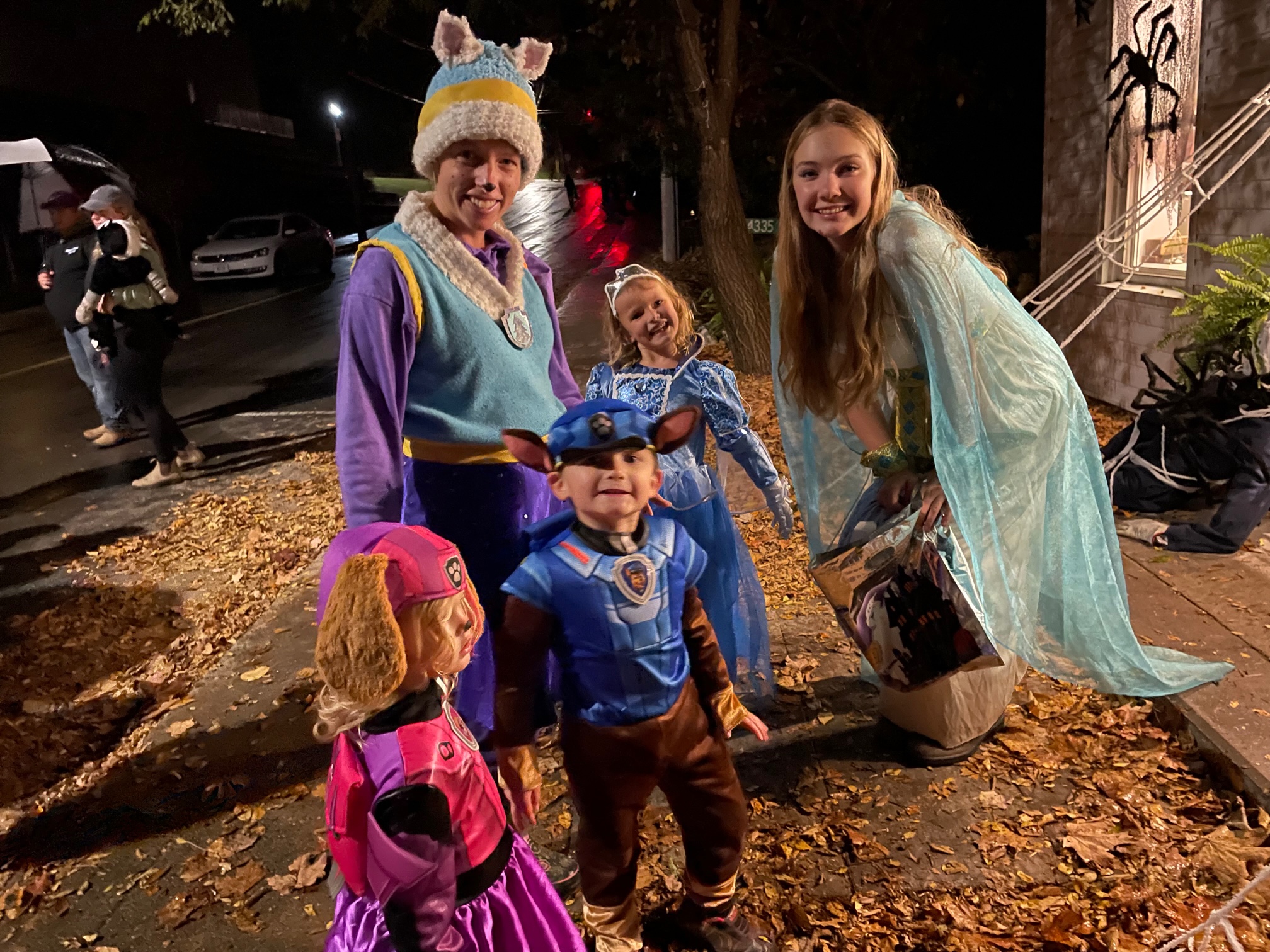
Clare trick or treating with the neighbourhood kids

Clare trick or treating with the neighbours’ kids this year

Neighbours making pizza

Pizza making party next door!

Just don’t call me late for dinner

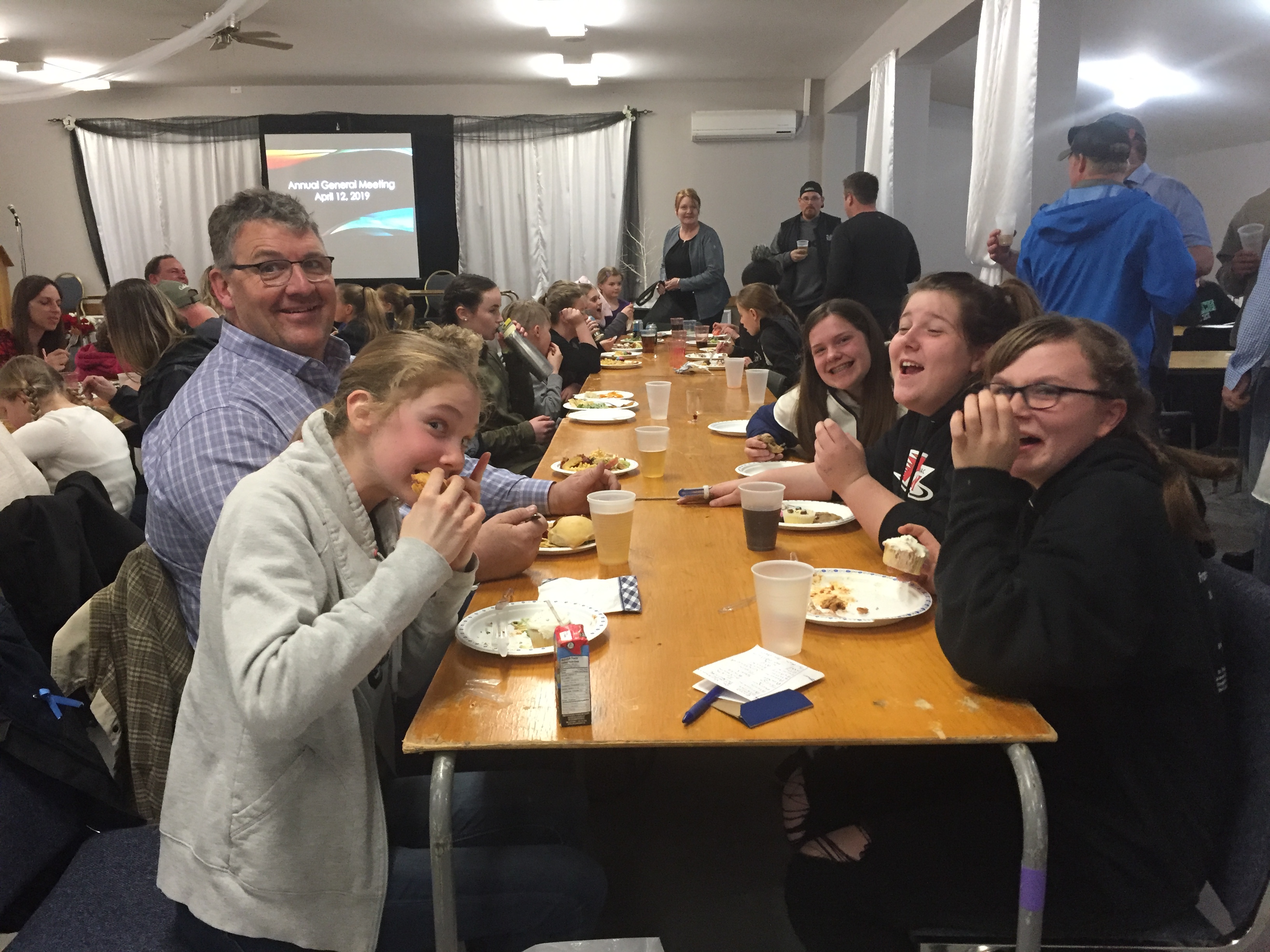
Family eating at potluckCall it a potluck, call it a smorgasborg, call it what you will, just don’t call me late for dinner.

Last weekend, our Frontenac Fury Girls Hockey Association held our annual hockey banquet and potluck.

It’s always a nice way to mark the end of the hockey season, recognize the girls’ achievements and share some laughs before all the hockey families hang up our sticks for the season.

But just like our girls would have going into any big game, it’s important to have a strategy when the pot drops at a potluck. Here are a few tips from a seasoned veteran in the line-up.

  • Always get in line before the biggest guy in the room
  • Scan the venue and your competition to scope out the best grub
  • Don’t fill your plate with too many salads or bread—save room for the main event
  • Enjoy the small talk during the intermissions between refills
  • Never take the last meatball or you may wind up in the penalty box
  • Unlike hockey, icing is a good thing at a potluck
  • When it comes to dessert, go for a hat trick
  • And make sure you give thanks for the big, warm extended family you’re breaking bread with

This week’s #HappyAct is to plan a potluck or smorgasborg and enjoy! And congratulations and thanks to all the Frontenac Fury teams and families for another fun, successful year. We’ll see you in the fall!Plate full of food

Potluck kitchen

Hockey families at banquet

Giving beyond the holidays

Loblaw gift card

This week, Loblaw Corporation announced it will give anyone who registers online and who states they bought certain types of bread at their stores from 2011 to 2015 a $25 gift card as a goodwill gesture for price-fixing that took place in their stores during that time period. Registration will open around January 8th.

I plan to register, but I also plan to give my gift card to the local food bank when I get it. I can’t take credit for this idea—at a retirement function the other day, people were talking about the Loblaw gift card and someone suggested we all register and do this.

We give so much to the people we love over the holidays. This week’s #HappyAct to to continue the spirit of giving beyond this weekend.

And kudos to Loblaw Corporation. I’d much rather see millions of Canadians receive a gift card in a positive gesture that can do great good than see the money frittered away in a nasty class action lawsuit.

Be sure to check back next week for my top 10 happy acts of 2017. Happy holidays!

Spread some kindness this festive season

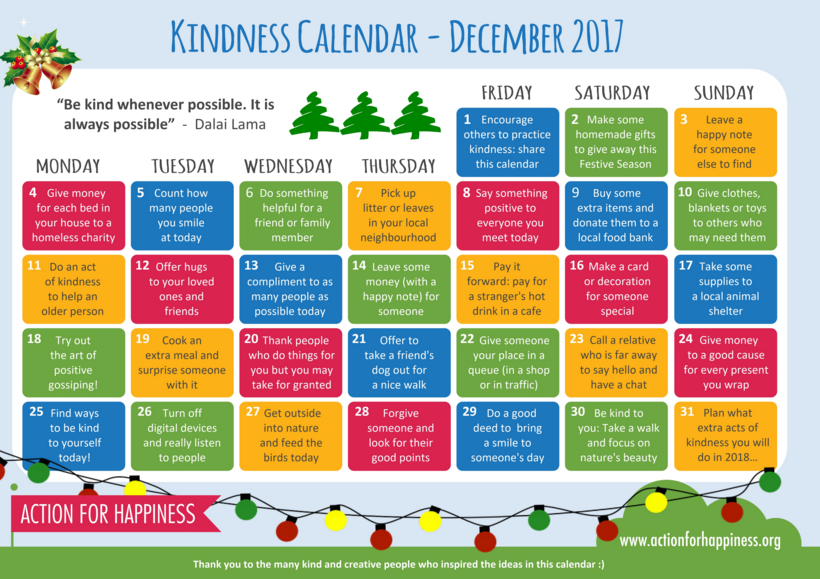
December calendar of kindness

One of my favourite holiday traditions is the advent calendar. We have four in our house this year (no fights) and I’ve brought them into work too.

A colleague shared a different type of advent calendar at work on Friday: a December kindness calendar. You can download your printable copy at actionforhappiness.org.

Here are some of the “doors of kindness” to open up your heart this advent season:

  1. Forgive someone and look for their good points
  2. Cook an extra meal and surprise someone with it
  3. Make a card or decoration for someone special
  4. Offer hugs to your loved ones and friends
  5. Count how many people you smile at today

This week’s #HappyAct is to spread some kindness in your community by doing a good deed a day. Happy holidays.

Know where you belong

sign that says happiness is knowing where you belongI’ve spent the last four days in Toronto. It struck me more than ever, that even though I was born there, I don’t belong there.

Toronto is an amazing city, but like with any large city, there is the good, the bad and the ugly.

Toronto the good

Stunning skyscrapers, lakefront paths and parks, festivals and events, fine dining and shopping, and people of every faith, race, culture living for the most part in respectful harmony.

Toronto the bad

Relentless traffic, air pollution, soaring housing prices, long commutes and endangered greenspace from concrete sprawl.

Toronto the ugly

Poverty, homelessness, and indifference. Both days, walking the few blocks to my course in the financial district, I walked past at least a dozen people sleeping on the street. One man was lying in the middle of the sidewalk sideways and was so still, he could have been dead. Everyone, EVERYONE including me stepped around him and walked by. I’m still ashamed.

This week’s #HappyAct is know where you belong. United Ways across the country are kicking off their campaigns. Get involved, give and help change lives locally where you belong.

Make an inspiration wall

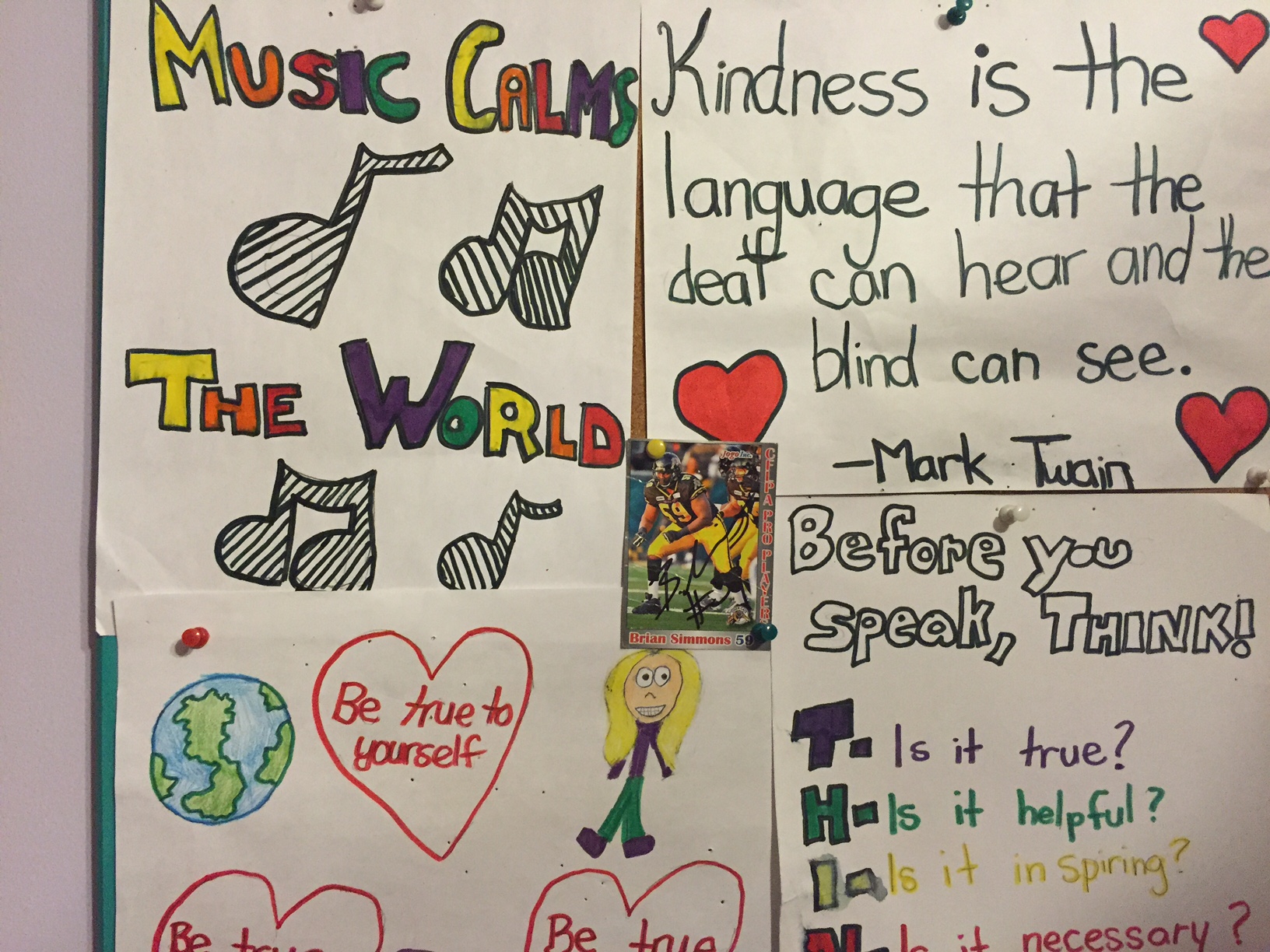
inspiration-wall
Grace’s inspiration wall

What inspires you? That’s the question we’ve been asking our employees during this year’s United Way campaign. Once again, the employees at Empire Life have blown me away by their generosity and willingness to be inspired by the incredible work United Way agencies do in our community and to make a difference.

There is so much in the world that is uninspiring today. It is rare to find something that compels you to feel or do something to create change in our society or something unique or beautiful.

I get my inspiration from my children, my friends and co-workers, and the natural surroundings of where I live.

The other day, Clare told me she wanted to start a new project: to create an inspiration wall. She started looking up inspirational sayings online. Her plan was to print them out and post them around her room. (Her teacher said she couldn’t do this at school if you can believe it). Grace created a similar inspiration wall a few years ago.

We need to be inspired at work, at home and in our community.

This week’s #HappyAct is to create your own Inspiration Wall. Here are some of the sayings Clare planned to use on her wall. Leave a comment. What inspires you?

“Happiness is found when you stop comparing yourself to other people.”

“When we get to the end of our lives together; the house we had, the cars we drove, the things we possessed won’t matter. What will matter is that I had you by my side.”

“You can never cross the ocean unless you have the courage to lose sight of the shore.”

“When it rains, look for rainbows. When it’s dark, look for stars.”

“If plan A didn’t work, the alphabet has 25 more letters.”

uw-inspiration-wall
An inspiration wall created by Empire Life customer service teams who adopted the Kingston Youth Shelter for this year’s campaign–there were posters like this all over the floor to encourage people to bring in donations for what the shelter needs.

Reach out your hand in peace and friendship

Paris, Brussels, Lahore, Pakistan.

The world has become a bloody place.

I don’t claim to understand these terrorist acts, but I have been thinking about what drives a person to destroy human life and what we can do to turn hatred into love and acceptance.

I’ve also had a lot of different experiences in the past few weeks that continue to send these thoughts swirling in my head.

On Easter Weekend, we took Dave’s Dad to the Canadian Warplane Heritage Museum in Hamilton. There was a special exhibit on Anne Frank that detailed her journey into hiding alongside Hitler’s rise to power. It was the week of the Brussels bombing and as I stood looking at the images of the Nazis in the 1930s, it was easy to draw parallels to today and how circumstances can make otherwise good people conduct acts of horror under the philosophical banner that the end justifies the means in fighting evil.

Leaving Hamilton and arriving at Union station in Toronto during rush hour on Easter Monday for business, I tried to imagine the destruction if a bomb exploded in the station. I thought of those people in Brussels and the images I had seen on television earlier that day of the Easter bombing in Lahore, Pakistan. Years ago, I had been in London, England a month before the bombs went off at the Kings Cross tube station. We had been in that station at least two or three times a day.

When my kids ask about these terrorist acts and whether they could happen where we live, my answer is always the same. “Yes, they can, but we cannot live in fear.”

Later that night, over dinner with a friend, we talked about everything going on in the world. We both admitted despite being “good people” and wanting to accept all races, creeds, cultures, we were not above profiling people (see an earlier blog post on stereotyping kids with autism).

Then I went and saw Johnny Reid and his What Love is All About tour at the KRock Centre in Kingston. I’m a huge Johnny Reid fan. I was fortunate to sit next to him on a plane to Nashville once. He was so genuine and generous with his time I became just as big a fan of Johnny Reid the man, as Johnny Reid the musician. During the concert, he said that one of the reasons he loves Canada so much is because it is one of the few countries in the world that truly accepts and celebrates diversity. His message was clear: love is the cure for the evils of the world.

It is hard to hate someone you know. This week’s #HappyAct is to say a kind word, or reach out and offer your hand in peace, friendship and acceptance the next time you experience fear or prejudice without basis. Get to know the person. Together we can try to change the world.

Does being a leader make you happy?

Nelson Mandela quoteThis is the question I’ve been pondering this past week after spending six days with leaders from across the country at the Queen’s Leadership Course.

It was an amazing but exhausting week, where we learned about team building, transformational leadership and how to be a good coach.

Transformational leadership is elevating others by inspiring people to see the importance of what they do so they want to do it better. It often results in change through a shared vision. Think of leaders like Nelson Mandela, the great basketball coach Phil Jackson and Mikhail Gorbachev.

With this definition in mind, you would think the obvious answer would be yes. That helping people develop and elevating them to new heights would result in immense personal satisfaction and happiness.

But Mandela and Gorbachev also had to endure incredible hardships, stress and conflict in their lives.

It made me think of two of my most recent leadership experiences, both non-work related. I would probably rate my performance in both these cases as a 4. Sure, I shared my vision, I worked hard, I led a team to the best of my ability, but in the end, after my leadership stint was over, there was very little change. When I ask myself the tough question, did I elevate others, the answer is no. I failed as a leader.

I also didn’t enjoy the one experience at all. Instead of being energized, I felt drained most of the time, frustrated and unhappy.

So, back to my original question. Does being a leader make you happy? I’m not sure I can answer that question, but I do know that some of the things they reinforced this past week does make me happy and more important, makes the world a happier place. Things like caring for others, taking the time to say hello and ask people how they are doing, what’s important in their lives. It’s the little things that are the hallmark of a great leader and the good news is, we all have the ability to be great leaders.

This week’s #HappyAct is to think of one small act you can do this week to help elevate others. Tell me what you think. Does being a leader make you happy? Leave a comment. Here are some inspirational quotes from the week to inspire you.

“Leadership is not about taking control; it’s about helping others make better decisions.”

“People respond remarkably to what you say and how you treat them.”

“You don’t need to be inspiring all the time. Be inspiring at the right time.”

“Great leaders elevate their followers; terrible leaders demean their followers and make them feel smaller.”


Thank a community leader

Charity cheque presentation
Brit Smith from Homestead Land Holdings presents $3 million to the UHKF, Susan Creasey is on the far right

Years ago, when I first moved to Kingston and was involved in a charity event, I called someone named Brit Smith to ask him for a donation for our cause. He said yes.

Brit Smith has been saying yes to the Kingston community for 50 years. Recently, he pledged to donate the remaining $3 million dollars needed to Kingston General Hospital to purchase and install a new MRI machine. He was moved to make such a generous donation after hearing that up to 1,000 people may be waiting for scans. Thanks to his donation, KGH will get the machine a year earlier than planned.

I found this wonderful Kingston Whig-Standard article about him published last year when he was awarded the rank of Knight of the French National Order of the Legion of Honour for his role and service in the second World War. He’s 95 now and still is active in his family-run business, Homestead Land Holdings going into the office every day.

I’ve never met Brit Smith. Some day I would like to meet him and thank him in person for saying yes to me all those years ago and for his generous ongoing support of our community.

We are so lucky to have so many incredibly gifted, generous people in our community who devote their time and energy to helping others.

This week’s #HappyAct is to thank a community leader. Send them a tweet, an email, a note on LinkedIn or give them a call. Here are a few leaders I would like to personally thank:

Thank you Bhavana Varma and the United Way for being such an inspiration, force for change and voice for those in need in our community.

Thank you Sheila and Peter Kingston, Susan Nicholson and Les Herr, and Susan Creasey. And thank you, Brit Smith.