Be a mentor

Me and my mentee MattFor the last two years, I’ve been in a mentoring relationship at work. I say mentoring relationship, because even though I think my role is technically the mentor, I’m pretty sure half the time I’m the mentee.

I knew a little bit about mentoring from some research I had done and from people I’ve known that have benefitted from having a mentor. But I had never taken the step to approach someone to help guide me in my career.

It’s been such a rewarding experience and I can safely say I’ve learned as much from Matt as Matt has hopefully learned from me. I’ve also learned a lot about myself and what I have to offer to others.

Here are some of the benefits I’ve discovered–some expected, and some quite unexpected–of mentoring.

  • In a mentoring relationship, you are constantly learning and sharing. Matt and I both blog and are involved in our kids’ school parent councils—we share ideas regularly on how to promote our blogs and council events through social media.
  • When Matt first approached me about being a mentor, my first thought was what could I possibly offer? I’ve learned that I have a lot to offer from years of experience dealing with people and issues at work.
  • Having someone you trust and can confide in is precious. Recently, I shared something with Matt that I have not shared with my team or my boss. It was something quite personal, and it felt good to be able to open up to someone who wouldn’t judge me and help me gain perspective and support me.
  • A mentor is a great sounding board. Often in our careers, we know the right course of action, but you just need a bit of advice or affirmation you’re doing the right thing.
  • A mentor can help you achieve your goals. By sharing your goals and making them “talk goals” you are far more likely to achieve them.
  • Having a mentor can also broaden your perspective and give you insights on other areas of the organization.

Tips to get the most of your mentoring relationship.

  • Meet regularly—we aim for 30 minutes each month
  • Try to set one goal or topic for each meeting
  • Trust is key—find someone who you can trust and who will respect your confidence

This week’s #HappyAct is to find someone who you can help you grow. Want to hear the flip slide? Read Matt’s perspective on mentoring next week.

Take a leap of faith and start a new tradition

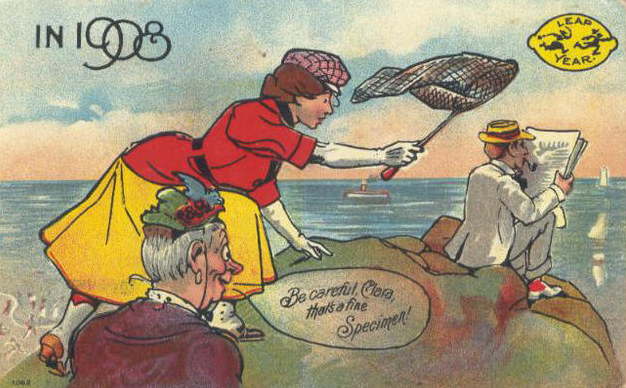
Picture of woman trying to lasso a manEvery four years, we get a unique and wonderful opportunity–an entire extra day in the finite cycle of time to do whatever we want.

Leap year traditions date back hundreds of years, the most famous of which is the Irish tradition of young women proposing to their often reluctant-to-wed sweethearts on February 29th. Many other Leap year traditions follow along this same theme of women taking matters in their own hands to find wedded bliss. Here are some modern twists to Leap Year traditions for you to consider starting:

  • Say a little prayer—this tradition dates back to ecclesiastical times where a member of the clergy would say a prayer for couples contemplating marriage in case the person being proposed to said “no”
  • Throw a Leap Year party—this was a chance for women to ask a man to dance, but you can just make it an excuse to throw a once-in-every-four years blow-out bash
  • Send a card—this tradition stems back to the days when women would send postcards to men as invitations to a Leap Year party—why not send a thank you note or note of appreciation to someone you know to make their day, or have a little fun and send a note from a secret admirer
  • Buy a new pair of gloves: Queen Margaret of Scotland in 1288 required that fines be levied if a marriage proposal was refused by the man. The fine was a pair of leather gloves, a single rose and a kiss (the gloves were meant to mask the ring finger of the woman)
  • Of course, if you’re single, and there’s someone in your sights, this is your chance to go for it!

I thought I would add a few of my own Leap Year traditions to the list:

  • Brew a special batch of Leap Year beer or if you’re a winemaker, Leap Year wine to imbibe throughout the year
  • Declare Feb 29th Reverse Roles day. If you have kids, make them the parents—tell them they can make all the decisions about what you eat and do that day. If you’re in a relationship, switch roles—whatever household duties you’d normally do, switch with your partner
  • And my personal favourite: lobby the government to declare Feb 29 a National Holiday so we can truly gain an extra day in the year to do whatever we want (who’s in?)This week’s #HappyAct is to adopt one of these Leap Year traditions or start your own. How will you celebrate Leap Year? I’m off to buy new leather gloves. Leave a comment.

How well do you bounce?

George Patton quoteHere’s a riddle for you. What do Taylor Swift and Wipeout have in common? They are teachers of resiliency.

My kids love Wipeout, that show where people jump from huge balls in a wacky obstacle course. Inevitably, they get knocked down, and the audience waits to see how quickly they can get back up and complete the course.

We all get knocked down in life. It’s how you bounce back, or in the words of TSwift, Shake It Off that is a real test of character. If you can develop resiliency, you’ll have far greater chance of being happy.

Here are 7 things I’ve found has helped build resilience.

  1. Always look for a silver lining. No matter how bad things are, see if you can see a positive —what did you learn about yourself or the other person if someone else is involved, or maybe just be proud of how you handled the situation.
  2. Believe all things happen for a reason. This has been a personal mantra of mine for years. It leads to acceptance faster, and then you can move on.
  3. Share the load. The first thing Dave and I do when we have a bad day is unload on each other. It’s one of the things I love most about him—that no matter what happens, I can come home and share my feelings and he will always listen and support me.
  4. Be self-aware. Take time to deconstruct what happened and why it affected you the way it did. Don’t dwell on the past, but be self-aware to learn and grow. Read my earlier post on developing emotional intelligence.
  5. Refocus on what’s important. Once you’ve deconstructed the event, focus on the future and what’s next. Set goals. Decide where you go from here and take decisive action.
  6. Recharge your batteries. When we’ve been knocked down, it takes a toll, both physically and emotionally. Take time to recharge your batteries. Go for a walk, zone out, do something that will help you get your inner strength and resolve back.
  7. Laugh in the face of adversity. This one’s easier said than done, but sometimes forcing yourself to laugh or trying to find humour in the situation can help.

This week’s #HappyAct is to think about how resilient you are. When you get knocked down, how fast do you bounce back? Try some of these tips to help build your resiliency. Leave a comment–how do you stay strong so you can bounce back?

Toast your buns

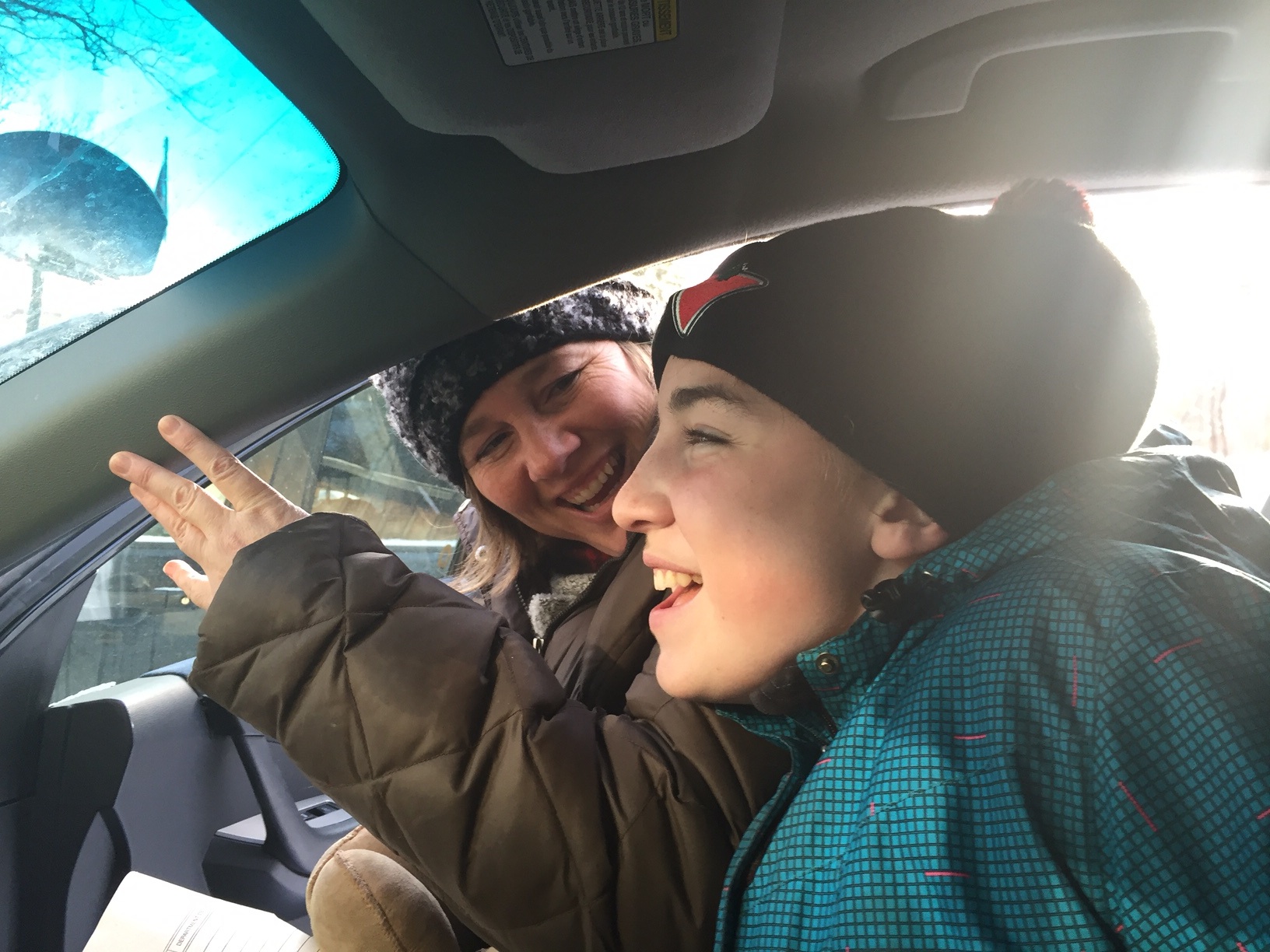
Mother and daughter in car
Grace and I fighting over the heated car seats

Minus 27 degrees Celcius. The deep freeze is finally here. The consensus on Facebook yesterday seemed to be the best way to beat the cold was to stay inside.

Not us. We spent three hours down at the lake yesterday, clearing off the rink, skating, skiing and even having a hot dog cookout. After warming up inside, we headed out again, this time in the car to Westport for a church spaghetti supper.

I don’t consider myself high maintenance. I don’t own a Coach purse or Gucci wallet. I drive a 10-year old Honda and I’m just as happy with a simple pasta supper at home or at the church in Westport than getting dressed up and going out to a fancy restaurant.

But there is one luxury I have come to appreciate, especially in the dead of winter–heated car seats.

Whenever we venture out on a cold day, the girls and I race to Dave’s car and fight over the front seat. The victor hops in the passenger side and cranks the dial to 24 or 25 and waits for the warmth of the seat to make their tush tingle. It’s luxury, pure luxury on a cold winter’s day.

Clare usually wins, because she “claims” she gets car sickness in the back seat of Dave’s car. Grace and I think it’s a sinister ruse. Trust me, it’s hard to be sympathetic when the little minx blurts out “My buttocks are burning!”

Happiness isn’t a warm puppy when it’s minus 27 outside. Happiness is a heated car seat.

This week’s #HappyAct is to fight for the front seat, or find something to keep your buns toasty warm. And if one of your kids claims they feel car sick, be heartless. Race as fast as you can to claim the front seat–no butts about it.

Forget the Super Bowl, watch the Puppy Bowl

puppy bowl logoI used to think the biggest TV sporting event of the year was the Super Bowl. I was wrong. Puppy Bowl 12 kicks off today at 3 p.m. Sponsored by Animal Planet, and billed as the cutest sporting event ever, the bowl of dreams features 49 players from different animal shelters across the United States playing for #TeamRuff or #TeamFluff.

There’s a tailgate party starting at 2:30, Pup Close and Personal features on each player and a Kitty half-time show.

If you’re on Twitter you can follow @MeeptheBird for the latest news, puppy drama and locker room moments from inside the stadium.

Who are you going to cheer for, Bonnie, Clyde, Wrinkles, Cream Puff or maybe Brooklyn? All the puppies playing in today’s bowl are either up for adoption or have been adopted.

As they say in one of their trailers for today’s show, “They can smell victory, and I’m pretty sure they will lick it too.”

This week’s #HappyAct is to forget #SuperBowlSunday and watch the #PuppyBowl. Check out this video featuring some of this year’s line-up. And special thanks to my friend Tim Aylesworth for helping me discover Puppy Bowl mania!


Develop your emotional intelligence

EQI’ve been reading a lot about emotional intelligence lately. Emotional intelligence is the ability to recognize, understand and manage emotions. Studies show that people with high emotional intelligence have better mental health overall, higher job performance and satisfaction, and are strong leaders.

While I haven’t read enough about emotional intelligence to know for sure, it seems safe to reason that people who are emotionally intelligent are also happier. If you can recognize, understand and manage your own emotions and the emotions of those around you, you are far more likely to be able to connect with people and be happy with who you are.

The article, 13 Habits of Exceptionally Likeable People, lists thirteen habits of people who are emotionally intelligent that make them likeable. You can read the full article—it’s quite interesting, but for the purpose of what makes you happy, I will focus on these seven:

  • Be curious and ask questions—it shows you care, but it also pays off in dividends in terms of learning new things, understanding, and acceptance
  • Be genuine: it will make you feel confident and instill trust in others
  • Be open-minded and don’t pass judgment
  • Be consistent—people want to know what to expect from you
  • Balance passion with fun—be serious when serious is called for, but don’t be afraid to have fun
  • Use positive body language and words. Remember “how you say something can be more important than what you say” or in the words of mother Maya, people won’t remember what you say or do, but they will remember how you make them feel
  • Smile and greet people by name

Here’s the good news: we all have the capability to build our emotional intelligence. This week’s #HappyAct is to raise your emotional IQ. How well did you listen to others? Did you smile and greet people by name? Were you consistent and open-minded? Have a great week everyone.

Take Kid President’s Awesome Year Challenge

 I was researching videos for work last week and watched a bunch of the Kid President videos. I found this one from 2013 I hadn’t seen before, Kid President Awesome Year Challenge.

I know it’s the end of January, so I might be a bit late to the party for New Year’s resolutions, but I’m taking his advice and throwing a “Take the Kid President Awesome Year Challenge” party and inviting all of my readers to make 2016 awesome.

Watch the video and then decide what you’ll do to make 2016 awesome. In the video, Kid President asks, “have you watched the news lately?”, then shakes his head. It’s easy to shake our heads and despair about what’s going on in the world. Or, we could do something about it, even if it is just small things like opening the door for the person behind us, giving someone a hug, or a high five. I mean, that’s what this blog is all about. We need to make the world a happier, more humane place, one happy act at a time.

This week’s #HappyAct is take the 2016 Kid President awesome year challenge and choose three things you will do to make 2016 the most awesome year ever, for you, your family and friends, and one for a complete stranger or the world we live in. I’m going to think about mine and maybe do a bit of research first. After all, I don’t even know if you can send a corn dog in the mail, but I’ll find out.

7 Ways You Can Score Free Stuff

Family with free t-shirt and hatsWith cauliflower costing $7 these days, finding ways to save money is a smart strategy. Finding ways to score free stuff is even smarter.

Last night we were at the KROCK Centre watching the Kingston Frontenacs Game beat the Niagara Ice Wolves. It was blue and white night, and after the whistle, they were throwing Maple Leaf t-shirts into the crowds. Home Depot held a drilling competition during one of the intermissions and were giving away free hats. We scored on both fronts at the Fronts!

Then on the way home, we’re in the Tim Hortons drive thru and they made a mistake on our order so we scored an extra two donuts and hot chocolate. It was a banner night in the Swinton household.

Scoring free stuff is great on the pocketbook, but it’s also just pure fun. Here are seven ways you can score free stuff:

  1. Attend a sports event. At the last three or four games we’ve been to, we’ve scored free t-shirts and hats. You don’t have to spend a mint either on the admission ticket. Last year we went to the Queen’s-Ryerson men’s and women’s double header basketball game and scored free t-shirts.
  2. Shop at Costco. Sure, you may wind up a few hundred dollars in the red when you leave the place, but if you try all the samples, you’ve basically scored a free meal.
  3. Sign up for a charity walk or ride. Many charity events, like the Big Bike for Heart and Stroke give you a free gift for different pledge levels—a win-win for everyone.
  4. Look for introductory offers for organizations. As an outdoorsman, Dave takes out an annual membership to the Ontario Federation of Anglers and Hunters. They have this amazing introductory offer where you get a tackle box full of lures, a reel, fishing line and more.
  5. Watch for 2 for 1 coupons on items, especially if it was something you were going to buy anyway. If you don’t need the second item, tuck it away for a gift.
  6. Attend a trade show or fair. These are goldmines for scoring free stuff!
  7. When travelling, research which local attractions are free or have free days. When I was in Washington last year I was surprised to learn that all of the Smithsonian museums are still free to the public. This may not technically qualify as free stuff, but with the high cost of vacation travel these days, finding free things to do is a fantastic score.

This week’s #HappyAct is to see what you can score for free this week. Just be prepared for the inevitable argument when your nine-year old insists on wearing her new Maple Leafs t-shirt to bed when your Canadiens loving spouse bans all blue and white in the house. What’s your best free stuff score? Leave a comment!

Puzzle and colour therapy

colouring sheetOne of the hot gift trends this holiday season was adult colouring books. Yes, you heard me right, adult colouring books. The idea is you de-stress from life by sitting down and colouring, just like you did when you were a kid. I had several friends who received these books as gifts this year.

It scares me a bit that we need adult colouring books as a society, but as I started thinking about it more, I can see why they’ve become such a craze. We also love to do puzzles in our house, which is along the same lines.

There are many therapeutic benefits of colouring and doing puzzles. In a world where pens and pencils have been replaced by computer keys, the tactile enjoyment of picking up a crayon and creating beautiful combinations of colours and artful designs is immediate. And while puzzles don’t give you the same creative fulfillment, they do give you an incredible sense of satisfaction as each piece takes you one step closer to finishing the darn thing and seeing the big picture.

I think what makes colouring and doing puzzles so therapeutic is you can literally shut off your brain when you do them. We need this. We suffer from information overload. We need to take time to free our minds and let our brains zone out.

It’s an unusual rainy day in January. Look at it as a gift. A gift to give yourself permission to do nothing, be still and enjoy down time.

This week’s #HappyAct is to turn off the TV or computer today, forage into the back of that closet, and get a puzzle out or colouring book and start puzzling or colouring. Enjoy your lazy Sunday. Here are two mindless creations from our house this past week.

puzzle


Love in the workplace

Tomorrow, most of us will go back to work after some much deserved time off. Not a single person I asked this year had a new year’s resolution about work and yet global employee engagement is at an all time low.

A 2015 Gallup study showed just 13% of employees are engaged in their workforce. Gallup defines employee engagement as employees being involved in, enthusiastic about and committed to their work and workplace. The remaining 87% of employees are either not engaged or indifferent–or even worse, actively disengaged and potentially hostile to their organizations.

What if we had more love in the workplace? Not romantic love, but the supreme emotion of love that affects how we feel, think and motivates us to act.

One leadership expert, Mark Crowley thinks love is the answer. In his Fast Company post, “Why engagement happens in employees hearts, not minds, Crowley says while traditionally using the word “love” in the context of the workplace has been taboo, when people feel cared for, nurtured and growing they will serve the organization well.

Another fascinating thing Crowley discovered in his research is “while people used to derive their greatest sense of happiness from time spent with family and hobbies, how satisfied workers feel in their jobs now determines their overall happiness with life. This monumental shift means that job fulfillment has become essential to people everywhere.”

I think employee engagement boils down to this. Your pay cheque is what makes you show up for work every day. What you do with your time when you’re there depends on four things:

  1. the degree to which the work you do is aligned to your passion and strengths
  2. the relationships you have at work and the “love” factor Crowley talks about
  3. how much you believe and are committed to the purpose of the organization,
  4. and what I call the “negative quotient”: the degree to which negative factors at work affect your ability to succeed. This can be anything from office politics to feelings of anxiety around change or direction to not having access to tools or resources to help you do your job (what experts call being “enabled” when defining sustainable engagement)

Employee rewards are important for attracting and keeping good talent, but not necessarily motivating people. Only people and love can motivate people.

If you have five minutes, read his full post. There are some great basic nuggets in the article: companies only focused on profits without a compelling mission will inherently neuter employee engagement and the importance of recognizing people.

This week’s #HappyAct is to love your co-workers and the people at work. And if I don’t say it enough to my team: thank you for everything you do. I think it’s a miracle you show up at work every day and do the amazing work you do. I love you all.