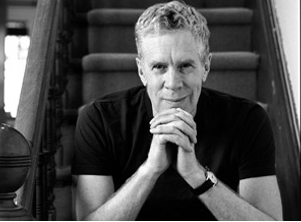
Lessons learned from the great Stuart McLean

Stuart McLeanThis week, Canada lost a national treasure. Stuart McLean, best known for his radio program The Vinyl Café and early days on CBC radio, passed away at the age of 68.

Stuart was one of the best teachers and mentors I ever had. I first met Stuart in 1984 where he was one of the young, hipper instructors in the Ryerson school of journalism. (I’m smiling as I write this because Stuart never in a million years would have considered himself hip.) We were instantly smitten by him.

Stuart wasn’t just a teacher. He was a friend. He was one of us. He’d invite us to his home for coffee on the weekends to hear our story ideas, and review transcripts or tape, or go out for a beer after a full day in the studio.

As a teacher, he was patient, encouraging and insightful. He’d let us explore and discuss ideas, perched on a desk at the back of the room, always watching and observing and jumping in when needed to steer us in the right direction. He knew the greatest learning was by doing and exploring, and gave us full reign to make mistakes, learn and grow.

While many people may remember Stuart as a great storyteller, I will always remember him as a great listener. Stuart had this uncanny ability to make you feel like you were the only person in the room. He gave people his undivided attention and hung on their every word.

I remember the time Stuart turned the tables on me and interviewed me for his radio program and one of his books. The segment was on Ernie the Hot Dog Man. Ernie was a fixture on Ryerson campus, and Stuart interviewed some of his students to find out what Ernie meant to us.

It was unnerving to be on the receiving end of the microphone and Stuart’s steely gaze. He thrust the microphone under my chin and started asking questions. His eyes never wavered once from my face. He said nothing–just sat and nodded with a slight grin on his face. I realized after I had watched a master at work. Stuart had perfected the art of listening and knew how to get his subjects to open up and share their inner most thoughts and feelings simply by staying silent.

Here are just a few of the things I learned from Stuart McLean.

I learned that every person in this world matters and has a story worth telling.

I learned to be curious and to ask questions.

I learned that people appreciate when you take an interest in their lives

I learned the importance of listening with your heart

I learned the power of silence in drawing people out

Most of all, I learned what it meant to be a good human being.

As I was reading the many tributes to Stuart this week online, I came across one story about his philosophy on teaching. The first duty of a teacher he said was to build confidence, no matter how deep you may have to dig. “If there’s something good in the assignment turned in, praise that,” he said. “If the writing’s bad but the broadcast quality is good, praise that. If the broadcast quality is poor, but they’ve organized it well, praise that. And if everything is bad, but their posture is good, well, dammit, praise that.”

I’m still learning from this great man.

Stuart, I know you’re up there in the vinyl café in the sky, microphone in hand, capturing new tales. This one’s for you.

Aim for progress, not perfection

strive for progress signIn my line of work, I make it a mission to cut out jargon. There is one buzzword I’ve adopted and even grown fond of lately–the word agile.

More and more, you hear about agile teams, projects and processes. Agile methodology is when you plan out your tasks or work in phases, then measure and tweak along the way.

The reason why I like this word so much is because the agile approach embodies an inherent philosophy that has a direct impact on happiness —the importance of aiming for progress, not perfection.

Two of the leading experts in the field of perfectionism are Canadians—Paul Hewitt, a professor at the University of British Columbia and Gordon Flett at the University of Toronto. In just one of their many studies of 10,000 professors, they found a statistical co-relation that those pursuing a perfect solution had a lower number of publications, lower amount of citations and a lower impact on their profession. They also had a higher rate of depression, anxiety, eating disorders and, shockingly, a higher rate of suicide.

I’ve never been a perfectionist. I can’t imagine the burden that weighs on people of trying to be perfect or achieving the perfect result all the time.

I’ve learned there are many ways to skin a cat. When my team works on a design concept or develops communication plans at work, there isn’t any single right or wrong answer or method. There are simply different options and approaches with different merits and risks. You choose a course, try it out, see what works, then adjust your plan.

You learn most when you fail. Unfortunately one of the biggest issues in business today is organizations say they are willing to let their employees fail, but when push comes to shove, the focus on the bottom line wins out. Companies are so lean they can’t afford the time, money or resources to fail.

Still, aiming for progress, not perfection is a philosophy that can benefit just about every aspect of our lives. Trying to lose weight? Aim for progress, not perfection. Studying for a big exam? Planning a large event? You know the answer.

This week’s #HappyAct is to aim for progress, not perfection. Perfection is an elusive dream. Instead set small, baby step goals, and celebrate when you hit milestones.

Where do you turn when you feel all alone?

sign that says this too shall passI’ve learned something important about happiness this week. It’s hard to be happy when you feel all alone in the world.

This week, for reasons I won’t disclose I’ve felt very alone and isolated. In fact, I can’t ever recall feeling quite this way before. I struggled to find my own inner happiness. I tried, oh, how I’ve tried, but I’ve learned it’s difficult to be happy when you feel all alone.

Here are some of the things that helped this week. Hopefully they will help you too if you ever find yourself feeling this way.

  • Being around other people. On Friday, I went for a skate at Market Square in Kingston. Just being around other people laughing and having fun outside on a beautiful cold winter’s day made me feel better
  • Spending time with my animals. No matter what, your pets will always love you.
  • Spending time outside—feeling the sun on my face, going for a walk on a crisp wintry night surrounded by the stars
  • Calling an old friend and hearing a friendly voice
  • Playing the piano. When I play the piano, I forget everything else and just concentrate on the notes, and the beautiful melodies floating up from the keys.
  • Writing—I guess it’s no surprise I’m writing this post at 4 in the morning when I couldn’t sleep

When all else fails, indulge in a good bout of tears, preferably in a hot tub under the stars. At least, that’s what my Mom always used to say (well, not the hot tub part–that piece of wisdom is mine).

This week’s #HappyAct is to share a comment on this week’s post. Have you ever felt all alone in the world? What did you do? And don’t worry about me. I’m hopeful, this too shall pass.

Ed. note: While generally I try to post positive, uplifting happy acts each week, I believe it’s just as important to know and spark discussion on what makes us unhappy.

Top Ten Happy Acts of 2016

top 10 happy acts of 2016While you’re having a hooga holiday, why not curl up and revisit some of my top happy acts in 2016? Enjoy the read!

On the lighter side

  1. Toast your buns—readers warmed to this post on heated car seats.
  2. Life’s a beach
  3. Fall Fan Fair
  4. Forget the Super Bowl, Watch the Puppy Bowl. It’s official. After this year’s Grey Cup, there’s no contest. Three downs beat four downs hands down. The Super Bowl is usually a snoozefest so you might as well watch the puppy bowl.

On work and wellbeing

  1. How well do you bounce: seven things to help you be more resilient
  2. Write your own employment contract: ideas for maintaining work-life balance
  3. Be a thermostat, not a thermometer: how to deal with stress

On making the world a better place

  1. Reach out your hand in peace and friendship: I wrote this post before Trump, before Aleppo. If you are bewildered about what’s happening in the world, read this post.
  2. Sharing the happy and the bad
  3. Say what you mean

There you have it. My top ten #HappyActs of 2016. Watch next week for my top predictions for 2017.

Joy to the world

joy-to-the-worldThe word “joy” is rarely used until the Christmas season arrives when it permeates our language. That’s because many Christians equate joy with the religious love of God for all creatures on earth.

Even if you aren’t religious, the holiday season can be a time of great joy for people who experience deep contentment, gratitude or happiness.

What is the difference between joy and happiness?

Alan McPherson, a retired minister of Central Presbyterian Church in Hamilton, distinguishes between happiness and joy this way: “Happiness is an emotion. Joy is deeper, more long-lasting. It is based more on inner certainties, not external events.”

Healthpyschology.org has a similar, but slightly different definition, saying happiness is an emotional state of well-being defined by positive feelings ranging from contentment to intense joy.

There are many passages in the bible that use joy and happiness interchangeably and yet religious groups often equate joy with God’s love to mean a more deeper, long-lasting emotion.

For me, the moments of joy in my life are the times when I have felt supremely happy and at one with the world. These moments are rare, but so very special.

This week’s #HappyAct is to find joy this holiday season. Celebrate peace on earth and a time when joyful all ye nations rise. Listen to a choir echoing its joyous strains and repeat the sounding joy. The weary world rejoices for yonder breaks a new and glorious morn.

The gift of time

watch wrapped up as a giftTime is a precious commodity. This weekend, we will receive a rare and special gift: an extra hour in our busy lives.

Here are ten things I never seem to have time for that you can do with your extra 60 minutes from Daylight Savings Time:

  1. Get a head start on your holiday shopping. Adidas and Reebok outlets are featuring 40% off everything in the store this weekend as part of their friends and family event and Indigo has a special 25% promotion on
  2. Go for a long walk in the woods before deer hunting season starts
  3. Sort the stray socks on your dryer and see if you can find a match
  4. Make a prediction for Tuesday night’s U.S. election. Check out sites like oddssharkcom and Paddypower.com, both predicting a 75-90% chance of a Clinton victory
  5. Clean out your pantry or medicine cabinet
  6. Linger with family or friends after a meal over a bottle of wine
  7. Give yourself a manicure or pedicure
  8. Change the batteries in your smoke alarms and check your carbon monoxide detectors.
  9. Start the project you keep saying you’ll start but never have time for
  10. Sleep in

Guess which one I’ll be doing? So much for best intentions. What will you do with your extra hour? Leave a comment.