It’s okay to be sad

happy and sad face pictures

People don’t talk about being sad anymore. They talk about being unhappy, struggling with their mental health or being depressed, but they don’t talk about being sad.

It’s like the word has been eradicated from our vocabulary.

This is a dangerous and disturbing trend because it presupposes that when we are sad, we have an illness or problem, when sadness is a natural emotion.

The other day I asked a friend how they were doing after spending the first Christmas without their Mom. My friend naturally admitted there were times she was sad, missing her mother very much.

Last week, we dropped Clare off at the airport in Ottawa. We knew it would be the last time we would see her until spring, and I was very sad for a day or two, missing her terribly as we returned to a quiet, empty house.

Author and happiness researcher Helen Russell in “How to Be Sad” says that in order to be happy, you need to allow yourself to be sad sometimes, but most people are terrified of being sad.

Exacerbating the problem is society’s newfound hyper-focus on mental health. We are so focused on mental health that there is a propensity to self-diagnose a deeper issue or problem when we may just be in fact, experiencing temporary, normal sadness.

We are often sad when we experience grief or loss, all inescapable emotions in life. If we are sad, it is because we’ve been blessed to have held something dear and joyous.

For example, as a parent, it is hard to watch your child experience heartbreak, but if they are sad from having their heart broken, it means they have lived and loved, and sadness and heartbreak are all part of the process of loving and finding the right person.

So the next time you find yourself feeling a little down, remember it’s okay to be sad.

Listen to the birds

Trumpeter swans in water

Each year, between December 14 and January 5, people from across North America participate in one of the largest citizen science projects in the world, the Christmas Bird Count.

Survey teams and individuals count birds in the field or at feeders on their property and record the birds they see. The data is submitted to the National Audubon Society and analyzed by Birds Canada to provide insight on the number, movements, and distribution of winter bird populations.

Studies show that seeing or hearing birds can have a positive impact on your mental wellbeing and happiness. One King’s College London study provided 1,200 people from around the world with an app. They were asked at random intervals to record how they were feeling such as happy or stressed and what they heard or saw, like trees and birds.

The study concluded everyday encounters with birds can be linked to “time-lasting improvements in mental wellbeing” and “these improvements were evident not only in healthy people but also in those with a diagnosis of depression”.

This year, the Frontenac Christmas Bird is on Saturday, December 14 and is celebrating its tenth anniversary. There are lots of special events planned, including a Winter Birds 101 crash course from 9-9:30 am, a Kids Bird Count from 1-3 pm with bird specimens, interactive activities, and a short walk to count birds, and a special dinner starting at 4 pm, all happening at the Sydenham Legion Hall. Wintergreen Studios is also hosting a winter bird workshop and guided count from 10 am to 3 pm on their property (register on their website here).

If you live north of Kingston and are looking for a fun day out in nature to lift your spirits, sign up to participate by emailing bonta.johnson@sympatico.ca or on Wintergreen’s website for their event. You can register or find out when the Christmas Bird Count is happening in your region on the Birds Canada website.

Need a smile? Watch one of these Best of the Nest Videos from All About Birds.

Ed. note: I took the above photo of trumpeter swans on a lake near my house during the 2023 Christmas Bird Count.

Secrets to happiness from around the globe

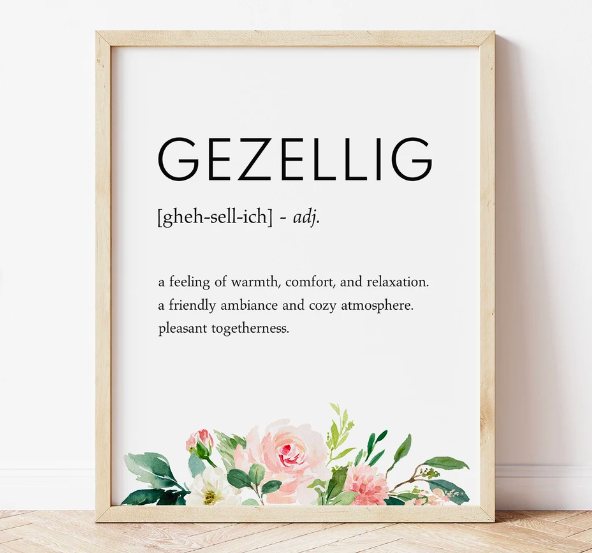
Sign with definition of Gezellig

Every country has its own unique belief system and language to describe happiness. Let’s take a quick trip around the world to see how other cultures seek and find happiness:

Joyous Icelanders embrace theta reddast, the belief that everything will work out in the end.

Italians believe dolce far niente, the sweetness of doing nothing.

In France, people exude joie de vivre, the joy of living.

Chinese xing fu is the art of finding your purpose.

The Dutch celebrate Gezellig, time spent with loved ones in a convivial and cozy atmosphere.

Germans believe in ruhe, finding peace and quiet.

And then there are the Scandinavians–the Danes known for hygge, the art of creating comfort and coziness and the Finns who value sisu, having the psychological strength to overcome extraordinary challenges.

Some countries have embedded happiness into their political and economic systems. Bhutan measures Gross National Happiness instead of GDP based on four pillars: ecological sustainability, preservation and promotion of a free and resilient culture, good governance and equality before the law, and sustainable and equitable socio-economic development.

I think North Americans could learn much about happiness from these other cultures. The ones that resonated most with me were the sweetness of doing nothing, finding peace and quiet, and believing everything will work out in the end. Which ones resonated most with you?

If you’d like to learn more about happiness around the globe, read The Atlas of Happiness: The Global Secrets of How to be Happy by Helen Russell. The common denominator in all these cultures? The power of positivity goes a long way. Have a happy week.

The happiness number in 2024

Denzel Washington quote: "Money doesn't buy happiness. Some people say it's a heck of a down paymen though."

In 2010, Gallup published a study asking Americans what amount of income would make them happy. The answer was $75,000 (USD).

In a new study released this summer, Americans were asked what amount of money would make them feel content, as measured by their liquid net worth. 56% of Americans responded $200,000.

This amount would give them enough of a safety net, peace of mind, and presumably extra funds to pursue their interests and passions.

Millennial respondents said that they would be more content with a higher salary job, whereas Gen Z respondents preferred having a higher liquid net worth. The average salary in the United States at the end of 2023 was $59,384.

So what’s our takeaway here?

As families grapple with the higher cost of living, it’s getting harder and harder to maintain a financial cushion, and yet having that cushion helps alleviate stress, anxiety, and contributes to our overall happiness.

To maintain that cushion, we may need to change our spending habits. It’s more than about dollars and cents. It’s about happiness and common sense.

What’s your happiness number? Leave a comment.

Finding happiness in the me age

girls taking selfies at a garden

They say the road to hell is paved with the best intentions. For almost a decade now, I’ve been blogging about happiness. I started this blog as an outlet for my writing and because I was fascinated by the juxtaposition of people living in a world with so much wealth, but struggling more than ever to be happy.

I’ve learned much about what makes me happy, the science of happiness and the intrinsic benefits of having purpose, showing gratitude and helping others.

I now fear instead of helping people live a happier life, I’ve contributed to the navel-gazing narcissistic culture our society has become.

Forget the #MeToo movement. We’re living in the age of #JustMe.

I know what you’re thinking. Every generation has claimed that the next generation is more selfish and self-absorbed than they were. Perhaps, but the advent of computers, cell phones, celebrity culture and the seismic shift in how we work and play in the past fifty years has propelled us into a whole new level of egocentricity.

Honestly, if I see another selfie of a 20-something posing sideways in front of a bathroom mirror holding up their cell phone with pouty lips, accentuated hips, and frosted tips, I think I’m going to lose it.

And don’t even get me started on the hyper-focus on resilience. Try telling a farmer living a hundred years ago in rural Canada with six mouths to feed and no running water you’re taking a break to “practice self-care” or going on a “forest therapy walk”, they’d mock you until their cows came home.

A sad and disturbing product of this #JustMe movement is we all have become more polarized in our views and unaccepting of other people’s opinions. What’s more, we don’t hesitate to share our views in the most public of forums. “We” are always right and everyone else is wrong.

It’s time we went from taking selfies to choosing selflessness, from practicing self-care to caring for others.

It was Ghandi who said, “The best way to find yourself is to lose yourself in the service of others.”

This week’s #HappyAct is to change the #JustMe narrative and find happiness by looking outward instead of in.

The comfort of routine

Author reading the Toronto Star

I have a confession to make: I’m a creature of habit.

On the weekends, my morning ritual is to sleep in, wake up, grab a coffee and read the morning papers or flyers (yes, I am a dinosaur). Since I’m not a morning person, it takes me at least an hour or two to get moving. Once up, I’m good with starting my day, whether that’s running off to hockey, walking the dog, meeting a friend for coffee or working around the house.

I come by this trait honestly—I inherited it from my father who was the very epitome of routine. Dave used to say you could set your watch by Dad and know the exact hour and minute when he would walk the dog, read the papers and have his first rye of the day.

I used to feel like I had to apologize for my habitual tendencies until I read an article from Northwestern Medicine linking the positive mental and physical health benefits of having routines. The article stated having a routine can help with stress, sleeping better, eating healthier and being active. Routines can help us achieve balance in our lives and make time to do the things we love and that keep us healthy.

Of course, my routines are the butt of my family’s jokes, but even that has become weirdly predictable and reassuring.  

I couldn’t care less about the science and what my family says. For me, there is just something so comforting and relaxing about the routines I love. They are a safe haven in a crazy world. Even writing this blog on Sunday mornings has become a welcome routine.

This week’s #HappyAct is stick to your guns and the routines you love. Gotta go. My second coffee of the morning awaits.

Happier Together

child smiling in Kinshasa

This Wednesday, March 20 is the International Day of Happiness. The day was declared by the UN in 2012 to recognize that happiness is a fundamental human right and to encourage nations and individuals to spread happiness and make happiness a priority.

The theme the UN has chosen this year is #HappierTogether. Here is a picture from their photo album of people from all over the world smiling, happier together.

It’s such a poignant theme. As individuals and societies, we’ve withdrawn from human connection, partly out of necessity from COVID-19, but also self-imposed.

Technology has only exacerbated this trend. We delude ourselves into thinking we’re more connected now by cell phones and technology, but these devices have somehow divided us, becoming platforms for discordant voices and viewpoints or have become something we hide behind instead of doing the real work of connecting with people in person.

Even our work lives have become more isolating with millions of workers now not even leaving their homes to experience human connection.

There are certain groups that are at higher risk of being unhappy in isolation, seniors and youth being two critical demographics.

After COVID, I blogged about “languishing” and wondering why I wasn’t chomping at the bit to get out and reconnect with people again. I concluded that it wasn’t because I had social anxiety and didn’t miss people, I just didn’t have the energy to re-enter the world.

It’s time. Time for us to reach out, be kind to each other, and understand that without human connection, most of us will never truly be happy.

It’s time to find the energy and make a conscious effort to be happier together.

This week’s #HappyAct is to do something to be happier together. Volunteer in your community, invite a neighbour over for a drink, check in on a senior. Post a picture of you smiling this week with people who make you happy and who you enjoy spending time with.

Happy International Day of Happiness!

My family smiling and acting goofy

How to be a happy shopper this Black Friday

black friday poster

Black Friday and the holiday shopping season is upon us. Canadians are being lured by savvy marketers with promises of up to 70% off, Black Friday Deals and Super Savings you can’t pass up.

While some people refuse to cave to the consumerism of the season, most of us succumb to varying degrees to the shopping craze this time of year.

Which begs the question. Does retail therapy make people happy? The science shows the answer is yes.

A 2014 study from the Journal of Consumer Psychology found that retail therapy not only makes people happier immediately, but it can also fight lingering sadness. 

Even just the anticipation of making a purchase or treating ourselves to something we desire releases dopamine, the hormone neurotransmitter in our brain that makes us feel good. 

The choices we make when shopping can restore a feeling of personal control and autonomy which helps in fighting feelings of sadness and anxiety over the things that are outside of our control in the world.   

In another 2014 study by University of Michigan, researchers showed that purchasing things you personally enjoy can be up to 40 times more effective at giving you a sense of control than not shopping, and those who actually purchased items were three times less sad when compared to those who only browsed.

Shopping also stimulates our senses, creating pleasure, especially this time of the year when the stores have festive displays and merry music playing.  

But before you go filling up your virtual or actual shopping cart, remember these caveats. For every instant hit of pleasure, there is a corresponding pang of potential regret when it comes time to pay the bills. You need to calculate whether the pleasure from the purchase would exceed the pain from the cost, and whether you can afford the purchase at all.

The Journal of Consumer Psychology study showed that even just the act of filling up your online shopping cart, then abandoning it, can create the same pleasure as if you had actually made the purchase.

In the end, spending less money may be more rewarding.

This week’s #HappyAct is to be a smart, savvy and happy Black Friday shopper. Find a few bargains and enjoy the small hit of dopamine, but don’t do anything you’re going to regret later.

Special #HappyAct Experiment: Go online this week to one of your favourite retailers and fill up your shopping cart with a bunch of items, then close down your browser without making the purchase. Did you feel happier just browsing? Leave a comment!

One simple thing you can do starting today to be happier

I’m a huge fan of TedTalks. Recently, I stumbled across one on the science of smiles by Ron Gutman, a professor from Stanford University whose mission is to help everyone live happier, healthier lives.

Gutman talks about a 30-year old study from the University of Berkeley, California that looked at old photos in school yearbooks and measured the success and well-being of the graduates throughout their lifetime based on their smiles. The students with the biggest smiles tended to lead more successful, well-rounded lives.

Another study involved looking at old baseball cards and the longevity of the ball players in correlation to the smiles on their cards. The ball players with the biggest smiles lived the longest.

Gutman says one-third of people smile more than 20 times a day, but sadly 14% of us smile less than 5 times per day. Children smile more than 400 times per day.

He claims smiling creates the same positive brain stimulation as eating up to 2,000 bars of chocolate!

Smiling is one of the most basic expressions of humans and something we all do every day.

This week’s #HappyAct is to make a conscious effort to smile at least 20 times a day this week and if you see someone sad, struggling or frowning, ask what’s wrong, tell them a joke, or do something to put a smile on their face.

Watch the full Ted Talk, the Hidden Power of Smiling.

Happiness by the numbers

bright yellow sneakers

Some time ago, I stumbled across these statistics on happiness.

infographic with stats on happiness

There’s not much we can do about our age and genetic disposition, but we can make an effort to reach out to friends, spend time with our loved ones and focus on what’s most important in our lives: developing positive relationships.

If all else fails, wear something orange or yellow.