Learn when to say yes and no

Volunteers working voluntary road toll

One of the greatest skills you can learn in life is when to say yes and when to say no.

This applies to parenting, volunteering, work, relationships, and the list goes on.

Some career coaches would advise you to always lean in and say yes when tapped on the shoulder to take on a new role or responsibilities at work. Not at the cost of your happiness.

There were at least three times in my career when I was offered a different role not in my chosen field of communications that would have given me broader management experience where I said no. Would I have advanced further in my career? Probably. But I know for a fact I would have been miserable and to this day I’m grateful I made the right decision for me and for my family to be happy.

I’m now a retiree and one of my retirement pledges was to help my community more. I’m still navigating what this looks like. I’ve started volunteering at the community garden once a week that supplies our local food bank and Meals on Wheels programs, just finished my annual seedling fundraiser for the Sydenham Lake Canoe Club, and worked a shift for the Verona Lions for their annual Victoria Day voluntary road toll. I was very happy to say yes to all of these volunteer jobs.

I also have greater clarity on what I’ll say no to. I refuse to do another garage sale—they are just too much work (ironically, Dave volunteered at one yesterday morning), and true to my retirement pledges, I’ll never sign up for something where I have to be on Zoom or in meetings a lot. Been there, done that.

Some people say yes to everything. They are the heroes and backbones of every workplace and community. I admire these people, but I am not one of them.

Here’s the wonderful thing about saying yes. When you say yes to the things you enjoy, you feel good about your contributions and are far more confident and unapologetic about saying no to the things that won’t bring you joy.

Sometimes it all comes down to timing. There are periods in our lives when you want to do more, but you just can’t. You have enough on your plate. During those times, it’s okay to say no. The day will come when you can say yes again.

This week’s #HappyAct is to learn when to say yes and when to say no. And whatever your answer is, always prioritize your happiness or the happiness of your family in the decision.

Pictured above: My neighbour Odin and I working the Verona Lions road toll. All the money raised goes back into the community. Learn more about volunteering with the Verona Lions. Below: volunteers at the Grace Centre garden with the garden coordinator Josey Cadieux (Dave was whipper snipping and didn’t want to be in the picture). See this article in the Frontenac News for more on the garden.

Garden volunteers standing beneath an arbour

Revisiting the four-day work week

Me and my friend Barbara in front of the Thornbury sign

Recently, I’ve moved to a four-day work week. Dave started working four days a week a year ago. It’s all part of our plan to eventually transition into retirement.

I’ve worked a four-day week one other time during my career. It was a short span of three months when the kids were little and we had many doctors and other medical appointments. It was a lifesaver—the perfect mix of having a rewarding, vibrant career, but having enough time to focus on my family and friends and get things done at home.

I can tell you I already feel a difference in both my mental and physical health.

I feel more well-rested, my brain feels like it has more space to breathe, and I’m taking time more slowly.

I’m no longer rushing through the weekend, trying to squeeze in a million things before Sunday night arrives and I have to steel myself up to do it all over again.

I’m making more plans to do the things I want to do, whether it’s having a coffee on a Friday with a friend (a luxury!), tackling a project, a long weekend away, or just spending time with Dave on little day trips here and there.

I’m getting more exercise and already feeling the positive benefits of not sitting at a desk 8 hours a day which has increasingly become more difficult and painful over the past several years.

Yes, I’m liking this four day a week thing.

Now if only more employers would wake up and realize the benefits of a four-day work week and make it happen. The world would be a happier place.

The photo above is a picture of me and my girlfriend Barbara on one of my first three-day weekends this summer when I went to visit her in Thornbury. Read about our day at the Thornbury Cider Company to see the Clark Drag Show

The case for the four-day work week

comic showing person relaxing Friday, Saturday, Sunday

I’ve always believed that North Americans are workaholics. As a society, we allow work to rule our lives, from our waking hours to our sleeping thoughts (see my recent blog on sleep). In my heart, I’ve always felt more European when it comes to work.

In the past five years, I’ve been encouraged to see a growing trend of countries and businesses shifting to a four-day work week.

What’s interesting is in the UK and Europe, companies adopting a four-day work week are generally working less hours than before: between 30 to 32 hours a week.

In North America, not surprisingly, companies experimenting with a four-day work week in some cases are simply proposing to eke the same number of working hours out of employees, but in four days instead of five.

The four-day work week movement 4dayweek.co.uk says it is campaigning “for a four-day, 32-hour work week with no loss of pay which would benefit workers, employers, the economy, our society, and our environment”.

The UK recently published the results of one of the largest pilot studies on a four-day work week. About 2,900 employees across the UK took part in the pilot. Calling it a “major breakthrough”, 56 of the 61 companies extended the pilot and 18 companies made the arrangement permanent.

Of employees surveyed before and after the pilot, 39% said they were less stressed, 40% were sleeping better and 54% said it was easier to balance work and home responsibilities.

The number of sick days taken during the trial fell by about two-thirds and 57% fewer staff left the firms taking part compared with the same period a year earlier.

“The vast majority of companies reported that they were satisfied with productivity and business performance over the trial period.”

In Ontario, a growing number of rural municipalities are starting to transition to a four-day week. There are now seven municipalities offering employees the option of working a four-day week, the latest being Algonquin Highlands.

The executive director of the Ontario Municipal Administrators Association says it’s easier for rural municipalities to adopt a four-day work week because they are smaller, more nimble, and have more difficulty attracting and retaining talent, so it’s to their benefit to offer more flexibility in the workplace.

In Algonquin Highlands, one group of employees works Monday to Thursday, with another group working Tuesday to Friday. All employees worked an extra hour a day. It’s been a success. As Mayor Liz Danielsen says, “There’s nothing better than having happy staff.”

This week’s #HappyAct is to start the conversation in your workplace. Ask your leaders about a four-day work week.

My unscientific poll on work and happiness

happy co-workers

Recently I emailed a dozen friends and asked them three questions about how happy they were at work. The results were very revealing. The people who responded work in all sectors, government, private sector and self-employed. Here are the results of my unscientific poll on work and happiness:

My first question was, “Are you happy at work?”

More than half were not happy at work. Some said they were ashamed to admit it, because “they have a pretty good gig”; one person said they weren’t happy but planned to slog it out until retirement. A quarter of respondents said they were happy, and one person said at different times in their career they’ve been happy, and unhappy at other times.

When I asked what was the cause of their happiness or unhappiness at work,

On the plus side, the common themes were working with great people, loving what they do, and the variety of work. One person said they work in a low-stress environment and have an eight-minute commute, so they can come home for lunch every day if they want.

For those unhappy at work, here were some of the reasons they cited for their unhappiness:

  • Lack of involvement and inclusion and team camaraderie.
  • Being tired of dealing with some teams who don’t appreciate the work they do.
  • The inactivity associated with being on a computer eight hours a day.
  • One person said working within an environment where there are too many people in authority who “literally don’t have a clue what they are doing” and a “poisonous” atmosphere as a result of so many people being off on leave, creating more work for those left behind who are still working diligently.
  • One person who is self-employed said, “I’m bored, but I like the flexibility of what I do, so I stay at it. Also, the administration associated with being self-employed is a tough slog. I’m always behind on that, so that creates guilt that I’m not keeping on top of things.”

My final question was “What would make you happy or happier at work?”

  • Being valued and respected and having their work acknowledged was a common theme, along with being able to do more of what they love to do and having challenging projects.  
  • Better work-life balance, and being compensated fairly and seeing more transparency in salary grids were cited as other key factors.
  • One person said they’d like to have a friend at work and work with a diverse team.
  • The one person who was unhappy at work in the “poisonous” environment said they cope by focusing on their family, volunteering and sports and outdoor activities to remind themselves of what’s important in life.
  • On a lighter note, one person wanted a Keurig machine, a fitness room with a treadmill or exercise bike and another an office cat (for me, it would be a dog!)

So what does this tell us and what can we do to be happier at work? Scientific studies show having at least one good friend at work is a key contributor to happiness. Making sure we choose a positive environment where we work with good people and where our work is respected is critical.

As we emerge from this pandemic, we have a unique opportunity to redefine our relationship with work. At the core of the discussion should be these three questions.

Special thanks to the people who participated in my unscientific poll.

More reading on work and happiness

The future of work

future of work sign

There is a raging debate going on about the future of work. Companies are considering whether to continue to let employees work remotely, return to the office or adopt some form of hybrid model when the worst of the pandemic is over.

As I said last week, we’ve learned much in the past year. But I fear that as a society, we will let a precious opportunity slip through our fingertips: the opportunity to finally redefine our relationship with work, to seek a greater work-life balance and truly imagine a brighter future, one where we don’t just spend our days making a living, but living our best lives.

Here is my vision for the future of work.

First, employees would be able to choose how many hours they want to work a week. Imagine if you could say to your employer, I want to work 24 hours a week, 30, or 32 hours a week so I can pursue my passion, whether it’s painting, writing, running a side business, or volunteering.

Employees would have more flexibility to choose when they work. 6 a.m. to noon? No problem. I was reading one study where 15% of workers said they’d prefer to work in the evenings or at night so they could do things outside during the day. Depending on the role, why not? It could also help with child care challenges for working families.

We need to discover how to bring joy and fun back into our work world. The reality for many office workers is their day consists of never-ending emails and meetings, distractions and interruptions that is making us unhappy at work. When you feel like your day consists of putting out fires and you haven’t accomplished what you set out to do, it’s disheartening. Even before the pandemic, people were habitually checking email 74 times a day and switching tasks every 10 minutes. 

There are many, innovative solutions to making work fulfilling again.

Let’s start by hiring more people. I believe too many companies are running too lean. There are simply not enough people to do the work. If some people opt for shorter work weeks, there could be the opportunity to hire people and distribute work a bit more equitably to help ease stress and workloads.

We also need to be smarter about how we spend our time during the workday. Companies could establish designated meeting times, and work times to help people concentrate and accomplish meaningful work, without disruption.

Several years ago, a Fortune 500 software company in India tested a simple policy: no interruptions Tuesday, Thursday and Friday before noon. The company experienced a 65 percent increase in productivity but also reported employees experienced an increase in work satisfaction. They discovered the most important factor in daily joy and motivation was a sense of progress.

We’ve also learned working from home this past year the importance of human connection. We miss our colleagues dearly.

The future of work needs to include being together again, but not dictated by arbitrary policies. Being able to collaborate, have fun together, celebrate successes are all great examples of when it will make sense to bring employees together in person. Training is another thing we’ve learned is a much more richer experience in person than remote learning.

Good workplaces will develop a do good culture. Providing opportunities for employees to get involved in their communities, and volunteer for worthy causes will add a new layer of purpose to work. Some companies already offer up to five days a year for employees to volunteer for local charities.

The future of work also includes more vacation. There will be a pent-up demand for travel when borders open up. North Americans could learn from other countries like the UK where residents get 28 days of vacation a year, France 25, and Germany and Australia, with 20 days.   

Finally, companies need to adopt the ner way of business. Ner is the business philosophy where the most important aspect is people and leaders only need to create an environment where people can excel. Companies have no hierarchy, just self-managing teams. Ner companies donate 3% of their profits and 2% of employee time to contribute to social projects and top salaries can’t be more than 2.5X higher the lowest salary. The ner philosophy creates more human, meaningful and entrepreneurial workplaces. And it works. Watch this video to learn more about ner.

Yes, we have a unique opportunity before us: to reimagine the future of work. Companies that are short-sighted will focus on one aspect: place.

Companies that are progressive and visionary will focus on outcomes and a new, more human philosophy towards work.

Who would you rather work for?

Stop being your own worst enemy

skeleton looking at a computer

There’s an enemy we are all facing right now, and it’s the enemy within.

Too many people are working more hours working from home than when they were in the office.

Why are we doing this to ourselves?

Have we programmed ourselves to delete our off buttons, so we don’t know when to shut down at the end of the day? Is it because we can’t separate work life from home life working out of our bedrooms and basements? Is it because there is nothing else to do in lockdown, and things will return to normal when the world rights itself? Or is there simply too much work and never enough hours in the day to get it done so we just keep working?

I think it is all of these things and it’s extolling a price.

Each month, Morneau Shepell publishes their 2021 Mental Health Index Report. It’s no secret mental health across all age groups has taken a dive since COVID began last March, but the most recent report shows two segments: women and managers are particularly at risk of burnout as they struggle to deal with the demands of work, home life and worries about finances and health of family members.

The report indicated employees are finding it more difficult to feel motivated to work and to concentrate. A startling one-quarter of Canadians are considering a career change despite their employers handling the pandemic well.

We’ve learned much in the past year. I’ve had several friends retire or make the brave and bold decision to simply leave their jobs. We’ve realized humans were not meant to spend entire days in dark rooms on devices. It’s not natural. We’ve also learned there is more to life than work.

As we slowly emerge from the darkest days of this pandemic, we will all be faced with choices. Be brave in your choices, and whatever you do, stop being your own worst enemy.

Next week: part two on the Future of Work

52 walks later

Group of employees
Some of my co-workers who walked with me in 2018

For once, I followed through on a New Year’s resolution.

Last January, I posted this blog where I vowed to walk one day each week at lunch with a fellow Empire Life employee. My goals were to stay connected with my co-workers and what’s happening in the company, get in shape, and save money (as opposed to going out for lunch with people to catch up).

In full disclosure, I didn’t quite make my goal—work schedules, vacation, and a nasty gland infection in November meant I finished just shy of my 52 walks this year, but I figure I met it in spirit. Here is what I learned on my walks:

  • For some of us, a quick walk at lunch is one of the only times to ourselves. For instance, I learned one co-worker  has five kids under the age of seven, with two-year old twins. If I had five kids under the age of seven, I’d definitely need an escape now and then!
  • Every person has a story to tell. One of my favourite walks this year was with a co-worker who just happened to mention that her husband had received an invitation to the royal wedding of Prince Harry and Meghan Markle. She agreed to let me post a little contest on our company intranet to guess who the mystery wedding guest was. We had a lot of fun as people tried to guess which of us knew royalty.
  • People have many hidden passions and talents. Several guys I work with are beer aficionados and are members of the Kingston and Area Brewers of Beer club, I work with several “foodies”, and people love their pets!
  • Life is full of joy and challenges. Many shared their lives, struggles and challenges with me. It was a great reminder that you never really know what’s going on in people’s lives (despite Facebook and Instagram) and to always listen with your heart.

And finally, but I didn’t need 52 walks to know this, I work with some of the nicest, most talented people around. Thanks to everyone who joined me for a walk in 2018. I plan to continue my walks in 2019.

What’s your New Year’s resolution? Leave a comment.

Best happy acts of 2018

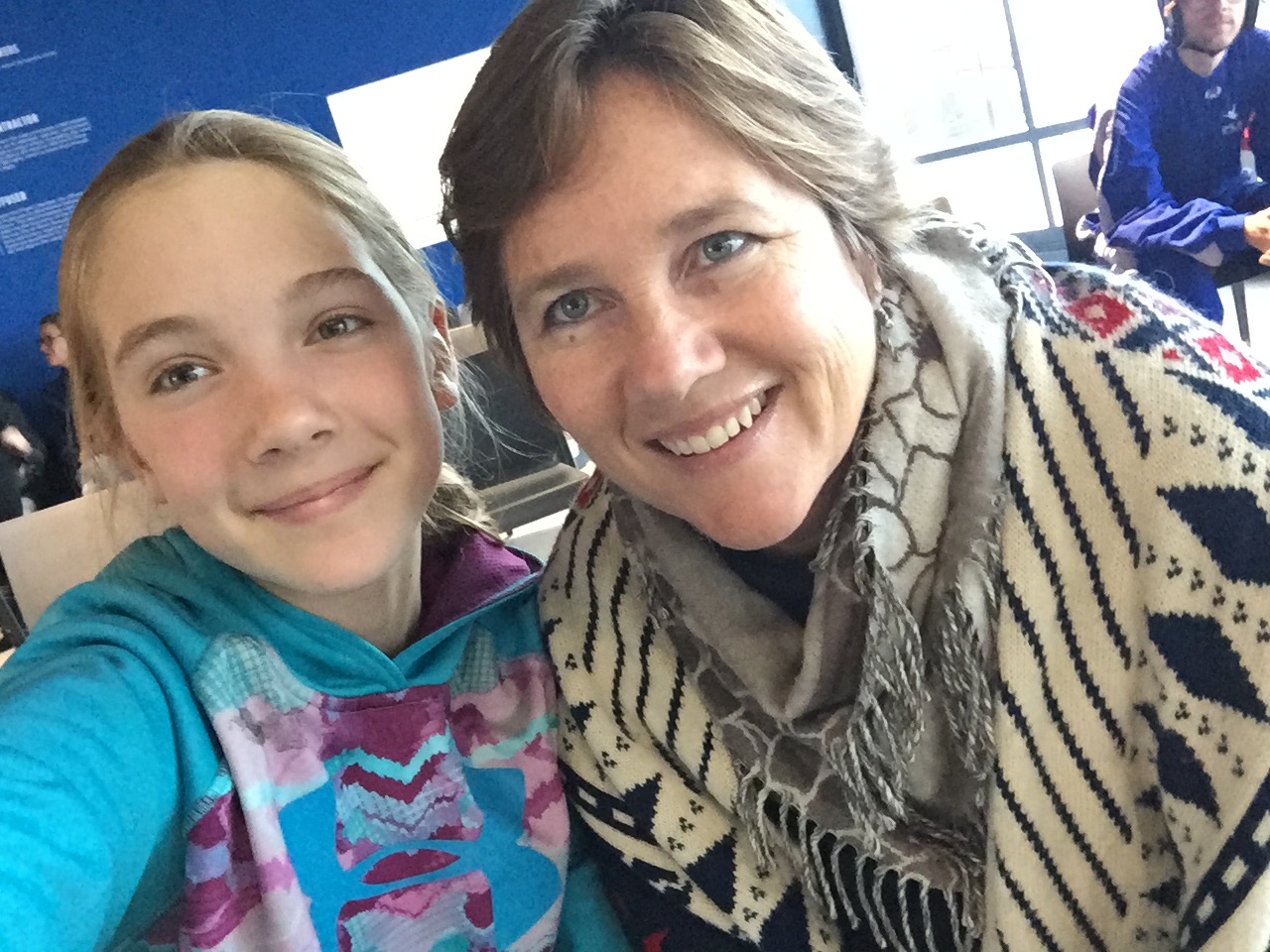
Author and her daughter

When I started this blog four years ago, I hoped I would find a community of people who would join me on a journey to explore what it means to be happy and be inspired to take action to create our own happiness, one happy act at a time.

I also knew there would be others who would never “get it” and think I’m crazy. I once had someone ask me, why do you blog about the same thing every week?  Sigh.

While there is always a common thread in my posts: exploring what makes us happy, I hope dear loyal readers you have figured out that like life, happyact.ca is a smorgasbord of content. Some weeks, it is a blog for foodies or commentary on work; other weeks it’s a travelogue or a humour column.

Some weeks it’s an advice column where I’m seeking advice for a problem or issue in my life. Other weeks, I’m sharing a tiny drop of inspiration or motivation. Either way, I hope you’ve enjoyed reading it and it’s helped you on your journey to be happy.

I know life gets busy and there is a good chance you may have missed some happy acts this year, so to help you overcome FOMO (fear of missing out), here is a reprise of my top ten favourite happy acts of 2018. I hope you keep reading every Sunday morning and continue on with me on this journey in 2019.

On travel and exploring

On being happy at work

For giggles

Motivation and inspiration

Happy New Year everyone and here’s to a happiness filled 2019.

Take the work happiness test

sign take the test

The average person spends 2,000 hours per year at work. Based on that staggering figure, it stands to reason that being happy at work is key to our overall happiness.

According to Harvard Business Review, there are three main things that contribute to happiness at work:

  1. Feeling like you are making a difference
  2. How hopeful you are about the future and the link between your work and your goals and aspirations
  3. Having positive work relationships

In Love in the Workplace, I shared the findings of one leadership expert, Mark Crowley who found a monumental shift in the drivers of happiness from time with family and hobbies to time at work. Crowley concluded “how satisfied workers feel in their jobs now determines their overall happiness with life. This monumental shift means that job fulfillment has become essential to people everywhere.”

HBR has a 24-question test you can take to measure your happiness at work. It gives you a summary report and tips on how to use your strengths and find happiness. It also shows your responses and happiness/satisfaction levels in comparison to other HBR readers who take the test.

I took it again this week. Like employee engagement scores, I find results for these kinds of tests can swing depending on your current state of mind. I scored Medium on Purpose and Hope and High on Friendship at Work. The test reinforced for me what I need to do to stay engaged at work and gave me helpful advice for making work a positive experience.

This week’s #HappyAct is to take the test to see how happy you are at work. How did you do? Leave a comment.

For more on happiness at work, read

How to be happier at work

Develop your emotional intelligence

Have a Happy Do Over Day

I watched a movie about time travel last week called About Time, a charming British indie film that was warm, thought-provoking, and witty.

In the movie, the father and son have a special gift: the ability to travel to places and times they have been before.

There is a critical scene in the movie, where the father tells the son the secret to happiness is to live each day twice: the first time normally with all the tensions and worries of every day life, and the second time doing the exact same things but noticing how sweet life is.

The film shows an ordinary day for the son. His morning is stressful, juggling making breakfast and lunches for his children, then fighting the morning commute downtown to his job as a lawyer, and endless meetings that seem pointless and bring little joy into his life.

The next scene is the son living the same day over. This time, he sees how beautiful his children are, and cherishes the precious moments with them over the breakfast table. On his morning commute, he looks out the window at the sunshine and marvels at the gift of another day. He sees the humour in the office shenanigans and celebrates success in court.

This week’s #HappyAct is to pretend we are time travellers. Choose an ordinary day this week, and relive it doing the exact same things you do every day, but this time, noticing how sweet life is. I’m going to try it and see what happens. Leave a comment and share your experience.