It’s never too late

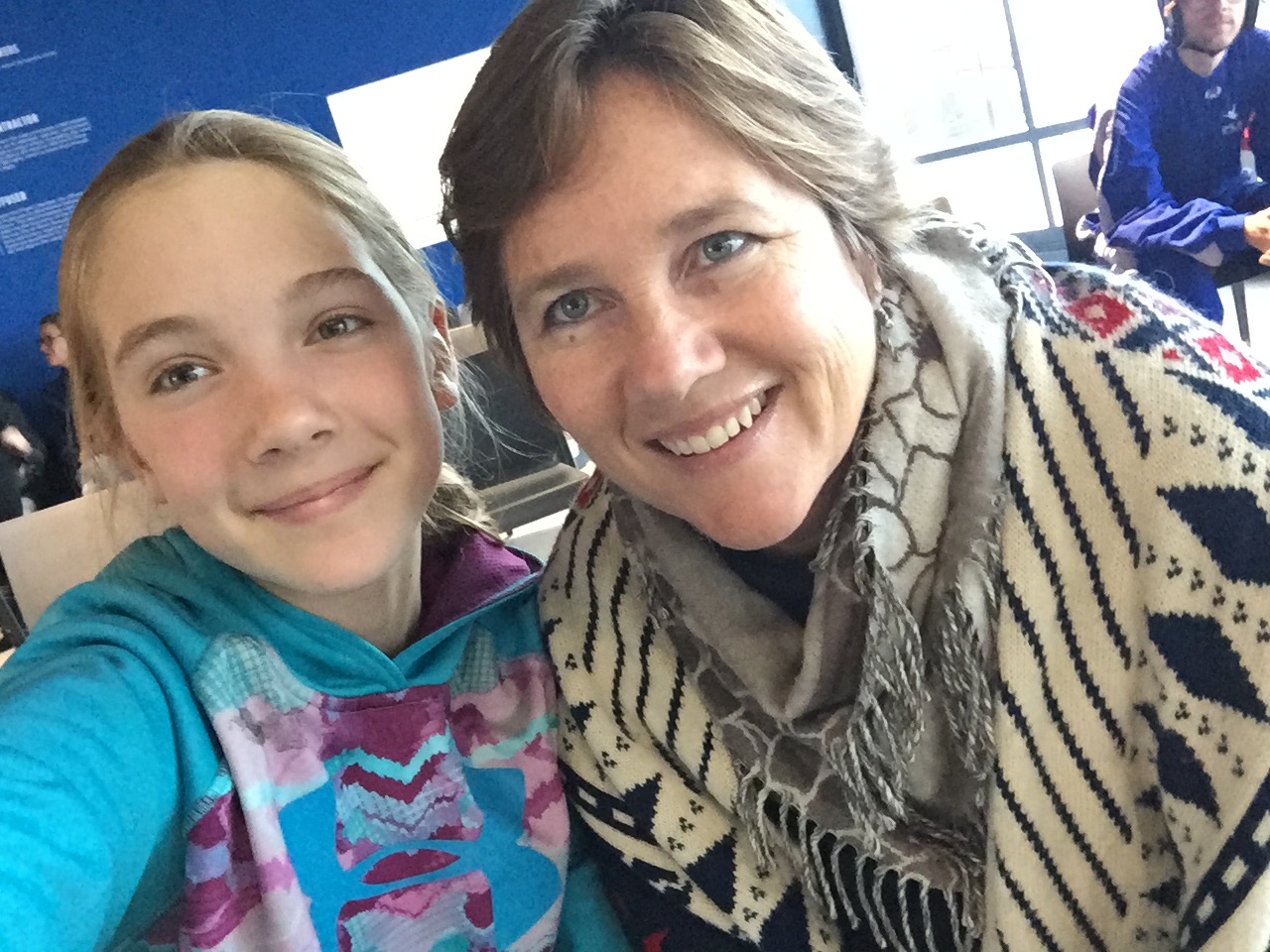
First-time author Lois Tryon

Sometimes when I get down on my writing, I think of Frank McCourt.

McCourt is best known for his novel Angela’s Ashes which won a Pulitzer Prize in 1997 (one of the most depressing books of all time). What’s interesting about McCourt is he didn’t start writing until he was in his 60’s and published Angela’s Ashes when he was 66.

I read another of his autobiographies, ‘Tis which chronicled his time teaching in the New York City public school system for 30 years. McCourt said while he was working, he had no energy and brain power left at the end of the day to tackle creative writing projects. It was only when he retired did he find the drive and creativity to write his series of award-winning novels.

I was reminded of this yesterday when Dave sent me a text that said “It’s never too late” with a link to an article in last week’s The Kingston Whig-Standard. The article was about a first-time author who at the age of 98 just published a book of poetry about living at Kingsbridge Retirement Community.

Lois Tryon started writing poems to while away the time, and the staff at the retirement residence had the idea to insert her poems in the daily menus to inspire her fellow residents.

This week’s #HappyAct is to remember it’s never too late. If you’re feeling like you should be further ahead in life, or in achieving your goals, keep at it. Here are some more examples of people who achieved greatness later in life:

  • Colonel Harland Sanders of KFC fame was 62 when he franchised his famous secret chicken recipe and opened his first restaurant
  • Julia Child didn’t publish her groundbreaking cookbook, Mastering the Art of French Cooking until she was 50.
  • Ray Kroc was a milkshake device salesman until at the age of 52 when he bought McDonalds and turned it into the world’s largest franchise
  • Henry Ford was 45 when he created the Model T in 1908
  • The great Morgan Freeman didn’t make it big in acting until he was in his 50s.

Photo of Lois Tryon by Elliott Ferguson, Kingston Whig-Standard
Never lose faith

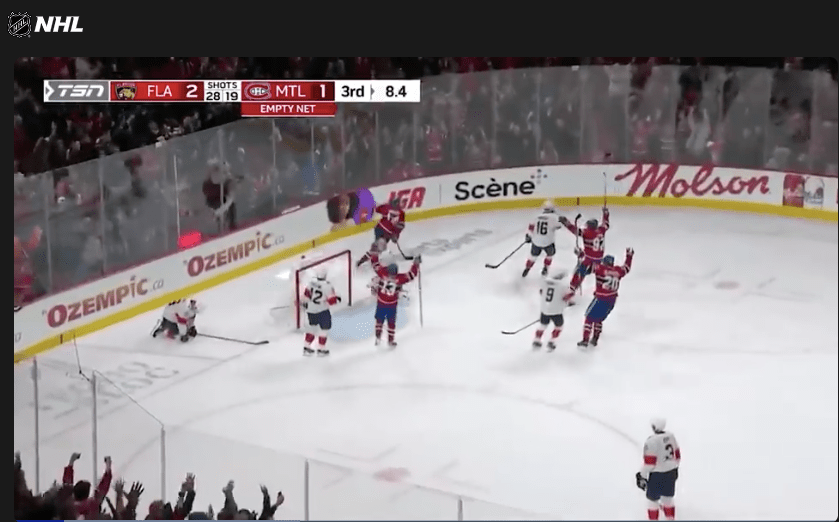
April 1 Montreal Canadiens game vs Florida Panthers

It’s been a rough couple of weeks in our household. We were out of power off and on for five days during the “Ice Storm of 2025”, the Montreal Canadiens lost a few critical games in their bid for a wild card spot in the Stanley Cup playoffs, and I was struggling with some of my writing projects.

A bit of backstory. I’ve been taking a writing course through the Seniors Association of Kingston on refining and editing your work. The instructor brought in a bunch of “how to” books and I borrowed one called “The Essential Guide to Writing a Novel” by James Thayer. It had some great insights and tips, but I discovered to my horror that I’ve made every rookie mistake a wannabe author makes when writing their first novel and that publishers look for before tossing the manuscript in the “no” pile.

As I tried to apply the learnings from the book—include backstory, but not too much or too soon; describe your characters, don’t describe your characters, let the dialogue show who they are–I became more and more confused and started second guessing everything I wrote. Every word I put down on the page sounded like crap and I found it very humbling and demoralizing.

I put my laptop away and turned on the TV. It was April 1st, April Fool’s Day and the Montreal Canadiens were playing the Florida Panthers one of the best teams in the league. The Canadiens were down 2-1 and Dave, whose nickname in our household is “Worst Habs Fan Ever” was about to say, “Turn it off, I can’t watch them lose again” when Nick Suzuki tied it with nine seconds left in the third period, sending the game into overtime. 29 seconds into overtime, Suzuki scored again with a class wraparound play to win the game 3-2.

Now I’ve been a hockey fan all my life and I never, EVER give up on my team until the buzzer goes (and just for the record, I cheer for the Leafs, Habs and Sens or any one of the Canadian teams once the playoffs start). I have always believed “it’s not over until the fat lady sings*”. The Canadiens proved that night you just need to have faith.

Later that week, I was back on the couch watching an interview on Late Night with Jimmy Fallon with Elton John and Brandi Carlisle who have just released a new album called Who Believes in Angels. They went into the recording studio without a single song written in advance with the goal of writing the entire album in 20 days. The first few days of recording were a disaster and Elton said he experienced moments of serious self-doubt. When Fallon expressed surprise that someone like him Elton John, could experience self-doubt, Elton replied, “You’re not a creative artist if you don’t doubt yourself”.

So I’ve decided I am going to embrace my self-doubt about my writing and see it as part of the creative process. I will continue to have faith in myself and keep writing.

This week’s #HappyAct is to never lose faith: in your team, in others, and most importantly, in yourself.

Ed note: The famous idiom, “It ain’t over until the fat lady sings” can be traced back to different sources, including when the lead soprano would sing in operas, but became a common saying in sports and hockey when Kate Smith would sing God Bless America at Philidelphia Flyers games in the 1970s. Go Habs/Leafs/Sens go!

Reflections on life and happiness from my Tanzanian philosopher friend

Author, her husband and guide from Access2Tanzania in the Serengeti

They say people come into your life for a moment, a day, or a lifetime. Sometimes it’s for a week.

In 2013, Dave and I took the trip of a lifetime to Tanzania. We spent a week in Arusha, the Ngorongora Crater and the Serengeti before flying to Zanzibar for four days in the Indian Ocean. The image of thousands of zebras and wildebeest migrating across the plains of the Serengeti is still seared in my mind.

Our local guide was Fulgence Kenedy, a sweet, soft-spoken young father with a beautiful smile, a twinkle in his eye and wicked sense of humour. We became fast friends, bonding over parenthood, our love of nature, and Justin Bieber (don’t ask). Over the years, we’ve kept in touch with Fulgence through Facebook and Facebook messenger.

Our trip to Tanzania was one of the things that inspired this blog. In a nation that had so little, we were struck by how warm, funny, and happy the people were and it made me reflect even more on what makes people happy.

Over the years, as we enjoyed the videos and pictures Fulgence shared online of him on safari, I noticed his posts were often accompanied by inspirational messages of love, hope and joy.

Here are some reflections on life, love and happiness from my Tanzanian philosopher friend Fulgence:

“Don’t plan too much, life has its own plans for you. Remember that some of the most beautiful moments of your life are unplanned.”

“Every sunset is an opportunity to reset and brings a new promise of dawn. You cannot stop the sunrise.”

“One day, I was surprised when I came home from church with my neighbour. When we had nearly reached home, she poured warm water* on me and wished me happy birthday. The question was, how did she keep the water warm all the time we were in church? It’s all because of love.”
*I asked Fulgence why his neighbour poured water on him on his birthday—he says it’s like when a child is baptized and is an act of love and acceptance

“Life doesn’t allow us to go back and fix what we have done wrong in the past, but it does allow us to live each day better than the last.”

“To succeed in life you need two things: ignorance and confidence.”

“The hardest test in life is the patience to wait for the right moment.”

“Everyone has a reason why you’re in this world, but to be in this world you pass through several people and make them happy or leave a wound in their heart…the bridge to cross is just a few short words. Sorry. I forgive you. Most of us don’t know how to say that when we hurt others. It’s time to love and care for others like you love and care for yourself.”

And finally,

“Happiness is a medicine”

I’ll leave you with this classic Fulgence joke. He asked me, “Laurie, do you know how to tell a male zebra from a female zebra? The male zebra is black with white stripes. The female zebra is white with black stripes.”

Ed. note: If you’re thinking of going to Africa on safari, we highly recommend you book with Access2Tanzania. Casey and the team here in North America will customize a trip for you. Ask for Fulgence—he’s featured on their website.

Zebras in the serengeti

One of my favourite photos: a pair of zebras in the Serengeti. Fulgence shared they will rest their heads on each others’ backs so they can see predators from any direction. Can you tell the male from the female?

So this is Christmas

Writers group at Kingston Seniors Association

So this is Christmas, and what have you done?

On Friday, at my last writer’s group meeting of 2024, one of our group members Joanne wanted to share something she had written in the spirit of the season. She called it “So this is Christmas” and started with the immortal verse John Lennon wrote more than 40 years ago during the Vietnam War for the song Happy Xmas/War is Over.

As Joanne read her heartfelt piece of thanks and gratitude, I looked around the room and thought about how grateful I was to be a part of this interesting group of people and how much I have learned from them in the four short months since I joined the group.

I’ve learned about botany, the undercover world of police work and drug busts, life in the Congo in the 1950s, the wild ponies in the New Forest in Hampshire, growing up on the Isle of Wight and so much more.

Some of us are writing novels, others short stories, and some their memoirs. All of us share a love and passion for writing.

But as much as writing brought us together, it is the people and camaraderie that make us come back each week.

There’s Franklin, our kind, patient leader who reminds us he will ring the bell if we go over time when sharing our work, but hasn’t rung it once since I’ve joined.

There’s Dorothy Anne, our skilled master, always with an encouraging word, tip or suggestion to improve our writing.

There’s Wayne, our pastry muse who scours the local bakeries to feed our minds and souls and lets us choose not just one, but two delectable treats, one to eat in class and one to take home.

There’s Sister Maureen, Greta and Pamela who honour us by sharing a glimpse into the fascinating lives they’ve lived each week.

There’s Mo, who shared such a moving piece a few weeks ago describing the sounds of a home filled with children, and the heartbreaking silence when they become adults and move out, that it took three members to finish reading it as each person welled up with tears.

As I was thinking about this group and Joanne’s words, she shared this, “It’s true we cannot change what is happening around the world and often not even in our own communities, so we may think, ‘Why bother?’ or ‘What can I do?’. The answer is plenty, and it all starts with kindness.”

So, this is Christmas. What have you done? Another year is over and a new one begun. Let’s all take a page from my writer’s group, and start the year with kindness.

The one skill you’ll need to succeed in an AI world

robot looking at blackboard

As a communications professional, I’ve always believed my greatest skill was the ability to listen and ask questions.

It has served me well in my career. In the age of artificial intelligence, I predict the ability to ask good questions will become the most important skill crossing nearly every profession.

In case you haven’t experimented with ChatGPT or any of the AI programs yet, the way it works is you ask a question, and the program uses machine learning to generate information. Just like any program, the quality of the output is 100% determined by the quality of the input. The more detailed, descriptive and targeted the prompt, the more accurate and helpful the result.

The possibilities are endless, just like the number of results you can receive. I know colleagues who now keep detailed spreadsheets of prompts to ask ChatGPT and similar programs. Here is an example of career-based prompts from Chris Donnolly for job hunting, expanding your network or updating your resume, a good one to keep handy since many of us could be out of work soon thanks to AI.

The key is to be as detailed and specific as you can. OpenAI recently unveiled its new video AI generator called Sora. At the launch, CEO Sam Altman asked people to send in prompts for Sora to demonstrate their ability to create videos in seconds. Here is a Twitter/X post with one of the videos based on the prompt:

“Beautiful, snowy Tokyo city is bustling. The camera moves through the bustling city street, following several people enjoying the beautiful snowy weather and shopping at nearby stalls. Gorgeous sakura petals are flying through the wind along with snowflakes.”

Scary isn’t it? And just like buyer beware, prompter beware. You can never completely trust the information you receive.

A lawyer in BC recently used ChatGPT to prepare legal briefs in a family law case. The brief cited cases that never existed. She was ordered to pay special costs in the case to opposing counsel and is under investigation by the law society for her actions.

Just like every new technology, we will need to navigate the ethics of AI and find the right balance and place for it in our lives. As I’ve been grappling with how to use it professionally and personally, I’ve decided not to use it for any creative projects unless it is to do research so my own thoughts, words and voice are represented in my work.

This blog is called the #HappyAct for goodness sake, so I thought I would end this week’s post on a positive note. I asked Bing Copilot, “I’m a communications specialist working in a small rural municipality. How much time before my job becomes obsolete due to AI?” I’ve shared the response it gave below.

The final line was “Remember, the future isn’t about humans vs. AI; it’s about humans collaborating with AI to achieve better outcomes. 🤝

Wait a minute. It didn’t answer my question. I guess machines are more like humans after all (time to brush up my resume…)

Bing Copilot response

“As a communications specialist working in a small rural municipality in Ontario, your role involves critical human skills that are not easily replicated by artificial intelligence. Let’s explore this further:

  1. Contextual Understanding: Your job requires understanding the unique context of your municipality, its people, and their needs. AI can process data, but it lacks the empathetic understanding that comes from human experience.
  2. Effective Communication: Your ability to convey information clearly, tailor messages to different audiences, and build relationships is invaluable. While AI can generate text, it often lacks nuance and emotional intelligence.
  3. Creativity and Adaptability: As a communications specialist, you adapt to changing situations, create engaging content, and find innovative ways to connect with residents. AI can’t match human creativity and adaptability
  4. Community Engagement: Building trust and engaging with the community is a core part of your role. AI can’t attend town hall meetings, listen to concerns, or build personal connections.
  5. Ethical Decision-Making: You navigate ethical dilemmas, handle sensitive information, and make judgment calls. AI lacks moral reasoning and can’t weigh complex ethical considerations.
  6. Local Knowledge: Your understanding of local history, culture, and politics is irreplaceable. AI lacks this context.

Predicting obsolescence is challenging, but here’s the optimistic view: AI can enhance your work by automating repetitive tasks, analyzing data, and suggesting content. However, your uniquely human skills will remain essential. As technology evolves, consider upskilling to stay relevant. 🌟

Remember, the future isn’t about humans vs. AI; it’s about humans collaborating with AI to achieve better outcomes. 🤝

Read part 1 on AI from last week: My new love-hate relationship

Forgive me/she/her

Pride month poster

June is Pride month. A few weeks ago, I finally changed my autosignature to include my pronouns she/her at the end. I’ve been meaning to change it for almost a year now, but finally got a round tuit at the hardware store when I was on vacation last week.

I’ve always considered myself an ally of the LGBTQ community and am looking forward to seeing a rainbow-filled feed on my social media channels on Tuesday.

But I confess I sometimes do find it hard to navigate this world of diversity and inclusion. It will be only a matter of time before I make a mistake and will have to ask for forgiveness.

For instance, I was writing an email to my team last week. I have a small team and we all know each other pretty well, so our work emails are pretty informal.

I started out writing my normal, “Hey guys, I’ll need to move our regular team meeting…” But then I remembered reading an article that said “guys” is inappropriate since it implies men and excludes others. I say this to my family all the time so hopefully I’m not insulting Grace and Clare the next time I say, “Hey guys, what do you want for dinner tonight?”

I thought about “Hey gang” but was afraid it might be discriminatory against people in actual gangs or imply they were a bunch of miscreants or hooligans.

I tried “Hey folks”, but then wondered if that had southern connotations, even though we don’t live in the United States, or a rural connotation that might be offensive.

I’ve sometimes used “Hey peeps” which seems pretty harmless, but could be racist towards chickens.

In the end, I just went with “Hey team”. Whew, problem solved.

You see my dilemma.

I know I’m being cheeky and there is a good chance someone who is reading this has already taking offence to me making light of an important subject.

I believe people have a right to be called whatever they want, whether it’s he, she, per, ze/ziethey, or they. Addressing people the way they prefer to be called is simply a matter of respect and is no different than when women started challenging the use of Miss and Mrs. as part of the feminist movement.

Personally, I don’t care what I’m called as long as you don’t call me late for dinner.

I know I have a lot to learn. I will make mistakes. I just hope you forgive me/she/her when I make them.

And to all my LGBTQ friends, I love you just as you are. You are authentic, funny and strong, and I am proud to celebrate by your side, a true ally, this month. Happy pride month, everyone!

Ed. Note: The dilemma of how to address people was encapsulated perfectly in the Saturday Night Live skit, “It’s Pat” in the early 90’s. Here’s an episode where the friends of androgynous Pat throw a birthday party for them. SNL was always on the cutting edge of societal issues. While the character of Pat was a caricature, the humour was in seeing how people with good intentions tried to unearth clues as to how to address Pat.

How to make friends with the bots

talking to a bot

Let’s face it. Bots are going to take over the world. One day we’ll all wake up, and every online interaction will start with talking with a bot. Think of them as Walmart greeters for the internet (except that Walmart just announced they’re laying off all their greeters).

I’m fascinated with bots. In my work, I’ve been helping our bot team choose language that is friendly, clear and helpful. But herein lies the problem with bots. For communication to be effective, you need to understand how people are feeling, thinking, and what you want them to do. It’s called knowing your audience. And with bots, you’re not exactly sure what the frame of mind is of the person at the beginning of the interaction, and just as important, at the end of the interaction.

I’ll illustrate this by sharing my latest interaction with Koodo’s bot. Koodo’s tagline by the way is “Choose Happy”. It went something like this:

————————

“Hi Koodo bot. I need your help. My daughter has fried her phone a second time and I want to know my options for my contract.”

(Four options popped up for me to choose, none of them was what I needed help with.)

So I said, “I think it’s probably easier if I just called you. What’s your toll-free number?”

(The bot in its programming must have picked up on the keyword phrase “toll-free number” so it answered this)

“1-800 numbers are free of Long Distance charges, but the local minutes to connect you to the network are still billed at the local minute rate. The numbers you can call are (list of numbers). If you run out of minutes, you will be charged for additional airtime. You might get a prompt to a recording message if the toll-free number isn’t available in your area.”

Then it asked me if their answer was helpful. I gave it a thumbs down.

We went back and forth a few more times. At this point, I couldn’t believe how difficult it was to just get their stupid 1 800 number from the bot and the UX tester in me went into overdrive, so I wrote,

“OK, so what’s the number you stupid bot” just to see how it would respond.

The bot answered, “Now, now, let’s play nice!” and send me a GIF of Maggie Smith looking affronted.

giphy

OK, so I don’t know how you would react to Maggie Smith raising her eyebrow in a supercilious manner just because you wanted to talk to someone in customer service, but my emotional response went from a ha, ha, I don’t believe it said that, to incredulous, to how dare you, you stupid bot? I showed it to Clare who had been sitting beside me the whole time and asked her how she felt about it. She said the exact same thing.

Let’s just say, I didn’t “Choose Happy” from Koodo in that moment.

To end the story, I ditched the bot, found their 1 800 number somewhere else, called them and finally found a human that was very helpful and resolved my dilemma. I did have to wait on the line for about 10 minutes though to speak to said human.

So if bots are here to stay, how do we make friends with them? Here are some tips:

  1. First, go in knowing their limitations. Bots do serve a purpose—they can answer simple questions, freeing up customer service agents to address more difficult issues and concerns.
  2. Be aware if you are dealing with a bot or a human. Sometimes this can be hard to know. If you’re not sure, ask. You’ll know after the first few interactions when five lines of text appear instantaneously.
  3. If after the first few questions it’s clear the bot’s programming isn’t giving you what you need, ask to speak to a live person. Most bots that are programmed well with have a human offramp, where you just pick “speak to a person” and they’ll redirect your enquiry.

If all else fails, you can always derive some entertainment value by messing with it. Just be prepared for the Maggie Smith gifs.

Best happy acts of 2018

Author and her daughter

When I started this blog four years ago, I hoped I would find a community of people who would join me on a journey to explore what it means to be happy and be inspired to take action to create our own happiness, one happy act at a time.

I also knew there would be others who would never “get it” and think I’m crazy. I once had someone ask me, why do you blog about the same thing every week?  Sigh.

While there is always a common thread in my posts: exploring what makes us happy, I hope dear loyal readers you have figured out that like life, happyact.ca is a smorgasbord of content. Some weeks, it is a blog for foodies or commentary on work; other weeks it’s a travelogue or a humour column.

Some weeks it’s an advice column where I’m seeking advice for a problem or issue in my life. Other weeks, I’m sharing a tiny drop of inspiration or motivation. Either way, I hope you’ve enjoyed reading it and it’s helped you on your journey to be happy.

I know life gets busy and there is a good chance you may have missed some happy acts this year, so to help you overcome FOMO (fear of missing out), here is a reprise of my top ten favourite happy acts of 2018. I hope you keep reading every Sunday morning and continue on with me on this journey in 2019.

On travel and exploring

On being happy at work

For giggles

Motivation and inspiration

Happy New Year everyone and here’s to a happiness filled 2019.

Why not?

kid ready to fly

Special guest blog by Ray Dorey

You miss 100% of the shots you don’t take.”
Wayne Gretzky

A few weeks ago, I caught up with a good friend over coffee. You might have heard of her. She’s the driving force behind the Happy Act blog, Laurie Swinton.

One of our exchanges was about a course I’ve been taking in genre fiction, which led to a discussion about comedy writing. I brought up the iconic Saturday Night Live, and what an absolute blast those writers must have crafting timely sketches for that particular week’s show.

And then, casually out of left field, Laurie suggested, “(SNL creator and executive producer) Lorne Michaels is Canadian. We should ask him about sitting in on a couple of writer’s meetings.”

I smiled. Was she serious? Surely there wasn’t a snowball’s chance in hell of that ever happening.

But then I recalled a time in my life when such a proposal was common.

I grew up captivated by all that was Disney; the movies, the tv programming, and the theme parks. I couldn’t get enough of the Mickey Mouse brand magic. Disney fueled my imagination, and creative passions.

Eagerly, I would scribe my heart out; sometimes conveying ideas, other times making requests, and nearly every time, I received a response. It made no difference that the replies were often form letters. I was still ecstatic.

Rejection letter from Walt Disney corporation

Sometime between then and now, I grew up, at least a little, and perhaps I lost some of that youthful exuberance. Today, I might only execute similar reach-outs when I thought I had a high chance of success. Dreams perhaps died before they ever had a chance to blossom.

But my younger self always had it right. What’s wrong with asking, even though a voice might warn you there’s a slim chance of reward? You could be inaccurate in your presumptions, or you could simply catch lightning in a bottle. Stranger things have happened. Why not to me? Why do people buy lottery tickets? Because the prize is so much greater than the risk–despite the low odds of winning.

Feeling buoyed, I told Laurie I would write to Lorne Michaels with our request. And I did. A brief search yielded multiple mail and email addresses for Mr. Michaels. So I crafted and launched the following missive:

Mr. Lorne Michaels
Creator and executive producer, Saturday Night Live
NBC Studios

30 Rockefeller Plaza
New York, NY – 10112

Dear Mr. Michaels,

No, I am not high and/or mentally unstable, depending on who you ask.

A friend and I, fellow Canadians and aspiring writers, are both long-time fans of Saturday Night Live.

While meeting recently over coffee, our conversation led to speculation about the creative process used to craft and hone material for the show, and how much indescribable fun it must be to participate.

So we were wondering (here comes the crazy part)…

Would it be possible for the two of us to sit-in on one or two writers meetings as observers?

We are not asking for anything else, and we can only offer our undying gratitude in return.

Sincerely,
Ray Dorey

A few days later, I received a response. My heart leapt in my throat.

One of the email addresses had bounced back. Oh well… it wasn’t the response I was hoping for, but it wasn’t a no, and it was still early. Seeds need time to yield mighty oaks.

But whether Mr. Michaels ever responds is really secondary here. The point is that I made the attempt, and knocked on a door that would have never had a chance to open otherwise.

I encourage you, as I re-encourage myself, to dare to defy logic, and to be more creative and optimistic with your pursuits. We’re only here for a short time, and fortune favours the bold as they say, so why not?

You can read more of Ray’s adventures and short stories at storiesfromdoreyville.wordpress.com.

Epic fails and lessons in writing from the school of hard knocks

Mark Zuckerberg

This week, on the 14th anniversary of Facebook, Mark Zuckerberg shared a posted about his failures. He wrote, “Over the years I’ve made almost every mistake you can imagine. I’ve made dozens of technical errors and bad deals. I’ve trusted the wrong people and I’ve put talented people in the wrong roles. I’ve missed important trends and I’ve been slow to others. I’ve launched product after product that failed.”

There are many days when I feel like an epic failure as a writer (or mother, or wife for that matter). The other day I read something I wrote a year ago. It was crap.

Writing for someone else’s voice is probably one of the hardest things for a writer to do. I need to do this a lot in my work. Here are some of my epic failures in writing over the course of my career.

  • Assuming someone’s spoken voice is the same as their written voice. I worked with one leader who was personable, funny and engaging in person, but whose written prose was formal and stilted.
  • Creating a narrative that wasn’t the narrative of the person giving the presentation. I prepared a presentation once for a leader and weaved a theme through it that I thought would resonate with the audience, using references to popular culture. It fell flat because it was my narrative, not their narrative.
  • Not using enough stories in my writing and not digging harder to find stories. Everyone has a story.
  • Slipping into corporate puffery. If something I’ve written sounds like a company wrote it, not a person, I’ve failed at my job, and I have.
  • Being too wordy.
  • Not being able to convince people to use clear language; people will often default to language they are used to or think others want to hear.

Yes, I have failed miserably time and time again. But there is one thing that makes me happy. I’m in good company.